2025-03-04 06:27
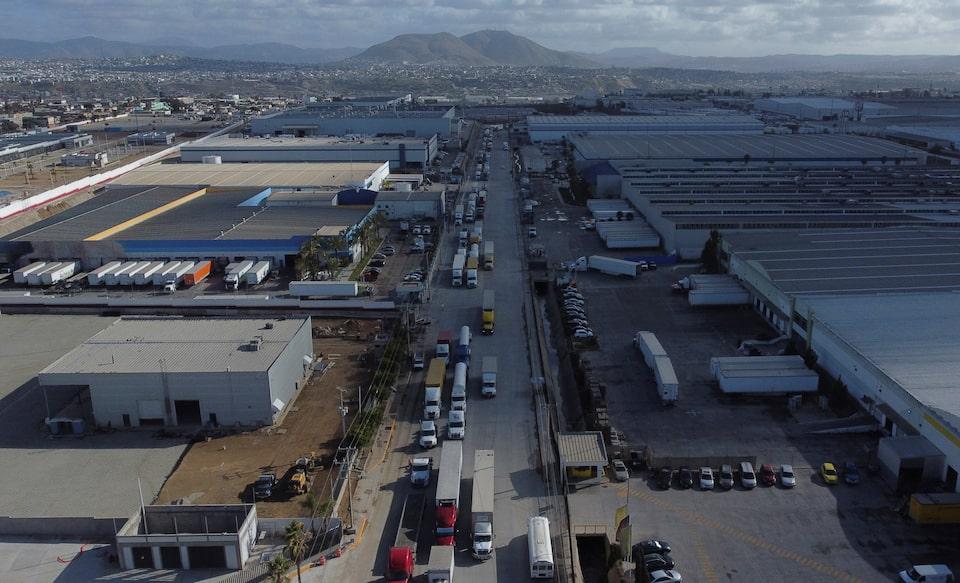
BEIJING, March 4 (Reuters) - China on Tuesday swiftly retaliated against fresh U.S. tariffs, announcing 10%-15% hikes to import levies covering a range of American agricultural and food products, moving the world's top two economies a step closer toward an all-out trade war. Beijing also placed twenty five U.S. firms under export and investment restrictions on national security grounds, but refrained from punishing any household names, as it did when it retaliated against the Trump administration's February 4 tariffs. Ten of these 25 U.S. firms were targeted by China for selling arms to Taiwan, which China claims as its own territory. China's latest retaliatory tariffs came as the extra 10% duty U.S. President Donald Trump threatened China with last week entered into force at 0501 GMT on March 4, resulting in a cumulative 20% tariff in response to what the White House considers Chinese inaction over drug flows. China has accused the U.S. of fentanyl blackmail and it has some of the toughest anti-drug policies in the world. Analysts have said Beijing still hoped to negotiate a truce with the Trump administration, but the tit-for-tat retaliatory tariffs threaten to escalate into an all-out trade war between the two economic giants. The new U.S. tariffs represent an additional hike to preexisting levies on thousands of Chinese goods. Some of these products bore the brunt of sharply higher U.S. tariffs under former president Joe Biden last year, including a doubling of duties on Chinese semiconductors to 50% and a quadrupling of tariffs on Chinese electric vehicles to over 100%. The 20% tariff will apply to several major U.S. consumer electronics imports from China that were previously untouched, including smartphones, laptops, videogame consoles, smartwatches and speakers and Bluetooth devices. China responded immediately after the deadline, announcing it will impose an additional 15% tariff on U.S. chicken, wheat, corn and cotton and an extra 10% levy on U.S. soybeans, sorghum, pork, beef, aquatic products, fruits and vegetables and dairy imports from March. 10, the finance ministry announced in a statement. "The U.S.'s unilateral tariffs measures seriously violate World Trade Organization rules and undermine the basis for economic and trade cooperation between China and the U.S.," China's commerce ministry said in a separate statement. "China will firmly safeguard its legitimate rights and interests," the statement added. Sign up here. https://www.reuters.com/world/china/china-vows-countermeasures-against-us-tariffs-linked-fentanyl-2025-03-04/
2025-03-04 06:26
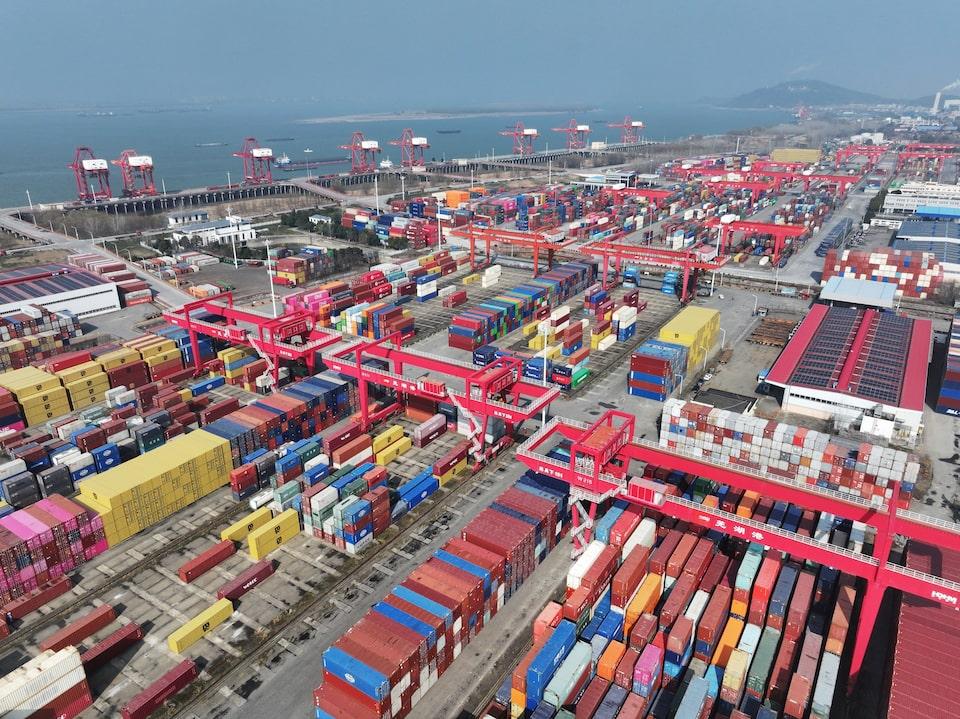
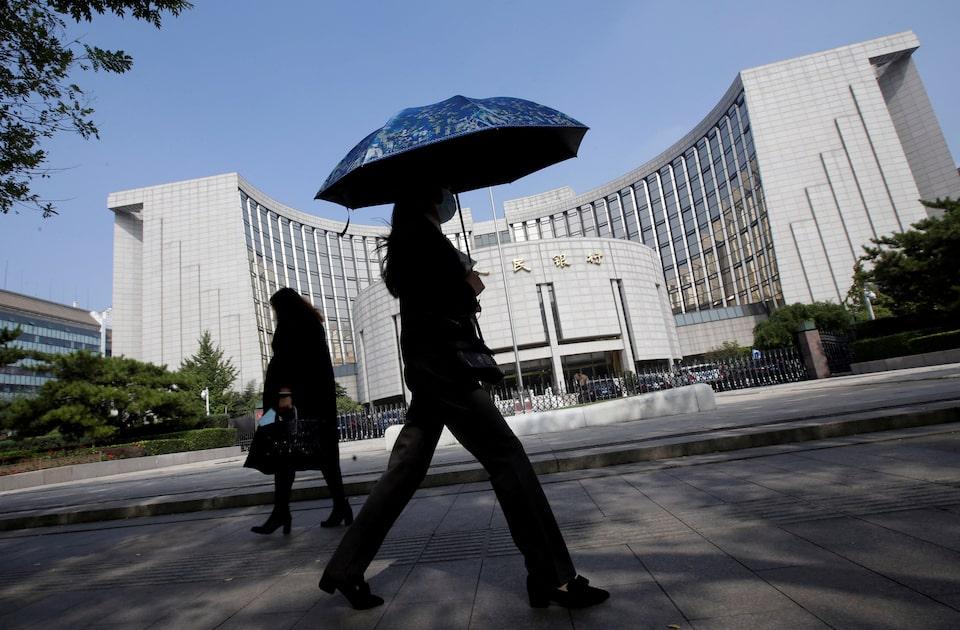
SHANGHAI, March 4 (Reuters) - China's yuan pared some earlier gains against the dollar on Tuesday after fresh U.S. tariffs on Chinese goods kicked in, heightening trade tensions and threatening to put more pressure on the uneven economy. The United States doubled trade tariffs on Chinese goods to 20% on Tuesday, and Beijing quickly said it will impose additional tariffs of 10%-15% on certain U.S. imports from March 10 as retaliation. But the currency market largely appeared calm following the tit-for-tat measures, traders said, with the onshore yuan only giving back some of its modest morning gains. As of 0551 GMT, the onshore yuan was 0.07% higher at 7.2826, down from an intraday high of 7.2763. It offshore counterpart traded at 7.2867 yuan around 0551 GMT. The central bank had continued to guide the currency firmer hours ahead of the expected imposition of the U.S. tariffs. The People's Bank of China (PBOC) has been offering support for the currency market by persistently setting firmer-than-expected midpoint fixings since mid-November, with traders and analysts interpreting the moves as an official attempt to keep the yuan steady. "However, we expect the Chinese authorities to eventually allow RMB to adjust in response to significant tariffs as evident in the 2018/2019 trade war experiences," analysts at Nomura said in a note. Trade tensions had been one of the key drags on the yuan during Donald Trump's first term as president. A series of tit-for-tat U.S.-China tariff announcements drove the Chinese currency down more than 12% against the dollar between March 2018 and May 2020. The yuan has lost 11.7% of its value against the dollar since Trump left office the first time in January 2021. Prior to the market opening, the PBOC set the midpoint rate , around which the yuan is allowed to trade in a 2% band, at 7.1739 per dollar, 6 pips firmer than the previous fix of 7.1745, albeit against a broadly stronger dollar in global markets. Tuesday's official midpoint was 988 pips firmer than a Reuters estimate of 7.2727. "We see the central bank will likely continue to anchor the spot with its daily fixing and look at yuan strength on a basket level (against many trading partners' currencies), especially this week as Two Sessions start," said Lemon Zhang, FX strategist at Barclays. Zhang expects the yuan to swing between 7.25 and 7.3 in the near term. Parliamentarians and political advisers gather in Beijing every March for two parallel sets of meetings called the Lianghui or "Two Sessions," where key economic growth targets and the policy agenda will be unveiled. Trump said on Monday he told the leaders of Japan and China they cannot continue to reduce the value of their currencies as doing so would be unfair to the United States. Analysts at BofA revised their forecasts for the yuan slightly higher to 7.5 at the end of the first quarter from 7.6 previously, while maintaining end-June predictions at 7.6. "We maintain that U.S. tariff risks and technology restrictions should not be underestimated with April 1 tariff headlines still looming," they said in a note published last week. "Consequently, we still hold a bearish view into 2Q and maintain a USD/CNY forecast of 7.60. The risk to this view is that China either achieves a negotiation pathway to hold of tariffs or engages in more aggressive stimulus to lift growth expectations." Sign up here. https://www.reuters.com/markets/asia/chinas-yuan-inches-higher-pboc-support-us-tariffs-loom-2025-03-04/
2025-03-04 06:21
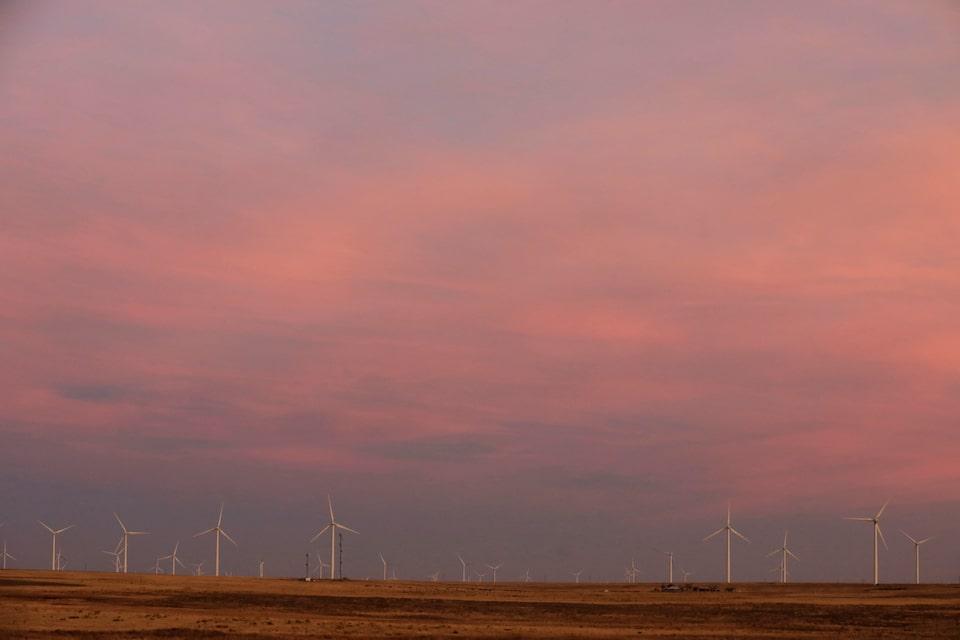
LITTLETON, Colorado, March 4 (Reuters) - An enduring spell of low wind speeds across Texas has forced the state's power firms to increase generation from fossil fuels to record highs so far in 2025, potentially leading power firms to shorten or delay planned maintenance breaks this spring. The Electric Reliability Council of Texas (ERCOT) power system, one of the largest in the United States, covers around 75% of Texas' land area, including the state's energy-intensive industrial corridors on the south coast. Typically, ERCOT power firms schedule plant maintenance in March and April when overall power demand tends to dip between the winter heating season and the energy-intensive summer when demand for cooling systems peaks. This year, ERCOT estimated that around 17% of the system's thermal power generation capacity of around 85,000 megawatts was scheduled for maintenance in March, which would require certain plants to throttle back or temporarily halt output. However, below-normal wind power production has meant ERCOT system planners have had to keep generation from fossil fuels plants at near record levels, which is eating into the time window for maintenance crews to get to work. WIND WOES Wind farms typically account for more than a third of ERCOT's total power generation during opening months of the year, as high winter wind speeds help boost clean power flows. However, ERCOT wind power generation during February was 18% below February 2024 levels due to low wind speeds, data from LSEG shows. This in turn pushed wind's power share to just 26% of the ERCOT total last month, compared with a 36% share in February 2024. To make up for the wind shortfall last month, power firms boosted generation from coal plants by 49% from the same month in 2024 to the highest February total in three years. ERCOT firms also boosted output from natural gas-fired plants by 33% from February 2024, LSEG data shows, and have had to sustain high fossil fuel-fired production levels so far in March as wind generation levels remain stunted. FORECAST After the sub-par wind generation total for February, power traders had anticipated a rebound in wind output during March and April, which have typically been the highest wind generation months in the ERCOT system. However, while wind production picked up at the start of March, the forecast for the coming week or so indicates a fresh drop in output is likely from current levels. Longer-term forecasts for wind generation are less reliable than shorter-term forecasts, and are not widely relied upon. The spotty nature of wind output this year has in turn meant that fossil fuel power plants have had to increase their overall share of ERCOT generation, which in February 2025 was 57% compared to 54% in February 2024 and February 2023. MAINTENANCE WINDOW If wind power levels remain below average this month, firms may struggle to complete the required maintenance on coal and gas-fired plants before power demand rises again when summer kicks in and temperatures and humidity levels rise. While new power plants may only need a few days for maintenance work to be completed, older and more complex systems can require weeks of work to properly prepare them for the peak summer demand season. And with the average age of Texas coal plants around 50 years and gas plants around 30 years, according to ERCOT, both sets of fossil plants in the ERCOT system can need regular and extensive maintenance and upgrades. Currently, ERCOT system demand levels are approaching their lows for the year, and average temperatures for Houston through mid-March are forecast to hold around 75 to 80 degrees Fahrenheit (24 to 26 Celsius), which is normal and should not lead to sustained demand for power-hungry air conditioners. However, temperatures tend to climb from May, which means there is less than 10 weeks to take care of the state's roughly 20 coal-fired, 17 oil-fired and 162 natural gas-fired power plants before they may be needed to crank output again. At normal wind generation levels, there would be plenty of scope to dial back output at multiple thermal power plants at this time of year, and accommodate the maintenance work. But this year's weak winds mean that ERCOT's fossil power network may need to maintain output levels for longer than normal, and leave maintenance crews with a shorter than normal window to prime the fleet for the summer rush. The opinions expressed here are those of the author, a market analyst for Reuters. Sign up here. https://www.reuters.com/markets/commodities/low-wind-speeds-may-limit-texas-power-system-maintenance-window-maguire-2025-03-04/
2025-03-04 06:14
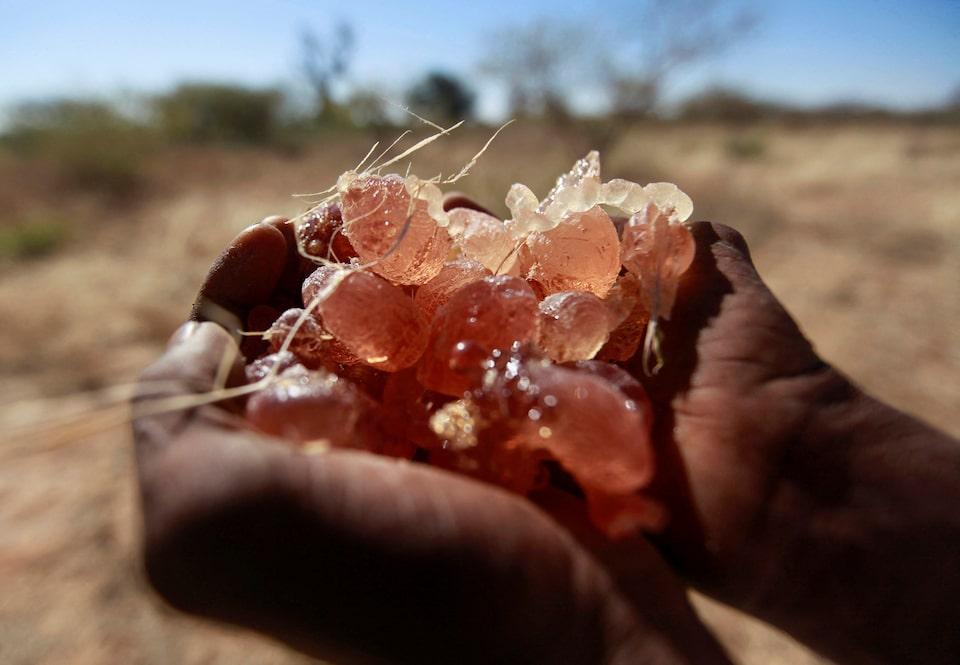
Sudanese gum arabic, used in consumer goods, is being trafficked to other African countries RSF controls Sudan's main gum-harvesting regions, complicating supply chains Traders offer cheap gum without conflict-free certification RSF-affiliated gum appears in informal markets, smuggled to neighbours LONDON/DUBAI, March 4 (Reuters) - Gum arabic, a vital ingredient used in everything from Coca-Cola (KO.N) , opens new tab to M&M's sweets, is increasingly being trafficked from rebel-held areas of war-torn Sudan, traders and industry sources say, complicating Western companies' efforts to insulate their supply chains from the conflict. Sudan produces around 80% of the world's gum arabic, a natural substance harvested from acacia trees that's widely used to mix, stabilise and thicken ingredients in mass-market products including L'Oreal (OREP.PA) , opens new tab lipsticks and Nestle (NESN.S) , opens new tab petfood. The paramilitary Rapid Support Forces (RSF), at war since April 2023 with Sudan's national army, seized control late last year of the main gum-harvesting regions of Kordofan and Darfur in western Sudan. Since then the raw product, which can only be marketed by Sudanese traders in return for a fee to the RSF, is making its way to Sudan's neighbours without proper certification, according to conversations with eight producers and buyers who are directly involved in gum arabic trading or based in Sudan. The gum is also exported through informal border markets, two traders told Reuters. Asked for comment, a RSF representative said that the force had protected the gum arabic trade and only collected small fees, adding that talk of any lawbreaking was propaganda against the paramilitary group. Last month, the RSF signed a charter with allied groups establishing a parallel government in the parts of Sudan it controls. In recent months, traders in countries with lower-gum arabic production than Sudan, such as Chad and Senegal, or which barely exported it before the war, like Egypt and South Sudan, have begun to aggressively offer the commodity at cheap prices and without proof it is conflict-free, two buyers who have been approached by traders told Reuters. While the acacia trees that yield gum arabic grow across the Africa's arid Sahel region - known as the 'gum belt' - Sudan has become by far the world's biggest exporter due to its extensive groves. Herve Canevet, Global Marketing Specialist at Singapore-based supplier of speciality food ingredients Eco-Agri, said it was often difficult to determine where gum supplies are coming from as many traders would not say if their product has been smuggled. "Today, the gum in Sudan, I would say all of it is smuggled, because there's no real authority in the country," he said. The Association for International Promotion of Gums (AIPG), an industry lobby, said in a January 27 public statement it "does not see any evidence of links between gum (arabic) supply chain and the competing (Sudanese) forces." However, five industry sources said the opaque new trade in gum risked infiltrating the procurement system of global ingredients makers. Companies like Nexira, Alland & Robert, and Ingredion buy a refined version of the amber-colored gum, turn it into emulsifiers and sell it to big consumer goods firms. Contacted by Reuters, Ingredion said it works to ensure that all supply chain transactions are fully legitimate and has diversified sourcing since the start of the war to include other countries such as Cameroon. Nexira told Reuters the civil war prompted it to cut its imports from Sudan and take proactive measures to mitigate the impact of the conflict on its supply chain, including broadening sourcing to ten other countries. Alland & Robert, Nestle and Coca Cola did not comment. M&Ms maker Mars and L'Oreal did not return requests for comment. CHEAP GUM FOR SALE Mohammed Hussein Sorge, founder of Khartoum-based Unity Arabic Gum, which served global ingredients makers before the war, said he was offered gum arabic in December by traders in Senegal and Chad. He said the Chad-based traders wanted $3,500 per tonne for hashab gum, a more expensive variety of gum arabic primarily produced in Sudan, for which he would normally expect to pay more than $5,000 per tonne. The sellers could not provide a Sedex certification, which ensures buyers a supplier meets sustainable and ethical standards, Sorge also told Reuters. Sorge did not buy the gum because he feared the low price and lack of documentation was an indication it had been stolen in Sudan or exported via informal RSF-affiliated networks. "Smugglers manage to smuggle gum arabic through the RSF because the RSF controls all production areas," Sorge said. Sorge, who fled to Egypt after RSF forces stole his entire gum supply in 2023, shared WhatsApp messages with Reuters showing these gum traders had reached out on five separate occasions, including as recently as January 9. Since October, the RSF banned exports for 12 goods to Egypt, including gum Arabic, in retaliation for what it said was Egyptian airstrikes against the militia. Asked for comment, the paramilitary said it banned what it called smuggling to Egypt because it was not benefiting Sudan. A buyer, who declined to be named for safety reasons, recounted how he also was approached by shadowy gum traders. "I have (acacia) seyal cleaned open quantities ready for shipping," read one WhatsApp message, reviewed by Reuters and offering a load of seyal gum, a cheaper gum arabic variety. In subsequent WhatsApp messages, the trader proposed to schedule shipping every two months at a negotiable price of $1,950 per metric tonne, lower than the $3,000 per tonne the buyer said he would expect to pay for this kind of load. In a different WhatsApp conversation with the same buyer, reviewed by Reuters, a different trader said that trucks carrying gum arabic had crossed the Sudanese border into South Sudan and Egypt. In all instances, the gum traders could not provide a Sedex certification, the buyer said, adding that he declined the offers for fear the gum came from RSF-affiliated networks. CHANGING ROUTES Before the Sudanese civil war, the raw gum would be sorted in Khartoum and then trucked to Port Sudan, on the Red Sea, to be shipped via the Suez Canal around the world. Since late last year, however, RSF-affiliated gum Arabic started to appear on sale at two informal markets on the border between the Sudanese province of West Kordofan and South Sudan, according to a buyer based in an RSF-controlled area, who declined to be named due to safety concerns. The buyer, a major trader in the West Kordofan area, said traders collect gum from Sudanese land owners and sell them to South Sudanese traders in these markets for U.S. dollars. All of this happens with RSF protection, which the traders pay for, the buyer added. Abdallah Mohamed, a producer who owns acacia groves in West Kordofan, also told Reuters the RSF takes a fee from the traders for protection. The paramilitary group has diversified its interests into gold, livestock, agriculture and banking. South Sudan Information Minister Michael Makuei, who is also the government's spokesperson, told Reuters transport of gum through South Sudan was not the government's responsibility. Calls and messages to Joseph Moum Majak, the minister of trade and industry for South Sudan, went unanswered. The RSF also takes the product to the Central African Republic through the border town of Um Dafoog, the buyer said, adding that some goes to Chad. A wholesale buyer, based outside Sudan, told Reuters the gum was now being exported through Mombasa in Kenya and South Sudan's capital Juba. Arabic gum of illicit origin has also appeared on sale online. Isam Siddig, a Sudanese gum processor who is now a refugee in Britain, told Reuters his warehouses in Khartoum had been raided by the RSF after he fled in April 2023 with three suitcases of gum in tow. A year later, his gum products appeared on sale, still in his company's branded packaging, in an online Facebook group according to a screenshot shared with Reuters. Sign up here. https://www.reuters.com/world/africa/how-key-ingredient-coca-cola-mms-is-smuggled-war-torn-sudan-2025-03-04/
2025-03-04 06:13
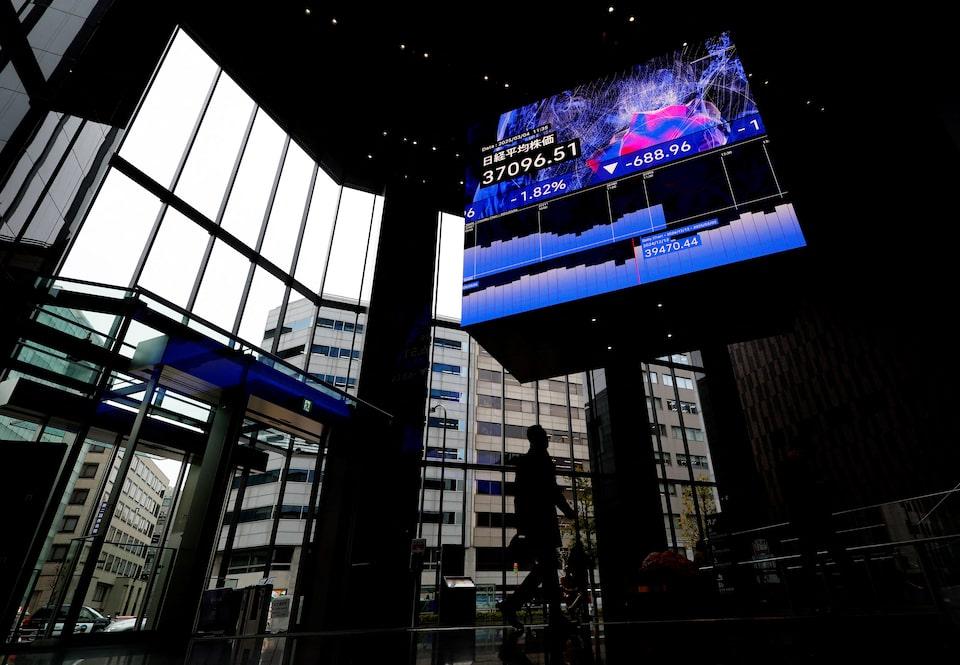
German Bund futures fall on debt brake agreement New US tariffs on Canada, Mexico, China come into force Gold rises amid safe-haven demand NEW YORK, March 4 (Reuters) - Major stock indexes fell on Tuesday as the United States hit Canada, Mexico and China with steep tariffs, while the euro climbed to a three-month peak against the U.S. dollar as German political parties agreed to a 500 billion euro infrastructure fund. U.S. President Donald Trump's 25% tariffs on imports from Mexico and Canada, along with doubled duties on Chinese goods, took effect on Tuesday. China and Canada retaliated while Mexican President Claudia Sheinbaum vowed to respond likewise, without giving details. The tariffs fueled investor worries about the impact on the economy. A trade group representing nearly all major automakers warned that new 25% tariffs on imports from Canada and Mexico imposed by Trump will lead to drastic price hikes. Jake Dollarhide, CEO of Longbow Asset Management in Tulsa, Oklahoma, said one concern is what tariffs mean for the prices of many items. "This economy has been driven by the consumer and saved by the consumer," he said. The Nasdaq ended down 9.3% from its record closing high on December 16. The Dow Jones Industrial Average (.DJI) , opens new tab fell 670.25 points, or 1.55%, to 42,520.99, the S&P 500 (.SPX) , opens new tab fell 71.57 points, or 1.22%, to 5,778.15 and the Nasdaq Composite (.IXIC) , opens new tab fell 65.03 points, or 0.35%, to 18,285.16. MSCI's gauge of stocks across the globe (.MIWD00000PUS) , opens new tab fell 9.67 points, or 1.13%, to 846.14. The pan-European STOXX 600 (.STOXX) , opens new tab index fell 2.14%. "Trump's tit-for-tat approach has heightened fears of a global trade war, pressuring risk assets while boosting safe havens," said Uto Shinohara, senior investment strategist at Mesirow in Chicago. Gold prices rose amid the heightened safe-haven demand. Spot gold was up 0.6% at $2,911.88 an ounce. Germany's conservatives and Social Democrats announced proposals to set up a 500 billion euro fund for infrastructure and overhaul borrowing rules aimed at increasing defense spending. The euro rose to $1.0623, the highest since December 6. Against the yen, the euro touched a two-week high. It was last up 1.2% at 158.64 yen . German Bund futures fell on the news out of Germany, which came after the close of European markets. German and European stocks are expected to open higher on Wednesday, as futures, which had fallen earlier in the day on the U.S. tariff worries, rose. Longer-dated U.S. Treasury yields reversed earlier declines on the news in Germany. The yield on the benchmark U.S. 10-year Treasury note rose 2.6 basis points to 4.206% after earlier falling to 4.106%, its lowest since October 21. Investors also digested a Reuters report, citing people familiar with the situation, that Trump's administration and Ukraine plan to sign the much-debated minerals deal following a disastrous Oval Office meeting Friday. Oil prices settled close to multi-month lows after reports of OPEC+ plans to proceed with output increases in April and after the tariff news. Brent futures settled 58 cents lower, or 0.8%, at $71.04 a barrel. The session low was $69.75 a barrel, its lowest since September. U.S. West Texas Intermediate (WTI) crude fell 11 cents a barrel, or 0.2%, at $68.26. The benchmark previously dropped to $66.77 a barrel, the lowest since November. Sign up here. https://www.reuters.com/markets/global-markets-wrapup-1-2025-03-04/
2025-03-04 05:34
A look at the day ahead in European and global markets from Kevin Buckland Europe wakes up to new U.S. tariffs on Canada, Mexico and China, bringing into starker relief Donald Trump's threat of levies for the EU next. Trump seems to have shifted to a harder line, saying his neighbours to the north and south had "no room left" for negotiations that would further delay 25% levies, following an earlier one-month stay of execution. China got slapped with an additional 10% tariff, doubling blanket duties imposed just a month ago. The measures took effect from 0501 GMT. The response in markets has been swift and decisive: sell stocks and buy bonds. After Wall Street took a dive on Monday, equities have sold off around Asia and European stock futures are pointing some 1% lower. Meanwhile, U.S. Treasury yields in Tokyo trading hours are plumbing their lowest since October. Crude oil has slumped to three-month lows, and an additional drop of 30 cents or so in the price of Brent would extend that milestone by another two months. It's not just that Trump's trade policies will significantly drag on global growth, but that they will be a self-inflicted wound at a time when the U.S. economy is looking more vulnerable. Bets for more Federal Reserve easing keep going up. Traders now price in three quarter-point rate cuts this year, from two just days ago, and leaning towards only one a month earlier. That's keeping the dollar down, in contrast with the trend previously - when Trump's protectionist policies strengthened the currency. Elsewhere, the euro and sterling are holding firm against the greenback amid pan-European efforts at a Ukraine peace deal, even as Washington seems to be moving closer to Moscow. The safe-haven yen is gaining, coming within a whisker of setting a five-month peak earlier on Tuesday. Japan is the latest to emerge as a potential tariff target, with Trump saying on Monday that he lambasted unspecified Japanese "leaders" by phone for "killing their currency." Sowing some confusion, Japanese Prime Minister Shigeru Ishiba said on Tuesday he hasn't spoken to Trump on FX policy. Trump's tariff threats are turning into reality at an increasing pace, and it was only last week that he said 25% levies were on their way for Europe-made "cars and all other things." April 2 is scheduled to bring a round of so-called "reciprocal" tariffs from Washington, on top of those already put in place. These could all still turn out to be largely a negotiating tactic rather than the new reality for global trade, and some investors and analysts certainly ascribe to that view. For now though, the market would rather sell first and wait for clarity later. Key developments that could influence markets on Tuesday: - Euro zone unemployment rate (Jan) - New York Fed President John Williams speaks at Bloomberg Invest event Sign up here. https://www.reuters.com/markets/europe/global-markets-view-europe-2025-03-04/