2024-07-09 14:49
Asset manager VanEck previously disclosed that it would charge a 0.20% management fee for its fund. Asset managers Invesco and Galaxy will charge investors a 0.25% management fee on its proposed spot ether (ETH) exchange-traded fund (ETF) if and when it is rolled out. This is just slightly higher than VanEck’s 0.20%, which was disclosed last month. With eight issuers looking to launch an ether ETF at the same time, fees will play a critical role in differentiating a product from the others and appealing to investors. Grayscale’s higher-than-normal 1.5% fee on its bitcoin (BTC) trust caused it, among other reasons, to bleed billions of dollars while others saw mostly inflows. Management fees are used by issuers to pay for the maintenance of a fund, such as for marketing costs, salaries and custodial services. Most issuers for the spot bitcoin ETFs picked a fee between 0.19% and 0.30% which will likely be the case for their ether counterparts. https://www.coindesk.com/markets/2024/07/09/invesco-and-galaxy-reveal-025-fee-for-spot-ether-etf/

2024-07-09 14:37
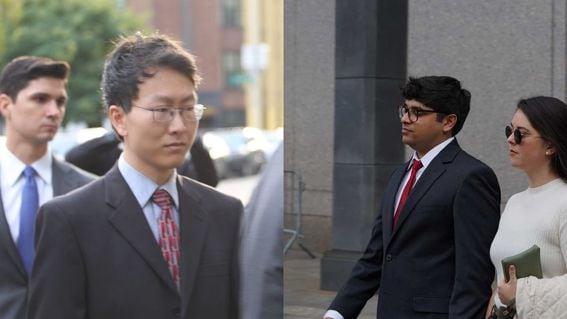
The duo pled guilty to criminal fraud charges and testified against their former boss, Sam Bankman-Fried, last year. Two former senior FTX executives who pleaded guilty to criminal charges and played a role in their boss Sam Bankman-Fried's conviction will be sentenced later this year. Former Director of Engineering Nishad Singh and former Chief Technology Officer Gary Wang will learn their fates on Oct. 30 and Nov. 20, respectively. Following their pleas shortly after FTX's massive, industry-shaking collapse in late 2022, they testified against Bankman-Fried at his trial, saying they were made aware of wrongdoing at the exchange shortly before it filed for bankruptcy. Another former FTX executive, Ryan Salame, was recently sentenced to 7.5 years in prison after pleading guilty to campaign finance charges. Salame did not testify against Bankman-Fried. Another executive, former Alameda Research CEO Caroline Ellison, pleaded guilty alongside Wang, but a sentencing date has not yet been scheduled. Ellison pleaded guilty to seven criminal charges – two counts of wire fraud and five conspiracy charges – and Wang pleaded guilty to four – one count of wire fraud and three conspiracy charges. In February 2023, Singh pleaded guilty to six criminal charges including fraud and conspiracy. During Bankman-Fried's October 2023 trial, he said he discovered that there was an $8 billion hole in FTX's finances around September 2022, but still signed off on transactions involving money that'd been taken from customers. "I learned that there was a hole that was enormous and that it had been spent and lost by Alameda, and I knew that it was $8 billion in size. So the last $8 billion of spend had necessarily come from customers. That spend included things like real estate investments, VC investments, campaign donations, and speculative events in trading," he said. Singh also testified that he programmed systems in 2019 to rout FTX customer deposits to Alameda bank accounts. In addition, he built out systems that gave Alameda "special privileges" that other FTX customers didn't have, including the "allow negative" feature that enabled Alameda to withdraw funds in excess of its balance and collateral. Wang pleaded guilty to conspiracy to commit wire fraud, conspiracy to commit securities fraud, conspiracy to commit commodities fraud and wire fraud. During Bankman-Fried's trial, Wang said he had helped develop parts of FTX's website. His most damaging admission may have been identifying a piece of code designed to reflect FTX's "public insurance fund," the public-facing figure meant to reassure investors that FTX had a reserve in case of mass withdrawals or other issues. This figure was essentially made up, and had nothing to do with what was actually in the insurance fund, Wang testified. He told prosecutors that he cooperated with the FBI "because it seemed like the right thing to do" and to stay out of prison. During his testimony last October, Singh similarly said he was "hoping for no jail time." https://www.coindesk.com/policy/2024/07/09/former-ftx-execs-nishad-singh-gary-wang-to-be-sentenced-this-fall/
2024-07-09 11:00
Shared sequencers and data availability (DA) are services that Rome could provide, as blockchain builders increasingly rely on "modular" networks to handle Ethereum's myriad components and functions. Rome, a crypto startup project aiming to use Solana as an auxiliary network to provide services to layer-2 blockchains built atop Ethereum, emerged from stealth and announced it has raised $9 million of funding from top-tier investors. The financing was provided by Hack VC, Polygon Ventures, HashKey, Portal Ventures, Bankless Ventures, Robot VC, LBank, Anagram, TRGC, Perridon Ventures, as well as notable angels including Anatoly Yakovenko, Nick White, Santiago Santos, Comfy Capital, Austin Federa, Jason Yanowitz, according to a press release shared first with CoinDesk. Rome, founded by Anil Kumar and Sattvik Kansal, aims to set up Solana as the network underpinning shared sequencers as well as data availability (DA), according to the release. A sequencer is the component of a layer-2 blockchain that batches up transactions and sends them to the base Ethereum blockchain to be settled, and some experts say these sequencers need to be decentralized to eliminate what can be single points of failure. A DA project is designed to store the reams of transactional data generated by Ethereum layer-2s, and to do so at a lower cost than what it takes to put the data onto the main Ethereum chain. "The main thing is, a shared sequencer needs to be its own chain, and it takes a lot of time, a lot of effort to do that, so we were looking for what chain we should use," Kumar said in an interview with CoinDesk. "If we look at Solana as a state machine, it is the best state chain, in comparison to Bitcoin, Cosmos, Ethereum." The project also aims to allow "atomic transactions" between Ethereum layer-2 networks, Kumar said. This is where multiple legs of a transaction are made on different blockchains. If any part of the transaction fails, none of it goes through, and the user is only out the cost of a Solana transaction, which is typically very low, he said. Rome joins the fray with other crypto projects that are working to develop shared sequencers or DA – part of the broader trend of "modular" blockchains where certain functions previously handled exclusively by the main Ethereum chain are unbundled and handled instead by alternative projects. Metis, an Ethereum layer-2 project, runs a decentralized sequencer, and Espresso Systems is building what it describes as an "L2 sequencing marketplace." Last month, NEAR Foundation, which supports the alternative layer-1 blockchain NEAR Protocol, spun out a project with $13 million in funding called Nuffle Labs that aims to provide DA. Another project, Avail is using its own network for DA, and disclosed in April that there are plans for it to be integrated as an option into five Ethereum layer-2s including Arbitrum, Optimism, Polygon, StarkWare and zkSync. Rome says a closed network will be open to developers starting this month, with plans for a test network at the end of 2024 and a main network launch in mid-2025. https://www.coindesk.com/tech/2024/07/09/blockchain-startup-rome-raises-9m-to-serve-ethereum-layer-2s-through-solana/

2024-07-09 10:34
Slippage, or price changes during execution of a trade, in the BCH market surged last week, signaling weak liquidity. BCH fell 20% last week, its biggest loss in three months, as Mt. Gox announced creditor repayments. Slippage surged across centralized exchanges, signaling poor liquidity as prices fell. Bitcoin cash (BCH), a cryptocurrency created by a hard fork of the Bitcoin blockchain in 2017, fell 20% last week, its biggest slide since April, according to data on TradingView and CoinDesk. The sell-off happened as defunct exchange Mt. Gox said it would begin paying back creditors the roughly $9 billion worth of tokens taken in a 2014 hack. That includes $73 million worth of BCH, equating to 20% of the token's daily trading volume. The resulting panic selling by BCH holders anticipating potential mass liquidations by the Mt. Gox creditors was amplified by poor liquidity, or order-book depth, across centralized exchanges, according to Paris-based Kaiko. In a market with poor liquidity, traders find it hard to execute large orders at stable prices, and a single large buy or sell order can disproportionately influence the asset's price, leading to a volatility explosion. "Looking at BCH price slippage for a simulated $100k sell order, it reached its highest level in over a month on most exchanges, indicating worsening liquidity due to insufficient order book depth for large market orders," Kaiko said in a newsletter published Monday. Slippage is the difference between the expected price of a trade and the actual price at which it is executed. A spike in slippage is representative of poor market liquidity and/or high volatility. According to Kaiko, on July 5, the day Mt. Gox announced reimbursements, slippage in BCH markets listed on Bybit rose to 2.8% from 0.2% and on Itbit to 3.5% from 0.3%. Poor liquidity has been a problem, particularly for alternative cryptocurrencies – that's everything other than BTC – since the FTX exchange and its sister concern, Alameda Research, went bankrupt in November 2022. Alameda was one of the biggest market makers, providing billions in liquidity in altcoins. The poor liquidity "coincided with strong selling pressure related to the Mt. Gox repayments event, with the highest slippage increase observed on Itbit and Bybit," Kaiko said. According to Jeff Dorman, chief investment officer at Arca, market makers have completely disappeared in a situation analogous to the 2009-10 credit markets. "The fallout of Alameda/FTX in 2022 is still rippling through the market as market makers have exited the business, liquidity has dried up, and there are no intermediaries to help smooth out trading. And since liquid funds are not getting inflows, and retail has moved back to memecoins and equities, if someone has to sell a token, it just gets hammered.," Dorman explained in a LinkedIn post. https://www.coindesk.com/markets/2024/07/09/bitcoin-cashs-mt-gox-led-sell-off-is-amplified-by-poor-liquidity/

2024-07-09 09:29
Miners’ profitability has been hit as the daily revenues fell from $78 million pre-halving to $26 million currently, one market analyst noted. Bitcoin mining difficulty dropped significantly by 7.8% on June 5, 2024, reaching levels not seen since before the halving event in April. This marks the largest difficulty drop since the collapse of crypto exchange FTX in 2022. One analyst said miners' daily revenues have plummeted from $78 million pre-halving to $26 million currently. This downward adjustment in mining difficulty can benefit smaller miners and potentially lead to profits for mining farms. One of the most important participants in the Bitcoin network may have a reason to rejoice in the coming weeks as power requirements to mine blocks fell 7.8% over the weekend. Data tracked by Coinwarz shows Bitcoin’s mining difficulty slumped from 83.6 terahash per second (TH/s) to 79.50 TH/s on June 5, reaching levels previously seen in March, a month before the halving event in April. A terahash measures how many hashes – or a digital guess for a calculation – per second a mining device, pool, or network can generate. Mining difficulty is adjusted every two weeks and can either surge upwards or pare back. This is because of Bitcoin’s inherent structure, which keeps miners in check by checking the speed of block generation, i.e., whether they are mining too fast or too slow. That’s one of the largest difficulty drop since crypto exchange FTX collapsed in 2022, which sent bitcoin prices spiraling down more than 10% in a week, analysts at crypto data provider CryptoQuant noted. "Network hashrate has experienced a 7.8% drawdown, which is comparable to post FTX collapse on December 2022," CryptoQuant head of research Julio Moreno, told CoinDesk in a Telegram message. “Miners’ profitability has been hit as the daily revenues fell from $78 million pre-halving to $26 million currently.” “Mining difficulty has been declining since early May following lower network hashrate as some miners turned off their equipment in response to lower profitability,” Moreno added. Downward adjustments mean a proportional decrease in the network’s hashing power — or the amount of available power on the Bitcoin network. A drop can favor smaller miners and spell profits for farms that were closed due to being unable to keep up with costs. Miners are entities that utilize extensive computing power to solve sophisticated encryptions and produce blocks on the Bitcoin blockchain. Each block rewards miners 6.25 BTC, which they typically sell to fund or expand operations. Miners were a major source of bitcoin selling pressure in June with over $1 billion worth of BTC sold over two weeks as prices ranged between the $65,000 and $70,000 levels. Selling pressure from defunct Mt. Gox and a German government entity has since roiled markets further – with BTC dropping briefly to as low as $53,500 last week. CoinDesk previously reported that Bitcoin hashrate and difficulty might fall during the North American summer months as miners curtail some of their operations. The lower competition may provide some reprieve to miners who are already facing a profit squeeze due to the halving event. Meanwhile, at current prices, only a few of the most popular mining machines remain profitable for users, creating a scenario that could mark a “local bottom” for BTC. https://www.coindesk.com/markets/2024/07/09/drop-in-bitcoin-mining-difficulty-comparable-to-ftx-collapse-cryptoquant-says/
2024-07-09 06:59
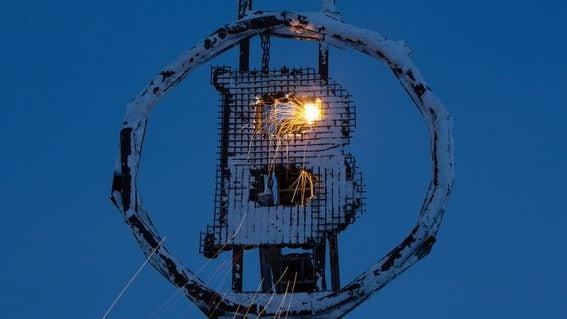
Macro factors and persistent "risk-on" in traditional markets suggest a promising outlook after BTC-specific supply overhangs run dry. Germany's BTC sales and Mt. Gox reimbursements weigh over BTC. Major economies' expansionary phase, slowing inflation, and peak tech optimism on Wall Street suggest a positive outlook. It may seem like turbulent times in the crypto market amid Germany's bitcoin (BTC) sales and fears about mass liquidations by defunct exchange Mt. Gox's creditors. However, looking past these supply overhangs reveals a promising outlook, buoyed by supportive macroeconomic factors and sustained risk-taking in traditional markets. BTC, the leading cryptocurrency by market value, has dropped over 17% to $57,200 in four weeks, causing a rout in meme coins, digital assets supposedly tied to artificial intelligence (AI), and other risky corners of the crypto market, CoinDesk data show. The big picture, however, remains bullish, meaning once supply overhangs from Germany and Mt. Gox creditors run dry, the market could stage an impressive recovery. G-7 in the expansion phase Investors commonly exhibit a greater willingness to deploy money in risky, growth-sensitive assets like bitcoin and stocks during periods of global economic expansion. The G-7, an informal group of advanced economies, is currently experiencing an expansionary phase of the business cycle amid elevated interest rates, according to the Organization for Economic Co-operation and Development's (OECD) composite leading indicator. The indicator, gauging the short-term economic outlook for a group of major nations, has crossed above 100 and is rising, indicating above-trend growth and acceleration, according to TS Lombard. CPI to boost Fed's confidence The U.S. Bureau of Labor Statistics' report on the June consumer price index (CPI), due Thursday, is expected to show that the cost of living rose 3.1% over the year, slowing from May's 3.3% annual increase, according to a survey of economists by The Wall Street Journal. The expected slowdown would imply continued progress toward the Fed's 2% target, strengthening the case for the central bank to begin reducing the benchmark borrowing costs this year. Renewed rate cuts could further catalyze demand for risk assets, including bitcoin. Since early this year, weaker-than-expected CPI prints have galvanized inflows into the spot bitcoin ETFs, boosting the cryptocurrency's market value. "We forecast headline CPI rose by 0.1% m/m owing in part to another drop in energy prices. This would result in the y/y rate falling a tenth to 3.2% and the NSA index printing at 314.770. Meanwhile, we expect core CPI increased by 0.2% m/m," economists at BofA said in a July 5 note to clients. "Should the CPI report print in line with our expectations, we would maintain our expectations for the Fed to start its cutting cycle in December," economists added, saying a 0.2% m/m core CPI would lift the odds of an early rate cut. Record tech optimism on Wall Street The path of least resistance for bitcoin is on the higher side as Wall Street remains entrenched in a wave of tech optimism, as evidenced by the new record highs in the ratio between its tech-heavy Nasdaq index (NDX) and the broader S&P 500 (SPX). Since early 2017, bitcoin has moved in lockstep with the NDX-to-SPX ratio, staging sharp rallies during periods of relative outperformance of technology stocks. Besides, social media's concerns about a potential meltdown in the U.S. stocks, adding to downside pressures in other risk assets, may be unfounded as the equity market does not appear to be in a bubble. "Whenever U.S. margin debt increases, we hear calls of a bubble forming in the U.S. equity markets. However, unlike in previous bubble episodes (including 2020-21), margin debt is growing less than the equity market capitalization. Rather than being a driver of equity performance, it is likely a consequence. This is unsurprising given the current high level of interest rates, which is not conducive to leverage increases, TS Lombard said in the July month's note to clients. "Another indication that the U.S. equity market is not in a bubble territory is investor positioning, which is close to neutral in both the S&P 500 and Nasdaq futures," Lombard added. Gold has also held steady in recent, a sign the macro picture is supportive of assets with alternative investment appeal like bitcoin. Lastly, past data show months after reward halving are bullish and characterized by double-digit price corrections. The Bitcoin blockchain underwent its fourth halving in April this year. https://www.coindesk.com/markets/2024/07/09/bullish-drivers-remain-in-play-despite-germanys-bitcoin-sales-and-mt-gox-reimbursements/