2024-07-01 06:32
The technology giant has dabbled in Web3 through partnerships and investments in startups. The terms of the deal were undisclosed. Last year, Bloomberg reported that Amber was planning to sell its Japanese unit. Sony is planning to restart the crypto exchange Whalefin, which it bought from crypto lender Amber Group last year. The deal was reported earlier by Wu Blockchain, and the details were later revealed by the Block. On Monday, Whalefin put out a notice that parent company Amber Japan was rebranding to S.BLOX. The notice added that the company was bought by Quetta Web, a unit of Sony, in August 2023. The financial terms of the deal were not disclosed. Amber Japan, formerly known as DeCurret, was taken over by crypto finance firm Amber Group in 2022. Sony plans to restart the crypto exchange soon with a new app, the firm said in a release on the PR Times. While Sony has dabbled in Web 3 through investments and partnerships, the latest deal will mark the PlayStation maker's proper foray into crypto. The company had teamed up with the Astar Network for a Web3 incubation program and filed a patent for transferring non-fungible tokens (NFTs) between different games and consoles. Sony and Amber were not immediately available for comment. Last year, Bloomberg reported that the Hong Kong-based Amber Group was planning to sell its Japan unit due to the strict regulations in the nation. https://www.coindesk.com/business/2024/07/01/sony-buys-ambers-japan-unit-to-enter-the-crypto-market-reports/

2024-06-29 02:37
A federal judge ruled the SEC had plausibly alleged Binance, Binance.US and Changpeng Zhao violated federal securities laws. A federal judge dismissed part of the U.S. Securities and Exchange Commission's (SEC) lawsuit against crypto exchange Binance and founder Changpeng Zhao, but allowed other charges, including charges against the holding company for Binance.US, to proceed. In a late Friday order, Judge Amy Berman Jackson, of the District Court for the District of Columbia, ruled that the SEC's charges against Binance for the initial coin offering and ongoing sales for BNB, BNB Vault, staking services, failure to register and fraud charges can proceed. She granted Binance and Zhao's motion to dismiss charges tied to secondary BNB sales and Simple Earn. The SEC sued Binance, Binance.US and Zhao last summer, alleging the exchanges were offering unregistered broker, trading and clearing services in the U.S. for unregistered digital asset securities. The regulator has brought similar charges against Coinbase, Kraken and – as of Friday morning – Consensys and MetaMask. The SEC had brought a plausible claim under most of the charges it filed, Judge Jackson wrote in her order Friday. "The Court notes that several of the district courts presented with SEC enforcement actions involving cryptocurrencies have taken pains to differentiate the alleged investment contracts from the tokens themselves," she wrote. "... The Court finds these observations to be clarifying and persuasive, as the differentiation is consistent with the Supreme Court’s earliest pronouncements concerning the meaning of the term 'investment contract' buried within the lengthy list that comprises the definition of a 'security.'" Zhao is currently serving a 4-month sentence tied to a sanctions violation charge brought by the Department of Justice and the Treasury Department. The SEC's case against him is separate from this criminal charge. The judge cited Judge Analisa Torres' 2023 ruling in the SEC's case against Ripple Labs in granting Binance's motion to dismiss the secondary BNB sales claim, saying the economic reality of the tokens' transactions mattered to the application of securities law. Like other judges, Judge Jackson rejected arguments that the SEC can't bring enforcement actions against crypto entities under the "major questions doctrine," a Supreme Court precedent that said Congress must direct federal agencies' authorities when it comes to significant industries. "The Court has not been given grounds to find that the industry, while important, has the broad reach that has motivated courts to apply the doctrine to other industries," the judge wrote Friday. The judge scheduled a hearing for July 9. https://www.coindesk.com/policy/2024/06/29/us-judge-lets-most-of-sec-case-against-binance-proceed-dismisses-secondary-sales-charge/

2024-06-28 20:15
The IRS has now set up its reporting system for crypto brokers, but it set aside related rules for DeFi and unhosted wallets as it continues to study 44,000 comments to the agency. The U.S. Department of the Treasury's Internal Revenue Service will require crypto brokers to file 1099 forms like their traditional investment-firm cousins, but decentralized finance (DeFi) operations and non-hosted wallet providers will have to wait for their own rule later in the year. The rule released Friday will go into effect for transactions starting in 2025 and will require brokers to keep tabs on cost basis for customers' tokens starting in 2026. The IRS won't call for reporting on most routine stablecoin sales and is putting a $600 annual threshold on NFT proceeds before they need to be reported. The U.S. Treasury Department issued its long-awaited tax regime for cryptocurrency transactions, setting up filing rules for digital assets brokers that will begin with transactions happening next year, but it put off some of its most contentious decisions about brokers that never take possession of customers' crypto. The new Internal Revenue Service (IRS) rules for crypto brokers released on Friday call for trading platforms, hosted wallet services and digital assets kiosks to submit disclosures on the movements and gains of customers' assets. Those assets will also include – in very limited circumstances – the stablecoins such as Tether's (USDT) and Circle Internet Financial's (USDC) and high-value non-fungible tokens (NFTs), though the IRS explicitly refuses to settle the longstanding battle over whether tokens should be considered securities or commodities. While this rule focuses on the most obvious platforms such as Coinbase Inc. (COIN) and Kraken, non-custodial crypto businesses – such as decentralized exchanges and unhosted wallet providers – are only getting a temporary reprieve from the new filing demands. The popular crypto platforms that handle a "substantial majority" of transactions can't wait any longer for rules, the agency contended, but the other issues need more study and they'll get their own rule "later this year." "The Treasury Department and the IRS do not agree that non-custodial industry participants should not be treated as brokers," according to the explanations included with the Friday rule. "However, the Treasury Department and the IRS would benefit from additional consideration of issues involving non-custodial industry participants." The final rule for the more commonly used brokers begins with transactions on Jan. 1, 2025, leaving crypto taxpayers with another filing year in which they're on their own to figure out their 2024 returns in the interim, though crypto firms have already been moving to adapt. The IRS gave an additional year until 2026 for brokers to start having to keep track of the "cost basis" for the assets – the amount each was originally purchased for. Real estate transactions paid for with cryptocurrencies after Jan. 1, 2026 will also need reporting, the regulation said. "Real estate reporting persons" will have to file the fair market value of the digital assets used in any such transaction. A 2021 infrastructure bill in Congress had set the stage for the Treasury's IRS to establish this formal approach to crypto, and since then the industry has been frustrated with a continuously delayed process. The eventual proposal drew 44,000 public comments. "Because of the bipartisan Infrastructure Investment and Jobs Act, investors in digital assets and the IRS will have better access to the documentation they need to easily file and review tax returns,” said Acting Assistant Secretary for Tax Policy Aviva Aron-Dine, in a statement. “By implementing the law’s reporting requirements, these final regulations will help taxpayers more easily pay taxes owed under current law, while reducing tax evasion by wealthy investors.” IRS Commissioner Danny Werfel said the final regulations took in the public comments. "These regulations are an important part of the larger effort on high-income individual tax compliance. We need to make sure digital assets are not used to hide taxable income, and these final regulations will improve detection of noncompliance in the high-risk space of digital assets," he said. "Our research and experience demonstrate that third-party reporting improves compliance. In addition, these regulations will provide taxpayers with much needed information, which will reduce burden and simplify the process of reporting their digital asset activity." Controversial rule The process of writing this controversial tax rule provoked widespread concern from the industry that the U.S. government would overreach by imposing impossible requirements on miners, online forums, software developers and other entities that aid investors but wouldn't traditionally be considered brokers and don't have the information about customers nor the disclosure infrastructure that would let them comply. The IRS said it recognizes that crypto brokers shouldn't include those "providing validation services without providing other functions or services, or persons that are solely engaged in the business of selling certain hardware, or licensing certain software, for which the sole function is to permit persons to control private keys which are used for accessing digital assets on a distributed ledger." The U.S. tax regulators estimated about 15 million people will be affected by the new rule, and about 5,000 firms will need to comply. The IRS said it tried to avoid some burdens on users of stablecoins, especially when used to buy other tokens and in payments. Basically, a normal crypto investor and user who doesn't earn more than $10,000 on stablecoins in a year is exempted from the reporting. Stablecoin sales – the most frequent in the crypto markets – will be tallied collectively in an "aggregated" report rather than as individual transactions, the agency said, though more sophisticated and high-volume stablecoin investors won't qualify. The agency said that these tokens "unambiguously fall within the statutory definition of digital assets as they are digital representations of the value of fiat currency that are recorded on cryptographically secured distributed ledgers," so they couldn't be exempted despite their aim to hew to a steady value. The IRS also said that totally ignoring those transactions "would eliminate a source of information about digital asset transactions that the IRS can use in order to ensure compliance with taxpayers’ reporting obligations." But the IRS added that if Congress passes one of its bills that would regulate stablecoin issuers, the tax rules may have to be revised. The tax agency also faced complex legal arguments in determining how to handle NFTs, according to its extensive notes on that topic, and the agency decided that only taxpayers who makes more than $600 in a year from their NFT sales need their aggregated proceeds reported to the government. The resulting filings will include the taxpayers' identifying information, the number of NFTs sold and what the profits were. "The IRS intends to monitor NFTs reported under this optional aggregate reporting method to determine whether this reporting hampers its tax enforcement efforts," according to the rule text. "If abuses are detected, the IRS will reconsider these special reporting rules for NFTs." As part of its efforts, the IRS published its definition for digital assets and the various activities covered by Friday's regulations. The IRS also defined a safe harbor for certain reporting requirements "on which taxpayers may rely to allocate unused basis of digital assets to digital assets held within each wallet or account of the taxpayer as of Jan. 1, 2025," it said. Earlier this year, the U.S. tax agency had released a proposed 1099-DA form to track crypto transactions – the form that millions of crypto investors would receive from their brokers. Read More: IRS Unveils Form Your Broker May Send Next Year to Report Your Crypto Moves The IRS clarified Friday that any attempt in this rule to assign buckets to crypto assets isn't meant to reinforce a side in the industry's ongoing battle with regulators – specifically the U.S. Securities and Exchange Commission (SEC) – to define whether tokens are securities or commodities. That debate is raging now in several cases before federal judges, and while the SEC is only willing to admit bitcoin (BTC) is definitely outside of the agency's reach, Commodity Futures Trading Commission Chair Rostin Behnam has said that Ethereum's ether (ETH) is also a commodity. Such a stance "is outside the scope of these final regulations," the IRS explained. Nikhilesh De contributed reporting. https://www.coindesk.com/policy/2024/06/28/us-treasury-issues-crypto-tax-regime-for-2025-delays-rules-for-non-custodians/
2024-06-28 19:09
In a near-vacuum of legal and regulatory clarity for crypto, district judges’ opinions on whether a given token is a security or not – which determines the level of regulation – can vary from court to court. Ripple’s California victory muddies the waters on whether or not XRP can be considered a security, according to attorneys active in the crypto space. District court judges are not required to agree with rulings made by their peers in other cases. Lawyers say the lack of legal certainty for XRP and other digital assets will likely continue until there is a ruling from a higher court or regulatory certainty granted by Congress. Ripple recently scored an unequivocal victory from a dollars-and-cents standpoint in a class action securities lawsuit, with the judge tossing out most of the case. But the judge also muddied the waters on a bigger issue, diverging from a high-profile decision last year by hinting that Ripple's XRP might be a security – thus deserving closer regulation. The conflicting rulings from two judges are a symptom of a bigger problem: the lack of legal and regulatory clarity for the crypto industry in the U.S. Until that clarity is granted, either by Congress or a ruling from a higher court, there will likely be more confusion for projects like Ripple and beyond. On June 20, Judge Phyllis Hamilton of the U.S. District Court for the Northern District of California tossed out most of a class action suit Ripple faced. She allowed only one individual state law claim against the crypto firm and its CEO Brad Garlinghouse to proceed to trial. The remaining claim – that, during a 2017 interview, Garlinghouse made “misleading statements” in connection with the sale of the XRP token, which the plaintiffs say were securities – is only worth $174, small potatoes for a firm estimated to be worth $11 billion. That outcome is objectively a huge win for Ripple, something celebrated by the company. The two certified classes in the suit included all investors who purchased XRP over a six-year period and either held it or sold it at a loss. In throwing out all the class action claims, the California judge overseeing the case shielded Ripple from potentially paying enormous damages. But there was the fly in the ointment: in her ruling, Hamilton suggested that XRP might, in fact, be a security – breaking with the opinion of District Judge Analisa Torres of New York’s Southern District, who ruled last year in a separate case brought by the U.S. Securities and Exchange Commission that XRP was only a security when sold to institutional investors. Torres’ ruling was widely celebrated as a step toward regulatory clarity for the crypto industry, as well as a potential precedent for other crypto securities cases. Hamilton’s ruling doesn’t undo Torres’ ruling – as Ripple executives have pointed out – but she’s the second district judge to more or less disagree with Torres’ assessment of XRP. In disagreeing with Torres, Hamilton potentially provided ammunition in the form of another alternative precedent for those who believe XRP – and other cryptocurrencies – are securities, crypto lawyers say. If this all sounds confusing, that’s because it is – even to crypto lawyers. A partial victory Hamilton’s decision to toss out the class action claims was based on statute of limitations grounds, and had nothing to do with whether or not Hamilton thinks XRP might be a security. “The court found that some of those claims were time-barred and others failed to raise a triable issue,” Joseph Castelluccio, a partner at international law firm Mayer Brown and co-leader of the firm’s fintech and blockchain practice groups, said in an email. “In other words, the Ripple-favorable rulings were not based on the view that XRP is not a security, which has been the central argument made by Ripple and two of its executives in the ongoing cases.” For the single claim she allowed to proceed to trial, Hamilton applied the Howey Test – a pillar of U.S. regulation based on a Supreme Court ruling, used to determine if an asset is a security or not – to XRP and found that it failed on the third prong, writing: "The [court] cannot find as a matter of law that Ripple’s conduct would not have led a reasonable investor to have an expectation of profit due to the efforts of others.” What this means, according to crypto lawyers, is that we still don’t definitively know whether XRP is a security or not. “In sum, the door is not shut on the question of whether XRP may have the status of a security, at least in relation to this ancillary cause of action,” explained Moish Peltz, a partner at New York law firm Falcon, Rappaport and Berkman. District court disagreements Ripple executives have said that Hamilton’s ruling doesn’t undo Torres’ 2023 ruling that XRP is not a security under federal law. “In the SEC’s case, Judge Torres’ ruled that under federal law XRP is not in and of itself a security,” Ripple Chief Legal Officer Stu Alderoty said in an emailed statement. “That ruling stands undisturbed and cannot now be challenged in Judge Hamilton’s courtroom.” It’s true that Hamilton’s ruling does not, in and of itself, challenge Torres’ ruling – though the SEC is likely to appeal its case against Ripple, and could potentially use Hamilton’s ruling as alternative precedent. Hamilton is not the first judge to break with Torres either. Another SDNY judge, Jed Rakoff, explicitly disagreed with Torres’ ruling in a separate case, SEC vs. Terraform Labs. But, maybe more importantly, the differing decisions underscore that district courts do not have to agree with each other. Though they are free to take guidance from other courts’ decisions, they are not obligated to, until a decision is made by a higher court, like an appellate court or the Supreme Court. A continued lack of clarity Lawyers interviewed for this story agreed that the district court split over whether or not XRP could be a security when sold on exchanges is a symptom of a much greater issue: the general lack of legal and regulatory clarity on whether a given crypto asset constitutes a security. “It’s actually very difficult to say what the law is in this area,” said Jason Gottlieb, partner at New York law firm Morrison Cohen, and chair of the firm’s digital assets practice. “In [Ripple’s] case, when we’re looking at various differing district court opinions, they have not just different results, but different ways of getting those results,” Gottlieb added. “I think there’s a lot of uncertainty when you try to take these district court cases and put them against each other.” Gottlieb added that since judges are coming to different conclusions, it's clear the law is not well-developed when it comes to cryptocurrencies. “We’re going to have a lot of district courts reaching differing conclusions and, even when they reach the same conclusions, they might get there for different reasons,” he said. “Until all these cases bubble up into the appellate courts and ultimately the Supreme Court, we’re not likely to have a lot of clarity on the law in this area.” But even if district court rulings aren’t necessarily binding, they can serve as a useful precedent in an industry like crypto, where the law is still being developed. After Hamilton issued her judgment, lawyers for the SEC filed the decision on the docket as a notice of supplemental authority – a way for lawyers to call attention to relevant legal issues in other cases – in their case against Binance, the world’s largest crypto exchange, in Washington, D.C. Longo didn’t put much stock in the SEC’s decision to file Hamilton’s decision in the Binance case, but said that it has become a frequent practice in the crypto industry for parties in litigation to put out notices of supplemental authority when there’s a potentially relevant decision in another case. “It’s part of the reality of the fact that so much of the law here has basically been forged in the context of our trial courts,” Longo said. “That’s where the case law has played out. There hasn't been a new regulation or statute. … I think it’s a symptom of the way the law has evolved here that, oftentimes, any trial court decision on the issue of Howey in the context of a crypto case frequently gets cited around to other courts with decisions on those kinds of issues in front of them.” Without regulatory clarity from Congress, the crypto industry has no choice but to search for answers in the legal system – a process that Longo and other lawyers noted was expensive and time-consuming. “The courts are attempting to resolve 'Neuromancer' issues at a 'Bleak House' pace,” Gottlieb joked. “The case is about an [initial coin offering, or ICO] that happened in 2014. So, 10 years on, we’re dealing with some of these cases,” Gottlieb added. “We’ve got issues going on today that we’re still going to be grappling with in district courts in five, 10 years down the road – and that’s not even counting when we’ll see results from the appellate courts or Supreme Court.” A slim shot at trial Lawyers agreed that the chances of Ripple’s California case actually making it to trial are slim-to-none, because the damages the plaintiff can win are very small. “Very frequently, these cases don’t go on to trial,” Gottlieb said, adding that in cases where the damages are small, both sides are incentivized to settle out of court. “Neither side is going to want to go to trial and spend a million dollars in attorneys fees over a few hundred dollars,” Gottlieb said. “If there’s an offer of compromise or an offer of settlement, that increases the pressure on the plaintiff to settle. … It’s hard to see this case going any further.” Lawyers for the plaintiff did not respond to CoinDesk’s request for comment. Correction (June 28, 2024, 22:00): Clarifies nuance in second paragraph about how Judge Phyllis Hamilton described XRP transactions in the lens of the case she's overseeing. https://www.coindesk.com/policy/2024/06/28/ripples-big-court-win-nonetheless-muddied-waters-on-whether-xrp-is-a-security-deserving-tougher-regulation/

2024-06-28 16:49
The SEC alleged that MetaMask acted as an unregistered securities broker and that its staking service violated securities laws. The U.S. SEC sued Consensys Friday, alleging MetaMask's Swaps and Staking products violated federal securities laws. The agency also targeted Ethereum staking services Lido and Rocket Pool, referring to their popular stETH and rETH tokens as unregistered securities. Consensys previously sued the SEC to try and block the regulator from filing Friday's suit. The U.S. Securities and Exchange Commission sued Ethereum software provider Consensys over its MetaMask service Friday, alleging the wallet tool was an unregistered broker that "engaged in the offer and sale of securities." The SEC suit also targeted Ethereum staking services Lido (LDO) and Rocket Pool (RPL), the third-party platforms MetaMask uses to power its staking feature. The enforcement action represents the SEC's latest attempt to categorize a broad swath of the crypto market as securities. After the surprise Ether ETF approval last month, the suit also confirmed lingering suspicion that the SEC might still attempt to place liquid staking derivatives of ETH, like Lido's stETH token, under its regulatory remit. The agency has already forced settlements tied to staking services, including with Kraken, while Coinbase ended its staking services in some states after making a deal with state securities regulators. MetaMask is the most-used wallet for Ethereum and a host of other blockchains. In addition to offering users the ability to store cryptocurrency bought on other platforms, MetaMask lets users buy and sell digital assets directly in-app via its "Swaps" service – one of the key features at issue in the SEC's lawsuit, which it filed Friday in the U.S. courthouse in the Eastern District of New York. Consensys collects a fee for providing this service and, according to the SEC's suit, facilitated more than 36 million crypto transactions over the past four years. The SEC said that "at least 5 million" of these transactions involved "crypto asset securities." The SEC said these securities include Polygon (MATIC), Mana (MANA), Chiliz (CHZ), the Sandbox (SAND) and Luna (LUNA), though it suggested other digital assets might also be securities. Many of the cryptocurrencies named in Friday's suit have already been named in previous SEC suits as unregistered securities, though at least some of the issuing entities have disputed this characterization. The SEC also scrutinized MetaMask's "staking" feature, which lets users deposit assets to secure the Ethereum blockchain in exchange for interest. That feature is powered by Lido and Rocket Pool – two of the biggest names in decentralized finance. MetaMask users can deposit into those third-party staking services and earn a tradeable receipt on their deposit, called a liquid staking token, in exchange. The SEC said MetaMask's Lido and Rocket Pool integrations amounted to "investment contracts," suggesting the agency views their popular stETH and rETH liquid staking tokens as unregistered securities. "Since at least January 2023, Consensys has offered and sold tens of thousands of unregistered securities on behalf of liquid staking program providers Lido and Rocket Pool, who create and issue liquid staking tokens (called stETH and rETH) in exchange for staked assets," the SEC said. "While staked tokens are generally locked up and cannot be traded or used while they are staked, liquid staking tokens, as the name implies, can be bought and sold freely." A representative for Consensys told CoinDesk on Friday that the company “fully expected the SEC to follow through on its threat to claim our MetaMask software interface must register as a securities broker." "The SEC has been pursuing an anti-crypto agenda led by ad hoc enforcement action," the representative said. "This is just the latest example of its regulatory overreach - a transparent attempt to redefine well-established legal standards and expand the SEC’s jurisdiction via lawsuit." Friday's lawsuit comes just weeks after Consensys announced the regulator had ended investigations into the company tied to Ethereum, citing two letters the SEC sent it. Those letters from June 18 did caution that the SEC might still bring enforcement actions tied to other issues. Neither letter mentioned MetaMask. Consensys, which is led by Ethereum co-founder Joe Lubin, previously sued the SEC in April looking for judicial relief against the SEC possibly calling MetaMask a broker or saying that its staking service violated federal securities laws. That lawsuit, filed in Texas, also sought a court order declaring ether (ETH) to be not a security and to end the SEC's investigation into Consensys. "We are confident in our position that the SEC has not been granted authority to regulate software interfaces like MetaMask," said the Consensys representative. "We will continue to vigorously pursue our case in Texas for ruling on these issues because it matters not only to our company but the future success of web3.” https://www.coindesk.com/policy/2024/06/28/sec-sues-consensys-over-metamask-staking-broker-allegations/

2024-06-28 16:45
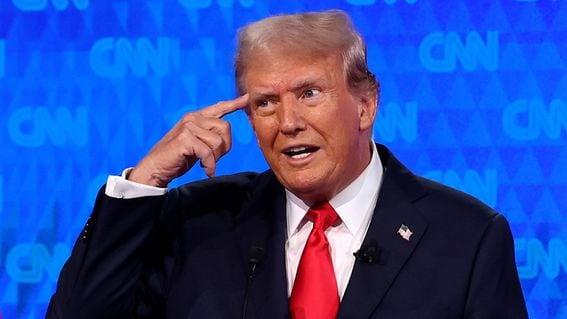
VanEck and 21Shares' applications seem doomed under the Biden administration. But they include a deadline that lapses when Trump would be in office, if he wins the presidency in November. Two asset managers, VanEck and 21Shares, filed to launch solana ETFs this week. They appear to be dead-on-arrival under Joe Biden, but a key deadline in the approval process would be next year, when Donald Trump, if he retakes the presidency, would be in office. Given Trump's recent embrace of crypto, that increases the odds solana ETFs will get approved. Asset manager VanEck wasted no time expanding its crypto exchange-traded fund journey, this week becoming the first firm to apply to create one tied to solana (SOL). Another firm, 21Shares, put in a request a day later. Given how long the approval process will take, their decisions look like a wager that newly crypto-friendly Donald Trump will win the U.S. presidency in November and take office in January. Although only bitcoin ETFs have been approved so far in the U.S. and funds – from VanEck and others – that seek to hold Ethereum's ether (ETH) aren't even fully approved yet, solana is a natural next step given it's one of the largest cryptocurrencies. But it hasn't cleared a prerequisite for the Biden administration's Securities and Exchange Commission: a well-established regulated derivatives market. Both bitcoin and ether have had that in the form of CME Group's cryptocurrency futures contracts. Now that Trump has warmed to digital assets and he's even accepting crypto donations for his campaign, that and any other potential objections may be moot. “I think VanEck’s filing is a sort of call option on the November election,” James Seyffart, ETF analyst at Bloomberg Intelligence, said during an interview conducted before 21Shares became the second solana applicant. “Under the current SEC administration – based on years of prior approval and denial orders for crypto ETFs – a solana ETF should be denied because there is no federally regulated futures market. But a new admin in the White House and a new SEC admin that’s more amenable to crypto policies could change that calculus.” An ether ETF is awaiting final SEC approval, which could happen any day now, according to reports. But New York-based asset manager VanEck made its next move. Timing plays a central role. VanEck submitted an S-1 filing for a potential SOL ETF on Thursday. That is needed when an entity is looking to offer a new security on the market. But the filing is meaningless if a second one, a 19b-4 form, isn’t submitted. While a decision on an S-1 filing isn’t subject to a certain timeline, the SEC is forced to respond to a 19b-4 within 240 days. If VanEck were to file a 19b-4 for its solana ETF today, that deadline would be Feb. 25, 2025, a month into a potential Trump administration. Current bets on Polymarket suggest that former Trump has a 67% chance of winning the presidential election in November against current President Joe Biden. The SEC under Biden has visibly been hard to convince to approve any crypto-related products; those that have been have taken years. But a Trump administration would almost certainly replace current SEC Chair Gary Gensler and shake up its priorities. “Given that CME-traded solana futures don’t currently exist, it seems the only viable path for spot solana ETF approval would be the implementation of a legitimate crypto regulatory framework that clearly defines which crypto assets are securities versus commodities – or for the SEC to agree with solana being designated as a non-security commodity," said Nate Geraci, president of the ETF Store, an investment advisory firm. "In either case, the agency would also need comfortability around surveillance sharing agreements with currently unregulated spot crypto exchanges. All of that appears highly unlikely to happen under the current administration, which makes the VanEck and 21Shares filings likely bets on a more crypto-friendly government,” he said. VanEck declined to comment on whether its filing for a SOL ETF was a bet on Trump or not. https://www.coindesk.com/news-analysis/2024/06/28/solana-etf-applications-look-like-bets-on-trump-retaking-white-house-making-us-friendlier-to-crypto/