2024-06-28 02:55
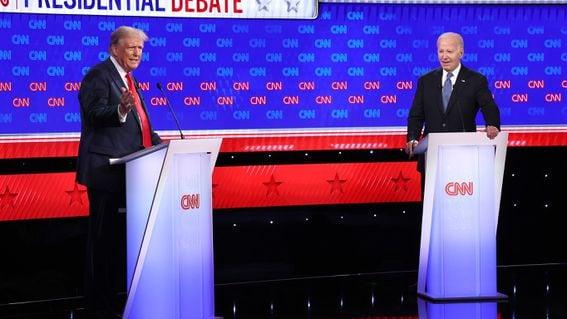
The crypto industry hoped for a question about regulatory or related issues, but the lengthy debate focused on other matters. Crypto did not come up during the first general debate in the 2024 U.S. presidential election, despite industry participants' hopes. This first debate between current President Joe Biden and former President Donald Trump – each their parties' presumptive nominee – was held Thursday in Atlanta, Georgia by CNN, hosted by CNN anchors Jake Tapper and Dana Bash. The 90-minute debate began with the economy but also touched on issues like abortion, immigration and foreign policy. The economic section was brief, and the debate barely approached technology policy, let alone the digital assets industry. Crypto has been a talking point for candidates and lawmakers through this election cycle, but emerged in a big way after Trump began discussing crypto issues on the campaign trail, promising to commute the sentence of Silk Road's Ross Ulbricht and making statements about regulation. For his part, Biden's campaign has not made any public statements about crypto, though his administration recently said he wants to work with Congress on legislation addressing crypto. Biden, who took office in January 2021, sounded raspy and was soft-spoken throughout the evening, reportedly due to a cold. Trump was louder and clearer, though fact-checkers dinged his assertions throughout the debate more than Biden's. For its part, the crypto industry is hoping for a Congress and administration that may pass legislation friendlier to digital asset businesses. To that end, participants are looking to repeat the massive spending on elections from 2022, with companies like Coinbase, Ripple and Andresseen Horowitz donating close to $50 million apiece to political action committees like Fairshake to support candidates. The industry has notched a number of wins in the primary season, with PAC support funding ads against Rep. Katie Porter (D-Calif.) who ran for a Senate seat and Rep. Jamaal Bowman (D-N.Y.) in a primary for his reelection. The first part of Thursday's debate focused on the economy, with the moderators asking about inflation, the cost of living and the national debt over the past few years. A prediction market on Polymarket gave Trump better odds of winning in November during the debate, with bets reaching as high as 68 cents, versus Biden at 29 cents. Each share pays out $1 if the prediction comes true, and zero if not, meaning the market thinks Trump has a 68% chance of winning. https://www.coindesk.com/policy/2024/06/28/crypto-unmentioned-at-first-2024-presidential-debate/
2024-06-27 13:41
The European Banking Authority told CoinDesk it intends to publish a final report on how it will monitor stablecoin issuers by the end of the month. The stablecoin rules from the European Union's Markets in Crypto Assets legislation will take effect on June 30. The rules ban stablecoins from having over 1 million daily transactions that pay for goods or services settled off- and on-chain. Tether, Circle and other big stablecoin issuers will soon be on a tight leash in the European Union. With new rules that take effect on June 30, not only will they require appropriate authorization to operate in the 27-nation trading bloc, they will also face the tough limits on transaction numbers and values set out in the Markets in Crypto Asset (MiCA) legislation. The regulations mean that some of the biggest stablecoin issuers including Tether, whose dollar-pegged USDT is the world's largest by market cap, and Circle, responsible for second-ranked USDC, may not be able to operate in the EU, said Robert Kopitsch, the secretary-general of Blockchain for Europe. "Non-EU, euro-denominated stablecoins – if they are over a certain threshold – then you need to stop issuing and using them, and that creates a problem because 99% of the stablecoins market is in USD," Kopitsch said on the sidelines of CoinDesk's Consensus 2024 conference in Austin, Texas last month. Caps MiCA is the EU's comprehensive package of rules for the crypto industry. It was voted into law last year and allows firms licensed by one member nation to operate throughout the bloc. According to the law's Article 23, companies must stop issuing an asset-referenced stablecoin that is used as a means of exchange for more than 1 million transactions or a value north of 200 million euros ($215 million) a day. The stablecoin rules take effect at the end of the month, and the other provisions are expected to come into force in December. The tough rules were created to prevent stablecoins like Facebook's now abandoned project Diem (formerly known as Libra) from replacing the euro, said Mark Foster, the EU policy lead at the Crypto Council for Innovation. The caps are there "to safeguard the monetary system," a European Banking Authority (EBA) spokesperson said. Blockchain for Europe and the Digital Euro Association – a think tank – tried to fight the measures in a 2022 letter arguing that they effectively banned large stablecoin issuers. A spokesperson for the EBA told CoinDesk that the provisions do not prevent companies from issuing stablecoins denominated in assets other than the euro. The key is whether they're used as a means of exchange, to pay for goods or services. If so, then the specific caps apply. Issuers can service Europeans without limitations when the tokens aren't a means of an exchange, Jón Egilsson, co-founder at Monerium said in a statement. That includes transactions between currency areas, peer-to-peer transactions and where a cryptocurrency is exchanged for an e-money token, he said. Though the EBA has yet to clearly define how it will measure these values, a consultation document suggests that transactions with both parties based outside of the EU might be excluded, but any transaction with at least one party in the EU may be counted. According to the consultation, a transaction includes both on-chain and off-chain transfers. Movements between addresses or accounts of the same person do not qualify as a transaction. A final report on how the EBA will measure transactions is likely by the end of the month, a spokesperson told CoinDesk. Companies that have had to suspend issuance will need to submit a plan showing they can keep to the limits before being reinstated. This could be tough: USDT's daily global trading volume is about $27 billion according to CoinGecko data. USDC's is $5 billion. Another barrier is obtaining the necessary certification. "When you're a stablecoin issuer at European level you need to have an e-money institution license or banking license, which is a very costly, long process," Kopitsch said. Circle and Tether are trying So Tether, Circle and other issuers have just three days to secure an e-money license to operate legally. Circle which conditionally registered as a Digital Asset Service Provider with the French Financial Markets Authority in April, aims to have an e-money license by the deadline, a spokesperson for the company said. "Circle is committed to full compliance with EU's MiCA regulations. We plan to onshore EURC to the EU and issue it from Circle France in a MiCA-compliant manner," the spokesperson said. "Additionally, we intend to issue USDC for our EU-based customers from the same entity in accordance with MiCA and subject to regulatory approval." EURC is the company's euro-backed stablecoin. Tether's equivalent is EURT. Earlier this week crypto exchange Bitstamp delisted the Tether token, citing MiCA. OKX delisted USDT in March, saying it wanted to focus on euro-denominated liquidity in the region. "Tether has engaged extensively with its exchange counterparties in Europe regarding the requirements, including those pertaining to the ongoing listing of USDT and other Tether tokens, and the interpretation of key regulatory provision," said Paolo Ardoino, Tether's CEO, in a statement. "While Tether is optimistic about MiCA's implementation, it remains crucial that stablecoin regulatory policies enacted are balanced, protect consumers, and nurture growth in our emerging industry." How the industry proceeds will depend on the European Commission and the incoming commissioners chosen by the newly elected European Parliament. "The question is what happens next because there's a growing understanding that there is a need for a solution," Kopitsch said regarding the stablecoin rules' restrictive nature. https://www.coindesk.com/policy/2024/06/27/eus-restrictive-stablecoin-rules-take-effect-soon-and-issuers-are-running-out-of-time/

2024-06-27 13:40
The Wikileaks founders' family quickly set up a site to allow bitcoin donations after a previous crowdfunding page accepted only credit cards and bank transfers. Julian Assange's wife Stella earlier this week made an "emergency appeal" to raise £520,000 to cover the cost of a private jet for Julian Assange to travel from the UK to Saipan and then to Australia. One donor alone sent just over 8 bitcoin worth roughly $500,000. The WikiLeaks co-founder reached a plea deal with the U.S. DOJ, freeing him after several years of imprisonment in the UK. WikiLeaks co-founder Julian Assange earlier this week received a donation of 8.07 bitcoin (BTC) from one entity, helping to cover the cost of a private jet that flew him out of the UK and ultimately to freedom in Australia after he reached a plea deal with the U.S. Department of Justice (DOJ). Initially, Assange's wife Stella made an "emergency appeal" to raise £520,000 to pay for the transport, setting up a crowdfunding page that allowed people to donate in fiat currency via credit cards or bank transfer. With that site notably not allowing crypto for donations, the family quickly moved to set up another page to accept bitcoin. Up to this point, the bitcoin address has received 34 donations totaling just over $500,000. The overwhelming majority, however, came from just that one 8.07 BTC donation. The original fiat site has also received about $500,000 in donations. "Julian’s travel to freedom comes at a massive cost: Julian will owe USD 520,000 which he is obligated to pay back to the Australian government for charter Flight VJ199," Stella Assange wrote on X. "He was not permitted to fly commercial airlines or routes to Saipan and onward to Australia. Any contribution big or small is much appreciated." The jet was organized by the Australian government after Assange reached a historic plea deal on Tuesday, where he pleaded guilty to espionage charges in exchange for his freedom. Bitcoin and Assange, of course, have a long history together, with Wikileaks more than 10 years ago surviving on bitcoin after the site was cut off from traditional banking rails. In a 2014 interview Assange said that WikiLeaks and bitcoin "kept each other alive." https://www.coindesk.com/business/2024/06/27/julian-assange-received-500k-bitcoin-donation-from-anonymous-bitcoin-whale/

2024-06-27 13:26
The filing is the first Solana ETF to be filed in the U.S. and follows six days after a similar product filing in Canada. SOL has jumped by almost 8% since the filing went live. The filing is the first solana ETF registration in the U.S. Asset manager VanEck filed to sell shares in a Solana (SOL) exchange-traded fund (ETF), the first such registration in the U.S., just six days after 3iQ filed for a similar product in Canada. The S-1 registration form lodged with the Securities and Exchange Commission (SEC), helped lift the SOL token's 24-hour gain to almost 8%. The CoinDesk 20 Index (CD20), a measure of the broader crypto market, has added 1.8%. VanEck has been known to be a first mover in this space. The asset manager was the first to file for a spot ether (ETH) ETF back in 2021, almost three years before the SEC began to engage with issuers that now include BlackRock, Fidelity, Ark Invest and others. An additional filing was lodged in September last year. "We believe the native token, SOL, functions similarly to other digital commodities such as bitcoin and ETH," VanEck's head of digital assets research, Matthew Sigel, wrote in a post on X arguing that SOL is a commodity, not a security. "It is utilized to pay for transaction fees and computational services on the blockchain," he wrote. Sigel added that VanEck filed for a solana ETF because the blockchain acts as a competitor to Ethereum with a "unique combination of scalability, speed, and low costs." The SEC approved the first spot bitcoin (BTC) ETF in January, while an ether ETF appears to be on the near horizon. Analysts are predicting that ETH ETFs would lure $5 billion of net inflows in the first five months. Several experts have said that if an ETH ETF is approved, the next coin to be packaged into such a fund would be SOL because its similarities to the second-largest cryptocurrency classify it as a commodity. They suggested, however, that serious conversations around such a product wouldn't start until 2025. Standard Chartered Bank analyst Geoffrey Kendric also considered Ripple's XRP to be a possible option. "[My] early thoughts are that this only has a shot to launch sometime in 2025 if we have a new admin in the White House and SEC," Bloomberg Intelligence ETF analyst James Seyffart wrote in a post on X. "Even then [it's] not guaranteed." https://www.coindesk.com/business/2024/06/27/vaneck-files-for-solana-etf-sol-rises-6/
2024-06-27 13:00
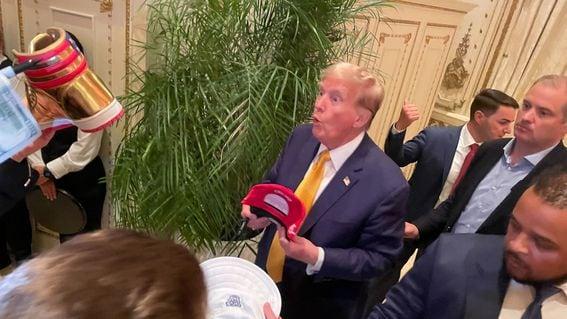
Market maker GSR sees bigger upside for SOL than bitcoin saw when it got U.S. ETFs. Under the Biden administration, Solana (SOL) appears nowhere close to getting its own ETF in the U.S. But, according to market-making firm GSR, if Donald Trump retakes the White House, it might be closer than many observers think and price-wise have far more upside than bitcoin (BTC) did when its spot ETF debuted. The U.S. presidential election could provide a breakthrough for additional crypto ETFs like SOL, per the research note shared with CoinDesk. If Trump becomes president again, he could shake up the established playbook for launching crypto ETFs, which usually takes years and starts with the introduction of federally regulated futures contracts – something solana lacks. "It may even be probable" that his theoretical administration implements permissive digital asset regulations that allow for the launch of "myriad spot digital asset ETFs," the note said. If that came to pass, SOL, one of the biggest crypto assets behind BTC and Ethereum's ether (ETH) (which already have U.S. ETFs), could be the first to benefit. "Solana is poised for a spot ETF if and when additional spot digital asset ETFs are allowed in the US, and the impact on price may just be the largest yet," the market maker's note said. Solana is one of only a handful of crypto assets with strong market demand whose network also has a high degree of decentralization, according to GSR's in-house calculations. The market maker said those attributes are expected to guide prospective ETF issuers' willingness to pursue a listing. Bitcoin's price more than doubled in the months preceding and following its spot ETF launch, GSR said. If SOL sees just 5% of the inflows that BTC did, its price could more than triple. GSR considered that inflow rate a "base case" because Solana investment products saw 5% of the inflows of bitcoin between 2021 and the end of 2023, before crypto ETF fever took hold. "Blue sky" inflow rates of 14% could see Solana's price shoot up nearly ninefold, per the GSR note. The figures are only a fraction of bitcoin's, but given Solana's smaller size have far greater potential for price action. Political uncertainty There's no ETF price action for solana without a solana ETF. And the asset hasn't checked the all-important box of having traded for years in a federally regulated futures market, as bitcoin and ether (widely expected to soon have its own ETF) did. That means it's years away from launch under the current playbook. "All you really need is for Donald Trump to become president and then you're subject to whatever he wants to do," said GSR Senior Strategist Brian Rudick, who wrote the memo. If Trump both wins the election and follows through on his campaign trail crypto promises he could bring about the changes necessary for SOL to have a short-term chance at becoming an ETF. But that's a big if. And the market hasn't exactly signaled an embrace of that "if," if one niche metric for tracking the likelihood of various crypto ETF launches, the discrepancy in pricing for Grayscale's crypto trust products, is referenced. "If there were greater odds of a SOL ETF, what you would see is the price of Grayscale Solana Trust (GSOL) collapse," he said. GSOL was trading at around a 750% premium to net asset value at press time, a staggering discrepancy that Rudick also said would collapse if Grayscale converted it to an ETF, as happened to its Grayscale Bitcoin Trust (GBTC) when that became an ETF. Rudick cautioned the comparison isn't ironclad because GSOL doesn't have much liquidity, meaning its holders don't have too many willing buyers to dump their overpriced trust shares on. https://www.coindesk.com/business/2024/06/27/solana-etfs-and-huge-sol-gains-a-real-possibility-under-trump-major-crypto-trader-says/
2024-06-27 09:48
Ether is more price sensitive to ETF inflows than bitcoin due to the large amount of ETH total supply that is locked up, the report said. Galaxy said spot ether ETFs could see $5 billion of net inflows in the first five months. Demand for the new products is expected to come from independent investment advisors and broker/dealer platforms. The lack of staking rewards could limit demand for these spot ETFs, the report said. Ether (ETH) spot exchange-traded funds (ETFs), once approved for trading, could see $1 billion of net inflows a month, Galaxy (GLXY) Research said in a report on Wednesday. “We expect the net inflows into ETH ETFs to be 20-50% of the net inflows into BTC ETFs over the first five months, with 30% as our target, implying $1 billion/month of net inflows,” analyst Charles Yu wrote. Ether ETFs are close to becoming available for trading in the U.S. after the Securities and Exchange Commission (SEC) approved filings from applicants last month. The regulator must also approve their S-1 filings before the products are cleared to trade. Spot bitcoin ETFs launched in the U.S. in January. Similar to the bitcoin (BTC) spot ETFs, new demand for the ether versions is expected to come from independent investment advisors or broker/dealer platforms, the report said. Ether will be more price sensitive to ETF inflows than bitcoin due to the amount of total supply of ETH that is locked in staking, bridges, and smart contracts, and the lower amount held on centralized exchanges, Galaxy said. Galaxy cautioned that spot ether ETF demand may be limited due to the lack of staking rewards. Outflows from the Grayscale Ethereum Trust (ETHE) will also likely be a drag on ether ETF inflows, and Galaxy estimates that these negative flows could be about 319,000 ETH per month or $1.1 billion. Still, due to the smaller percentage of ether held in these trusts the “ETHE ETF conversion will be a relatively smaller drag on ETH price relative than the Grayscale Bitcoin Trust (GBTC) conversion.” Unlike GBTC, ETHE is not faced with forced selling due to bankruptcy from the likes of 3AC and Genesis, which supports the notion that ether will see less selling pressure related to Grayscale trusts than bitcoin, the report added. The SEC could approve spot ether ETFs as soon as July 4, according to a Reuters report on Thursday. https://www.coindesk.com/markets/2024/06/27/ether-spot-etfs-could-see-5b-of-net-inflows-in-the-first-five-months-galaxy/