2024-06-26 19:59
As part of the settlement agreement, Abra pledged to stop accepting crypto deposits from U.S.-based Abra Trade customers. Abra and its founder and CEO William "Bill" Barhydt have settled with 25 state financial regulators for operating without money transmitting licenses. Abra will return up to $82.1 million to U.S.-based customers in the 25 states. Crypto investment platform Abra and its founder and CEO William "Bill" Barhydt have settled with 25 state financial regulators for operating its mobile application without the proper licenses, according to a Wednesday announcement from the Conference of State Bank Supervisors (CSBS). Under the terms of the settlement agreement, Abra will return up to $82.1 million in crypto to U.S. customers in the settling states. Abra has also agreed to stop accepting crypto allocations from all U.S. Abra Trade customers, as well as to stop "making, buying, selling or trading cryptocurrencies" to Abra Trade customers in the U.S. Barhydt has also agreed not to participate "in any capacity" in the business of any money transmitting or money services business in any of the 25 settling states, other than as a passive investor, for five years. "State financial regulators take their role to protect consumers and prevent unlicensed activity seriously," said CSBS Chair and Washington State Department of Financial Institutions Director Charlie Clark in the press release. "Companies that do not operate within the bounds of state laws will be held accountable." Washington, Arkansas and Connecticut are some of the states involved in the settlement. Abra’s settlement with state financial regulators for unlicensed money transmitting activity comes in addition to the firm’s settlements with certain state securities regulators, including New Mexico and Texas, for selling unregistered securities. "Abra is pleased to enter into a Term Sheet negotiated with a working group from the Money Transmitters Regulators Association regarding the Abra App that Abra previously offered in the U.S.," said an Abra spokesperson in an emailed statement. "The corresponding consent orders will settle all state matters related to the Abra App in the U.S. for the period from March 2021 to June 2023," the spokesperson said. "Since June 2023, 99% of assets held by U.S. retail customers of Abra using the Abra App have already been returned – over $250 million. Abra continues to operate in the United States through Abra Capital Management, an SEC-registered investment advisor, that allows clients to invest in crypto, earn yield, stake and borrow against their crypto holdings." In a tweet, Abra CEO Bill Barhydt said that "Abra Private and Abra Prime are fully operational in the USA and International." "These are both fantastic services with big announcements coming in the next few days," he said. "If you are looking to invest in Bitcoin or crypto abra.com can definitely help you." In its Wednesday announcement, CSBS said that state money services business (MSB) regulators were tipped off about Abra by state securities regulators last summer, and that "state financial regulators collaborated with the securities regulators and worked on a parallel path to settlement." Additional states are allowed to join in the multi-state settlement. https://www.coindesk.com/policy/2024/06/26/abra-settles-with-25-states-for-operating-without-licenses-will-return-up-to-82m-to-us-customers/
2024-06-26 18:50
In this week's issue of CoinDesk's weekly blockchain tech newsletter, we're covering $100 million of fundraisings, project updates from Solana and other teams, complaints over LayerZero's "pay-to-claim" airdrop and nervousness surrounding the Mt. Gox bitcoin distribution. Airdrops are supposed to be free money; that's why there were a lot of complaints about LayerZero's "pay-to-claim" distribution last week of its ZRO tokens. A 10-cent fee per token might not seem like too much to complain about, but it was. ALSO: The Winklevoss twins donated (too much) to Donald Trump's presidential campaign. Top picks from the past week's Protocol Village column: BNB, Algorand, Solana Foundation, Matter Labs, ZKsync, Aleph Zero, Polkadot, Parity Technologies. More than $100 million of blockchain project fundraisings: Ora, Allora Labs, Conduit, ZKX, Enso, Farworld Labs. Blast, a layer-2 blockchain atop Ethereum, went forward with its long-anticipated airdrop of BLAST tokens. Network news FREE, FOR A FEE: Token airdrops are, after all, free money – one reason why project teams might be less sympathetic to users who complain that they didn't get what they thought they were owed. Now, the blockchain interoperability project LayerZero has introduced a new twist to the process – what some observers are calling "pay to claim." When LayerZero Foundation came out last week with the ZRO airdrop, it forced users to fork over a "proof-of-donation" before they could claim the new tokens. As detailed by CoinDesk's Shaurya Malwa, users had to make a donation of 10 cents in USDC to Protocol Guild – a collective funding mechanism for Ethereum's layer-1 research and development maintainers – for each ZRO token they hoped to claim. In a video address posted on X, LayerZero Labs co-founder Bryan Pellegrino said that "users need to do something in order to get something," adding that the amount was "extremely small" and that "the easy path" would have been to "optimize for the least amount of criticism." LayerZero Foundation said it would match all donations up to $10 million. The ostensible rationale? “By donating to Protocol Guild, eligible recipients show long-term alignment with the LayerZero protocol and a commitment to the future of crypto,” LayerZero said in an X post. It goes without saying that endorsement of the move was not universal: "If I'm at McDonald's and they force me to donate to get my cheeseburger, do I really care about the kids or am I just hungry?" one frustrated poster wrote on X. MOUNT TOP? Mt. Gox, the once-dominant bitcoin exchange that's been tied up in bankruptcy court for years following a devastating 2014 hack, announced it would start distributing assets to clients, sending the BTC price tumbling. The leading cryptocurrency took a bigger hit than smaller tokens, pushing its share of the overall crypto market down by 1.8 percentage point to 54%. The fear is that, as the Mt. Gox investors and creditors get the bitcoin, some of them might rush to cash out, unleashing a wave of selling that would, at least in the short term, push the price lower. Technical market indicators suggest a price drop to $50,000 could be in the offing, though as of press time bitcoin appeared to stabilize just below $62,000. Some traders argued that the risk of mass selling might be overblown. The Winklevoss Twins, founders of the Gemini crypto exchange, wrote on X that they each gave $1 million to Donald Trump's presidential campaign – but later they had to be refunded because the donations were over the legal limit. Mexican cartels have been using the cryptocurrencies bitcoin, ether, monero and tether to buy the raw materials needed to make the drug fentanyl, according to the U.S. Treasury Department's Financial Crimes Enforcement Network (FinCEN). The German government, which holds over 45,000 BTC, including bitcoins seized from a privacy website, transferred 750 BTC valued at over $46 million, with 250 BTC sent to the crypto exchanges Bitstamp and Kraken, according to blockchain sleuth Lookonchain. The transfers added to speculation that the country might be preparing to sell some of its bitcoin holdings, adding to bearish pressures in crypto markets. Protocol Village Top picks of the past week from our Protocol Village column, highlighting key blockchain tech upgrades and news. Schematic illustrating the new allocation for priority block-producing rights under BEP-341 (BNB Forum) 1. BNB Chain announced a new BEP-341 proposal, "Governance Enabled Continuous Block Production." According to the team: "This proposed enhancement aims to significantly improve the transaction processing capacity of BSC by enabling validators to produce consecutive blocks. To address any risks, BEP-341 introduces adjustable governance parameters aimed at balancing performance improvements with critical security measures." 2. Algorand Foundation announced at its annual Decipher conference in Barcelona that it has created a new "implementation for decentralized authentication and communication called LiquidAuth." According to the team: "LiquidAuth, a decentralized, free-to-use, open-source, and chain-agnostic authentication tool provides greater security and privacy to users than centralized solutions like WalletConnect." 3. The Solana Foundation announced the launch of Solana Actions and blockchain links ("Blinks") to its suite of developer tools. According to the team: "These tools offer a way to integrate blockchain transactions into any platform, creating a seamless and intuitive Web3 experience for users. Multiple Solana ecosystem projects will be using Solana Actions and Blinks at launch, including Cubik, Sanctum, Tensor, Realms, Access, Jupiter, Helium, Truffle, Phantom and Backpack." 4. Matter Labs, the main development firm behind the layer-2 network ZKsync, introduced a new roadmap called ZKsync 3.0, aimed at making the ecosystem more interconnected – including a new "Elastic Chain" that somewhat resembles rival Polygon's AggLayer, released earlier this year. At the core of ZKsync "3.0" is the v24 upgrade, released June 7, turning “ZKsync from a single ZK chain into an Elastic Chain,” the Matter Labs team wrote in a blog post shared with CoinDesk. 5. Aleph Zero, a privacy-enhanced public blockchain operating on a Substrate stack developed by Polkadot developer Parity Technologies, introduced zkOS, an EVM-compatible privacy layer that generates zero-knowledge proofs in under a second on consumer devices, according to the team: "This allows for private transactions and dApp interactions without revealing underlying data. ZkOS uses Halo2 with KZG commitments for faster proof generation and provides a zkToolkit to simplify integration for developers. Based on benchmarks, zkOS can execute proofs in 600-800ms on MacBooks." Money Center Fundraisings Ora co-founder Kartin Wong (Ora) Ora, a blockchain project to incorporate AI into decentralized applications (dapps), said it raised $20 million in funding from investors including Polychain, HF0 and Hashkey Capital. The fresh funds will allow the project "to continue developing its technology and infrastructure for tokenizing AI models and bringing decentralized AI to the Ethereum ecosystem," according to a press release. Allora Labs, contributors to the Allora Network – described as a "decentralized, self-improving machine intelligence network that powers applications with an evolving system of machine learning models" – closed a strategic funding round, bringing their total company funding to $35 million. Investors included Polychain, Framework Ventures, CoinFund, Blockchain Capital, Mechanism Capital and Delphi Digital." Conduit, a crypto-native platform that enables developers to launch their blockchain applications with one-click infrastructure (including a layer-2 network atop Ethereum in under 15 minutes), announced its $35 million Series A, led by Paradigm and Haun Ventures, with additional investments from Robot Ventures, Credibly Neutral, Coinbase Ventures and Bankless Ventures. ZKX, describing itself as "the first social perp trading DEX on Starknet and Ethereum," has raised $6.3 million in a seed round featuring key investors, such as Flowdesk, GCR and DeWhales, according to the team. Enso, an intent engine for chain abstraction, has closed a $4.2 million funding round with Ideo Ventures, Hypersphere and more than 60 angel investors, according to the team – to support the launch of a layer-1 Cosmos-based blockchain this year. Farworld Labs, the Farcaster-native gaming company, has closed its $1.75 million pre-seed funding round, co-led by Lemniscap and Variant. Deals and grants Colosseum, the recently launched startup accelerator that organizes hackathons for the Solana ecosystem, raised $60 million for a fund that will invest in early-stage projects, the company announced Tuesday. The fund, which was oversubscribed, will focus on pre-seed investments in selected startups from the winners of Solana Hackathons. Crypto exchange Bitget announced a $20 million TON Ecosystem Fund in alliance with Singapore-based investment firm Foresight Ventures, "aiming to support early-stage projects building on The Open Network (TON)," according to the team. Hut 8 Receives $150M Investment as Thirst for Energy Brings AI Firms to Bitcoin Miners Billionaire Tech CEO Michael Dell Signals Bitcoin Interest Via Michael Saylor Retweet Japan’s Metaplanet Wants to Buy Another $6M Bitcoin Data and Tokens Blast Token Debuts at $3B Value as 17% of Supply Airdropped to Early Adopters Ether Spot ETFs to Attract $15B of Net Inflows in First 18 Months: Bitwise Tether to Stop Minting Stablecoin USDT on Algorand and EOS Cardano Unfazed by Failed DDoS Attack Targeting Staked ADA Don't Tell Anyone, but Private Blockchains Handle Over $1.5T of Securities Financing a Month NEAR Sees TVL Growth, Concentrated in Lending Platform Burrow NEAR Protocol transaction breakdown (Flipside) NEAR Protocol, a layer-1 blockchain, has seen its total value locked (TVL) – a crucial measure of user deposits – triple during the first half of 2024, to about $325 million, according to a new report by Flipside. "Recent surges in transaction volume and new user growth have further cemented NEAR’s position as a strong contender to the EVM-centric narrative that continues to dominate most DeFi discussions," the report reads. EVM stands for "Ethereum Virtual Machine," which is essentially the blockchain operating system that Ethereum-based and Ethereum-compatible smart contracts rely on. But a closer look shows that just three applications on NEAR account for some 72% of the TVL, according to Flipside – Burrow, a non-custodial lending and borrowing platform; Meta Pool, a multichain liquid staking platform; and LiNEAR, a protocol that enables users to create and trade synthetic assets. "To maintain and expand its current growth trajectory, NEAR will need to attract and foster a more diverse on-chain ecosystem and make more tangible steps towards achieving a more multichain future," according to Flipside. "This includes supporting a wider array of apps and services beyond its current flagships and successfully driving more cross-chain bridging activity." Calendar July 8-11: EthCC, Brussels. July 11: TezDev 2024, Brussels. July 25-27: Bitcoin 2024, Nashville. Aug. 19-21: Web3 Summit, Berlin. Sept. 19-21: Solana Breakpoint, Singapore. Sept. 1-7: Korea Blockchain Week, Seoul. Sept. 12-13: Global Blockchain Congress, Southeast Asia Edition, Singapore Sept. 30-Oct. 2: Messari Mainnet, New York. Oct. 9-11: Permissionless, Salt Lake City. Oct. 21-22: Cosmoverse, Dubai. Oct. 23-24: Cardano Summit, Dubai. Oct. 30-31: Chainlink SmartCon, Hong Kong. Nov 12-14: Devcon 7, Bangkok. Nov. 20-21: North American Blockchain Summit, Dallas. Feb. 19-20, 2025: ConsensusHK, Hong Kong. May 14-16: Consensus, Toronto. https://www.coindesk.com/tech/2024/06/26/the-protocol-blasts-3b-airdrop-and-bitcoins-mt-gox-moment/

2024-06-26 17:40
About 4k bitcoin had been seized from narcotics trafficker Banmeet Singh at his January 2024 trial. Bitcoin (BTC) fell back towards $60,000 on Wednesday, after a wallet tagged to the U.S. Government moved about $240 million worth of seized BTC to a Coinbase Prime address, igniting concerns among traders that the digital assets will likely to be sold. Some 3,940 bitcoin originally seized from a Silk Road vendor was moved by the the wallet, according to an Arkham Intelligence social media post. "This BTC was originally seized from narcotics trafficker Banmeet Singh, and forfeited at trial in January 2024," the post said. The last movement by the government— which in late 2022 seized roughly 50,000 bitcoin related to the Silk Road website—was $2 billion worth of bitcoin on April 2, which at the time also put pressure on digital markets. The last confirmed sale by the government was in March 2023, when it unloaded 9,861 coins for $216 million. Attempting a modest bounce from its Mt. Gox-related tumble earlier this week, bitcoin slipped back below $61,000 as the news hit. It's since edged back to $61,100 down 1% over the past 24 hours, with the broader CoinDesk 20 Index lower by about the same amount. Ether {{EHT}} also slipped on the news, falling 1.6% on the day. https://www.coindesk.com/markets/2024/06/26/bitcoin-falls-after-us-sends-240m-worth-of-silk-road-related-btc-to-coinbase/

2024-06-26 17:19
Coinbase, Ripple and a16z donated unprecedented money to influence the outcomes of congressional races, but nobody wants to say who's in charge, how it works or even to discuss digital assets in campaign ads. The crypto industry has been deploying a $169 million fund that's so far supported more than 20 congressional primary wins in the 2024 elections – including helping knock off an incumbent congressman in New York this week. The companies behind the Fairshake PAC and its affiliates have declined to answer questions about its origins or their ongoing relationship with the organization. The crypto industry is buying millions of dollars in ads that generally don't mention cryptocurrency. In politics, money talks, but the donors and organizers behind crypto's massive U.S. campaign fund don't. The digital assets industry has amassed a juggernaut of campaign finance, a $169 million fund that's capable of steering many contests this year and could decide the makeup of next year's Congress. It's already scored more than 20 victories, including high-profile elections in California and, just this week, New York. Crypto's political operation has been using tactics it tested successfully in the congressional races two years ago, but this time, there's a lot more money – enough to rival the top politically active industries and even the major parties' own war chests. And those in charge of how it's spent don't want to discuss how they got here. Representatives of the Fairshake political action committee that wields the bulk of the money have declined to answer questions about the PAC's management, coordination and decision-making, and its main backers – including Coinbase Inc., Ripple and Andreessen Horowitz (a16z) – are similarly reticent, despite repeated attempts by CoinDesk over a months-long period to ask who is in charge and how choices are made with funds pooled by industry leaders. CoinDesk analyzed the federal campaign-donor disclosures of more than two dozen prominent business leaders and leading companies to paint a picture of an operation that's rapidly (and cooperatively) amplifying its approach to political influence. The vast bulk of money is shepherded through a set of coordinated PACs under the umbrella of Fairshake. That PAC is affiliated with a matched set of underling committees: Protect Progress, for supporting Democrats, and Defend American Jobs, the Republican outlet. The industry has also used a dark-money group, the Cedar Innovation Foundation, which in one initiative pushed the crypto cause in the pivotal-but-delicate battleground of Ohio. The PACs have flooded targeted primary elections with influxes of money that in some cases vastly outpaced the organic fundraising by the candidates, but so-called super PACs like Fairshake don't give directly to campaigns. That would be illegal. Instead, they buy ads for or against candidates, which they can do at an unlimited level. While one primary candidate in a race may be relying entirely on rounding up individual donations, which are capped at $3,300 per election, her opponent may get the boon of this super PAC that splashes out millions. Crypto benefactors offer an explanation for the massive campaign spending: Tens of millions of U.S. voters who want the government to embrace and write tailored rules for digital assets haven't been heard, they say. "It became obvious to us that they had almost no voice in the political process and that there was this huge disconnect between policymakers and this gigantic cross-section of the American public," said Faryar Shirzad, chief policy officer at Coinbase, in an interview with CoinDesk. "We're trying to de-politicize crypto," said Faryar, who migrated to the industry from Wall Street titan Goldman Sachs Group Inc. "Our broader policy and political efforts are designed to allow us to have discussion on the merits." However, the ads the PACs are paying for typically don't even mention – let alone advocate for – crypto. When contacted by CoinDesk, Coinbase invited further questions about its political involvement before declining to get into the nuts and bolts of how decisions are being made with the nearly $50 million the company donated. Ripple and a16z Crypto were asked similar questions that sought to understand how the PACs were set up, who is in charge of them and how the wishes of donors have been shared with those managing the giving, and they declined to answer. Public company Coinbase did disclose in a filing to the U.S. Securities and Exchange Commission that "in December 2023, we together with a number of other crypto and blockchain market participants supported the launch of the Fairshake Political Action Committee to support political candidates in the 2024 U.S. presidential election who support crypto and blockchain innovation and responsible regulation." However, a Fairshake spokesman told CoinDesk the PACs aren't planning to weigh in on presidential candidates, despite recent news from some of the individual leaders who have loudly thrown in with former President Donald Trump. While the Coinbase statement suggests coordination among donors, it's unclear how the companies – sometimes rivals – came together, though most of the companies or businesses they've invested in have faced enforcement disputes with federal regulators. Their cooperation is seemingly continuing, with a recent follow-up round of matching contributions from the top three companies for $25 million each. Stopping new Warrens One of the emerging stars in U.S. progressive politics, Rep. Katie Porter (D-Calif.), was setting a course to become another Sen. Elizabeth Warren (D-Mass.), the former presidential candidate and outsized presence in Democratic politics. In Porter's California, the 50-year-old lawmaker had a reasonable shot at an open Senate seat this year. But the cryptocurrency industry's political operation couldn't stomach another high-profile senator standing in the way in Washington, so it devoted more than $10 million to sour her base of young voters there during the California primary. Her high-profile Senate campaign in California had raised a little more than $30 million from direct donors and about another $500,000 from outside PAC support, so, thanks to this single industry, about a third of that was directly countered. The campaign to derail Porter flew banners over Hollywood and drove vans around featuring barbed commentary to support accusations that she was misleading voters about taking corporate support for her campaign – a claim her campaign refuted, countering that it was "billionaires and corporate special interests using misinformation to rig our elections." Under the well-funded assault, Porter fell behind frontrunner Rep. Adam Schiff (D-Calif.) – who raised a similar amount but had no opposition spending – and top Republican candidate Steve Garvey, a former Major League Baseball star. She was eliminated in the primary, blocking her pathway to the Senate and bumping her entirely from Congress (since she isn't running to keep her House seat). A consistent strategy of Fairshake is to focus on districts that lean strongly toward one party and to support crypto-friendly candidates in those primary elections, because the winners are also likely to take the general election. If that seems a familiar gambit to elevate crypto candidates, it may be because it was the same one used by GMI PAC Inc., a leading industry PAC in 2022, which counted convicted fraudster Sam Bankman-Fried, the former FTX CEO, as one of its top backers. GMI's strategist then, Michael Carcaise, is in a similar role now at Fairshake. Latest foray More recently, the crypto PACs set sights on a congressional district in Westchester County and part of the Bronx in New York. Its incumbent Democrat, Rep. Jamaal Bowman, opposed two recent congressional votes that became instant litmus tests for the crypto industry's view of sitting lawmakers: whether they supported the House's Financial Innovation and Technology for the 21st Century Act (FIT21) or Congress' effort to overturn the SEC's crypto account policy. (The Republican-backed bill got "yes" votes from one-third of House Democrats – a surprising show of bipartisanship.) The industry aimed a $2.1 million blowtorch of negative ads opposing Bowman, opening with, "What happened to decency? It's gone in Jamaal Bowman's New York." Progressive House firebrand Rep. Alexandria Ocasio-Cortez (D-N.Y.) called it "disgusting and abnormal" for so much outside money to be dumped into the race in an effort to unseat Bowman – spending which went well beyond Fairshake to include other PACs. To put it in perspective, Bowman's own fundraising had brought in about $4.3 million, according to Federal Election Commission records. In other words, when it came to campaign advertising in that district, the vast majority of messaging was paid for by Fairshake and other outside super PACs, not any of the candidates. And on Tuesday, incumbent Bowman was soundly defeated. Neither Bowman's campaign nor that of the Democratic primary winner, George Latimer, responded to earlier requests for comment on crypto's role. In a less high-profile primary battle in Alabama earlier this year, Shomari Figures' campaign managed to outpace several other Democratic contenders, though he'd raised a similar amount to his closest rival – both taking in less than $500,000 in direct donations. One difference: Fairshake devoted $2.4 million to advertising on Figures' behalf and spent more than $200,000 to oppose one of his fellow Democrats, according to election records. "It's becoming increasingly common for super PACs to spend more than the candidates that they're supporting," said Sarah Bryner, director of research and strategy at OpenSecrets, in an interview with CoinDesk. Figures, a veteran of several government roles in Washington, once worked for Sen. Sherrod Brown (D-Ohio), who has so far been an impediment to crypto legislation progress as the chair of the Senate Banking Committee. But Figures indicated on his campaign website that he'd "embrace the new landscape around digital assets, like cryptocurrency, to stimulate innovation and technological advancement." The PACs are making big-money bets on such statements by untested politicians. "It's really turning into one of the biggest forces of money in politics in this cycle," said Jordan Libowitz, vice president for communications at the Center for Responsibility and Ethics in Washington, who equated Fairshake's approach as a "money-in-politics speed run." The amount of money still on hand – which was $109 million as of May 31, according to the PACs – keeps them "on everyone's radar," Libowitz said. Crypto's political arms clearly aren't shy about spending a lot, but this isn't the industry's first time under the campaign-finance spotlight. In the congressional races two years ago, the sector nearly reached $100 million, all said. Some $74 million, though, was tied to the now-imprisoned Bankman-Fried and his cohorts at the defunct FTX crypto exchange. When the dust settled on those previous elections, one in three members of Congress had taken FTX-tied money. And in the end, that money became a target for clawback in the company's multi-billion-dollar bankruptcy. From their own pockets A handful of businesses and individuals stand out as crypto's leading donors this time, including Marc Andreessen and Ben Horowitz, the well-known digital assets investors behind a16z; Brian Armstrong, the CEO of Coinbase; and Tyler and Cameron Winklevoss, the twins behind the Gemini platform. They've all given so much money that their names have begun appearing among top political donors nationally. A ranking maintained at OpenSecrets.org had Andreessen and Horowitz breaking into the top 10 this year, with their most recent commitments likely moving them even higher on that list. That rarified air was visited in 2022 by Bankman-Fried, who was once ranked as the fourth most prolific donor in the country. While the PACs have stayed out of the biggest political show of 2024, several crypto dignitaries have revealed their personal preferences in the race for the White House. The Winklevoss brothers made news last week by saying they'd each commit $1 million to back Trump (though some of that was later refunded due to the pair exceeding campaign contribution limits). Before that, the Gemini executives – who have so far given matching sets of political donations in this cycle – had backed most of the serious contenders who tried to seize the Republican nomination away from Trump: Vivek Ramaswamy, Nikki Haley, Sen. Tim Scott and Florida Gov. Ron DeSantis. They each personally gave $2.5 million to Fairshake also, putting them among its top individual donors, but they declined to answer questions sent to a Gemini spokesperson. Perianne Boring, the head of the Digital Chamber – a U.S. lobbying arm of the industry – had personally supported the campaign of Gov. DeSantis last year before backing crypto fan Robert Kennedy Jr. this year in his independent bid for the White House. Kristin Smith, who runs the Blockchain Association in Washington, had put her money behind Ramaswamy, who had – for a time – been the candidate with the most aggressive stance on the benefits of cryptocurrencies. With Trump making a dramatic shift as a digital assets booster, Messari founder and CEO Ryan Selkis has been a very vocal supporter of the former president as the best bet for the industry, though Selkis has sent money to Trump, Ramaswamy and U.S. Rep. Dean Phillips, a Democrat who challenged President Joe Biden. Others who cut some of the biggest personal checks for campaign support in this election are a trio of million-dollar donors to Fairshake, including Coinbase's Armstrong, who has also given more than $100,000 to individual lawmakers – a list of Republicans in the Senate and a more even mix of Democrats and Republicans in the House. The others are venture capitalist and Union Square Ventures co-founder Fred Wilson, and Phil Potter, a former Bitfinex and Tether executive. Still, the bulk of the digital assets sector's political juice is coming from the biggest businesses. Coinbase, Ripple and a16z are leading the pack, though Jump Crypto (which is reportedly under CFTC investigation) recently chimed in with another $10 million (for $15 million total). USDC stablecoin issuer Circle Internet Financial and Payward Inc. (which is facing an SEC lawsuit) have also given significant amounts. Bipartisan cash Though many of the insiders leaned toward supporting Republicans, the crypto PACs have carefully distributed money across both parties. "At Ripple, we believe the future of the crypto industry is not really a partisan issue at all," Ripple CEO Brad Garlinghouse said in a statement to CoinDesk. "Many Republicans and Democrats alike are already supporting a pro-innovation and pro-compliance posture that could allow the U.S. to regain a position of leadership in this critical segment of technology. That same leadership in the development of the internet allowed massive job creation and geo-political benefits – and our elected officials have an opportunity to do that again here." It's unusual for a super PAC to give to both parties, according to Bryner, so that bolsters the industry's non-partisan claim. As for public engagement, Garlinghouse's and other companies have mostly limited themselves to press releases, curated blog posts and general public statements. "We will continue to make contributions to candidates who believe in productive uses of blockchain technology," a spokesman of a16z offered as one example. None of the companies have raised their hands to disclose whether they're supporting the Cedar Innovation Foundation, the dark-money operation backed by crypto interests. Though one common denominator for all of the PACs and Cedar is a shared spokesman, Josh Vlasto. Not about crypto The latest ads going after Bowman in New York illustrate another noteworthy component of crypto's political engagement: The industry-funded messages don't usually mention digital assets. As demonstrated with the generic names of PACs such as Protect Progress and Defend American Jobs, crypto's campaign operations make some effort to avoid being obviously connected to crypto. Most of the time, the ads like those targeting Bowman or supporting others don't even mention their positions on cryptocurrencies, even if that's the purpose behind the spending. The ads are instead attempts to wound or bolster their core political credentials. One exception was an effort to get crypto enthusiasts in California to rise up against Porter, because their demographic tended to overlap with her base in the state. Otherwise, the spending represents unfiltered political expediency, trying to get as many members of Congress as possible on the pro side of crypto votes by expending colossal amounts of money to pay for whatever messages will be most effective in getting wins. Business interests have long tried to steer U.S. elections, especially after the Citizens United decision from the U.S. Supreme Court opened a highway of "independent expenditures" by super PACs. "Now they're doing it much more in the open," Libowitz said. "A company is not writing a $25 million check out of the goodness of its heart," he said, but because that firm expects it to help business. Industry insiders are already seeing the powerful campaign-finance potential heightening how seriously their issues are being taken on Capitol Hill in this current session, long before the general election. And this year's presidential contest has suddenly latched onto digital assets, too – literally. Trump pivoted recently from his past suspicion of cryptocurrency to a new embrace – echoing the crypto-friendly positions of some of the Republican candidates who had competed with him earlier in the race, and opening his campaign to cryptocurrency donations. While Fairshake has so far indicated it's staying out of the Biden-Trump clash, that contest has a heavy potential effect on crypto's U.S. destiny. "Our focus continues to be on supporting candidates on both sides of the aisle and in both chambers who will stop playing politics and pass clear and responsible rules of the road which will protect American consumers, spur American innovation and grow American jobs," Vlasto said in a statement. As Ripple's Garlinghouse put it: "Those that stand in the way of that will certainly be on the wrong side of history." The famously fast-tempo industry has slowly learned the lesson of the long game in Washington, and Vlasto said this campaign-finance effort is already preparing to influence races beyond November. "We are employing a sustainable strategy and have built an effective operation that is well-positioned for the long term," he said. "We will have the resources to affect races in 2024 and beyond.” Read More: Crypto Dollars Helped Lift U.S. Politicians to Victory in Congressional Primaries https://www.coindesk.com/policy/2024/06/26/crypto-giants-notch-wins-in-expensive-quest-to-sway-us-politics-without-mentioning-crypto/
2024-06-26 16:11
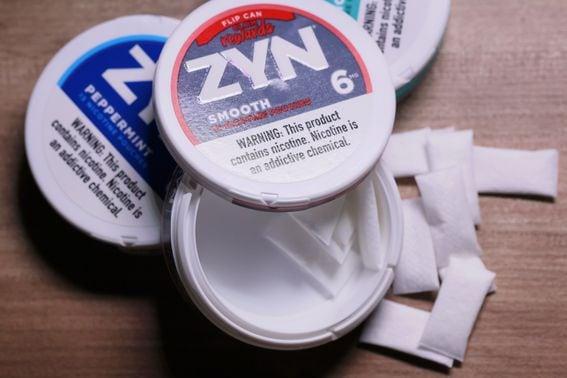
The Fortune 500 firm initially demanded an end to the crypto named for its nicotine pouch, but backed down after realizing there was no entity to sue. The founder of ZynCoin, a meme token named after a hyper-popular nicotine pouch, has extinguished a legal threat from the Fortune 500 tobacco giant behind the cigarette substitute. Philip Morris, the Fortune 500 company that owns Zyn manufacturer Swedish Match, sent ZynCoin founder Colton Kirkpatrick a cease-and-desist letter in the first week of April. The letter, reviewed by CoinDesk, demanded he put the token in the proverbial ashtray. ZynCoin was to immediately discontinue all use of "ZYN Coin," "ZynCoin," and any reference to ZYN products or any other images confusingly similar to the ZYN mark, the letter read. Kirkpatrick said he pushed back and reached a compromise: the prefix "zyn" will stay in the token's name, but the team behind it will make minor changes in its marketing. "They wanted to cease and desist the entirety of Zyncoin, which was problematic because it's etched into the smart contract and the coin on-chain," Kirkpatrick told CoinDesk in an interview. "There's no 'off' button." Nor is there any entity, centralized or otherwise, behind the Zyn token, which runs on the Ethereum blockchain. So Kirkpatrick was limited in what he could do to satisfy Philip Morris' trademark fit. Philip Morris eventually figured this out, and after speaking with Kirkpatrick and his counsel, the company backed down on its demands. "They went from wanting the whole project to cease and desist to, after researching, realizing they couldn't easily sue or stop the coin due to its decentralized nature," Kirkpatrick said. "For the avoidance of any doubt, Kirkpatrick may use '$ZYN,' 'ZynCoin,' 'Zyncoin,' and 'ZYNCoin,' (the 'Permitted Marks')," a final version of an agreement between the tobacco giant and Kirkpatrick reads. Kirkpatrick's counsel pointed out to Phillip Morris that there are plenty of other companies with z-y-n in their names, and any infringement created by the Zyn token would be minimal because it's not a competing product to nicotine pouches. The compromise: add a dollar sign in front of "Zyn" to clearly indicate Zyncoin is a cryptocurrency, and remove references to specific circular canisters on the project's website to avoid possible brand confusion. An email to the U.S. general counsel for Swedish Match, the Philip Morris subsidiary responsible for Zyn, went unreturned. The contretemps may be a sign of disputes to come as meme coins named after celebrities or consumer products without any formal ties proliferate. It also shows that brands or celebs can do only so much to stop crypto projects from piggybacking on their names. "The practicalities of enforcing compliance within a decentralized community present unique challenges," said Florida-based digital assets attorney John Montague, who was not involved in the case. "Even if the founder can change the website to remove infringing materials, the decentralized decision-making process inherent to DAOs adds another layer of complexity." For example, "token holders might refuse to approve proposals to alter on-chain details, making compliance with legal demands difficult," Montague said. Hands Tied There have been prior attempts to stamp out unofficial, fan-made crypto homages to real-world products. Nintendo's lawyers quickly doused NFTs and Metaverse games using the company's recognizable characters during the height of the last crypto bull market. But these all relied on centralized entities as hosts. Entities that could be served. Ross Feingold, special counsel at Taiwan's Titan Attorneys-at-Law, told CoinDesk that if enough effort were made, there could be means to serve entities on-chain through a non-fungible token, though this could be time-consuming and costly. "You might just consider the cost as being cost-prohibitive to start sending demand letters anyway," he said. "But I can imagine where there'd be some situations where you say, 'we're not really suffering any harm here,'" Feingold continued, noting that there's not an obvious case of brand damage or confusion with the token and the Zyn pouch. After all, Zyn token holders are buying the token out of admiration for the product, the coin is free advertising for a company that can't buy it. Philip Morris and other tobacco giants have been banned from advertising their products on TV in the U.S. since the 1980s. Then in 1998, the Clinton White House cut off transit, billboards, and product placements, virtually killing tobacco advertising entirely. Montague said there might be a case for saying that the Zyn token is a parody. "For trademark purposes, a parody must convey the dual message that it is the original but also that it is not, and serves as a form of satire, ridicule, joking, or amusement," Montague explained. He was quick to add that the satire argument has been tried before in the crypto world and ended up burning the defense. "It did not work out well for Ryder Ripps, and he got hit with approximately $1.6 million in damages, so parodies that involve big business brands need to be careful," Montague said. https://www.coindesk.com/business/2024/06/26/zyncoin-meme-token-patches-things-up-with-tobacco-giant-philip-morris/
2024-06-26 13:25
The prominent Web3 investor has held talks with investment banks, but has yet to decide on an adviser. Animoca Brands, known for investing in Web3 and crypto gaming companies, is considering selling shares to the public next year. The company was valued at $5.9 billion at its last fundraise, in 2022. Co-founder Yat Siu has said non-fungible tokens (NFTs) can be a major component of digital capitalism. Animoca Brands is looking to go public in 2025, the Information reported on Wednesday. The Web3 giant, valued at $5.9 billion during its last raise in 2022, is considering Hong Kong or the Middle East for a potential listing, the report said, citing Animoca co-founder Yat Siu. Siu added that the firm has held talks with investment banks, but has not yet hired an adviser. The firm, known for investing in non-fungible tokens (NFTs) and crypto gaming companies, has also not decided on the location for a possible initial public offering (IPO). It has made many investments in Web3 companies, including gaming company Axie Infinity, the TON Network and payments application hi. In an interview with CoinDesk earlier this year, Siu said NFTs are underutilized and can be a major component of digital capitalism, transforming industries such as rights management and education. The company was previously listed on the Australian Securities Exchange. The shares were delisted by the exchange in March 2020, which cited various rule breaches. https://www.coindesk.com/business/2024/06/26/animoca-looks-to-go-public-in-hong-kong-or-middle-east-in-2025-report/