2024-06-10 16:52
Validators found to be facilitating sandwich attacks face stiff penalties. A group of Solana (SOL) validators are facing financial penalties for allegedly facilitating economic attacks against crypto traders. Over 30 validator operators were kicked off the Solana Foundation Delegation Program over the weekend, a source familiar with the matter said. While they remain validators on the network, they're no longer eligible to receive what amounted to payout boosters for validating transactions on the Solana blockchain. Many of the operators were Russians, another source said. The purge escalates a months-long shadow war between heavyweights of the Solana validator ecosystem and an underground economy of validators believed to be exploiting traders for profit through what's known as a "sandwich attack," whereby bots frontrun and backfill trades that haven't yet been executed. It's among the more notorious maximal extractable value, or MEV, strategies possible on blockchains that rely on mempools, which are essentially waiting rooms for unconfirmed transactions. Solana doesn't have a native mempool, but the wildly popular validator software developed by Jito Labs once did. In March, at the height of Solana's meme coin frenzy, Jito Labs shut off the mempool function because it was exposing traders to near-constant and costly sandwich attacks. Jito's CEO framed the move as being in the best interest of the Solana ecosystem even if it cut off one potential revenue stream for validators, the server operators who keep things running on this decentralized network. Rather than completely solve the problem, Jito's move pushed it underground. Whispers quickly emerged of private mempools whose operators were making at times hundreds of thousands of dollars by enabling sandwich attacks. One proposal from infrastructure operator DeezNode offered validators who opted into its private mempool 50% of the profits generated by MEV, according to documents reviewed by CoinDesk. A Jito Foundation governance post from late Sunday indicates 10% of the JitoSOL pool is being delegated to validators running private mempools. The Jito Foundation has proposed imposing further economic penalties on those validators by way of restricting yet more staked SOL. Solana Foundation's own delegation blacklist is small as a portion of the delegation program. It targets a total of 32 operators that together had 1.5 million SOL, about 0.5% of program stake, a source said. "Enforcement actions are on going as we detect operators participating in mempools which allow sandwich attacks," a representative for the Solana Foundation said Sunday. https://www.coindesk.com/business/2024/06/10/solana-heavyweights-wage-war-against-private-mempool-operators/

2024-06-10 16:11
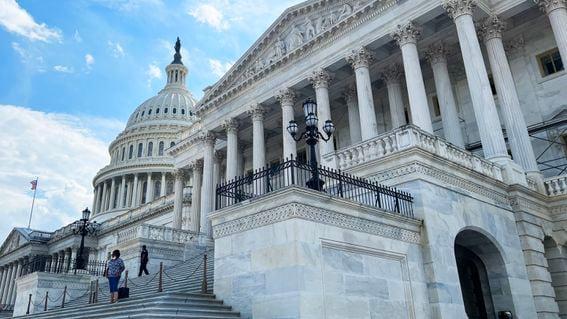
The industry says a surprise section in a recent spending bill could slam crypto with sanctions threats, but a key Senate office is now meeting with digital assets sector insiders. A provision in the recent spending package from the Senate's intelligence committee targets crypto ties to terrorism and caught many in the industry off-guard, criticizing it as a flawed approach to a worthy goal. The staff of the panel's chairman, Sen. Mark Warner, has been meeting with people in the digital assets industry to talk about the provision, sources say. Crypto insiders predict the effort isn't likely to survive the budget process. A piece of legislation with heavy implications for the digital assets sector made it through the Senate Select Committee on Intelligence's funding package recently without most in the industry – and many in Congress – apparently aware of it, but industry insiders consider its chances for survival to be limited. A Senate bill meant to fund U.S. intelligence operations included a section borrowed from an earlier bill aimed at preventing the use of cryptocurrency to support terrorism. That provision, as written, could require a massive shift in the crypto industry toward identifying users' identities to prevent sanctions that could strangle digital assets businesses. Were it to become law, it would mark the most important U.S. crypto policy yet adopted – and all without significant debate about its merits. This section of the intelligence funding effort would speed and automate the process to sanction "foreign digital asset transaction facilitators" – including crypto exchanges – that are linked to users who support terrorism groups. Though the Intelligence Authorization Act cleared the committee in a unanimous 17-0 vote, its crypto section wasn't mentioned publicly nor listed among the major provisions of the bill when Sen. Mark Warner (D-Va.), the committee's chairman, announced the passage in a press release. Now, Warner's office has been setting up meetings with people in the crypto sector to talk about that section, according to three people familiar with the discussions, and the Digital Chamber, an industry lobbying group, confirmed it's among those in the talks. The dialogue suggests the matter is still in play as the spending package advances toward wider Senate consideration, potentially within the must-pass National Defense Authorization Act (NDAA). "We’ve chatted with Warner staff on this, and they’re open to broader engagement here from industry," Cody Carbone, chief police officer for the Digital Chamber, told CoinDesk in an email. "I think it likely does get zapped out of the NDAA process given the immediate pushback from the industry." The House of Representatives may also be unlikely to embrace this kind of provision that puts the industry in a strict U.S. box soon after the House approved wider crypto market-structure legislation meant to regulate the industry without stifling it. That passage last month of the Financial Innovation and Technology for the 21st Century Act (FIT21) saw a third of House Democrats jump on board, suggesting that crypto regulation could have wide bipartisan support across Congress. That showing reinforced another recent industry success in the Senate in which 11 Democrats voted with Republicans to erase the Securities and Exchange Commission (SEC) accounting policy despite a promised (and fulfilled) veto from President Joe Biden. With so many senators sympathetic to the industry, passage may be difficult to win for illicit-finance legislation that didn't come through an open debate and amendment process. The original bill was backed by Sens. Warner, Jack Reed (D-R.I.), Mike Rounds (R-S.D.) and Mitt Romney (R-Utah). Overly broad? The language in the spending bill may implicate a broader-than-intended array of crypto interests, and it could include central banks that issue central bank digital currencies (CBDCs) and software developers, industry insiders contend, adding that other lawmakers seem to have been unaware of its existence. It could raise concerns, too, among users of the market-leading Tether stablecoin (USDT), which has been under U.S. scrutiny for the use of its tokens by bad actors. Warner's office didn't respond to a request for comment on the crypto provision, nor did the office of Sen. Mark Rubio (R-Fla.), who is vice chairman of the intelligence committee. The Washington-focused representatives of the sector's lobbying groups have sought to make it clear to policymakers that they're open to discussion on legislation to prevent illicit use of cryptocurrency, as this provision aims to accomplish. Such bills have also been broadly recognized as necessary to get Senate Democrats on board with other crypto initiatives to regulate the structure of the markets and the issuance of stablecoins. "Overall, we’re aligned with the goal of the legislation to cut off funding for foreign terrorist organizations, and I appreciate that it limits coverage to those groups that have 'knowingly' facilitated funds to bad actors," Carbone said, adding that the legislation isn't entirely bad or good. But the guidelines for identifying violators and the lack of a proportional – perhaps tiered – sanctions system could be problematic, he argued, and he said it puts too much authority in the hands of the U.S. Treasury Secretary. The crypto industry is also keen to avoid a repeat of its painful legislative surprise in an infrastructure bill in 2021, which included an 11th-hour provision that directed crypto taxation. Getting blindsided by that bill amplified the industry's interest in funding a bigger Washington lobbying presence that's now weighing in on this intelligence bill. https://www.coindesk.com/policy/2024/06/10/senate-bill-could-open-crypto-to-us-sanctions-but-industry-trying-to-head-it-off/
2024-06-10 15:18
Amid a new generation of yield-bearing stablecoins, PayPal is confident in its purely payments-focused PYUSD. Notwithstanding regulatory uncertainty, stablecoins that kick out cash to customers are here and vying for the many trillions held in money-market funds and dollar deposits globally. With the potential to make payments on the internet more cost effective, PayPal sees a decoupling of the payment capability of stablecoins from the yield-generating capability of money-market funds. Stablecoins have long played a vital role in the cryptocurrency industry, a vehicle to shuttle money around the digital economy, sidestep volatility without having to liquidate portfolios into fiat currencies or post as collateral for trading. Their usefulness in payments is fairly obvious: They seek to replicate a conventional currency like the U.S. dollar or euro in a blockchain-powered form, serving as digital stand-ins for something consumers are already comfortable with. But huge amounts of money are stashed in them, generating gigantic profits for stablecoin issuers – who traditionally share none of that bounty with token holders. Tether's USDT is the third-largest cryptocurrency in the world with $112 billion in assets, according to CoinDesk data; Circle's USDC is No. 6 at $32 billion. That money is invested in assets considered supremely safe like U.S. Treasuries, earning billions of dollars a year in yield for those companies. This makes them crypto-era versions of an old product in traditional finance: money-market funds. The difference: Money-market issuers share the interest they earn from their investments in bonds and other fixed-income instruments with their customers. Until recently the lack of competition in a low interest rate environment meant that stablecoin issuers not only could keep all the interest they earned on the collateral because the users and distribution partners didn't really care, said Rob Hadick, general partner at venture capital firm Dragonfly. "But with interest rates rising, the stablecoin issuers have become extremely profitable and it's only natural that those partners, like the exchanges, and the power users will start asking for more of a cut of the revenue," Hadick said. To be fair, regulations prohibit stablecoin issuers from returning yield to users in the U.S., and the soon-to-arrive Markets in Crypto-Asset (MiCA) regime will do the same in Europe. But blockchains span the planet and stablecoins that kick out cash to customers are here. Competition has already started to heat up with firms like Ondo, Mountain, Agora and others promising a more equitable economic model. Just last week, Paxos introduced a UAE-regulated yield-generating one called the Lift Dollar. Payments play Stablecoin issuers giving something back in the form of a money-market yield is a sensible strategy and a potential worry for traditional dollar-pegged tokens like Circle and Tether, which make up the bulk of collateral posted for trading purposes. But there are other ways goodwill can be shared with users, such as some of the cost efficiencies gained from using a purely payments-focused stablecoin, carrying out transactions on a grand scale. This is the aim of fintech giant PayPal's addition to the stablecoin space: its PYUSD token. The coming years could see a decoupling of the payment capability of stablecoins from the yield-generating capability of money-market funds, according to PayPal SVP and head of blockchain, Jose Fernandez da Ponte. "I think that in a few years from now you're going to see corporate treasurers keeping liquidity in a money-market fund, and the moment that they need to make a payment, switch that money-market fund to a stablecoin and make the payment, because those are built for purpose," Fernandez da Ponte said in an interview. Clearly, PayPal seems to be more focused on honing PYUSD's ability to do faster, cheaper payments – PYUSD is now integrated with the high-throughput Solana (SOL) blockchain, for instance – than worrying about how its locked up value level stacks up against USDT and USDC. But not everyone thinks a payment-focused stablecoin like PYUSD will necessarily thrive in the face of central bank digital currencies (CBDCs) and yield-sharing tokens, a view taken recently by analysts at Bank of America. Despite the fact PYUSD is small in comparison to the likes of Tether and Circle, it would likely be unwise to bet against PayPal given its long reach into fintech and payments via applications like Xoom and Venmo. "Let's be honest, who in crypto has better distribution than PayPal already?" said Dragonfly's Hadick. "It's unlikely in my mind that PYUSD proliferates DeFi [decentralized finance], or that it proliferates other [non-Paypal] applications. But it reduces the burden on PayPal's back office operations and makes them more capital efficient, such that they improve their own margins by 50 basis points and perhaps pass off some of that to the customer." Dollar base Stablecoins as a payment method will have enduring value and are very important, said Charles Cascarilla, the CEO of stablecoin issuer Paxos. But there's a much larger world out there when considering the $6 trillion or so in money-market funds plus some $17 trillion of deposits at banks, and many trillions more in overseas money-markets funds and dollar deposits, he said. "Payment assets are always going to be a subset of the broad deposit and dollar base," Cascarilla said in an interview. "So there's only so much that's going to be in payment stablecoins since many people are going to want to be in something that's generating a return." Hadick agrees that over time, pretty much all trading in both traditional finance and crypto is going to move towards tokenized yield-bearing collateral. "The benefits of being able to earn yield while increasing capital efficiency and do intraday settlement will be too much for any major institution to ignore," he said. https://www.coindesk.com/business/2024/06/10/stablecoin-issuers-want-to-give-something-back-in-multi-trillion-dollar-market-race/

2024-06-10 13:00
The U.K. firm joined JPMorgan’s Tokenized Collateral Network (TCN), piloting the tokenization of its own money market fund with Onyx Digital Assets. Fidelity International has selected JPMorgan’s Onyx Digital Assets blockchain to tokenize a money market fund. The move means improved efficiency in delivering margin requirements and a reduction in transaction costs and operational risk, Fidelity International said. Fidelity International, a London-based funds management firm, has tokenized shares in a money market fund (MMF) using JPMorgan’s Ethereum-based private blockchain network, Onyx Digital Assets. Tokenization occurred near instantaneously through connectivity between the fund’s transfer agent (JPMorgan’s transfer agency business) and Tokenized Collateral Network, an application that sits between a collateral receiver and a collateral provider on the bank's Onyx blockchain, said Fidelity International, which is a separate entity to U.S.-based Fidelity Management and Research. Tokenization of traditional financial assets has become a priority for banks, and it’s an area JPMorgan has been working on for some years. The essence of tokenization is to create on a blockchain a virtual investment vehicle representing real-world assets such as real estate, precious metals and collectibles. Stocks and bonds work too. Fidelity International also has a long history with digital assets, most recently working on a tokenization project with Swiss bank Sygnum in March. In October last year, JPMorgan carried out its first live blockchain-based collateral settlement transaction involving tokenized shares in a BlackRock money-market fund. The shares were transferred to Barclays for collateral in an over-the-counter derivatives trade. BlackRock has gone on to further embrace tokenization through its public-facing BUIDL project, with tokenization services firm Securitize. “Tokenizing our money market fund shares to use as collateral is an important and natural first step in scaling our adoption of this technology,” Stephen Whyman, Fidelity International's head of debt capital markets, said in an email interview. “The benefits to our clients and the wider financial system are clear; in particular, the improved efficiency in delivering margin requirements and reduction in transaction costs and operational risk.” JPMorgan’s TCN started with the tokenization of money market shares, a type of mutual fund that invests in high-quality, short-term debt instruments and cash equivalents. The plan is to expand across equities, fixed income and a range of asset classes, the bank said. “Fidelity's participation in TCN brings its MMF units onto our network through tokenization, adding a new asset that is otherwise prohibitively complex to use across today's collateral landscape,” said Keerthi Moudgal, head of product at Onyx Digital Assets, JP Morgan, via email. CORRECTION (June 10, 14:26 UTC): Corrects date of project with Sygnum in fourth paragraph. An earlier version of this story placed it in 2019. https://www.coindesk.com/business/2024/06/10/fidelity-international-tokenizes-money-market-fund-on-jpmorgans-blockchain/

2024-06-10 12:37
The broker raised its Galaxy Digital price target to C$23 from C$17, while maintaining its buy rating. Galaxy Digital price target raised to C$23 from C$17 at Canaccord. The crypto financial services firm is well positioned to benefit from the continued adoption of digital assets, the report said. The company’s mining assets could appreciate in value if the AI trend continues, the broker said. Galaxy Digital (GLXY) is well positioned given its strong institutional exposure to benefit from the continued adoption of digital assets on a structural basis, broker Canaccord Genuity said in a research report on Monday raising its price target for the crypto financial services firm. Canaccord raised its Galaxy price target to C$23 from C$17 while maintaining its buy rating on the stock. The shares closed at C$16.25 on Friday. “With digital assets hovering near all-time highs, some incremental logjam beak on the regulatory front, good business execution by GLXY and some rerate up on an sum-of-the-parts (SOTP) valuation, we are boosting out price target,” analysts led by Joseph Vafi wrote. We are seeing a “slow but steady shift toward mainstream adoption of digital assets” in recent months, the report said, noting the unexpected initial approval of eight ether spot exchange-traded funds last month by the Securities and Exchange Commission (SEC). The crypto financial services firm has a good foothold in the ETF market, having partnered with leading players like Inveco, DWS and Itau, Canaccord said. Other tailwinds include Robinhood’s recent agreement to buy Bitstamp, where Galaxy acted as exclusive financial advisor to the crypto exchange, with the deal underscoring the firm’s investment banking capabilities, the authors wrote. Galaxy also owns the Helios mining facility in west Texas, which could see appreciation if energy hungry artificial intelligence companies continue to seek out deals with bitcoin miners such as the recent Core Scientific (CORZ) approach. https://www.coindesk.com/markets/2024/06/10/crypto-mainstream-adoption-has-increased-in-recent-months-canaccord-says/
2024-06-10 09:28
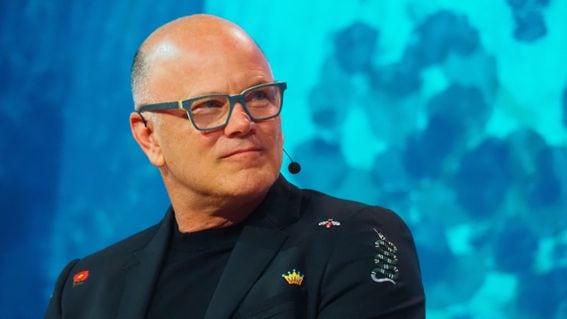
One trader expects ETH prices to hit $10,000 in 2024, a nearly 200% increase from current levels of $3,600. Bitcoin led the investment activity with over $1.97 billion in inflows, while Ether saw its best week since March with nearly $70 million in inflows. Some traders expect buying activity in ether-tracked products to continue, with expectations of the asset reaching the $10,000 price level in 2024. Crypto investment products took on nearly $2 billion in inflows last week to help extend a five-week run to over $4.3 billion, asset manager CoinShares said in a Monday report. Trading volumes in exchange-traded products (ETPs) rose to $12.8 billion for the week, up 55% from the week prior. Bitcoin led investment activity at over $1.97 billion inflows for the week, while ether (ETH) saw its best week of inflows since March at nearly $70 million. Buying activity for spot bitcoin exchange-traded funds (ETFs) in the U.S. has picked up since mid-May after a dismal few weeks in April, which saw days of zero net inflows across all products and even outflows from major products such as BlackRock's IBIT. However, inflows have since picked up - with IBIT becoming the largest bitcoin ETF last week amassing over $20 billion worth of the asset since its January issuance. “Unusually, inflows were seen across almost all providers, with a continued slowdown in outflows from incumbents,” CoinShares analyst James Butterfill said. “Positive price action saw total assets under management (AuM) rise above the $100 billion mark for the first time since March this year.” Butterfill added ETH buying was likely in reaction to the surprise SEC decision to allow spot ether ETFs. Meanwhile, some traders expect the inflows into ETH products to continue in the coming months, with a rally expected toward the end of the year. “$5-10 billion of fresh capital could be channeled through ether products in the short to medium term,” Ed Hindi, Chief Investment Officer at Tyr Capital, told CoinDesk in a Monday email. “This could fuel an end-of-year rally in ETH and its ecosystem to new record highs.” “A price target of $10,000 in 2024 is now a reasonable target especially when other supportive factors, like ETH now being deflationary, are taken into consideration,” Hindi added. In May, the U.S. Securities and Exchange Commission (SEC) on Thursday approved key regulatory filings tied to ETH ETFs, a historic milestone for the second-largest cryptocurrency. The regulator approved documents for eight ETFs – from VanEck, Fidelity, Franklin, Grayscale, Bitwise, ARK Invest 21Shares, Invesco Galaxy and BlackRock – for listing on the Nasdaq, NYSE Arca, and Cboe BZX exchanges. https://www.coindesk.com/markets/2024/06/10/bitcoin-bags-2b-inflows-ether-sees-highest-institutional-buying-since-march/




