2024-06-07 18:26
The MakerDAO creator discusses the motivation behind the ambitious Endgame proposal in a wide-ranging interview. Although MakerDAO’s dai (DAI) might be the most successful decentralized stablecoin, last year founder Rune Christensen worried the project was teetering on the edge of collapse. So he set about coming up with a rescue plan. Christensen’s proposal, now known as Endgame, is a massive expansion of the Maker project, which would see the release of new stablecoins, new ways to generate revenue and potentially limitless new business prospects through the creation of “subDAOs.” CoinDesk sat down with Christensen for a wide-ranging interview to get a better sense of what’s coming down the pike as Endgame begins to roll out as early as this summer. We connected on May 17, the day Maker announced the coming release of two fully decentralized stablecoins, NewStable and PureDAI, which will eventually replace DAI, which has a market cap of over $5 billion. So it's a big news day for you guys. You could say that. Would you say the idea of launching a more decentralized stablecoin is a tacit acknowledgment that dai (DAI) should have always pursued decentralization first and foremost? I mean, there's mainly two approaches to decentralization in DeFi. One uses decentralization as a tool and the other is using it as sort of the guiding – I wouldn't call it an ideology, but this underlying measure or the end goal itself. What this announcement touches on is how these two things interact when using decentralization as a tool. If you're thinking about someone building a product that’s useful for end users, then making it decentralized should be done for a specific reason like resilience and the ability to offer features. Whereas when decentralization is your guiding ideology, then the product itself is pure decentralization. It's two very different user bases and demographics, right? Our second user base is the OG Bitcoin and Ethereum types that value purity. But the vast majority of people, especially the more mature crypto gets, are more interested in useful products. We especially see this with stablecoins. With the stablecoin trilemma it’s very hard to scale. If you have a $1 peg, you have to use real assets, which will always limit decentralization. What are MakerDAO's core values? When Maker started it was during a time when all these early experiments and random ideas, which were mostly pointless [were floating around]. We wanted to try to build something useful to people with this technology. We're really lucky that we had that perspective because it brought us to build a stablecoin, which, at the time, was kind of a boring idea that nobody wanted to do. All that other stuff was cool, but you couldn’t use it unless there's something stable. It turns out that a stablecoin is actually the most powerful business model; it's basically been the product that has taken off and come out of blockchain technology that has actually impacted people. Big time, right? Ultimately, the reason why we’re in the game now, the reason why we are basically making a lot of major changes is we're basically trying to rethink from first principles. How to really build something useful that's going to benefit people that also benefits from all the things you can do with decentralization. Do you feel like you have a good sense of where Endgame will end up? So the real basic concept of Endgame is really growth and resilience – that’s the overall goal. It has to be something that can grow exponentially, and as it grows it gets more and more resilient. The core idea of Endgame is to reach an end state of the system, so it doesn't have to change anymore to the extent that’s possible. That kind of taps into the original Bitcoin values, this principle that decentralization is good, resilience is good, reliability is good. But to give people what they want, you have to be able to adapt to the market. So that's where subDAOs come into the picture; you enable the core of the system to reach this end state and become immutable. … That then allows for subDAOs to take care of all the complexity, adaptation and innovation that can attract new users. That's basically where the whole journey begins. We have to see what actually works in practice before we commit to something and follow market cues. It's hard to predict everything in advance and then just build it exactly the way it was predicted. Usually that would not result in something that is actually very useful to people. It's better to sort of figure out what people actually want and then move in that direction with it. What do you make of the trend of DeFi brands, like Aave, for instance, expanding beyond their core category? I mean, it's the same sort of thing that is pushing us towards Endgame at Maker. So actually I think Aave’s attempt at decentralizing social media is a bit of an outlier. I think the more classic way this is happening is – Frax was the first project to articulate this, when they were talking about how every project ends up sort of doing all the code bases models, right? So if you're DeFi, probably you'll also be doing lending, you'll be doing stablecoin, you'll be doing exchange. Maker also is doing a DEX, lending and stablecoins. The reason why this is happening is because the real challenge all of this is not really building the actual products, it's having the governance layer in a DAO to maintain it all. So that's where all the complexity and investment goes: having the ability to make the decisions that maintain something like that. If you already have that capability for doing it with a stablecoin, then you've already paid the majority of the cost and it's very easy to add more features using the same governance rails. And in fact, you kind of have to do that because it's so expensive and difficult to maintain the governance. With Endgame, we're taking this to the absolute extreme, because we're building this extremely advanced, extremely sophisticated governance layer that we will be reusing again and again and again with subDAOs. That’s the economies of scale – experience and data is gained from all the different subDAOs. Do you ever feel that MakerDAO governance is over-engineered? I believe the problem is that it's undere-ngineered. Funny. The problem is the reason why you can simplify governance. I mean, that's what we did originally, right? We built the technical layer, we built the protocol, and put a simple voting system on it and released it assuming that the free market would take care of it because the community will vote in their own best interests. But unfortunately, what actually happens in DAOs is politics. So the problem is the assumption in any group setting – in any political setting, you could say – is that when somebody makes a proposal or makes an adjustment to a public system they're doing that to benefit the system, right? That's the game theory. … But the real game theory is that people will do whatever is best for them. Everybody wants to vote to give themselves money. If you just have enough honest people, they can see that happening and then shut it down. The problem is you get this additional layer of politics where what happens is people will kind of argue over some proposal that’s supposed to be in the best interest of the whole system. They’ll say “it's so great and I'm so selfless proposing this,” but there will be an underlying motivation. It’s incredibly difficult to tell when it is genuine. Humans are just like that, right? They will be obfuscated and they will collaborate and you'll have groups with shared interests. The point of all this is it is very, very complex – you can’t “solve” human politics. The only real answer to this is basically to put in place some hierarchy, a leader that you have faith in to decide who's being honest. The only alternative to that is to try to build out a transparent framework that contains all of that knowledge, like all the knowledge that a CEO typically has in a company. You want to have as much public data and knowledge as possible so when you pay for a particular engineering task, you know if you were overpaying and how to quality-check it. You can’t leave all those decisions up to voters because they'll vote for, like, their own supplier that gets paid 10x market price. But you can't figure out if that's happening unless you actually have the data and these processes built. In a sense, it’s an extremely challenging engineering effort where you have to build all these processes to be detail-oriented, because every single black box you leave anywhere in the governance system is like leaving a bug in a smart contract that a hacker can come and hack. That's the direction we're slowly going in at Maker by building Atlas, which is sort of a big governance layer. Do you think you would make a good politician? No. I mean, like, I definitely have had to develop those types of skills to basically deal with the problem of doing stuff with DAOs. But I'm definitely not naturally – I'm, well, I'm not exactly a technical person in the sense that I'm not doing any of the code in Maker, but I'm definitely more technically minded. What do they call it? A shape rotator rather than a wordcel. That's funny. You can feel free to decline to answer, but do you have any sense of why those VCs collaborated to vote against Endgame? Well, it was not all the VCs. I think there were three prominent ones. I think at that point, like everyone else, they were very disappointed with what had happened with the project because it had sort of taken off – it had grown a lot and then suddenly it lost all its revenue and had crazy expenses. And then I think from their perspective, they probably just viewed Endgame as some kind of desperate sort of fever dream, right? Like, it's already bad and now it's gonna fail fully and their tokens are going to become worthless. And then they actually sold all their MKR when they failed to vote against it. Unfortunately for them, they sold right at the bottom. Then what happened was you had this new generation of hedge funds and VCs coming in and buying up all their MKR. These were institutions that were explicitly very, very excited about Endgame, they bought because they actually thought this was a cool idea. And I think that’s what you want – the MKR did its job because you actually want voters to be aligned. When exactly did you start thinking that you had to do Endgame? It really all came from the problem of the politics I just talked about, right? The budgets. I saw what was happening, and then I started extrapolating and I realized it would get so much worse – like, the project would die. That’s where the idea of subDAOs came from, a way of starting from fresh so you can set the right direction, the right momentum, with the right knowledge. You can’t just put people in a DAO, and then have the free market steer things. You have to really give them the data, give them the frameworks, give them the tools to move in the right direction where there's interaction. And even when you do that, it will still fail sometimes. That's the other thing, it's a fresh start for communities that are specialized in particular areas so they can become more streamlined. Spark will be a subDAO focused on DeFi innovation. And then there are other subDAOs that can be about gaming or financial inclusion by serving as a way to get yield for potential users, for instance, which is a huge crypto demographic that hasn’t really seen an advanced crypto product. You get to make these bets on new communities that have a particular direction led by a group of people that believe in that direction. The other major thing is they're allowed to fail. It’s designed so that if a subDAO fails, it doesn't damage the whole thing, which is kind of a problem with Maker. The last part is solving how to make growth really take off, because DAI was really only adopted by crypto natives. The branding was sort of quite random. So with Endgame, we’re rebranding to try to fix that. The ace up our sleeve that we have is decentralization. SubDAOs will function as an adoption funnel through tokens that offer yield to holders of the new stablecoin with new and better branding. It's exactly the same asset – the only question is how are you getting the yield for the DAI savings rate? It’s a bit like DeFi Summer, where yield farming was essentially risk free. So it's a way to sort of get the growth, excitement, experience, and maintain its resilience as it grows so people are not losing the money. So you can really kind of just push it and adopt it. How do you deal with the stress of leading one of the most important DeFi projects? It’s really hard for me to explain how I dealt with it in the past because it was really crazy. The early days of crypto were so insane – unreal situations, crazy drama, crazy personalities, a lot of toxicity. The main way I dealt with it is that the more I tried to improve what we were trying to build – making something useful for people – the better things got. Gradually, things have just been getting better and better. Even dealing with Endgame – this massive change – is nothing compared to the early days of Maker. Are you still thinking about making an MMORPG? I actually have a gaming company that's building an MMORPG that I founded around the time the Maker Foundation wound down. Being in Europe, are you at all concerned about the Tornado Cash verdict? I ask because the judge essentially said founders could be criminally liable for code they release that they suspect could be misused. I think the problem with privacy technology is that it attracts a lot of bad guys and illicit use. There’s naturally a large illicit user base. But there are also way more legitimate users. It's like a road, bad people use the roads, but the vast majority are regular people. It's a big challenge, because we need privacy technology, right? We have a right to privacy, but these tools often end up as honeypots in a sense. But obviously Maker has always focused on having good relationships with regulators because we want adoption by regular people. And we've achieved that. A lot of people use and benefit from the system, which makes it dramatically different from something like Tornado Cash. Today’s announcement of a completely decentralized stablecoin detached from Maker wouldn’t have KYC though, by definition. It seems like prosecutors, when they can't shut something down, try to put a person behind the code. Yeah, but again it comes back to whether it has some kind of legitimate use. The point is if you're making it easy to do bad things with this technology. There is no privacy on the blockchain, right? Everything is totally transparent. You have Chainalysis monitoring everything. Mixers thwart that. The best example of all is the banking system, because this is happening all the time at a much greater scale. You can be fully anonymous in crypto if you're just smart enough. But in the banking system, it's actually pretty easy because you just need to bribe a few corrupt bankers or something like that. It's pretty straightforward. So the thing that would get risky for us, even though I think, again, that there is a moral obligation to figure out how to do this in a way that doesn't just disproportionately benefit criminals, is to build a privacy solution into a decentralized currency. It's very hard to do that safely and without becoming a target. We're definitely not going to build you know, native privacy into pure DAI or anything like that. Do you want to do a quick round of Overrated/Underrated? OK. Solana? Underrated. Life extension research? Overrated. Ai risk research? Overrated. AI itself? Underrated. CBDCs? Overrated. Blockchain gaming? Overrated. Could you say why? I think it has a ton of potential, but I'm really disappointed in basically almost everything. The amount of attempts and quality of the attempts is just very disappointing. There’s something wrong with the culture – like, everyone's just doing it for the money. And it's pushing away real builders who are never going to touch the blockchain gaming industry. If you had the right people trying to do it, you could build some really cool things and we'll get there. But the signal-to-noise ratio is crazy. How much MKR do you own or control? You can log onto Etherscan and find my wallet. It's pretty easy. Is there anything that you want to talk about? I mean, the only thing that's important to me right now is just how impactful launch season will be. There are many new things coming and it can be quite difficult to explain – there'll be a new brand, new token, new app. There'll be these different options if you’re a DAI holder that you can choose. It's really, really powerful stuff. We spent two years just distilling all the things that have been learned basically since the beginning of DeFi. And then we are sort of launching all the key aspects of those, but trying to make it simple and easy to use. The killer feature is yield farming, which I think will be relevant for a lot of people. But it's hard to explain in advance that you will be able to save money with low risk, like you're used to with stablecoins, but now you can get these very interesting and valuable tokens as you do it. Yield farming is sometimes described as a marketing expense. Would you agree with that? Yeah, I think that was kind of the old version of yield farming that others have done. But nowadays we have designed a system where the yield side actually makes the protocol sustainable. What was risky before, even if you were doing it with stablecoins, is that you were doing it in untested, brand-new smart contracts. So there's gonna be a lot of technical risk. In our case, there is no technical risk – or very low technical risk – because it's just as safe as all the other components of the Maker system. There’s financial risk, but with the new subDAOs and tokens there will be a lot of incentives. In 10 years where do you think Tether will be? I think it would probably be even bigger than it is today. They are reaching escape velocity and they're not even paying any yield. They're just growing and growing and growing because it's so useful. The number one thing that makes a stablecoin useful is the network effect, right? People use tether because everyone else uses it, so they already have that flywheel. We definitely hope to get to that point as well. But fundamentally the bed we're making with Endgame is we can't guarantee we get to that point at least within some timeframe we can control. So we are really focusing on the yield aspect so we have a growth driver that is independent from requiring this huge network effect. But then we may be able to use this yield growth driver to build up a huge network of users and start to get this sort of compounding effect. It could be very successful and profitable, even if it was never used as a currency at all. Maybe it's just like a savings account to tether or something like that. This was great, good luck. I appreciate the candid responses. Cheers. https://www.coindesk.com/consensus-magazine/2024/06/07/rune-christensen-explains-why-he-wants-to-remake-maker-and-kill-dai/
2024-06-07 17:15
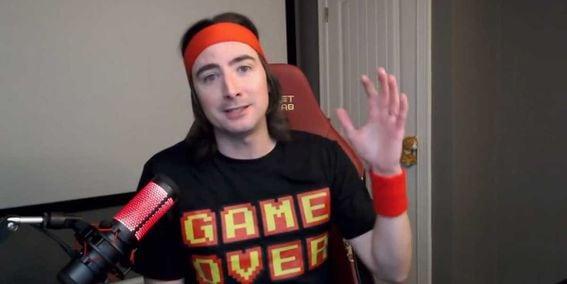
Solana-based meme token GME is down 50% from earlier Friday, but remains sharply higher for the week Retail trading legend Keith Gill, otherwise known as Roaring Kitty or DeepF*ckingValue aliases on social media, returned to his livesteam for the first time in several years on Friday. Prior to the livestream, GameStop (GME) shares tumbled 25% in the morning hours of the Friday session after the company rushed out a first quarter earnings report and a 75 million share offering in wake of the large run higher in the stock this week. Shares continued lower during Gill's appearance as he attempted to lay out his long-term bull case on GameStop. They're currently lower by 40% for the day. Solana-based meme token GME, which was inspired by the company but has no affiliation with it, almost doubled in price in less than a day before sharply paring gains on Friday. At press time it was down 50% over the preceding few hours, though still higher by more than three-fold this week. Gill returned to social media last month after three years of silence, unleashing a speculative frenzy for GameStop that spilled over to the memecoin market with multiple opportunistic tokens launching on the Solana blockchain. Thursday, Gill revealed in a Reddit post that his stock and options position was worth $586 million at the time. https://www.coindesk.com/markets/2024/06/07/gamestop-tumbles-40-as-trading-icon-roaring-kitty-returns-to-livestream/
2024-06-07 14:07
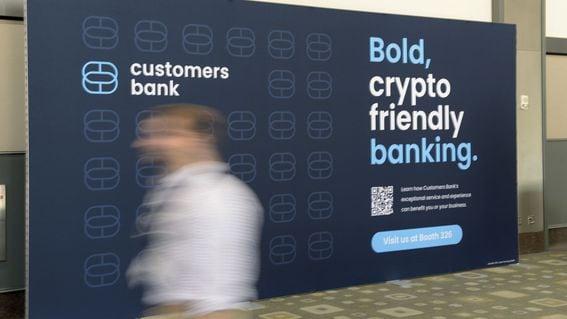
The move is not a widespread debanking of hedge-fund clients, but rather the offboarding of inactive accounts, one person said. Customers Bank has debanked a number of crypto hedge funds in recent weeks, three people said. One person said the move was mainly housekeeping and the offboarding of inactive accounts. To limit its exposure to digital assets the bank has capped deposits from crypto clients at 15% of total deposits. Customers Bank, which services some of the largest names in crypto including Galaxy Digital (GLXY), Coinbase (COIN) and Circle, has told some hedge-fund clients it can no longer provide them with banking services, according to three people familiar with the matter. Whilst the extent of the cull is unclear, one person said "a load of funds" were involved. A second person said the action represented the offboarding of inactive accounts rather than the widespread debanking of the industry. A third person said their digital assets financial services firm had spoken to a number of funds looking for new providers in recent weeks, potentially as a result of the offboarding of accounts at Customers. This latest development highlights the difficulty that some crypto companies have in accessing the U.S. dollar banking system in the aftermath of the collapse of Silvergate Bank and Signature Bank last year. The West Reading, Pennsylvania-based company, which is owned by Customers Bancorp (CUBI), deals only in U.S. dollars and does not accept cryptocurrency or make loans to support crypto activities. It offers its clients, estimated at well over a hundred digital asset firms, a real-time blockchain-based payments platform called Customer Bank Instant Token (CBIT) that allows crypto clients to make U.S. dollar payments 24/7. A spokesperson for Customers Bank declined to comment on the policy, saying only that the bank was choosy as to who it took on as a client. To limit its exposure to crypto, the bank has capped deposits in CBIT, which delivers almost instant settlement and does not charge any fees. “We have previously discussed publicly our 15% cap on deposits in the CBIT vertical," the spokesperson said. "As a result of that policy limitation, we are understandably selective with respect to new business. In each of the industries that we serve, we perform extensive due diligence and seek to onboard only high-caliber clients. The digital assets industry is no exception.” Total deposits at the end of the first quarter were about $18 billion, with CBIT contributing around $2 billion. https://www.coindesk.com/business/2024/06/07/customers-bank-said-to-debank-some-digital-asset-hedge-funds/
2024-06-07 12:02
The acquisition will potentially allow the trading platform to offer a wider range of crypto products to a more institutional client base, the report said. The Bitstamp acquisition is a strategic move by Robinhood to expand its crypto business, the report said. Bernstein said that by acquiring an exchange the trading platform can offer markets in many more tokens. JMP said it doesn't expect material accretion from the deal. Robinhood’s (HOOD) acquisition of Bitstamp is a strategic move by the trading platform to expand its crypto business and positions the company well against competitors such as Coinbase (COIN) and Kraken, broker Bernstein said in a research report on Friday. The broker notes that Bitstamp, as one of the oldest exchanges that offers crypto, Robinhood has “stood the test of time over multiple cycles.” Robinhood offers 15 cryptocurrencies to retail investors in the U.S. and more than 30 tokens in Europe, whereas Bitstamp lists over 85 tokens, the report said. By acquiring an exchange the trading platform can offer markets in a lot more tokens. “With a full exchange, HOOD gets access to global liquidity, and thus can offer the liquidity to its own broker platform, potentially improving its economics,” analysts Gautam Chhugani and Mahika Sapra wrote. Exchanges offer a wide range of services such as staking, stablecoins, trading, custody and prime broking, the note said. The acquisition of Bitstamp potentially allows Robinhood to offer a wider range of crypto products to a more institutional client base. Bernstein has an outperform rating on Robinhood stock with a $30 price target. The shares were little changed in early trading on Friday at around $23. Broker JMP said the acquisition of Bitstamp will “drive opportunities to broaden Robinhood’s participation in the evolving crypto value chain,” in a report on Thursday. Owning an exchange will give Robinhood opportunities to connect more deeply into the crypto ecosystem and could allow the platform to get more involved in the tokenization of assets and securities, the report said. The acquisition will give Robinhood more exposure to institutional clients and will accelerate the company’s buildout in Europe, the report added. As Bitstamp is marginally profitable at best, JMP said it does not expect material accretion from the deal. JMP has an outperform rating on the stock with a $30 price target. https://www.coindesk.com/markets/2024/06/07/robinhoods-bitstamp-deal-is-strategic-and-brings-added-institutional-exposure-bernstein/
2024-06-07 08:21
A new market on betting application Polymarket has seen over $120,000 in trader placed on Keith Gill making ten figures on his GameStop equity and options holdings. Market watchers expect Keith Gill, known as Roaring Kitty, to potentially reach a billion-dollar position in GameStop stock by Friday. Polymarket bets on Gill becoming a billionaire have gained traction, with "yes" odds rising to 50. Market watchers are widely backing retail stock trader Keith Gill to clear a billion dollars on his GameStop (GME) stock positions by Friday in what could become one of the biggest meme-stock trading success stories. Gill, popularly known by his X account @TheRoaringKitty and Reddit account “DeepF*ckingValue” aliases – he doesn't use an asterisk on the platform – flashed a $583 million position in a Reddit post on Thursday, showing $382 million in profit across options and equity positions. GME stock added 47% to $46 yesterday and surged to $61 in after-hours trading. Followers on Reddit quickly did the math and calculated that GME needed to add just $9 on Friday to give Gill a billion-dollar exposure to the video game retailer's stocks. Polymarket bets on Gill clearing the 10-digit mark on his brokerage account have quickly found favor among investors. The “Roaring Kitty billionaire by Friday?” market has racked up $120,000 in bets since going live late on Thursday, with “yes” odds climbing since early Asian hours on Friday – reaching 50%. “If GME hits 70$, the intrinsic value of his position would reach a billion. (5m shares * 70$) + (12m shares from calls * (70$ - 20$ strike)),” said user “etj103007,” who purchased 15,000 shares in favor. “I believe in Roaring Kitty,” said another user who held 1,000 “yes” shares. The market will resolve to “yes” if @TheRoaringKitty announces that he is a billionaire or otherwise shows a brokerage position of at least $1 billion dollars in value by 11:59 PM ET tonight. The resolution source for this market will be information from Gill or his known social accounts. Meanwhile, a spoof GME token on the Solana blockchain has racked up nearly $200 million in trading volumes in the past 24 hours, largely driven by Gill’s social updates. Related meme roaring kitty (KITTY) rose 220%, CoinGecko data shows. https://www.coindesk.com/markets/2024/06/07/roaringkitty-a-gamestop-billionaire-by-friday-crypto-traders-are-placing-50-odds/
2024-06-07 07:10
The latest breakout is characterized by lack of speculative froth as opposite to March and positive macroeconomic details. The latest breakout is characterized by a lack of speculative froth as opposed to March. Renewed rate cuts by G-7 central banks and oil price slide favor risk assets. Bitcoin (BTC) has surged back above the significant threshold of $70,000, setting its sights on retesting the record highs it achieved in March. This recent upswing above the said level appears positively distinct from the one seen three months ago. Let’s delve into the reasons why. Less froth A frothy market, often a precursor to a price correction, is characterized by a leveraged speculative frenzy. So far, perpetual futures tied to bitcoin and other cryptocurrencies show no such signs. While open interest-weighted funding rates continue to hover above zero, they are well below the highs seen in March, according to data source Coingecko. In other words, bullish long positions are dominant and bulls are willing to pay bears to keep their positions open. However, the market is less heated than in March. Exchanges collect funding rates every eight hours. The lack of speculative froth means the latest breakout above $70,000 could be longer-lasting than in March. Funding rates in other large-cap cryptocurrencies tell the same story. The chart by Velo Data shows funding rates in large-cap coins, including BTC, currently hover in the green zone, representing the annualized 10% to 20% range. Funding rates over 100% represented the overheated category marked by red bars. At press time, the annualized three-month futures basis (premium) in bitcoin on major offshore exchanges like Binance, OKX, and Deribit ranged between 10% and 13%, significantly below March highs above 25%, per Velo Data. The measured rise in the premium also suggests the absence of speculative fervor. "Looking at the current market positioning, I don’t think things are anywhere frothy like they were in late March/early April," Greg Magadini, Director of Derivatives at Amberdata, said in a weekly newsletter. "We can clearly see that the futures basis is much lower than around peak positioning and the underlying OI buildup is rather stable for BTC," Magdini added. Positive macro The present macroeconomic environment appears more supportive of risk assets, including cryptocurrencies, than in March. Per Bloomberg, investment banking giants like JPMorgan Chase & Co. and Citigroup Inc. expect the U.S. Federal Reserve to cut the benchmark borrowing cost by 25 basis points to the 5% to 5.25% range next month, pivoting toward renewed liquidity easing. The Fed fund futures show traders pricing rate cuts in the year's final quarter. The European Central Bank and Bank of Canada have already pulled the trigger. The bias for rate cuts starkly contradicts the situation in March when traders feared resurgent inflation would force the U.S. central bank to resume rate hikes. The recent swoon in oil prices is also supportive of bitcoin, according to the newsletter service LondonCryptoClub. The per barrel price for the West Texas Intermediate (WTI) crude has dropped by over 13% to $75.50 in one month, signaling disinflation and putting downward pressure on government bond yields. The decline in yields, the so-called risk-free rates, is said to incentivize risk-taking in financial markets. "Oil is now 12% off its highs and up just 7% YTD. It’s hard to play a 'reflation' narrative with oil falling, and lower oil typically pulls 10-year inflation expectations lower, which in turn pulls 10-year U.S. yields lower…which in turn can help push bitcoin higher indeed," founders of LondonCryptoClub said. https://www.coindesk.com/markets/2024/06/07/bitcoins-latest-rally-to-71k-is-different-from-the-march-breakout-heres-why/