2024-06-04 18:45
ETH will start outperforming bitcoin following the ETF launch after almost two and a half years of underperformance, the report said. U.S. spot ETFs could accumulate around 1 million ETH in five months based on the size of similar ETH products globally and CME futures open interest relative to bitcoin, K33 Research said The omission of staking will not negatively impact the inflows to the ETFs, the report said. Ethereum-based exchange-traded funds (ETF) that can directly hold ether (ETH) are soon arriving in the U.S. and could attract $4 billion of inflows in the first five months, crypto analytics firm K33 Research said in a report. The company based its forecast by comparing the assets under management in existing ETH-based exchange-traded products around the globe to similar bitcoin (BTC) products and the amount of open interest (OI) in futures contracts on the Chicago Mercantile Exchange (CME), the go-to marketplace for institutional investors. Ether's OI on CME currently stands at 23% of the size of BTC futures, but it has seen an average share of 35% of BTC futures since ETH futures started trading on CME in 2021, indicating significant institutional demand for ETH in the U.S., per K33. Applying these ratios to the nearly $14 billion inflows so far into the spot BTC ETFs, K33 puts the estimated ETH ETF inflows between $3 billion and $4.8 billion within the first five months. This estimate is slightly higher than JPMorgan's $3 billion forecast for this year. Based on current prices, this would equal 800,000 to 1.26 million of ETH accumulated in the ETFs, or roughly 0.7%-1.05% of the total supply of tokens, creating a supply crunch for the asset, according to the report. Unlike futures-based products, the issuers of spot ETFs will need to buy tokens in the spot market as investors buy ETF shares. "As seen in BTC, this monumental supply absorption shock should lead to price appreciation in ETH," said Vetle Lunde, senior analyst at K33 Research. Bitcoin, after an initial correction in late January, rallied nearly 60% to record highs following the introduction of U.S. spot ETFs. K33 analysts predicted that with the start of ether ETFs, the price of ETH would start outperforming BTC after almost two and a half years of the ETH-BTC pair's downtrend. Last month, the U.S. Securities and Exchange Commission (SEC) approved key filings for spot ETH ETFs in a move that surprised most market participants. This move paved the way for greenlighting the funds to trade in the U.S. After working through the necessary documentation, market observers expect the ETFs to start trading as soon as late June or early July, the K33 report said. Notably, applicants deleted the parts of their filings that would have allowed staking the assets in the fund, likely to appease the regulator. K33 said that the omission of staking would not negatively impact inflows to the ETFs, contradicting JPMorgan's stance, as 99% of assets under management in Canadian ETH ETFs and 98% of European products are held in funds without staking. https://www.coindesk.com/markets/2024/06/04/ether-price-poised-for-supply-shock-as-etfs-may-attract-4b-inflows-in-five-months-k33-research-says/
2024-06-04 18:39
BODEN appears to be the winner as first exchange open to U.S. residents lists the election-themed tokens. Kraken announced that PoliFi tokens BODEN and TREMP are now available on its Kraken Pro platform, making it the first U.S. exchange to list the PoliFi themed tokens. BODEN appeared to be the winner, up 10% versus 5% for TREMP. Kraken announced today that it has listed the PoliFi tokens BODEN and TREMP on its Kraken Pro platform, making it the first major exchange available to U.S. residents that has listed PoliFi tokens. For the uninitiated, PoliFi tokens are meme coins with a political theme, seen as a way to express support for a preferred candidate. While the first major PoliFi token was MAGA, BODEN and TREMP, two tokens on Solana with caricatures of the politicians inspired by Doland, a bastardized version of Donald Duck with an attitude problem, are quickly catching up in popularity. And with U.S residents now able to trade two major PoliFi tokens on a major retail exchange – previously they were only available on offshore centralized exchanges or decentralized exchanges – BODEN appears to be the winner. According to CoinGecko data, the Joe Biden-themed token was up over 13% immediately after the listing announcement before leveling off. In the last 24 hours, it's ahead 10% versus 5% for TREMP. Currently BODEN has a trading volume of around $10 million versus TREMP's $12 million, per CoinGecko, which has yet to list trading volume from Kraken. The trading volume for these tokens is fairly small in the crypto world. Dogwifhat, for instance, has volume within the $400 million range over the similar period. On Predictit, which is open to U.S. residents, Trump leads Biden by over four percentage points, a margin higher than poll aggregates compiled by 270 to Win, which puts Trump less than a percentage point ahead. Polymarket, not open to U.S. residents, maintains the widest margin, with Trump leading by 56% to Biden's 38%. https://www.coindesk.com/markets/2024/06/04/boden-token-up-over-10-tremp-gains-5-after-kraken-lists-solana-polifi-duo/

2024-06-04 18:08
After a period of flat to negative flows, the spot ETFs have added $2.4 billion in assets over the past month, according to data from Bloomberg Intelligence. The U.S.-traded spot bitcoin ETFs added $2.4 billion worth of bitcoin over the past month. This streak follows a period of flat to negative after an initial phase of euphoria. BlackRock's iShares Bitcoin Fund (IBIT) crosses $20 billion in assets under management. The U.S.-based spot bitcoin ETFs yesterday made it 15-consecutive sessions of net inflows, with the latest rush of money combing with a rally in the price of (BTC) to send BlackRock's iShares Bitcoin Fund (IBIT) to more than $20 billion in assets under management for the first time. According to Bloomberg Intelligence senior ETF analyst Eric Balchunas, the ETFs pulled in roughly $2.4 billion in fresh money over the past month. That would be the third-largest amount of net inflows across the entire ETF market. “The ability to bounce back with renewed interest after a couple nasty selloffs is rare for hot sauce type strategies,” Balchunas said in a post on X. “[It] shows staying power.” Following the initial euphoria for the launch of the spot ETFs, inflows slowed down significantly in April and even turned negative for several days, an occurrence which experts then said was very normal. Since May 16, though, net inflows have averaged $140 million per day, according to data from Farside Investors., led by IBIT, which pulled in $1.1 billion over that period and continues to be the strongest out of the ten funds. IBIT as of yesterday held 291,563 bitcoins valued at $20.15 billion. https://www.coindesk.com/markets/2024/06/04/bitcoin-etfs-resume-inflow-winning-streak-blackrocks-ibit-crosses-20b-in-aum/

2024-06-04 16:40
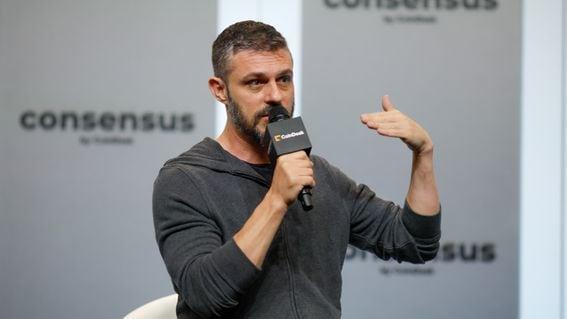
The creator of the Ordinals and Runes protocols discussed his motivations on stage at Consensus 2024. Casey Rodarmor says he has no regrets about the two controversial protocols, Ordinals and Runes, he launched on Bitcoin, which have made the original and most valuable blockchain a lot more like other, alternative chains. There are essentially two guiding principles that Rodarmor has followed since bursting on the scene as one of Bitcoin’s most influential coders: Bitcoin should remain secure and so should its applications. Note: The views expressed in this column are those of the author and do not necessarily reflect those of CoinDesk, Inc. or its owners and affiliates. The “only thing that's interesting about any sort of blockchain is the extent to which it can resist the government,” Rodarmor said on stage at Consensus 2024, in Austin, Texas, on Friday. “I view bitcoin’s (BTC) primary role as being hard money that individuals can adopt to transact and do all the things that they want to do with [it].” Although Ordinals and Runes have generated about as much antipathy as enthusiasm among bitcoiners, Rodarmor’s protocols are proof positive that it’s possible to build things using Bitcoin that are as difficult to stop as a bitcoin transaction is to censor. In so doing, he has kicked off a new era – sometimes called Bitcoin Season Two – celebrating the fact that Bitcoin can be used almost however you want. That said, Rodarmor readily acknowledged that Runes, his latest project, launched to coincide with the Bitcoin halving event on April 19, 2024, is decidedly less important than Bitcoin itself. He referred to the protocol, which enables the creation of tradable assets on Bitcoin similar to tokens on Ethereum, as a “sideshow.” “They are not as important as Bitcoin in this vein,” he said. “They provide the sort of niche, fun, degenerate thing” that crypto traders seem to desire. And that’s where the value of Runes and Ordinals comes from: by creating an outlet for on-chain gambling, they also help to bolster Bitcoin’s once-lagging fee economy. In fact, the historic halving event earned the highest fees ever paid for a bitcoin block, at just over $2.4 million in BTC. Transaction fees remained elevated through much of April, but have since normalized to around $3 on average, according to bitinfocharts. But that is higher than the sub-dollar prices seen through much of 2022 and 2023. “I for sure would not have done anything that I thought was bad for Bitcoin,” Rodamor said, explaining that due to the hard cap on the amount of bitcoins that will eventually enter into circulation via a mining subsidy, the network’s security will ultimately have to be paid for by transaction fees. “I would prefer those sources are here sooner rather than later.” Rodarmor added that his work is really part of a continuum of people building all types of tools, from chain swaps to different ways to configure transactions, that have the possibility of attracting “normal users.” However, these tools are only ultimately useful to Bitcoin if they “contribute to the security and robustness” of the network. “I think this gives people a preview of the destiny of Bitcoin,” he said. “They can see what it's like with very high fees.” All of this is important especially in light of Bitcoin’s “anarchic” governance structure – which, similar to Churchill's famous quote about democracy, is “dysfunctional” but likely the “absolute best form of governance that Bitcoin could have,” Rodarmor said. Because no one individual or entity is directly responsible for Bitcoin, the only shot of developing a sustainable fee economy is by shipping actual products. What “makes people uncomfortable about Bitcoin governance is that there is no formal governance,” Rodarmor said. If there were, it’s likely that protocols like Runes and Ordinals wouldn’t have been permitted. Several key figures in Bitcoin circles, including longtime developer Luke Dashjr, have been highly critical of Rodarmor’s projects, and have even moved to censor these types of transactions. “I personally would rather drink poison and jump off a bridge than try to participate in the Bitcoin Twitter/GitHub consensus process,” Rodarmor said. He noted that even though Ordinals and Runes have been an unexpected success story, he didn’t receive a grant or any funding to develop the protocols. “I’m an enthusiast,” he added. https://www.coindesk.com/opinion/2024/06/04/you-may-not-like-it-but-casey-rodarmor-proves-bitcoin-is-permissionless/
2024-06-04 09:17
Block Earner doesn't need to pay a penalty because it acted honestly in seeking to engage with government over regulation of crypto-related products and services. ASIC sued Block Earner over two of its products – Earner and Access. ASIC subsequently published a release entitled "Court finds Block Earner crypto product needs financial services licence." While the release acknowledged that ASIC had been unsuccessful in arguing that Access needed a license, the judge upheld Block Earner's claim that the release was "unfair and misleading." An Australian judge ordered the country's financial regulator to pay some of the costs of a legal dispute with crypto-based startup Block Earner and chided it for publishing a "misleading media release." The rebuke follows a February ruling by Judge Ian McNeil Jackman that Block Earner's yield-bearing "Earner" product was unlicensed while its DeFi "Access" service did not need the same licensing and could continue to be offered. The Australian Securities and Investment Commission (ASIC) sued Block Earner over the two products in 2022. ASIC subsequently published a press release entitled "Court finds Block Earner crypto product needs financial services licence." While the release acknowledged that ASIC had been unsuccessful in arguing that Access needed a license, Jackman upheld Block Earner's allegation that it was "unfair and misleading." Jackman also determined that the fintech company should be relieved of paying a penalty for Earner because it acted honestly in seeking to engage with the government over regulation of crypto-related products and services. ASIC was ordered to pay costs incurred by Block Earner after the federal court's Feb. 9 judgement. “The court rightly calls out ‘a deeper issue’ that the ‘rules of the legal system are promulgated and clear’ noting that obtaining legal advice in an emerging area like crypto will support an argument for relief from a penalty," Blockchain Australia Chair Michael Bacina said in a statement. “Crypto projects which charge ahead without seeking proper legal advice not only risk their products infringing the law, but also remove a potential argument for relief of a penalty in the event an innovative product in an area of unclear guidance end up being found to be infringing.” Read More: Australian Court Hands Over $41 Million of Crypto Held by Blockchain Mining Group at Regulator's Request https://www.coindesk.com/policy/2024/06/04/australian-regulator-scolded-over-misleading-release-must-pay-costs-as-block-earner-avoids-penalty/

2024-06-04 08:00
Floki is gearing up to introduce newer products in the coming months, including the Valhalla metaverse game on its mainnet. DWF Labs will buy $12 million worth of Floki tokens to support the meme coin's growing ecosystem, one Floki developer said. The purchase follows February's commitment to buy $10 million worth of FLOKI tokens, which contributed to a 50% price increase at the time. Crypto trading firm DWF Labs will buy $12 million worth of floki (FLOKI) tokens from the open market and the Floki treasury to support the dog meme coin-turned-utility project’s growing ecosystem, Floki developer “B” told CoinDesk on Tuesday. This follows a previous commitment to purchase $10 million worth of FLOKI tokens in February, which contributed to a 50% jump in FLOKI prices the following week. The trading firm has facilitated key exchange listings and partnerships with industry participants, which has helped boost sentiment around the Floki ecosystem, B said. Floki will release the mainnet version of its flagship utility product, the Valhalla metaverse game, later this year, the developer said. In the coming weeks, Floki will also release several key utility products, including the Floki trading bot and the .floki domain name service. DWF’s purchases will support the growth of these ventures and provide the requisite liquidity. Floki first announced a partnership with DWF Labs in May 2023, when the trading firm purchased $5 million worth of FLOKI tokens. Earlier this year, DWF Labs committed to investing $10 million in Floki's sister project, TokenFi, over a two-year period to develop a suite of artificial intelligence (AI) products. FLOKI prices have risen 8% in the past 24 hours, beating the 0.4% advance of the CoinDesk 20 Index (CD20), a a measure of the wider crypto market. https://www.coindesk.com/business/2024/06/04/dwf-labs-to-purchase-12m-floki-from-project-treasury-open-market/