2024-05-30 22:02
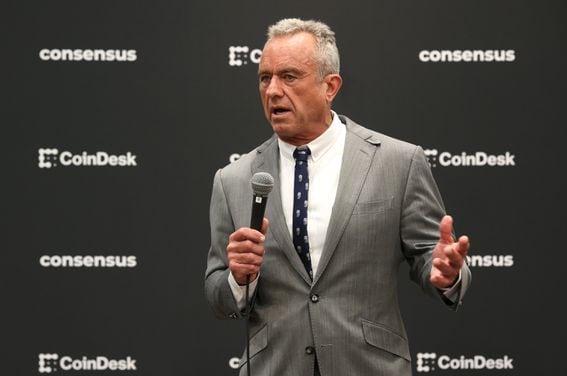
The U.S. presidential candidate spoke at Consensus 2024 Robert F. Kennedy Jr., the U.S. presidential candidate, spoke at a press conference Thursday at Consensus 2024 in Austin, Texas. Here are some of his comments: Donald Trump's guilty verdict "I'm going to talk about issues of broader concern. I want to focus on the economic issues and the health issues. That's what my campaign is about. I'm not going to get dragged into the dirt pile. I don't have any thoughts. I've been very disciplined in not talking about lawsuits against [Joe] Biden or Trump." Thoughts on Trump's new pro-crypto stance "I'm happy about that. I think it's a good thing for our country. Commitment to crypto is a commitment to freedom and transparency. I'm not going to question if it was a political decision. I'm happy he did it, and I hope President Biden does, too." Biggest issues facing crypto regulation in the U.S. "I think transactional freedom is one. We need sovereignty over our own wallets, transactional freedom and a currency that is transparent. We need to make sure America remains the hub of blockchain technology. I'm going to make sure cryptocurrency is regulated in a way that protects the consumer from deceptive schemes. I purchased 21 bitcoins since I started this campaign. I also bought three coins for each of my kids." What does the future hold for crypto fans? "My objective if elected president is that crypto is a transactional currency. That people can have transactional freedom. That people have a choice as to whether they can buy it. I think it should be treated as a currency; we shouldn't be taxing it as capital gains. I think there are issues in how we do that. I believe that it should be a currency used to purchase things like apples, lunches and coffee and that people can do that." What inspired him to run for president "I toyed with getting into politics when I was younger. For two decades I took that off the plate. I saw what happened during Covid and when the government shut down the economy. I thought it was wrong. The government shut down every church, attacked the 5th amendment, shut down business without due process … they shut down jury trials, they violated prohibitions and I saw this attack on the constitution and censorship, not just to me but so many people who were trying to talk. I saw that and it seemed so unethical to my country. All these traditional values for my party and my country were disappearing, and I felt I could play a unique role in showing people what America's supposed to look like." https://www.coindesk.com/policy/2024/05/30/robert-f-kennedy-jr-on-trumps-guilty-verdict-and-pro-crypto-stance/
2024-05-30 21:27
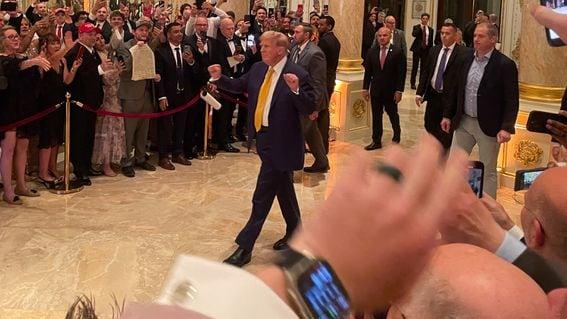
TRUMP dropped 35%, while Jeo Boden surged 20% in the aftermath. A jury finding Donald Trump guilty is more than just bad news for the former U.S. president: The announcement also smacked holders of the TRUMP meme coin. The token sank as much as 35% after the verdict. Meanwhile, Jeo Boden, a meme coin inspired by President Joe Biden, soared 20%. Trump was found guilty on Thursday by a New York jury on all 34 counts. He was accused of falsifying business records. He's the first U.S. president convicted of a felony. Over at Polymarket, the blockchain-powered prediction market, traders nonetheless continued to expect Trump to defeat Biden in the November election. Trump is well ahead – with 56% odds of winning, versus 38% for Biden – even after the verdict. CORRECTION (May 30, 2024, 21:35 UTC): Fixes misspelling of TRUMP. https://www.coindesk.com/markets/2024/05/30/trump-token-sinks-after-former-us-president-is-found-guilty-in-new-york/
2024-05-30 21:14
Attendees are cautious optimistic about apparent regulatory and legislative changes, though not everyone is convinced. AUSTIN, Texas – The biggest news this year at Consensus seems to be the political sea change happening in the Democratic party over crypto. While President Biden’s administration essentially carried over the same reluctant-to-the-point-of-being-nearly-hostile approach to crypto as its predecessor, ever since the bottoming out of the industry in 2022 (the year from crypto hell) it has been actively hostile. The easiest way to sum up Biden’s “whole of government” attempt to wrangle in the crypto industry is with the catchphrase Operation Choke Point 2.0, coined by VC Nic Carter to describe the apparent debanking of many crypto firms. Note: The views expressed in this column are those of the author and do not necessarily reflect those of CoinDesk, Inc. or its owners and affiliates. But in a matter of weeks, this has changed. Beginning with the bipartisan vote in the House and Senate to repeal the U.S. Securities and Exchange Commission’s (SEC) much-maligned accounting bulletin (SAB121) and extending to yesterday’s reveal that the Biden administration is reportedly doing outreach to crypto firms in a late-stage attempt to hear what they have to say about what good crypto policy would look like, it has become (nearly) believable that brighter days are ahead on the political, regulatory and legislative fronts for the domestic crypto industry. The feeling is in the air, probably because everyone appears to be voicing it out loud. For instance, yesterday on the Consensus stage, NYSE President Lynn Martin said that she doesn’t think that crypto will remain a “partisan” issue much longer. In the same way that stock and bonds are mostly apolitical, it doesn’t really make much sense to view crypto as inherently political (in fact, crypto may have a better case for actually being apolitical, given the technical design of protocols like Bitcoin). However, not everyone is in alignment here. For instance, a big name crypto lawyer who works for a red hot DeFi startup, who asked not to be named given the sensitivity of his work, said he doesn’t think Biden’s apparent change of heart is genuine. “He’ll likely revert back to course, if reelected,” he said. Asked whether he felt any weight off his shoulders at all, or whether his job has or will get any easier, under seemingly improving regulatory conditions, he said “absolutely not.” Today is the same as yesterday. Austin Campbell, a Columbia University business lecturer who is plugged into the D.C. circuit, echoed this idea when noting that the seemingly parallel change in Congress is not likely permanent. In fact, if you look at how the voting on the landmark Financial Innovation and Technology for the 21st Century Act (FIT21) happened, it largely broke down on age lines. Though this in itself could be a positive, given that younger members of Congress are more likely to “get it,” and despite the fact that U.S. politics is a gerontocracy, the dinosaurs won’t rule the world forever. This morning, Messari founder Ryan Selkis, who recently spoke with former President Trump at Mar-a-Lago Club, and Uniswap Labs chief lawyer Marvin Ammori, a longtime Democratic operative, actually debated the recent political machinations afoot on the Main Stage. Selkis’ main argument was that any easing up on crypto by the Democrats is largely a result of Trump capturing the “single issue” crypto vote, and that it should be treated as suspect. While Ammori argued that political changes don’t flip like a switch, and that things like SAB121 and FIT21 were the result of real bipartisan collaboration and successful crypto lobbying. “My point is, we don't necessarily want to be partisan, because that will be a setback in the long term,” Ammori said. In other words, crypto should be wary of aligning itself with any one party or any one candidate – especially considering that campaign promises are rarely kept. For his part, Selkis wanted to step out of wishful thinking (i.e., that Democrats could be suddenly supportive of crypto after so many years) and into the realm of realpolitik (i.e., that if the theory of bipartisan support were true, it’d be because Dems’ needs have shifted). “Democrats right now are like a cheating spouse; we caught them with their pants down,” Selkis said. “To reward this Democrat, mainstream party at this point in time is not only foolish, but I think it shows a profound lack of self-respect – they need to do penance.” https://www.coindesk.com/opinion/2024/05/30/everyone-at-consensus-24-is-talking-about-bidens-crypto-flip-flop-is-he-for-real/

2024-05-30 20:07
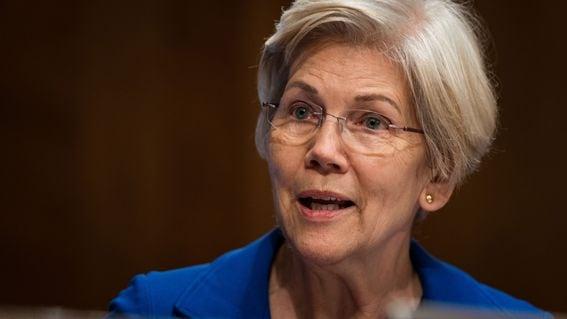
The Massachusetts Democrat called for answers from the U.S. drug agencies today on progress in the crackdown on drug traffickers' use of crypto. U.S. Sen. Elizabeth Warren (D-Mass.) is demanding to know how the Biden administration is doing in throttling the use of cryptocurrencies in the trafficking of fentanyl, according to a letter she and another lawmaker sent to the White House Office of National Drug Control Policy and the Drug Enforcement Administration (DEA). Warren and Sen. Bill Cassidy (R-La.) asked for updates on "actions to crack down on drug traffickers’ exploitation of crypto to grow their business and launder their ill-gotten gains," the letter said, arguing that "cryptocurrency has played an increasingly prominent role in the global fentanyl trade over the past decade, both in terms of facilitating the manufacturing and trafficking of fentanyl and in laundering drug cartels’ criminal proceeds." The U.S. Treasury Department and federal law enforcement agencies have pursued networks and individuals involved in the trafficking of fentanyl precursor chemicals. Read More: Chinese Firms Used Crypto Payments to Run Fentanyl Network, U.S. Claims in Charges Warren suggested last year the need for laws to shut down use of digital assets in that segment of the global drug trade. The senator faces election this year, and the announcement of her latest letter was made a few hours before the appearance at CoinDesk's Consensus 2024 event of John Deaton, a crypto-supporting Republican trying to unseat the prominent lawmaker. https://www.coindesk.com/policy/2024/05/30/sen-warren-wants-to-know-how-drug-agencies-are-pursuing-crypto-ties-to-fentanyl/
2024-05-30 19:02
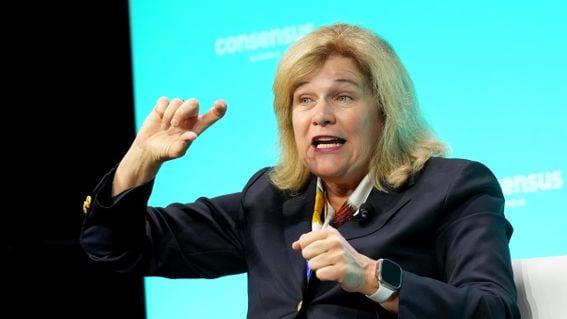
The president and CEO of the asset management giant said blockchains are "transformational tech" that can help drive down operational costs during a panel discussion at Consensus 2024. AUSTIN, TX — Franklin Templeton, the $1.6 trillion asset manager based in Silicon Valley, has been at the forefront of traditional finance heavyweights pushing into the digital asset space. "We have looked at blockchain tech [and found] this is going to be transformational and we better make sure we understand it," Jenny Johnson, president and CEO of Franklin Templeton, said during a Thursday panel discussion at Consensus 2024 in Austin. That's why the company is running about 30 validator nodes on 12 different blockchains, for example, on Ethereum (ETH), Cardano (ADA), Stellar (XLM) and Provenance, Johnson said on the panel. That's more than what the asset manager's website shows, which mentions six networks including the same four blockchains plus Polkadot (DOT) and Solana (SOL). RWA tokenization A key allure of blockchain technology, she explained, is the efficiency to record and reconcile transactions and its potential for cost savings. "Franklin [Templeton] today has a huge number of people, a couple hundred, who just reconcile [data] between systems, then we have to reconcile with our counterparty and another firm," Johnson said. Blockchains offer a single "source of truth" and record timing of transactions better than conventional processes, she said, which could help cut costs and decrease administrative workload. "We're in a business where we're constantly being pressured to drive down the costs of the delivery of what we do," she added. One example benefitting from blockchain is tokenization, making real-world assets such as funds and bonds available on digital asset rails. Franklin Templeton was a pioneer, she said, launching the first money market fund available on-chain using the Stellar network in 2021, years before rivals like BlackRock entered the space. Bitcoin ETFs Franklin Templeton was one of the 11 issuers approved to list spot-based bitcoin exchange-traded funds in the U.S. in January, and is also among those waiting for approval to launch a similar vehicle for the second-largest cryptocurrency ether. Johnson said that many people are attracted to bitcoin (BTC) as an asset outside of the banking system that's resistant to government seizure, but ETFs offer a well-understood vehicle to get exposure. "For me, it's a vehicle of choice," Johnson said. "An ETF is a regulated entity, which makes a lot of people more comfortable who wouldn't have transacted in this space otherwise." https://www.coindesk.com/business/2024/05/30/franklin-templetons-jenny-johnson-on-bitcoin-etfs-rwa-tokenization-and-blockchains-potential-for-tradfi/
2024-05-30 16:04
Do Kwon is currently out on bail in Montenegro, awaiting extradition to either the U.S. or South Korea. Do Kwon and the company he co-founded, Terraform Labs, have agreed to a "settlement in principle" with the SEC in a civil case alleging fraud. Terra’s LUNA token surged as much as 38% after news of the agreement became public. Terraform Labs and co-founder Do Kwon have reached a "settlement in principle" with the U.S. Securities and Exchange Commission (SEC) over a civil case alleging fraud, according to a court filing Thursday. Terraform’s LUNA token climbed as much as 38% to the highest since April 12 after news of the agreement became public, according to data on charting platform TradingView. A listing for the District Court for the Southern District of New York refers to a May 29 telephone conference, "without transcription or recording." Counsels for all the parties were present. The scheduled oral arguments were "cancelled because the parties have informed the Court that they reached a settlement in principle." The parties must file documentation in support of the settlement in front of Judge Jed S. Rakoff by June 12. The development comes less than two months after a Manhattan jury delivered a 'liable' verdict after a nine-day trial. The SEC had accused Terraform Labs and Kwon of misleading investors about the stability of its products. The $40 billion ecosystem based around the algorithmic stablecoin UST and an earlier version of LUNA collapsed in May 2022, triggering an industry-wide contagion. Later that month, the SEC said it was looking to impose a $5.3 billion penalty to settle the case, its steepest fine yet on a cryptocurrency project. Terraform replied in court that only an “appropriate civil penalty” per violation should be imposed. During the trial, CEO Chris Amani had said the company was undergoing bankruptcy proceedings and had only approximately $150 million in assets remaining. Lawyers of Do Kwon said Kwon has “no illegal profits … to disgorge.” Do Kwon is currently on bail in Montenegro, awaiting extradition to either the U.S. or South Korea. He also faces criminal charges in New York, as well as in South Korea. Read More: Do Kwon's Huge Fine Shows the SEC Is Ratcheting Up Penalties Against Crypto Firms https://www.coindesk.com/policy/2024/05/30/terraform-do-kwon-agree-in-principle-to-settle-fraud-case-with-sec-court-filing/