2024-05-29 22:55
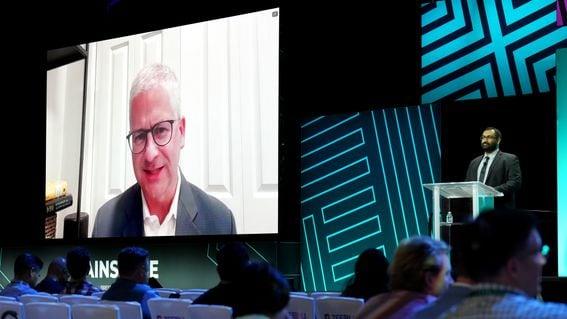
Rep. Patrick McHenry – the chief GOP negotiator on crypto legislation – said future policy is now assured by a major bipartisan showing for his effort in the House of Representatives. Patrick McHenry, the retiring chairman of the House Financial Services Committee, said he's confident that his crypto legacy will become permanent policy by 2025. The so-called FIT21 crypto bill is now a "consensus product" of the House and can't be ignored, he said. Rep. Patrick McHenry (R-N.C.) vowed the crypto industry won't have long to wait to get U.S. regulations, now that the U.S. House of Representatives has shown the way. "We will have crypto law within the next year, and I can say that with certainty," McHenry, the chairman of the House Financial Services Committee told an audience Wednesday at CoinDesk's Consensus 2024. "Crypto policy is inevitable, and crypto law is inevitable." McHenry, who has been wrangling the crypto legislation in the House, argued that the outcome is assured by the massive level of bipartisan backing last week for his Financial Innovation and Technology for the 21st Century Act (FIT21) – with more than a third of House Democrats showing up to vote yes, despite pushback from the White House. He said the momentum will carry into the next congressional session in 2025, if it has to, and will lift the market-structure bill and the long-awaited legislation to regulate stablecoin issuers. "We basically have a consensus product out of the House of Representatives," McHenry said. "That's a huge thing that we have to take advantage of and leverage it into law." Read More: U.S. House Approves Crypto FIT21 Bill With Wave of Democratic Support Meanwhile, the prominent House lawmaker, who is retiring from Congress at the end of the year, said he'll keep trying to find a way to keep the legislation alive this year. While granting that "the Senate's a more complicated beast," he said he'll be trying to find some way to get the bill over the finish line and to President Joe Biden's desk before he leaves Congress. When asked whether he had a specific must-pass bill to tie it to, he said, "anything and everything – that's what I'm looking for." Earlier in the day at Consensus, a senior member of his Republican caucus, Rep. Tom Emmer (R-Minn.), suggested that crypto legislation has its best chance of success toward the end of this year, when Congress is transitioning out of this session and toward the next – known as the lame-duck session. McHenry's 2025 promise may be tempered somewhat by the fact that he'd said something similar at the same Consensus event a year earlier, but he explained Wednesday that he had no way of predicting the chaos of the House Republicans' leadership battles that left him as the stand-in speaker for a short time and effectively stalled legislative progress. While U.S. lawmakers and crypto executives were meeting at Consensus in Austin, Texas, to speak about current events in crypto – often criticizing the approach of SEC Chair Gary Gensler – the regulator posted a fresh alert on Wednesday warning of crypto scams. "Fraudsters often use innovations and new technologies to perpetrate investment scams, and this has been the case with crypto asset securities-related investments," the agency said in its newest alert. https://www.coindesk.com/policy/2024/05/29/us-lawmaker-at-center-of-crypto-negotiation-predicts-digital-assets-law-by-next-year/
2024-05-29 22:41
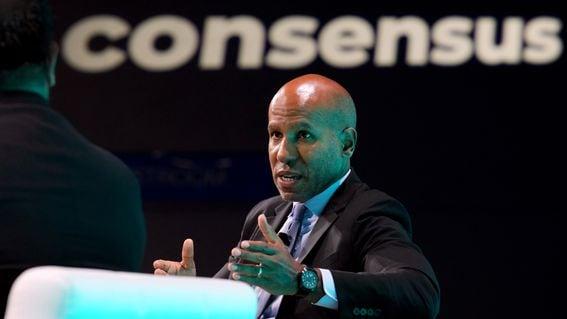
FinCEN’s 2023 proposal to require crypto companies to report transactions that involved mixing is about transparency, not banning mixers, said Brian Nelson, U.S. Treasury undersecretary. AUSTIN, Texas – The U.S. Department of the Treasury is not attempting to ban cryptocurrency mixing services, a top official said Wednesday. Speaking at CoinDesk’s annual Consensus conference in Austin, Brian Nelson – the Treasury’s Under Secretary for Terrorism and Financial Intelligence – addressed the Financial Crimes Enforcement Network’s (FinCEN’s) 2023 proposal to classify mixers as a “primary money laundering concern” and require virtual asset service providers (VASPs) to report any crypto transactions that involved mixing to the agency. FinCEN’s proposal – along with an increasing number of enforcement actions by the U.S. Department of Justice against mixing services including Tornado Cash and Samourai Wallet – have been seen by many in the industry as evidence of a coming attempt to ban crypto mixing in the U.S. entirely, which the Treasury is firmly denying. “At the end of the day, this [proposal] is not a ban on mixers,” Nelson said. “This is a proposed rule designed to drive transparency.” Nelson said he’s sympathetic to crypto users’ desires for financial privacy, but suggested that the industry and Treasury should work together to find ways to enhance privacy without enabling terrorist financing. “From our perspective, we believe that there is a difference between obfuscation and anonymity enhancing services that support privacy – we of course totally recognize that, in the context of public blockchains…that there would be a desire to have a certain degree of privacy,” Nelson said. “In that spirit, we want to work closely with industry to identify and collaborate on tools that can enhance privacy.” Nelson said that the majority of mixers he’s seeing are not actually created to enhance privacy, but are made to skirt anti-money laundering (AML) and know-your-customer (KYC) reporting requirements, thus making them “very attractive” to bad actors, including North Korea. “It’s not that everybody needs to know who you’re transacting with,” Nelson said – just that people and VASPs alike need to know they’re not “unwittingly” funding Hamas or North Korea’s weapons program. https://www.coindesk.com/policy/2024/05/29/us-treasury-isnt-trying-to-ban-crypto-mixers-top-official-says/
2024-05-29 21:14
NYSE President Lynn Martin and Bullish CEO Tom Farley discussed crypto regulations, changing U.S. politics and the limitations and opportunities of blockchain tech to improve traditional markets. NYSE President Lynn Martin is open to offering crypto trading, but the lack of clear regulatory guidance is an obstacle, she says. U.S. regulatory environment will improve in the next couple years regardless of the election outcome, Tom Farley, the CEO of Bullish and Martin's predecessor at NYSE, predicted. AUSTIN, TX — The New York Stock Exchange would consider offering cryptocurrency trading if the regulatory status of such an expansion by the stock market giant was clearer, the company's president said. "If there was clear regulatory guidance [in the U.S.], it would be an opportunity to look at," Lynn Martin said Wednesday during a panel discussion at Consensus 2024 in Austin, Texas. U.S-listed spot bitcoin (BTC) exchange-traded funds (ETF) amassing $58 billion of assets is "a strong sign" that there's demand for regulated crypto products, she added. While traditional financial markets and digital assets are increasingly getting more intertwined with more traditional financial heavyweights offering crypto products, the lack of regulatory clarity is still weighing on the industry slowing innovation, Martin and Tom Farley, CEO of crypto exchange Bullish, discussed during the panel discussion. (Bullish is the parent company of CoinDesk. Farley previously had Martin's job at NYSE.) "The fact that you've seen $58 billion or so come to the ETFs has been a strong sign that the market is looking for regulation in traditional structures," Martin said. "So, hopefully, the [U.S. Securities and Exchange Commission] saw the inflows and said, 'Hey, this makes a lot of sense,' considering bitcoin ETFs have been a tremendous success." NYSE's U.S.-based rival, the Chicago Mercantile Exchange (CME), a giant in regulated crypto futures trading, is planning to launch spot crypto trading to clients, the Financial Times reported earlier this month. Farley highlighted the sudden change of heart towards crypto in U.S. politics, including the ousting of the anti-crypto chair of the Federal Deposit Insurance Corp. (FDIC), the passage of the Financial Innovation and Technology for the 21st Century Act (FIT21) bill in the House, and Republican presidential frontrunner Donald Trump doubling down supporting crypto in a rapid chain of events. "Five years of evolution happened in five minutes," he said. "I'm really optimistic about what it means in this country. I think, just like in Europe, just like in Hong Kong, you're going to have regulators codified, 'Hey, what's your reasonable digital assets industry look like.'" "You're gonna see progression in 2024 and 2025, irrespective of whether or not it's Trump or Biden or Michelle Obama [will be president]," he added. Martin said she continues to be optimistic about using blockchain technology to make financial processes more efficient and transparent, especially for less liquid assets such as municipal bonds. However, Farley said traditional, real-world assets won't migrate to digital asset rails en masse given regulators' distrust towards public blockchain plumbing. "Regulators want to get their power-hungry, sticky little fingers on everything," he said. "How do you get your fingers on the Solana? How do you get your fingers onto something that's decentralized?" Hence, regulators would likely push TradFi firms towards developing private blockchains instead of using the existing blockchains for settlement, he said. https://www.coindesk.com/business/2024/05/29/nyse-would-consider-crypto-trading-if-regulatory-picture-were-clearer-president-says-at-consensus-2024/

2024-05-29 19:00
"Illicit actors can use NFTs to launder proceeds from predicate crimes, often in combination with other methods to obfuscate the illicit source of proceeds of crime," the Treasury found. The risk assessment is the Treasury's first into NFTs as a means of carrying out fraud and other crimes. The Treasury determined that NFT platforms "lack appropriate controls" to combat money laundering and sanctions evasion. The U.S. Treasury Department said non-fungible tokens (NFTs) are "highly susceptible to use in fraud and scams and are subject to theft," in a new risk assessment about illicit finance, its first into NFTs as a means of carrying out fraud and other crime. "The report determines that illicit actors can use NFTs to launder proceeds from predicate crimes, often in combination with other methods to obfuscate the illicit source of proceeds of crime," the Treasury said on Wednesday. The Treasury also determined that NFT platforms "lack appropriate controls" to combat money laundering and sanctions evasion. Therefore it recommends further application of regulations to NFTs and the platforms they are traded on. A U.S. government study into NFTs in March concluded that no specific legislation was required to deal with concerns around copyright and trademark infringement. The Treasury's assessment, however, addresses the financial aspect of the NFT market more directly. Read More: NFT Providers May Need Registration to Comply With UK Money Laundering Rules https://www.coindesk.com/policy/2024/05/29/us-treasury-describes-nfts-as-highly-susceptible-to-use-in-fraud-and-scams/
2024-05-29 18:18
The financial industry veteran discusses ETFs, tokenization and future banking blockchain opportunities. Approval of bitcoin ETFs was a "big psychological turning point," reigniting retail trading interest in crypto and bringing in new types of institutions. Tokenization is a growing trend due to the sheer benefits of "digitizing the lifecycle" of asset issuance by improving firms' operating efficiency and increasing liquidity. Crypto has the ability to transform parts of the financial system to operate in more efficiently. AUSTIN, TX — Goldman Sachs, the 150-year-old investment bank, is getting deeper into crypto, according to the firm's global head of digital assets, Mathew McDermott. The executive, a 19-year veteran of the bank, helped found its digital asset desk in 2021 and has since led efforts to introduce a suite of products and services including liquidity in cash-settled derivatives, options and futures crypto trading. McDermott, who sits on the boards of Coin Metrics and HQLAx and advises firms like One River Digital and Elwood Technologies, discussed a number of topics at Consensus 2024, including the viability of other crypto-based exchange-traded funds (ETFs) after ether (ETH), where the biggest opportunities remain for firms like Goldman and the rising popularity of tokenization. ETFs and beyond "The bitcoin ETF obviously has been an astonishing success," McDermott said on stage at the Money Reimagined summit. This has not just recatalyzed retail trading interest in crypto broadly, but has also started to bring in new types of institutions making new types of plays. It was a "big psychological turning point" for the industry. Will that translate into the U.S. Securities and Exchange Commission approving a wider swathe of crypto-based products? The securities watchdog recently approved applications from exchanges like Cboe, NYSE Arca and Nasdaq that want to list ETH ETFs, but may take months to pass the S-1 filings from wannabe issuers like Ark Invest, Bitwise, BlackRock, Fidelity and Grayscale, among others. "This is a natural progression that ETH will hopefully be approved to be a fully tradable ETF," McDermott said. Whether that "opens the door for everybody else" like Solana (SOL). Perhaps, but perhaps not – due to the established dominance of the big two cryptos. "From my vantage point, our clients typically just focus on bitcoin and Ethereum – they're the two products that have tradable futures on the CME. So that's why you can see a positive read [on ETH ETFs]. In terms of others, I think we could be positive, but I think it's too early to say." Tokenization Goldman was undoubtedly early to the tokenization trend, though has yet to fully embrace using open blockchains. McDermott said the firm's decision to use private, permissioned chains beginning in 2021 had more to do with the uncertain legal environment than any sort of "strong ideological position." "For us, seeing what our clients want to do then becomes 'how can you service our clients'. It's been important to have our own platform to move in a slightly more expeditious way," he said. Because clients like wealth managers and institutional investors' needs can change, the firm has "options" on where it ultimately "settles." Ultimately, McDermott says, he sees tokenization as a growing trend due to the sheer benefits of "digitizing the lifecycle" of asset issuance, which not only improves firms' operating efficiency but also liquidity by potentially bringing in a wider group of investors. "If you can actually create a product that you can fractionalize and offer up to a much broader universe of investors that not only broadens the distribution channel but also concentrates more secondary liquidity – that is very powerful," he said. Where to next? While McDermott said Goldman is already well on the way to proving the "commercial viability" of banks using blockchains, a lot of the products today are relatively "vanilla." Nevertheless, if the tokenization of staid asset classes like money market funds continues, that means an additional $4.7 trillion in collateral that can be used to create derivatives and repos. "That's hugely powerful," he said. "As you get clarity on the regulations, you get more people coming in on the sell side and start showing the viability of the market on-chain," he said. "You can then start to build out and tap into these other asset classes where the value proposition probably is great," like real estate and green debt issuance. Might crypto ever replace banks? "Institutions like ours actually see the potential in how it can transform where parts of the financial system can operate in a much more efficient way." https://www.coindesk.com/business/2024/05/29/tradfi-rushes-in-goldman-sachs-digital-assets-lead-matthew-mcdermott-on-the-institutional-embrace-of-tokenization/

2024-05-29 17:56
The Republican majority whip, Rep. Tom Emmer, suggested headwinds for a major crypto bill in this waning session, with a best shot in the so-called lame-duck session after the election. One of the top members of the U.S. House of Representatives predicted that the best remaining chance for major crypto legislation this year is in a tight window at the end of the congressional session. Republican Emmer noted the major recent support from Democrats in Congress for crypto measures, but he suggested the U.S. Senate probably has significant work to do. Despite the crypto industry's high-profile recent wins in Congress, major legislation faces a massive practical roadblock in the Senate, U.S. Rep. Tom Emmer (R-Minn.) acknowledged Wednesday, saying that chamber will want its own say in a big crypto bill, leaving little time in the waning congressional session. If there's a chance for the House-approved Financial Innovation and Technology for the 21st Century Act (FIT21), Emmer said said at CoinDesk's Consensus 2024 event in Austin, Texas, it's "probably more likely during the lame-duck" – the session of Congress that occurs between the election and the transition to the new session at the start of the year. It's a period in which must-move legislation is often targeted with unrelated add-on bills that can jump into law through fast-moving negotiations. In the normal legislative course, Emmer, who is top leader in the House as the majority whip for the Republican caucus, pointed out that FIT21 – which got hefty support in the House – is now on-deck in the Senate. If lawmakers there actually pick it up or engage in serious work on a similar bill, that effort would need another run-through in the House. "They're going to want to change it, which means it comes back to the House," Emmer said, though he noted the major emerging support from Democrats on this and other crypto matters. On FIT21, the first comprehensive digital assets legislation to win approval in one of the chambers of Congress, 71 Democrats joined in the yes vote despite opposition from President Joe Biden, including former Speaker of the House Rep. Nancy Pelosi (D-Calif.). Similarly, a separate effort to overturn a U.S. Securities and Exchange Commission accounting policy, Staff Accounting Bulletin No. 121 (SAB 121), drew a hefty surge of Democrats when it passed the House and Senate, including from Senate Majority Leader Chuck Schumer (D-N.Y.) Biden threatened to veto that resolution. Emmer said there is "a ton of goodwill under the surface" for such crypto issues. He argued events have overtaken the "anti-crypto" Sen. Elizabeth Warren (D-Mass.), who he said has an outsized influence over the White House. Emmer also argued that crypto-critical SEC Chair Gary Gensler is "on his way out" and losing favor in the administration. Still, he warned, "I'd be very careful about trusting a cornered animal." Read More: U.S. House Approves Crypto FIT21 Bill With Wave of Democratic Support https://www.coindesk.com/policy/2024/05/29/us-houses-emmer-says-best-hope-for-crypto-legislation-is-year-end-session/