2024-05-23 06:53
All the updated forms removed the provisions for staking ether, which some say was causing a regulatory roadblock. BlackRock, Grayscale, and Bitwise filed amended 19b-4 forms with the SEC for their proposed spot ether ETFs, removing staking provisions. This change was likely made to avoid regulatory roadblocks. Staking is considered a form of passive income in the crypto world. BlackRock, Grayscale and Bitwise on Wednesday filed amended 9b-4 forms with the U.S. Securities and Exchange Commission (SEC) for their proposed spot ether exchange-traded funds (ETFs). All the updated forms removed the provisions for staking ether, which some say was causing a regulatory roadblock. “Neither the Trust, nor the Sponsor, nor the Ether Custodian [...] nor any other person associated with the Trust will, directly or indirectly, engage in action where any portion of the Trust’s ETH becomes subject to the Ethereum proof-of-stake validation or is used to earn additional ETH or generate income or other earnings,” the amended BlackRock filing said. Staking is the process of locking specific cryptocurrencies for a set period to help support the operation of a blockchain, in turn, for a reward. These rewards are considered mainly passive income among crypto traders. As of Thursday, annualized yields on ether staking were nearly 3%, according to data from popular staking service Lido. All ether ETF hopefuls have now filed their amended proposals ahead of an approval or disapproval decision expected on Thursday. Fidelity filed its amended S-1 forms earlier this week, dropping its staking plans. Later, VanEck, Franklin Templeton, Invesco Galaxy and ARK 21Shares filed similar amendments to remove staking. Hashdex is the only issuer yet to file an amendment to its Ethereum ETF. As such, the Depository Trust and Clearing Corporation (DTCC) has started listing VanEck’s Ether ETF under the ticker symbol ETHV on its site, which some take as a positive sign. On Monday, influential Bloomberg analysts Eric Balchunas and James Seyffart updated their odds of approval to 75% from the earlier 25%, causing a market-wide jump. Ether rose over 17%, while bitcoin retook the $71,000 mark for the first time since early April. Market watchers have described the move as a sudden change in tone for the SEC, which was earlier said not to be considering the approval of an ether ETF. In an interview with Unchained, Seyffart said the issue had become “political,” with the decision coming “from above, likely Biden.” https://www.coindesk.com/policy/2024/05/23/blackrock-grayscale-bitwise-file-updated-19b-forms-in-rush-for-ethereum-etf/

2024-05-23 06:10
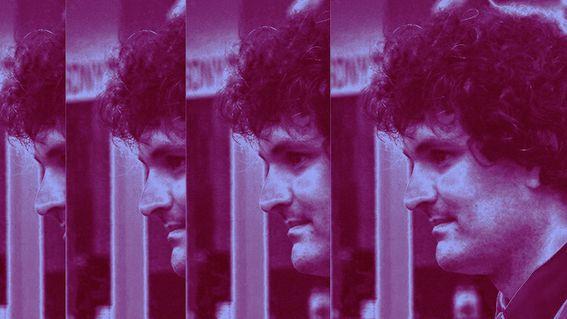
The location of the new prison is undisclosed as of early Thursday, but is thought to be in California, WSJ said. He is likely to be placed in a medium-security prison. Sam Bankman-Fried is being relocated to a new prison, likely in California, as he works on an appeal to overturn charges. The transfer process is expected to be slow, and the exact location of the new prison is undisclosed. Convicted crypto fraudster Sam Bankman-Fried is being moved to a new prison away from New York as he works on an appeal to overturn charges, per a WSJ report. The location of the new prison is undisclosed as of early Thursday but is thought to be in California, WSJ said. He is likely to be placed in a medium-security prison. However, the judge who oversaw Bankman-Fried's trial issued an order that recommended he be kept jailed in New York "to facilitate access to appellate counsel." As such, the actual transfer could take over a month, as the process is thought to be slow. In March, the crypto mogul was sentenced to 25 years in prison and ordered to forfeit $11 billion. He was earlier convicted of seven counts of fraud, conspiracy, and money laundering. Sam Bankman Fried's FTX exchange, formerly the world's third largest, went bust in November 2022 after a CoinDesk scoop said the platform's sister concern, Alameda Research, was on shaky financial footing. https://www.coindesk.com/policy/2024/05/23/ftx-fraudster-sam-bankman-fried-being-transferred-to-new-prison-wsj/
2024-05-22 21:42
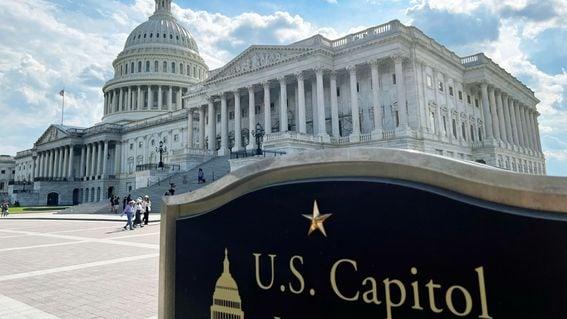
The House's passage of the digital assets legislation passes the crypto baton to the Senate, where odds remain low for decisive action. The U.S. House vote goes 279-136 to approve the Financial Innovation and Technology for the 21st Century Act with a very strong showing from House Democrats. The passage of the crypto market-structure bill marks the industry's most significant legislative accomplishment in Congress. The crypto industry recorded its biggest-ever U.S. policy win on Wednesday when the House of Representatives approved a wide-reaching bill to establish regulations for digital assets markets, recording a 279-136 vote that saw Democrats crossing party lines to support it. Latest News: U.S. House Passes Bill Banning Federal Reserve From Issuing a CBDC The Financial Innovation and Technology for the 21st Century Act (FIT21) marks the first time a major crypto bill has cleared one of the chambers of Congress. The issue now heads to the U.S. Senate, where its future is much murkier, because there's no counterpart bill. Support for such an effort remains unclear there, and the necessary committees haven't done the same level of work on crypto. The U.S. has fallen behind other global jurisdictions in establishing crypto regulations, and despite the win on Wednesday, implementing such oversight is far from complete. "We need rules of the road," said Rep. Josh Gottheimer (D-N.J.), one of the Democrats who bucked the opposition of the White House and the ranking Democrat on the House Financial Services Committee, Rep. Maxine Waters (D-Calif.). He called it "well-reasoned, thoughtful, bipartisan legislation" and argued before the vote that "it's fit to become law if we work together." Overall, 71 Democrats and 208 Republicans voted in favor of the bill, versus 3 Republicans and 133 Democrats who voted against. President Joe Biden opposed the bill with a policy statement, though he didn't say he'd veto the bill, as he had recently when Congress sought to overturn a Securities and Exchange Commission (SEC) effort to set crypto accounting policy. SEC Chair Gary Gensler also came out strongly against the legislation in a lengthy public statement arguing the bill wasn't needed and endangered existing securities regulations. The legislation – largely driven by House Republicans – would establish a regime to regulate the U.S. crypto markets, setting consumer protections, installing the Commodity Futures Trading Commission (CFTC) as a leading regulator of digital assets and the watchdog of the non-securities spot markets and it would more clearly define what makes a crypto token a security or a commodity. Waters argued that the bill is seeking to let the crypto businesses who have been dodging securities laws avoid responsibility. "They have already made billions of dollars unlawfully issuing or facilitating the buying and selling of crypto securities," Waters said. "And Republicans are now proposing to reward these illegal activities by making these activities legal." Prior to Wednesday afternoon's vote, the House debated a handful of amendments to the bill, including by Reps. Greg Casar (D-Texas), Brittany Pettersen (D-Co.), Ralph Norman (R-S.C.) and Scott Perry (R-Pa.). Casar's amendment to change a crowdfunding exemption from $75 million to $5 million was defeated, but the rest were adopted. Read More: Crypto Industry Rallies Behind House Bill as It Heads Toward Final Vote https://www.coindesk.com/policy/2024/05/22/us-house-approves-crypto-fit21-bill-with-wave-of-democratic-support/
2024-05-22 21:19
The island-country’s digital minister has radical ideas for using open-source technology to provide public goods. Her approach is called Plurality and it’s gaining attention across the world. Daniel Kuhn meets her. A new political philosophy has entered the chat. “Plurality,” the title and central subject of a new book by Microsoft’s internal economist Glen Weyl and Taiwan’s former (as of yesterday) Minister of Digital Affairs Audrey Tang, is the idea that collaboration-enhancing technologies should be more widely embraced both by the public and state. Societies should learn to cherish a wider range of viewpoints, the authors argue, and one of the ways to foster that state of mind is through technologies – perhaps blockchains – that enable us to come together. The book is essentially a coda to Tang’s career as a public servant as well as an outgrowth of Weyl’s previous techno-political theory meant to counter the malaise overtaking a world beset by wealth inequality and economic stagnation, laid out in “Radical Markets.” Tang, who entered public office to help advance Taiwan’s digital developments in 2016 (and was appointed its first digital minister in 2022), stepped down on Monday to go on a world tour to speak about the theory of Plurality and educate politicians on Taiwan’s groundbreaking civic digital experiments. You may be asking yourself how it is that advocating for a diversity of opinions, healthy civic debate and technology is a novel political strategy. And you’d be right! But what sets Plurality apart is Tang’s tangible experience running large scale, open-source, public, digital infrastructure projects like the g0v project (pronounced Gov Zero), which created open source and interactive alternatives of Taiwan’s government websites, and vTaiwan, which enabled citizens to petition for policies. In other words, there is praxis to Tang and Weyl’s theory – a goal in action. Weyl has described Plurality as something similar to environmentalism; it only works if you do it. The dream is to get the whole world on-boarded onto this system, advancing democracy and open-source technological innovation simultaneously. The book itself is a working example of Plurality: written collaboratively with a number of co-authors, the book is freely available to all (here) and something they hope to add to over time. “Our project will be carried out in conjunction with Plurality research and implementation,” Tang and Weyl write in an announcement post. “We don't just need hackers and writers, we need designers, storytellers, marketers and distributors to work with us. Under no circumstances will Glen and Audrey receive any compensation or royalties for writing this book, in keeping with the legal code that accompanies their positions; revenue will only be used to support the community and philanthropic mission we hope to build.” CoinDesk caught up with Tang (who by all accounts has had a fascinating life, which was detailed yesterday in a TIME profile and will soon be the subject of a documentary) to discuss the writing of the book, how to convince governments to embrace progressive technology and what it means to be a “good enough ancestor.” This interview has been edited for length and clarity. To start off with an easy one: What was it like writing a book with Glen Weyl? So the book actually started two years ago even before I was appointed as minister of digital affairs. So in a sense, it grew with the ministry. As you understand, our ministry got started when the unprovoked war on Kyiv happened, when people suddenly started to care about resilience. And so a lot of the ideas from the book, like IPFS, decentralization and Web3 for redundancy, suddenly became a topic of focus when our ministry first started a year and a half ago. I think it's both very practical that those cutting edge ideas get used in Taiwan, and also highly enjoyable in the sense that people care about Taiwan. But they may not know how a civic tech ecosystem functions or how the state can fund a lot of decentralized technology as public infrastructure in the same way it builds highways and bridges. There was a lot of mutual learning. I would also point out that as a result of co-writing this book, both Vitalik Buterin and Glen have become residents of Taiwan. They got gold cards, which we hand out for anyone who contributes for 8 years or more to open source or any of the internet commons. For people who would hear the gist of the book and assume that it's another form of technical libertarianism, could you describe exactly what you mean by “plurality?” Sure, so plurality means collaborative diversity, right? It means technology that fosters diversity. So in that sense, it is a little bit similar to the idea of decentralization where everybody can host their own systems. But there's another dimension of effective collaboration and coordination, which we loosely refer to as democracy but it's not about just voting. It is about a continuous form of democracy that allows, for example, AI facilitated deliberation between people holding very conflicting ideas to build bridges for people who were originally ideologically opposed. I would say this form of collaboration sounds a little bit technocratic, that diversity sounds a little bit libertarian, but it is a unique combination of the two – collaborative diversity – that sets plurality apart. So I liked the book. It was a love letter to Taiwan in some sense, but how would you best persuade governments outside of Taiwan to adopt these democratic experimentations? Well, first of all, I think we learn from a lot of other governments as well. Our reputation system came from Reykjavik, Iceland. Our participatory budget system came from Barcelona. And of course, we were inspired by the internet consultation in Brazil from more than 10 years ago. And so there's a long tradition of working with internet technologies, not for the government to govern the internet, but using internet technologies to improve the governance of government itself. What Taiwan can contribute here is that we have advanced some of the more, I would say, resilient defenses against polarization attacks, you know, information manipulation attacks, deep fakes, transnational fraud and pandemic misinformation – you name it. For example, we've managed to overcome the polarization tied to our January election, without people hating each other. That's partly thanks to participatory fact checking, where we set up a community with 1000s of contributors and music to spread the idea of super fact checking. So as you can see, in any jurisdiction where there are similar threats or a similar urgency for clarity, these ideas take hold and the grassroots community just grows from there. Just off of the idea of crowdsourcing truth. X has a version of it. Do you think these different programs are better run by the government or by private corporations? Yeah, I think that the greatest thing about Community Notes is that it really is open source. I remember Vitalik set up his own node to verify what x.com did was correct. So because it's open source, you can think of it as a layer. Imagine, not just for x.com, but for anybody in the fedi-verse where you can conceivably you can build a Community Notes, including Threads and other things, and in a sense making this not just a jury duty of sorts, but rather making it a alternate entry point where the Committee Notes are the default for the various different social platforms. So to your question, I see it working as a bridging system across different social networks and that the state should fund it, of course, but not control it. This is in a sense like funding running water for civil discourse, because if there is no such layer, then polarization is the default for the current generation of the social web. Responding to some of the like blockchain critics, how can the blockchain world help devise protocols that look more plural pluralistic rather than plutocratic? I think a healthy ecosystem in the blockchain world is one that is not dominated by a single implementation, right? So of course Ethereum itself has multiple implementations and also on different layer 2 solutions. I have in mind, for example, the Polkadot system, which is a distinct ecosystem, building on a kind of common meta-protocol. We need to get people to better understand that crypto really follows a toolkit approach, like the fact that you can reuse most of the governance protocols and enjoy cross-chain coordination. I think this is something that we in traditional politics find it difficult to imagine. Of course, there are things like gold cards that give people residency across multiple jurisdictions that kind of approximate this, but it is still not as nimble or mobile as, for example, Gitcoin is as far as that can identify people across multiple social presences. These examples serve as a very important proof of concept. So that when new governments start looking at quadratic voting, project funding and all sorts of ways coordination could be more thorough, they can point to those already working on-chain examples and say, “oh, let's just copy that” instead of doing research from scratch. So the Daily Beast wrote a piece saying that some of Taiwan's civil tech experimentations are seeing decreasing use. Yeah, they decreased during the pandemic. That is true. I wanted to give you an opportunity to respond because I don’t think I saw a quote from you. I think it's up to the vTaiwan community to explain what happened during the pandemic and what happened after. If you want a quote, actually, because the Plurality book is co-written with them, you can just read their account Chapter 2-2, has a very comprehensive response, saying that, and I quote, “As a decentralized, citizen-led community, vTaiwan is also a living organism that naturally evolves and adapts as citizen volunteers participate in various ways. The community’s engagement experienced a downturn following the onset of the COVID-19 pandemic, which interrupted face-to-face meetings and led to decreased participation. The platform faced challenges due to the intensive volunteering effort required, the absence of mandates for governmental responses, and its somewhat narrow focus. In response to these challenges, vTaiwan’s community has sought to find a new role between the public and the government and extend its outreach beyond the realm of Taiwanese regulation in recent years. A significant effort to revitalize vTaiwan was its collaboration with OpenAI’s Democratic Input to AI project in 2023. Through partnerships with Chatham House and the organization of several physical and online deliberative events centered on the topic of AI ethics and localization, vTaiwan successfully integrated local perspectives into the global discourse on AI and technology governance.” Then the next paragraphs say that today a second, related platform, Join, averages about more than 11,000 unique daily visitors. So while the state e-petition platform enjoyed slightly increasing participation during the pandemic because of the ease of online voting, vTaiwan’s reliance on weekly face to face meetups did experience that downturn, but now they're on a bounce back. So in a sense, you’re saying there was a natural evolution of people moving to different platforms, like the shift from MySpace to Facebook? I think the good thing about g0v [pronounced Gov-Zero] is that every project is by definition open source and part of Creative Commons. And so for new generations who want to revitalize vTaiwan, they do not have to start from scratch. Of course, the vTaiwan community today is not the same community at launch in 2014. All of us who were part of the original thing are still around, but the people who are running it are like 10 years younger than us now. And so, to your question, I think it is not just a migration thing. It is also how each generation thinks about experimentation. The original use of vTaiwan’s Polis was considered very cutting edge in 2015 because it was very new. But now, the government regularly uses the Join platform, which has Polis embedded in it, so it’s a sign that Polis is no longer R&D – public servants feel comfortable using it. The state's role is to maintain the mature open source products and make sure it's part of the public civic infrastructure. Are you familiar with Nathan Schneider? I read his tweets. So he recently wrote a book about digital democracy, and has since begun researching what would happen if digital democracy was basically everywhere online. Like, if you had to vote on any number of decisions, wouldn’t that be a nightmare? You refer to “Governable Spaces?” Exactly. We had some conversations, not with Nathan, but with people doing similar research. I think it all depends on how top down it is. For example, the Zero Summit (which is happening today and tomorrow) almost always uses Slido, the very thin way to crowdsource Q&As. But Slido was also acquired by Webex to be just one feature during the video chats. Democratic tech becomes a very thin layer like that. People being in the same Discord workspace is also this sort of governable space as part of their toolkit; they don't even need to think about it as digital democracy. But it actually increases the throughput of coordination and makes collaboration easier and in that setting. I don't think it's particularly dystopian, because it's literally just increasing the bandwidth and reducing latency of governance. We grow from that, like from four people to 400 people to 40,000 people and so on. I have a few slightly personal questions, you don't have to answer them. Are you an extropian? How would you define it? Like someone who wants to live indefinitely? Yeah, I guess so. Well, I have a very different relationship with longevity. I was born with a heart condition that for the first 12 years of my life, whenever I went to sleep it was a 50/50 chance that I would survive. I needed to get the surgery for the condition when I was 12. So I'm good now, but it shaped my personality. I always have this compulsion to publish before I perish every night. So I publish everything. So in a sense, I think it's also extropian. Do you think Taiwan should raise taxes? I mean, our taxes are so low by OECD standards. But we're doing pretty good with a very low tax rate. Last year, we even gave everyone $100, including young people, because we got more taxes than we anticipated from TSMC and so on. How long do you intend to stay in government office? So I'm stepping out on May 20. What are you doing next? I'm on a book tour. I'm going to go to Madrid and Paris for VivaTech. And I think to Croatia, for BlockSplit and also to Helsinki, Berlin – I'm missing a few. So many different countries in a span of three to four weeks right after May 20. Do you hold cryptocurrencies? I did, back in 2010-11 I consulted for one bitcoin per hour. But when I became a public servant I quite explicitly got out. My consultation rates when I started, bitcoin was something like 100 U.S. dollars and then it grew to $300 or $400 by this time I entered the cabinet in 2016. So it was still not very significant. Obviously, you are a strong advocate for open source everything. Do you think the same arguments hold true in the world of AI? Yeah, I mean, my mainframes started as computationally expensive. Open source still managed to thrive. But of course, during those times of the Free Software movement, open source started to thrive when personal computers started to get connected to the internet circa 1997. What I'm trying to get at is that I think the fundamental freedoms, like the freedom to use software for any purpose, is doubly true when it comes to machine learning and machine training models. If a foundation model cannot be governed by the people who use it, then essentially it's the people who train those foundation models, determining its worldview, perspectives and epistemic norms of the people using the model. So for example, in Taiwan, there is the National Science and Technology Council, which aligns the Lama3 models using local crowdsourced – what we call the alignment assembly, which is when people’s general preferences determine how it should behave – like with regards to the use of imaging celebrities in advertisements. It is a mini public microcosm of our population to determine the guide rails affected by it. The ability to steer AI is very important. And that openness to steering is the key whether you call it open source, or open weights or open access. Do you think the models will establish AGI? It only makes sense if you're like placing robots in place of people, because that's that's what AGI is – it can do what people can do. But in the actual way we're using AI nowadays, it’s more like assistive intelligence. The email replying modem doesn't send the email on my behalf, right? It just drafts emails on my behalf, using my style. All these uses increase our collective intelligence. And if the goal is plurality, then AGI is more like a distraction. Do you think Taiwan will remain a democracy in the next decade, 50 years or century? Of course, of course. Depending on the ranking, we're either the most democratic country in all of Asia or the second: sometimes to Japan, sometimes to New Zealand. But we're certainly among the top and in terms of internet freedom. I think it is this combination that is very rare, because many jurisdictions think to allow for this amount of internet freedom, it will surely lead to polarization and decline of democracy. But Taiwan is living proof that you can have maximal internet and also a functional democracy without polarization. I really liked your phrase “humor over rumor.” When is it appropriate to apply a strategy like that? I think some sort of humor, at least on a personal level, is always good. When I look at very trollish, toxic text, I automatically focus on the like three words out of 3,000 that can be construed as funny or informative. Through this lens, we can enjoy interacting with the parts that's actually enjoyable. I often find that just making fun of oneself can be disarming. If you go to my Flickr, there's this whole album of me making memes like this, so whenever there’s some controversy at the ministry I can quickly respond with a mimetic picture as a very funny rebuttal. We call it pre-bunk. That is that you don't need to wait for information manipulation, polarization or conspiracy theories – you can make a funny scoreboard of people's preferences of AstraZeneca versus BNP versus Maderna if there’s controversy over the COVID vaccine. So you have a knack for a turn of phrase. Is there one expression that you choose to live by? Oh, yeah, I would like to be a good enough ancestor. Oh, that's a good one. I think good enough means that we don't over-design and foreclose the possibility of future generations. They're going to be much more creative, but it is our job to make sure that they have a larger canvas when they are born into the world compared to when I was born into the world. https://www.coindesk.com/consensus-magazine/2024/05/22/audrey-tang-learning-from-taiwans-digital-civic-experimentation/

2024-05-22 19:29
NEAR, FET, RNDR, TAO and AGIX gained even as the broader market benchmark CoinDesk 20 Index saw a slight decline during the day. Artificial intelligence-focused cryptocurrencies climbed Wednesday, defying the muted action of the broader digital asset market ahead of the quarterly earnings report of chip-making heavyweight Nvidia (NVDA) due later. Large-cap AI tokens such as Fetch.ai's FET, Render's RNDR, Bittensor's TAO and SingularityNET's AGIX advanced 4%-5% over the past 24 hours, CoinGecko data shows. Decentralized physical infrastructure network (DePin) AIOZ Network's token (AIOZ) jumped 7% during the day after an announcement that the chip-maker listed the project on the Nvidia Accelerated Applications Catalog where users can search for tools and services built on Nvidia platforms. The native token of layer-1 (L1) network Near Protocol (NEAR) – which attracted some buzz when its co-founder spoke at an Nvidia conference earlier this year – saw a 2% gain during the same period and was the best performing asset – in the CoinDesk 20, which fell 0.6% alongside modest declines for bitcoin (BTC) and ether (ETH). Today's broad market decline came after the past few days' breakneck rally on several positive regulatory developments in the U.S. and falling bond yields as inflation fears abated. Nvidia shares were lower by 1.5% just ahead of the close of regular trading Wednesday, with the earnings results due after the bell.Patrick Moorhead, founder and CEO of Moor Insights & Strategy, said in an interview with Yahoo Finance earlier this week that "the company is going to clearly beat expectations." The stock has climbed 90% this year and more than 200% year-over-year. https://www.coindesk.com/markets/2024/05/22/ai-focused-tokens-edge-higher-ahead-of-nvidia-earnings-results/
2024-05-22 19:15
A new White House statement suggests not even the president who appointed the SEC chairman thinks the government can go on overseeing digital assets without new policy. Securities and Exchange Commission Chair Gary Gensler is holding the line that he doesn't need legislation to police crypto, even as the White House and others say they're ready to hash out regulatory policies. A presidential policy statement on Wednesday said the White House is eager to establish a "comprehensive and balanced regulatory framework." The White House is "eager" to work on a crypto bill. That was the sentiment of its latest statement on Wednesday, putting the administration on-the-record again about wanting new digital assets policies to protect investors. But U.S. Securities and Exchange Commission (SEC) Chair Gary Gensler – the securities watchdog President Joe Biden hired as a member of his transition team and a key regulator – says don't bother. Gensler's strong view that existing laws give his agency plenty of authority seems to go against other U.S. regulatory agencies, the White House and its Treasury Department. Gensler, in a statement he issued against the Financial Innovation and Technology for the 21st Century Act (FIT21) on Wednesday – as the bill heads toward a vote that's expected to count a significant number of Democratic supporters – accused crypto firms again of showing "their unwillingness to comply with applicable laws and regulations for more than a decade, variously arguing that the laws do not apply to them or that a new set of rules should be created and retroactively applied to them to excuse their past conduct." "The crypto industry’s record of failures, frauds, and bankruptcies is not because we don't have rules or because the rules are unclear," Gensler argued. "It’s because many players in the crypto industry don’t play by the rules." Biden's White House may not like FIT21 either, but a policy statement the same morning said the administration is "eager to work with Congress to ensure a comprehensive and balanced regulatory framework for digital assets, building on existing authorities." Rep. French Hill (R-Ark.) said in a CoinDesk TV interview on Wednesday that many House Democrats "recognize that the existing Securities and Exchange Commission rules are inadequate." Hill added that FIT21 is trying to give Gensler's agency a roadmap for handling this sector. "I cannot explain why he's taken the position that he had," Hill said. "I think he's isolated from other regulatory leaders." The SEC didn't immediately respond to a request Wednesday to comment on whether Gensler sees himself at odds with fellow government officials. The SEC's sister agency in policing the U.S. markets, the Commodity Futures and Trading Commission (CFTC), has taken a strong pro-legislation position, arguing that existing law leaves a hole in oversight of the crypto spot markets for non-securities, such as bitcoin (BTC). CFTC Chairman Rostin Behnam has told lawmakers that "Congress needs to act" on crypto legislation, and he's said that if FIT21 passes, his agency can build a regulatory framework within 12 months. A CFTC spokesperson told CoinDesk on Tuesday that the agency would not comment on the bill. Consumer-protection groups seem to be in Gensler's corner on this, and Mark Hays, a senior policy analyst for Americans for Financial Reform and Demand Progress, dismissed the apparent contrasts among different corners of the federal government. "It reflects slightly different takes on what's important and the 'art' of what's possible in politics," he told CoinDesk in an email. The regulators "all have different tools to address crypto regulation matters. Some of them have exercised that role effectively; others could do more." The spot-markets gap could be filled by separate legislation naming the SEC its regulator, said Hays, who argued that in matters of investor protection the SEC's view should get some deference, despite the CFTC "playing the spoiler." His groups are among dozens of organizations opposing FIT21 on consumer-protection grounds. The federal courts – despite Gensler's contention that judges have agreed with his agency "time and again" on crypto matters – haven't yet provided consistent answers on whether tokens should be treated as securities, and the final say may still need to come from the U.S. Supreme Court. So, it's a race between Congress and the courts on who will define how tokens such as bitcoin, Ethereum's ether (ETH), tether (USDT) and solana (SOL) should be handled in the U.S. Among other government voices clamoring for crypto legislation, Treasury Secretary Janet Yellen said earlier this year that "Congress should pass legislation to provide for the regulation of stablecoins and of the spot market for crypto-assets that are not securities." The Treasury interest in the spot markets and illicit finance doesn't leave a clear picture yet on exactly what the administration's financial arm would be interested in for crypto oversight, though the White House has certainly indicated that FIT21 isn't it. But whether the government likes it or not, that's the first crypto bill that will receive a vote in one of the chambers of Congress, leaving it as the most prominent piece of digital assets legislation in the conversation. "We're disappointed that Chairman Gensler doesn't see that this is better than current law and gives him the tools, ability, and a process that can allow him to be a better regulator and a better supervisor in this space," Hill said. Read More: SEC's Gensler Says House Bill Would 'Undermine' Regulator's Crypto, Capital Markets Oversight https://www.coindesk.com/policy/2024/05/22/secs-gensler-going-rogue-in-solo-quest-to-stop-us-crypto-legislation/