2024-05-14 11:34
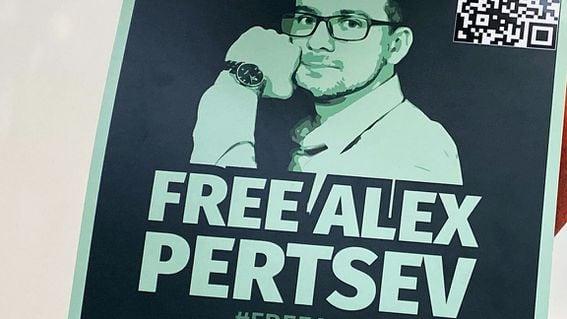
Alexey Pertsev was first jailed in the Netherlands in August 2022. Tornado Cash developer Alexey Pertsev was sentenced to 64 months in jail for money laundering "Tornado Cash does not pose any barrier for people with criminal assets who want to launder them," according to the translated verdict seen by CoinDesk. Tornado Cash developer Alexey Pertsev has been found guilty of money laundering by a Dutch judge at s-Hertogenbosch court on Tuesday. Pertsev has been given 64 months of prison time by the court. The 31-year old Russian was escorted after the session by police to the cells under the court. This is where he will remain until the public prosecutor finds a prison in the Netherlands that is appropriate for his crimes. "Tornado Cash does not pose any barrier for people with criminal assets who want to launder them," according to the translated verdict seen by CoinDesk. "That is why the court regards the defendant guilty of the money laundering activities as charged." Pertsev can appeal his sentence, which starts today. It does not appear that the time he spent behind bars between his arrest in August 2022 and Tuesday's verdict will count against the time he now has to spend in prison. An indictment shared ahead of the trial said that between July 9, 2019 and Aug. 10, 2022, Pertsev made "a habit of committing money laundering" and that he should have at least suspected the criminal origins of illicit transactions on the Tornado Cash platform. The developer was first jailed in the Netherlands in August 2022 after Tornado Cash was blacklisted by the U.S government. At the time, the U.S. Treasury had alleged that Tornado Cash was a key tool for the North Korean hacking group Lazarus. The Lazarus Group has been tied to a $625 million hack of Axie Infinity’s Ronin Network and other major crypto thefts. The trial result could play in future trials of other Tornado Cash developers. Other developers of the crypto mixer, Roman Storm and Roman Semenov, also face allegations of money laundering and sanctions violations in the U.S. Storm will go to trial this September, but Semenov has not yet been arrested. Storm was arrested last year, after the U.S. again added Tornado Cash to its sanctions watchlist. In the U.S., however, Storm is not accused of being responsible for the laundering of $1.2 billion due to differences in how U.S. and Dutch laws address personal responsibility in this type of alleged crime. https://www.coindesk.com/policy/2024/05/14/tornado-cash-developer-alexey-pertsev-found-guilty-of-money-laundering/
2024-05-14 11:03
“Roaring Kitty is living proof that retail can mog (outperform) institutions at the highest level,” one meme coin developer said. Meme coins surged after a post by Keith Gill, a retail trader whose online persona and investment strategies contributed to the GameStop short squeeze in 2021. The meme coin surge was not limited to microcap tokens but also impacted larger tokens like Pepe and Floki. Top meme coins climbed higher Tuesday after a viral post by retail trader Keith Gill, whose cult following contributed to the GameStop short squeeze of 2021, sent some stocks and tokens flying at the start of the week. Gill, who turned $58,000 into an estimated $50 million between 2019 and 2021 by buying GameStop (GME) options, sparked a run in the stock after posting from his @TheRoaringKitty X account for the first time in three years. A mere picture posted by Gill sent the stock skywards, nearly doubling in value on Monday despite multiple trading halts, even as Gill did not directly mention Gamestop. GameSpot’s retail euphoria quickly spread to token markets. Several offshoots and joke tokens referring to GameStop, Gill, and his online kitten persona flooded Solana and Ethereum blockchains – with a meme GME token surging as much as 500%. A video featuring the X-Men character Wolverine posted later on by Gill caused dozens of WOLVERINE tokens floated by opportunistic developers, most falling over 90% in the hours following. The action was not limited to microcaps. Larger tokens Pepe (PEPE) and floki (FLOKI), and cat-themed tokens popcat (POPCAT) and mog (MOG) jumped as much as 30% in the past 24 hours, data shows. Such revival showed an early sign of risk appetite returning to the crypto markets following weeks of relatively lull trading action. Gill’s post revived talks of a dogecoin (DOGE) rally among some traders, similar to its 2021, which occurred after GameStop’s run from $4 to $120 in a month. “Roaring Kitty is living proof that retail can mog (outperform) institutions at the highest level,” MOG token developer Shisui told CoinDesk in a message. “His return was perceived as bullish for meme coins because the market remembered that much of the Gamestop mania of 2021 spilled over to $DOGE and other meme coins.” “While we are far from being in a true risk-on environment, the price movements after Roaring Kitty’s comeback hint at which assets will outperform when frothy conditions return. The market has shown its hand, and it wants $MOG,” Shisui added. Among developers and traders, part of Gill’s influential appeal isn’t only that he has made generational wealth: It’s the allure of a single trader taking down hedge funds from his bedroom using publicly available tools and the chance of them landing a similar move. That has contributed to the general acceptance of meme tokens and made the sector a strong contender to DeFi and utility crypto projects compared to previous cycles, some opine. “The industry is only just starting to come to grasp with memes being fun, relatable, enjoyable, and representative of the average person,” said B, lead developer at Floki, in a note to CoinDesk. “The vast majority of retail is flocking over to meme coins and ignoring the tired old "utility" crypto projects.” “While many are worried about the "lack of fundamentals surrounding meme coins" and the implications of the continued attention they are getting for the space, the strong interest in meme coins was something I predicted years ago,” B said. He pointed out that Floki has now been focused on utility products to engage its audience that initially purchased the tokens as simply a meme. https://www.coindesk.com/markets/2024/05/14/gamestop-rally-sends-meme-coins-skywards-pepe-floki-mog-surge/
2024-05-14 10:34
The way bitcoin options are priced suggests Wednesday's CPI report, though pivotal, may do little to disturb the calm in the crypto market. Bitcoin's options market is pricing for negligible volatility after Wednesday's U.S. consumer inflation release. The CPI is expected to offer relief after a string of upside surprises that dented Fed interest-rate cut hopes. Tomorrow's U.S. inflation report will take center stage as investors look for guidance on the Federal Reserve's path for interest rates after a series of recent surprises dented expectations of rate cuts. Still, the pricing of bitcoin options – which can offer protection against swings in the asset's price – suggests traders do not foresee a volatility explosion following the release. Traders often buy options that capture specific events, pushing their implied volatility higher relative to shorter- and longer-term contracts. Analysts look at the difference between implied volatility for options expiring before and after an event to understand how much extra volatility the market is pricing. "The market is pricing a premium of only 1.5 vols for the event ... almost negligible," institutional liquidity provider OrBit Markets, one of the top altcoin market makers on Deribit, told CoinDesk. In other words, prices may move less than 2% on either side following the CPI report, exhibiting hardly any additional volatility. S&P 500 options are pricing in relatively higher volatility for the release, OrBit said. The U.S. Labor Department will publish the consumer price index (CPI) data for April 12:30 UTC. It is forecast to show the cost of living increased by 3.4% year-on-year, a moderation from March's 3.5%. Core CPI, which strips out the volatile food and energy component, probably rose 3.6% year-on-year, down from March's 3.8%, according to estimates published by Bloomberg. Options offer buyers insurance against bullish or bearish price moves. A call option protects against price rallies, while a put protects from price slides. Implied volatility refers to expectations for price turbulence over a specific period. Markus Thielen, founder of 10x Research, considered bitcoin options expiring later in the week. His analysis agrees with OrBit's. "Implied volatility at 52.8% for options expiring on May 17 is just 2% higher than other options, which means traders expect a moderate pick up in volatility post-CPI. However, realized [historical] volatility remains below 50%, meaning expectations for an outsized move either up or down are not priced in," Thielen told CoinDesk. CPI to signal moderation Fed funds futures currently assign just a 5% probability of a rate cut in June, with the number rising notably into September. Some analysts expect a potential soft CPI print to bulk up the rate cut probability, sending bitcoin past $65,000, the upper end of the its recent trading range. Others are more cautious. Inflation, for example, is only one of the inputs considered by policy makers. "Some signs of slower price growth (if materialized) would be welcomed by Fed officials, but the details of earlier price increases have been concerning. It will take more than one softer price report to calm inflation fears," economists at RBC said in a weekly note. "Our view is that inflation pressures will ease over the second half of this year, but that is contingent on economic growth slowing and unemployment edging higher. We expect the Fed will stick to a wait-and-see approach over the summer while watching the data closely. We think the Fed will move to cut interest rates in December if domestic demand and inflation readings gradually move lower over the remainder of this year." https://www.coindesk.com/markets/2024/05/14/bitcoin-market-activity-suggests-looming-us-inflation-data-may-be-non-event/

2024-05-14 09:20
User activity has plunged after a hyped run-up to the introduction of the Runes protocol, which was expected by some to mirror Solana’s meme coin ecosystem. The Bitcoin Runes protocol experienced a significant decrease in activity and fee revenue after its initial surge after the Bitcoin halving. Runes takes the Ordinals protocol a step further by making transactions cheaper and faster, but has failed to maintain meaningful traction among users. Despite the initial excitement, the protocol's momentum has slowed, and its impact on the Bitcoin ecosystem remains to be seen. Activity on the Bitcoin Runes protocol has slowed over the past week, a sign it has failed to generate meaningful traction among users despite a stellar start last month. Runes takes the Ordinals protocol a step further by making transactions even cheaper and faster. Ordinals are a way to embed data into the Bitcoin blockchain by inscribing references to digital art into small Bitcoin-based transactions. The much-hyped Runes went live after Bitcoin’s fourth halving on April 20. Data tracked on Dune Analytics shows that in its first 10 days the protocol racked up more than 85,000 token issuances and generated over $3 million in fees. In the past two weeks, however, all the metrics – including fees, new Runes and user activity – have dropped more than 50%. Only some 5,000 new Runes have been issued since May 1, generating just under $100,000 in fees. At its peak, Runes led transactions and fees in the broader Bitcoin ecosystem, accounting for as much as 80% of all network activity. Now it's 20%. Worth noting, however, is that the downturn came amid a general market decline marked by falling bitcoin (BTC) prices and slow growth in alternative tokens, which may have contributed to a drop in sentiment for novel technology. Built for memes and ‘degens’ Runes generated massive interest on social platform X before its launch with creator Casey Rodamor aiming to make it a protocol ripe for meme coin trading and “degen” traders. Some industry participants expected the protocol to mirror the flourishing meme coin ecosystem on blockchains such as Solana and Base – likely fueling interest and bets on little-known memes. PUPS, a Runes token, emerged as a big play and surged from under $10 million capitalization to over $150 million in under a week, gaining support from several noted traders such as BitMEX founder Arthur Hayes. Several NFT collections and tokens were launched on Ordinals, and even on Ethereum, before the protocol's introduction – each aiming to transfer over and become the biggest compilation after the launch. Such activity made Bitcoin-based NFTs top other collections on the usual leaders Ethereum and Solana, with tens of millions exchanging hands in an otherwise scant market for non-fungible tokens. Some skeptics say that while Runes may serve as a way to build the Bitcoin ecosystem, there’s still work to be done. "The success of the Bitcoin L2 project based on OP_Return is doubtful as UTXO based blockchain network is fundamentally different from smart contract based network," Ho Chan Chung, head of marketing at CryptoQuant, told CoinDesk in a Telegram message. "The current notion of Bitcoin narrative as a digital currency combined, and the difference in the blockchain network fundamental are the two big hurdles that Bitcoin L2 projects need to overcome." "Lightning network was able to prove it. However, Ordinals, BRC-20, and Runes all seemed to fail at winning the narrative for now." Chung added. https://www.coindesk.com/tech/2024/05/14/bitcoin-runes-protocol-sees-traction-waning-after-much-hyped-introduction/

2024-05-14 07:00
A U.K. election is expected to happen this year, but it likely won't change the trajectory of the country's crypto policy efforts. The Labour Party is a favorite to win the U.K.'s upcoming general election. Regardless of who is elected, crypto policy should still continue developing as it has been, said Adam Jackson, director of policy at Innovate Finance. A U.K. election is not going to derail the progress the country has made when it comes to regulating the crypto sector, industry stakeholders told CoinDesk. An election date has not been announced yet, but it is expected to happen in the country this year. The ruling Conservative party – which has been in government for nearly 14 years, since it was first elected in May 2010 – has ushered in a sweep of crypto measures. The party set out to make the country a crypto hub in 2022 and has since introduced a markets bill to enable crypto to be regulated as a financial activity by the Financial Conduct Authority (FCA). Now the Conservatives have promised to put in place legislation for stablecoins and staking in the coming weeks – before the next election. Many believe that is a realistic goal. The country needs secondary legislation that formally tasks the FCA with regulating crypto, including stablecoins, said Adam Jackson, director of policy at Innovate Finance, in an interview. "That's what the government said they would do," Jackson said. "We haven't heard otherwise as to why that's not feasible. So all things being equal they should have those powers by the time of the national election." Laura Navaratnam, U.K. policy lead at the Crypto Council for Innovation, agreed that the Conservative government at the moment is "definitely" on track adding that even the country's regulators – the Bank of England and the FCA – have been moving forward by publishing discussion papers on stablecoins. "There is always the risk with any level of political turbulence that some of that stuff could slow down," Navaratnam told CoinDesk in an interview. Labour The Conservatives may have a couple of months left before an election is announced, but once it is they will have to go head to head with their opposition party and could lose power. The current favorite to win is the Labour party, according to an Ipsos poll that surveyed over 1,000 people in April. The poll shows that 44% of voters intend to vote Labour while only 19% intend to vote for the Conservatives. The U.K. recently hosted a local election which showed a large swing towards the Labour party and marked major losses for the Conservatives. Labour managed to attain 1,158 local councilor seats and gained 186 whereas the Conservatives only attained 515, and lost 474, falling behind the Liberal Democrat party also, BBC data showed. The size of the majority in an election matters, Jackson said. "I think for any party, the smaller the majority, the more they will be constrained in what they do in some of these areas," Jackson said. Labour so far has indicated that it wants to make the U.K. a securities tokenization hub in its plan for the financial sector. Tokenization is the process of creating a digital representation of a real thing including financial assets. A tokenization regime is something that people in the country have been calling out for. "We’re pleased to see that Labour have committed to helping turn the U.K. into a global hub for digital tokenization as part of the party’s policies for the financial services sector," CryptoUK said in February. However, Labour did not say much about how it plans to regulate crypto. "So I think the question we have is, you know, what's the Labour approach on that? It's not a question that they can ignore," Jackson said. Labour said in its report that this was only the "first stage in outlining Labour’s vision for the future of Britain’s financial services," indicating more information may come. "I think there's a long time between now and an election and so I wouldn't expect them to further the details out at this point," said Varun Paul, senior director and business lead for CBDC and financial market infrastructure at Fireblocks. "I'm pleased – I don't think that digital assets are proving to be a political hot potato at the moment, I think we're lucky in the U.K. that it's not become a political battleground like it has been in the U.S." Some lawmakers in the U.S. have been calling for a central bank digital currency to be banned while others want the country to conduct a CBDC pilot. Meanwhile, across the pond, Labour indicated that it intends to support the Bank of Englands' digital pound work in its report. "We should see quite a stable approach to financial services, regulation and things going in the same direction," Jackson said. https://www.coindesk.com/policy/2024/05/14/industry-stakeholders-believe-a-uk-election-wont-derail-crypto-plans/

2024-05-14 05:38
Crypto OTC liquidity network Paradigm on Monday announced a block trading facility for linear options tied to MATIC, SOL and XRP. Trades facilitated by Paradigm will be submitted to Deribit for execution and clearing. OTC liquidity network Paradigm introduces block trading for linear altcoin options on the centralized crypto exchange Deribit. The inaugral trade between QCP Capital and Galaxy Digital involved MATIC call options expiring on May 31. Crypto over-the-counter liquidity network Paradigm announced on Monday a block trading facility on leading derivatives exchange Deribit for options tied to prominent alternative cryptocurrencies (altcoins), MATIC, SOL, and XRP. “Clients can now execute block trades in Polygon (MATIC), Solana (SOL), and Ripple (XRP),” Paradigm said on X, adding that the linear options will offer payouts that "directly correlate with the price movements of the underlying asset.” Options are derivative contracts that give the buyer the right, but not the obligation, to buy or sell the underlying asset by a specific date (expiration date) at a predetermined price. A call option gives the right to buy, and a put option offers the right to sell. Block trades are privately negotiated futures, options, or combination trades exceeding certain volume thresholds. Participants typically use communication technologies like Paradigm to request quotes bilaterally and agree on the price, following which the trade is submitted to an exchange, in this case, Deribit, for execution and clearing. Block trades reduce slippage or costs associated with executing transactions and ensure a minimal impact on the going market price. Since its inception in 2016, Paradigm’s OTC network has been a preferred venue for institutional investors to take block trades. The platform has registered nearly $400 billion in volume to date and, as of May, accounts for 17% of the cumulative bitcoin and ether options activity on Deribit. Paradigm’s new offering has already found takers. On Monday, the platform announced the successful completion of an inaugural trade involving 500,000 units of MATIC call spreads between Singapore-based QCP Capital and Galaxy Digital. The trade involved MATIC call options at strikes 80 cents and 95 cents, expiring on May 31. Paradigm facilitated the trade, which was printed on Deribit. MATIC is the native cryptocurrency of the Polygon Network, used for staking and to pay gas fees. "We are thrilled to see Paradigm expand its block trading services to include linear altcoin options, starting with the pioneering transaction in MATIC options on our platform. This expansion not only broadens our mutual offering but also sets the stage for upcoming inaugural blocks in SOL and XRP," Luuk Strijers, chief executive officer at Deribit, said. https://www.coindesk.com/markets/2024/05/14/paradigm-unveils-block-trading-facility-for-matic-sol-xrp-options/




