2024-05-09 20:40
The shares of the miner dipped about 1.5% in after hours trading on Thursday afternoon. Marathon Digital (MARA), one of the largest bitcoin miners, missed consensus first-quarter revenue expectations due to operational challenges it faced during the quarter. The company mined just 2,811 bitcoin during the year's first three months, down 34% from the previous quarter. "Bitcoin production, and therefore revenues, generated during the quarter was negatively impacted by unexpected equipment failures, transmission line maintenance, and higher than anticipated weather-related curtailments at Garden City and other sites during the quarter," the company said in a statement on Thursday. Marathon reported first quarter earnings per share of $1.26, at first glance easily topping Wall Street estimates of $0.02, but not comparable to forecasts as the company adopted newly-approved FASB fair value accounting rules. The mark-to-market adjustment was a very favorable one given the big run higher in bitcoin prices. The miner is sticking to its 2024 guidance of ramping up to 50 exahash per second (EH/s) and sees additional growth in 2025. Marathon's stock fell roughly 1.5% in post-market trading on Thursday. Shares have declined 26% this year while peer Riot Platforms (RIOT) has seen its stock price fall 40%. https://www.coindesk.com/business/2024/05/09/bitcoin-miner-marathon-digital-misses-q1-revenue-expectation-on-operational-challenges/

2024-05-09 18:25
The asset manager’s largest shareholder is urging investors to vote against the reappointment of the firm’s CEO, Jonathan Steinberg, who has led the firm’s business toward decentralized finance. WisdomTree Prime, the firm's digital asset app, went live in New York on Thursday. The app allows users to save, spend and invest in digital assets on-chain. The move comes as one of the firm's biggest shareholders is urging investors to vote against the reappointment of CEO Jonathan Steinberg given his strong push into crypto. WisdomTree's digital asset app, which offers users access to bitcoin (BTC) and Ethereum's ether (ETH) as well as dollar and gold tokens, on Thursday became available to customers in New York, even as CEO Jonathan Steinberg is under pressure from shareholders as a result of the investment company's push into decentralized finance. The app, called WisdomTree Prime, launched in 21 states in July and received a charter to operate as a limited-purpose trust company under the New York Banking law in March. It lets users save, spend and invest in digital assets on-chain using the Stellar and Ethereum blockchains, which share ownership records. "Since we first entered app stores in select states last summer, we have exhibited strong momentum across all fronts, including new digital fund launches, payment capabilities, and collaboration with regulators," Will Peck, head of digital assets at the firm, said in a press release. WisdomTree's digital asset plans, however, have caused headaches for Steinberg, the Financial Times reported earlier this week. The firm's biggest shareholder, Graham Tuckwell, chair of ETFS Capital, doesn't agree with the firm's strong push into DeFi and has urged investors to vote against the reappointment of Steinberg. According to the FT, Tuckwell told shareholders that Steinberg's initiatives in DeFi have been a "massive distraction and utterly unsuccessful." The Australian businessman became an important shareholder of WisdomTree in 2018 when the firm acquired the European arm of ETF Securities which Tuckwell founded in 2005. WisdomTree has become a dominant TradFi player in crypto since 2019 when it launched its first bitcoin exchange-traded product on Swiss stock exchange SIX. In January of this year, it became one of the 10 issuers of a spot bitcoin ETF in the U.S. The fund has seen the least amount of inflows among all issuers at around $70 million, while others have collected billions of dollars of investors' money. https://www.coindesk.com/business/2024/05/09/wisdomtrees-crypto-business-goes-live-in-new-york-against-big-shareholders-wishes/
2024-05-09 17:26
Unlike paid shills of yore, "key opinion leaders" invest in the projects they promote on social media. In return for buzz, they can sell tokens sooner than other investors. Members of crypto's influencer class are writing checks for countless startups and then promoting them on social media. In return, these so-called key opinion leaders get discounted valuations and options to sell sooner than other early investors – sometimes right when the token launches. "KOL rounds" are an increasingly popular way for founders to market their projects without spending anything out of pocket, unlike the old model of paid promotion. KOL arrangements aren't always disclosed to the investing public, several insiders said. Crypto founders have long relied on Silicon Valley-style investors to fund their risky ideas. But in the last few months, venture capitalists and angel investors have given way to a new breed of influencer-turned-investor: the KOL. Key Opinion Leaders flood the social media feeds of global crypto users with "alpha" about which protocols to watch and invest in. They can be as pseudonymous as a cartoon penguin or as recognizable as a YouTube personality. A CoinDesk review of KOL fundraising found a budding economy of influencers who write checks for crypto startups and then promote them to thousands of retail traders on YouTube and X (formerly Twitter). Projects are betting KOLs will help attract users and, critically, eager buyers before they issue their tokens. "The further they are gonna shill their bags, the further the token might go, which is super-good for the project and super-good for price action," said Vlad Svitanko, the CEO of marketing firm Cryptorsy, which helps organize KOL rounds. KOL rounds are a twist on the paid shills of earlier crypto cycles, those high-flying influencers like Ben Armstrong (aka BitBoy Crypto) who charged tens of thousands of dollars to promote tokens to massive online audiences. Instead of billing projects for their services, KOLs now put money in them – albeit on very generous terms. Those terms include discounted valuations and options to sell tokens sooner than other private investors are allowed to. Crypto's upper class is acutely aware of how these "KOL rounds" operate, CoinDesk found in over two dozen interviews with founders, developers, investors and other insiders who insisted on anonymity to discuss fundraising from influencers. It's less clear how well retail investors (the ones being influenced) understand the KOLs' financial relationship with the projects they're boosting. Many KOLs don't disclose their paid deals. Failure to do so could violate U.S. consumer-protection laws, according to a lawyer familiar with these arrangements. "When influencers fail to disclose such arrangements, they mislead their audience, many of whom rely on these endorsements to make financial decisions," said Ariel Givner, an attorney who runs a crypto law practice near Philadelphia. "This lack of transparency undermines the trust that is essential in digital commerce and can lead to significant financial losses for unsuspecting followers." KOLs' prominence is only poised to grow as the multi-billion-dollar "creator economy" reshapes online life. Crypto may be supercharging the trend. "It's a massive thing. It's circumventing not only VCs, it's also circumventing marketing,” said one well-connected person who works with KOLs. “People are going to say they don't even need marketing – they get capital from distribution." Humanity Protocol One startup that turned to KOLs recently is Humanity Protocol, a competitor to Sam Altman's billion-dollar digital identity project Worldcoin. Far-smaller Humanity Protocol raised $1.5 million from a combination of angel investors and KOLs in early March, according to an investor presentation. A document titled "Humanity Protocol's Alignment form for KOLs" assigned influencers six months of social media homework: "like" and comment on three tweets a week, write three tweet threads about Humanity Protocol, join at least one of Humanity Protocol's Twitter Spaces a month, among other requirements. The project gave content-specialist influencers granular missions. Trader KOLs should publicly buy Humanity Protocol's yet-to-be-announced tokens "after the launch to demonstrate commitment," one document said. It directed YouTuber KOLs to create two "speculative videos about Humanity Protocol being a main Worldcoin competitor and about the Airdrop." "We're tracking all activities and will void the SAFT and refund KOLs who aren't keen on supporting the project," the Humanity Protocol document said. SAFTs (simple agreements for future tokens) are the contracts through which crypto startups pledge their potentially valuable tokens to backers, including VCs, angels and KOLs. Flashback to 2017 | SAFT Arrives: 'Simple' Investor Agreement Aims to Remove ICO Complexities A spokesperson for Humanity Protocol declined to comment. In one recent video, a presenter for the YouTube channel Altcoin Buzz, which has 419,000 subscribers, touted Humanity Protocol's "huge competitive advantage" over Worldcoin. Altcoin Buzz employee Shitij Gupta shared the video in a private Telegram channel maintained by Humanity Protocol (dubbed "Humanity Protocol - KOLs"), two eyewitnesses said. KOLs are asked to join the channel after filling out an "alignment" form that CoinDesk reviewed. Contacted by CoinDesk, Gupta said "Altcoin Buzz has not invested in Humanity," and that he is in the private KOL channel on Telegram "because we want to get information on the project." He did not rule out receiving future compensation ("not yet," he said, when asked about pay) but said Altcoin Buzz would disclose any "sponsorship." Crypto companies often give their VCs and angels equity. KOLs seldom get shares in the company. Instead they get tokens: a stake in the decentralized crypto network that the company is building. Tokens are where the money is in crypto, anyway. Humanity Protocol wrote in its undated KOL document that its rival Worldcoin had a fully-diluted valuation (the sum total of all its WLD tokens) of $80 billion. Tokens are also easier to sell than equity. Among crypto startups' private investors, few have a faster path to selling them than KOLs. Evolution of KOLs Influencers began monetizing their followings BitBoy-style years ago. The old pay-to-play model still hits. "KOLs can charge tens of thousands just for one tweet," a general partner at one VC said. "They are probably one of the most lucrative businesses" in crypto. The startup world is a haven of "angels": deep-pocketed (often well-known) investors who write small checks for startups, lending cash and credibility. They're influencers – KOLs in their own right. Sometime last year angels and KOLs began to converge. Then the convergence accelerated. By 2024, it wasn't just headliners joining KOL rounds but "anyone with a pulse" who had many thousands of followers, quipped one high-ranking employee at a crypto startup. "The funny fact is that 75% of more-or-less well-known TGEs that took place since the beginning of the year had KOL rounds," estimated Stacy Muur, an influencer with 46,000 followers who, over text messages, said she does not engage in these deals. (TGEs are token generation events). According to research conducted by market intelligence firm The Tie, which tracks token prices as well as KOL activity on social media, influencers regularly move the crypto markets. "They definitely have an impact," CEO Joshua Frank said of KOLs, adding they likely have outsize influence on cryptos with smaller market caps. 'A quick buck' KOL rounds have essentially become a vehicle for projects to fund their marketing without having to pay for anything out of pocket. Instead, they bring dozens of influencers to their cap table. "I think it's better kuz then the influencers have real skin in the game, they buy their share," one prolific investor with tens of thousands of followers wrote in a text message. Their incentive alignment isn't always built to last. Participants in KOL rounds often get a good chunk of their tokens unlocked on token launch day, meaning they can sell as soon as the token debuts. "Right now the trend is that nobody accepts more vesting than 12 months," said Matas Čepulis, an executive at the car-focused metaverse project OBS World and associate at the marketing firm KOL HQ. "Everybody wants to make a quick buck." An AI-focused crypto project called Creator.Bid is letting its KOLs access as much as 23% of their BID token allocation on May 15, when the public gets its airdrop, according to terms circulating among investors. A second called Veggies Gotchi is giving KOLs the same number of tokens as its selling to the community, according to its documents. Neither project commented. Citizend, a token launch platform that's about to hold a community token sale, is giving KOLs a less favorable unlock and vesting period than retail buyers, said Julian Leitloff, an advisor to the project. In a text message he said Citizend requires its KOLs to promote the project but leaves disclosures up to them. "That is their obligation and nothing we enforce contractually," he said. 'Heavy loss for retail' KOL arrangements are "a win for protocols, a win for KOLs, but a heavy loss for retail," said Muur, the influencer who said she doesn't take these deals. "These deals are not properly disclosed in most cases, so the community doesn’t know about KOL rounds and its vesting terms," she lamented, expressing a sentiment echoed by other insiders. Because most crypto projects don't consider their tokens to be securities, they don't follow the transparency rules that apply to promoters in stock markets, people in the KOL industry said. U.S. securities law aside, many KOLs could be violating Federal Trade Commission rules requiring "clear and conspicuous disclosures," said Givner, the Philadelphia-area lawyer. "The core of the matter is, if you’re receiving compensation to shill about something, it MUST be disclosed so as to not mislead consumers." The arrangement leaves retail traders in the dark about KOLs' financial stake and their ability to sell tokens to very people they've been hyping up for launch day. "You obviously make your community exit liquidity," Muur said. Weeding out 'garbage' The KOL economy is only becoming more efficient at extracting value. Multiple crypto marketing agencies said they compiled lists of hundreds of KOLs. For a fee, they link influencers to projects where they can make the most impact. KOLs, too, are evolving. Smaller ones have started forming into syndicates through which they can leverage better deals in KOL rounds, two people familiar with the practice said. To be sure, not every crypto project runs a KOL round. One KOL marketing executive said 95% of teams get cut for being "random bulls**t." Only the upper tier of projects can raise from influencers, he said. He chalked this up to credibility: If influencers promote obvious flops, they'll lose their audience's trust. Still, that upper tier floods prospective KOLs with near-incessant pitches. One prolific investor said he gets offers to join KOL rounds "10x a day." Virtually all of them require promotions, he said. Almost none of them require disclosures. Projects themselves can afford to be picky about who they use to promote their wares. Or at least, to try. "We curated 100 KOLs, really took our time to weed out the garbage," said an executive at one well-known crypto project that recently held a KOL round. "End result, most not all, just want their token to pump and sell as quickly as possible." https://www.coindesk.com/business/2024/05/09/inside-cryptos-kol-economy-influencer-investors-get-special-treatment-in-token-deals/

2024-05-09 17:00
Hyperbolic, the two-year-old startup focused on decentralized AI computing, said that it is introducing a protocol called “Proof of Sampling,” aimed at addressing challenges with trust in decentralized AI networks. In mathematics, Jasper Zhang figures to be a sort of Zeus. He says he won gold medals at math olympiads in China and Russia, and it took him just two years to get a Ph.D. from the University of California, Berkeley. Now he's trying his hand at solving a key problem at the intersection of two of the fastest-growing but most complicated areas – blockchain and AI. Jasper Zhang is a speaker at CoinDesk's Consensus Festival, May 29-31, in Austin, Texas. Hyperbolic, the two-year-old startup that Zhang leads focused on decentralized AI computing, said Thursday that it is introducing a protocol called “Proof of Sampling (PoSP),” aimed at addressing challenges with trust in decentralized AI networks. Hyperbolic was co-founded in 2022 by Zhang and Yuchen Jin, who holds a Ph.D. in computer science from the University of Washington. The concept for the new protocol was created in conjunction with researchers from Berkeley and Columbia University, according to the team. It combines math, computer science and economics, deploying “advanced sampling methods and game theory to incentivize integrity and minimize computational demands across decentralized networks,” Hyperbolic shared in a press release with CoinDesk. Zhang, 28, said in an interview with CoinDesk that he sees PoSP as the next iteration of verification for decentralized networks. “People in the beginning thought there's only one way to do verification, which is with consensus," Zhang said. "Later on people discover optimistic proving and then ZK proofs.” Now there's PoSP, he said, and it can not only be applied to AI, but also to rollups, a type of layer-2 blockchain, as well as so-called actively validated services (AVSs), which are protocols secured by restaking protocols like EigenLayer. A research paper on the Proof of Sampling Protocol by Zhang and several co-authors was submitted on May 1 to arXiv, an open-access repository hosted by Cornell University for scientific papers that have not yet been peer-reviewed. According to the paper, the design relies on a "pure strategy Nash Equilibrium." That refers to a game theory concept attributed to the Princeton University-educated mathematician John Nash, who was the subject of the 2001 Oscar-winning film A Beautiful Mind, directed by Ron Howard and starring Russell Crowe. Here's a figure from the paper illustrating the architecture: As part of the release, Hyperbolic is introducing “spML,” an implementation of PoSP built specifically for AI verification. "SpML leverages the foundational principles of PoSP to create a verification mechanism that is not only faster and more secure but also economically feasible," Zhang said in the press release. Now they just have to prove it works in practice. https://www.coindesk.com/tech/2024/05/09/math-olympian-in-shadow-of-john-nash-tries-to-solve-blockchain-ai-trust-dilemma/

2024-05-09 16:27
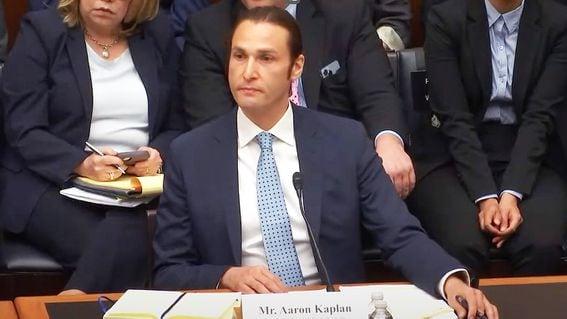
The startup's plan to launch a custody operation followed by SEC-compliant crypto trading missed its first-quarter target, but the firm says it's just finishing up some technical work. Prometheum has fallen several weeks behind the date it said the business would open for crypto custody, and its CEO said the company is trying to finish technology related to its wallet system before launching. The firm has said it'll begin holding crypto securities for clients before starting its trading operations. Much of the crypto sector has been apprehensive about the ribbon cutting on Prometheum's custody and trading operations, which the firm said will fully comply with U.S. Securities and Exchange Commission (SEC) demands. The doors have so far stayed shut well past the target date, but the company explained it's still finishing a process for auditing smart contracts. "We expect completion soon and will move towards the launch of our custodial services for institutional clients imminently thereafter," said Prometheum Inc.'s co-CEO Benjamin Kaplan, in a statement to CoinDesk. Prometheum is a crypto-native startup that's the first to get a special-purpose broker dealer approval under SEC regulations and is now licensed to hold, trade and clear transactions in crypto securities. Its executives had originally said they'd have a custody operation rolling in the first quarter of this year – a date now more than five weeks past. But Kaplan said the firm is "excited to be nearing the public launch of its custodial services for institutional clients." "Building proprietary technology subject to federal securities laws requires us to meet the high standards set by our regulators and expected by our clients," he said. "We have been finalizing a rigorous smart contract auditing process conducted by a leading auditing firm." A spokesman, who declined to name the auditing firm, said Prometheum's wallet system uses smart-contract technology. He said ironing that out represents the only significant holdup before opening. Every week that Prometheum delays is another week that existing businesses wait to find out whether a crypto custodian and broker dealer can hold and trade tokens by treating them – including the marquee asset of Ethereum's ether (ETH) – as securities. So far, the SEC hasn't blocked the company's progress through its chain of registrations, and SEC Chair Gary Gensler has even referred to its efforts as a sign of progress. Prometheum said it intends to provide custody for ether, the second-largest token by market share, and when asked what other tokens the company may handle, the spokesman said the firm doesn't yet have any further asset names to announce. The wider crypto industry has been embroiled with the SEC in legal battles raging across several federal courts, in which digital assets exchanges and other companies are insisting that the regulator is wrong about its position that most tokens are securities. Prometheum, the first firm to get the special broker-dealer license, represents the contrarian view that Gensler and his agency are right, and many industry insiders and their allies among Republican lawmakers have chastised the company's executives and accused Prometheum of being an SEC pet project. If Prometheum is correct, it could become a live demonstration of Gensler's view on cryptocurrencies as securities, which he argues belong under the jurisdiction of existing U.S. securities law and SEC oversight. Issuers of securities must be registered with the agency and submit to an array of disclosures and examinations, and the securities themselves must also be registered – requirements that many industry proponents say crypto companies and decentralized organizations would find impossible to meet. Prometheum's leaders say they intend it to be a one-stop shop where investors – institutional and retail – will one day be able to keep their digital tokens, trade them on its alternative trading system (ATS) and deal in the future of tokenized assets. It's not yet clear who the company's first customers will be. "We cannot say anything regarding specific clients now, but as always Prometheum Capital expects to be used by all ranges of institutions who require compliant access to digital asset securities including institutional investors and traders, asset management firms, family offices, hedge funds, registered investment advisors (RIAs), banks, and financial institutions," according to the spokesman. The company had said its trading operation – the more high-profile test of its business model – was supposed to get started as soon as this second quarter of 2024, though it's unclear whether the custody delay will push off that timeline, too. Brothers Benjamin and Aaron Kaplan have shared leadership of the company. Co-CEO Aaron Kaplan is set to appear at the Consensus 2024 event later this month. https://www.coindesk.com/policy/2024/05/09/prometheums-contentious-answer-to-crypto-compliance-is-running-late/
2024-05-09 15:48
Potential legal action against Robinhood should be viewed as a continued attempt by the SEC to reinforce its stance that all crypto tokens other than bitcoin and ether should be classified as securities, the report said. The legal actions against crypto exchanges appear to be an attempt by the SEC to influence policy makers and legislators, the bank said. If the SEC denies approval of spot ether ETFs it will likely face a legal challenge and lose, the report said. JPMorgan said the lack of approval this month is not a huge disappointment as it was widely expected by the market. The Well’s Notice issued to trading platform Robinhood (HOOD) by the U.S. Securities and Exchange Commission (SEC) should not pose an obstacle to the eventual approval of spot ether (ETH) exchange-traded funds (ETFs), JPMorgan (JPM) said in a research report on Wednesday. The popular trading platform received the notice – a preliminary warning from the regulator about potential enforcement action – on May 4, the company said in a filing on Monday. The notice should be viewed as a “continued attempt by the SEC to reinforce its position that all crypto tokens outside bitcoin and ether should be classified as securities,” analysts led by Nikolaos Panigirtzoglou wrote. JPMorgan said the SEC's legal actions against crypto exchanges appears to be an attempt by the agency to influence U.S. policy makers and legislators, who will be responsible for passing crypto market regulations at some point. “The Wells Notice against Uniswap and Metamask makes it clear that decentralized platforms are not exempted from the SEC’s objective to eventually supervise most of the crypto industry,” the report added. The bank noted that Robinhood offers trading on 13 crypto tokens outside bitcoin and ether. The trading platform reported strong first-quarter earnings yesterday driven by a surge in crypto trading. This fueled a 40% year-on-year jump in revenue. The lack of approval of a spot ether ETF this month is unlikely to be a huge disappointment to markets as it was expected, and this is implied by the significant discount to net asset value (NAV) of the Grayscale Ethereum Trust (ETHE), the report said. “The template is likely to be similar to bitcoin (BTC): with futures based ether ETFs already approved, the SEC (if it denies the approval of spot ether ETFs) is likely to face a legal challenge and eventually lose,” the analysts wrote. https://www.coindesk.com/markets/2024/05/09/robinhood-wells-notice-shouldnt-deter-eventual-approval-of-an-ether-spot-etf-jpmorgan/