2024-04-25 23:01
Law enforcement agencies will no longer need to wait for an arrest to seize crypto. New powers that will make it easier for law enforcement agencies to seize crypto come into effect on Friday. The U.K. passed a crime bill last year to aid crypto seizures, allowing law enforcement agencies to seize funds before making arrests. New powers that will help law enforcement agencies seize crypto used for crime came into effect on Friday, the U.K Home Office said in a press release. As a result of these new rules, police in the country will no longer be required to make an arrest before seizing crypto holdings, the Home Office announced. The new rules came after the U.K. Parliament passed a crime bill last year, which laid the foundations for crypto to be seized more quickly. "This will make it easier to take assets which are known to have been criminally obtained, even if sophisticated criminals are able to protect their anonymity or are based overseas," Friday's press release said. The police has stationed crypto tactical advisors across the country and has already seized hundreds of millions of pounds worth of crypto. In January, the National Crime Agency worked with the U.S. Drug Enforcement Administration to investigate a drug enterprise which led to $150 million in cash and crypto being seized. "It is vital that investigators and prosecutors have the capability and agility to keep pace with this changing nature of crime which these new measures will greatly assist our ability to restrain, freeze, or eliminate crypto assets from illegal enterprise," said Chief Crown Prosecutor Adrian Foster in the press release. Officers will also be able to transfer the crypto into a wallet controlled by law enforcement agencies. They will be able to destroy crypto assets "if returning it to circulation is not conducive to the public good." The press release pointed to privacy coins as an example of an asset type where seized coins may be destroyed. "These reforms will also enhance our national security," Home Secretary James Cleverly said in the statement. "Terrorist organizations like Daesh are known to raise funds through crypto transactions and these updated powers will enable our agencies to more easily strip them of their assets." https://www.coindesk.com/policy/2024/04/25/uk-law-enforcement-agencies-can-now-seize-crypto-more-easily-as-new-rules-take-effect/

2024-04-25 18:55
The payments firm stopped taking crypto payments in 2018 due to bitcoin’s high volatility. Stripe will reintroduce crypto payments later this year, initially only for Circle's USDC stablecoin, on the Solana, Ethereum and Polygon blockchains. The fintech giant stopped supporting bitcoin in 2018 during the first crypto winter. Six years after dropping support for bitcoin (BTC) and, thus, crypto payments altogether, Stripe is bringing back the service later this summer, though initially only for Circle’s USDC stablecoin. “We’re excited to announce that we’re bringing back crypto as a way to accept payments, but this time with a much better experience,” Stripe co-founder and President John Collison said Thursday in a keynote address at the company’s Global Internet Economy conference. The payments processor has a long history in crypto, first tapping the bitcoin ecosystem in 2014. Four years later, in 2018, it discontinued all of those efforts, arguing that bitcoin was too volatile and would function as an asset rather than a medium of exchange. It had also criticized its lengthy transaction times and growing fees at the time. That year saw bitcoin’s first “crypto winter” with the token dropping from a high of $19,650 in December 2017 to $3,401 at the end of 2018. The fintech giant took a step toward re-entering the market the following year by becoming a co-founder of Facebook’s Libra project, but it stepped away later that year and Libra never got off the ground. In 2022, Stripe introduced a project to facilitate fiat-to-crypto payments. “Crypto is finding real utility,” Collison said in his keynote Thursday. “With transaction speeds increasing and costs coming down, we’re seeing crypto finally making sense as a means of exchange.” Payments will be available on the Solana (SOL), Ethereum (ETH) and Polygon (MATIC) blockchains, Stripe said. The company is currently valued at $65 billion, according to Bloomberg, and is one of the biggest payments providers in the world with over $1 trillion in transactions in 2023. https://www.coindesk.com/business/2024/04/25/stripe-brings-back-crypto-payments-via-usdc-stablecoin/

2024-04-25 18:36
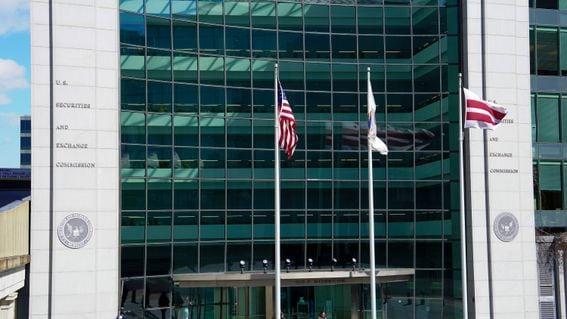
By offering their MetaMask wallet software, the SEC says Consensys is acting as an unregistered securities broker. Ethereum developer Consensys has filed a lawsuit against the U.S. Securities and Exchange Commission, striking back against what the company calls an “unlawful seizure of authority” over Ethereum by the federal regulator. The company wants a federal court to declare that ETH (ETH) is not a security, any investigation of ConsenSys based on the idea that ETH is a security "would violate" the company's fifth amendment rights and the Administrative Procedures Act, that MetaMask is not a broker under federal law, that MetaMask's staking service does not violate securities law and an injunction against the SEC investigating or bringing an enforcement action tied to MetaMask's Swaps or Staking functions. In the complaint filed Thursday against the SEC and all five of its commissioners, Consensys revealed it received a Wells notice from the SEC on April 10, indicating its intention to bring an enforcement action against the company for violating securities laws via its MetaMask wallet product. Consensys denies that it acts as a broker, stating that the wallet is “simply and interface” and “neither holds customers’ digital assets nor carries out any transaction functions.” The complaint adds that the SEC’s encroaching authority over Ethereum goes against its own past statements that the cryptocurrency is a commodity, not a security (citing former director Bill Hinman's 2018 speech), as well as the SEC’s sister regulatory agency, the Commodities Futures Trading Commission (CFTC), own authority over Ethereum, which oversees derivative products tied to ether. In its suit, Consensys claims that it “built its business against the backdrop of this regulatory consensus”, and the SEC’s new grab for power – which it calls an “about-face” – over Ethereum would therefore “violate the Constitutional requirement of fair notice under the Due Process Clause.” "The SEC’s unlawful seizure of authority over ETH would spell disaster for the Ethereum network, and for Consensys," the suit claims. A representative for the SEC declined to comment on the suit. The suit also leans on the "major questions doctrine," a Supreme Court ruling barring federal regulators from dramatically exceeding the scope of their Congressional mandates. Two judges have already rejected the idea that crypto falls under the doctrine during arguments brought by Terraform Labs and Coinbase. ConsenSys filed the suit in the District Court for the Northern District of Texas, joining groups like the Blockchain Association and companies like Legit Exchange, which filed similar preemptive suits seeking to block the SEC from treating certain crypto companies or assets as securities. In recent months, the SEC has also brought suits against crypto exchanges like Binance.US, Binance and Kraken. Uniswap Labs revealed earlier this month it had also received a Wells Notice from the regulator. https://www.coindesk.com/policy/2024/04/25/consensys-sues-sec-over-unlawful-seizure-of-authority-over-ethereum/
2024-04-25 16:57
The new feature helps to expand the utility of the Franklin OnChain U.S. Government Money Fund's BENJI token and make it more interconnected with the digital asset ecosystem. Asset manager Franklin Templeton said Thursday that it has enabled peer-to-peer token transfers for its $380 million tokenized money market fund, a key step to make the offering more interconnected to the broader digital asset economy similar to rivals. The move allows investors of the Franklin OnChain U.S. Government Money Fund (FOBXX) to transfer the fund's BENJI token between each other without any intermediary. The BENJI token, available on the Stellar (XLM) and Polygon (MATIC) blockchains, represents shares in the fund that holds government securities, cash and repurchase agreements and pays out a steady yield to token holders. "Allowing fund shares to be transferred peer-to-peer puts Franklin Templeton on the cutting edge of the financial sector where tokenized real-world assets are an industry staple and more open, transparent, and accessible," Jason Chlipala, chief business officer of Stellar Development Foundation, said in an email. The development is important because transferability allows to expand the token's utility in the future such as trading on secondary markets or using it as collateral for loans in the decentralized finance (DeFi) platforms. "Eventually, we hope for assets built on blockchain rails [...] to work seamlessly with the rest of the digital asset ecosystem," Roger Bayston, head of digital assets at Franklin Templeton, said in a press release. Tokenized U.S. Treasuries are at the forefront of the race to bring traditional financial assets such as bonds to blockchain rails – also known as tokenization of real-world assets. The market for tokenized Treasuries have mushroomed to $1.2 billion, growing tenfold since early 2023, as digital asset investors have been seeking safe yields for their blockchain-based cash holdings. BENJI, launched in 2021, is the largest and oldest of them with a $380 million market capitalization, rwa.xyz data shows. Newcomers like Ondo Finance's tokens and BlackRock's new BUIDL fund with Securitize, which have already allowed peer-to-peer token transfers, carved out a significant market share and are closing in on Franklin Templeton's offering. https://www.coindesk.com/business/2024/04/25/franklin-templeton-upgrades-380m-tokenized-treasury-fund-to-enable-peer-to-peer-transfers/

2024-04-25 16:32
The author of "Burn Book" says argued that the cryptocurrency sector has been caught up in a "huge hype cycle" with a considerable amount of "scammery" involved. Tech journalist and author Kara Swisher downplayed crypto's transformative potential, comparing it to a minor eruption versus the internet's major explosion. Swisher criticized crypto's hype and "scammery," predicting digital assets will settle as a niche within the broader tech landscape. AI is now the focus, attracting major tech interest and investment, though it faces its own inflated hype cycle. In an interview with CoinDesk's First Mover, technology journalist Kara Swisher, author of the New York Times bestseller "Burn Book," said that she is skeptical that cryptocurrencies have transformative potential, calling digital assets important but not world-changing. "The internet was a major Cambrian explosion. This is a tiny one. I guess a volcanic eruption on Indonesia," she said on First Mover. "It's a very important area of technology, but it's not the most important. It's not the center of everything." Swisher argued that the cryptocurrency sector has been caught up in a "huge hype cycle" with a considerable amount of "scammery" involved. "Crypto people really overplayed their hand in that regard, saying it's going to change everything," she said. "This is a typical thing of technologists … [saying] that it's going to change the whole world." Swisher believes crypto will ultimately settle into being just another niche within the broader tech landscape, comparing it to many other technological innovations that have come and gone without reshaping the world. "It needs to replace something that's better. Digital downloads of books, for instance, aren't necessarily better than physical books, but they are very good," she said. "[Crypto] overstepped itself, but it will settle into a nice, small corner." What follows crypto? So if crypto is fizzing out, and is yet to fulfill the grand visions of its most ardent supporters, where is the the hype going? Artificial intelligence, says Swisher. AI isn't profitable yet because "these ventures are very costly, requiring substantial investment in computing power and development," she said. "Unlike the early internet era, where anyone could launch ventures like Uber or Airbnb inexpensively, AI requires significant capital," she continued, citing OpenAI's Sam Altman wanting to raise enormous sums for projects like chip manufacturing. "Only the big companies can afford to lose this money and afford to pay for this," she said. But AI has captured the interest of the public and major tech companies in a way that's taken some of the momentum away from blockchain and crypto, albeit not without its own hype and exaggerated claims similar to those seen in the crypto space. "AI is a big deal in comparison," she said. "It's just that everyone has to slap AI onto their company name, and then they're an AI company." https://www.coindesk.com/markets/2024/04/25/kara-swisher-says-crypto-will-change-a-little-corner-of-the-world/

2024-04-25 16:06
The pool mined the first block after last week's halving, winning an "epic" sat in the process. Mining pool ViaBTC won the race to mine the first satoshi after last week's halving, which it has now sold at auction for $2.13 million. The Ordinals protocol allowed individual satoshis to be identified and traded, attaching value to particularly notable sats for the first time. ViaBTC, the mining pool that mined the first block after the Bitcoin halving on April 20, sold the "epic" satoshi it contained for 33.3 BTC ($2.13 million). An auction for the satoshi, or "sat," which has a face value of around $0.0006, ended at 16:00 UTC on crypto exchange CoinEx following a flurry of competing bids during the final few hours. There was an expectation the first sat produced by the Bitcoin network after its fourth halving event on April 20 would attract considerable interest with some commentators estimating that it could fetch millions of dollars. In the three previous halvings, there was little up for grabs other than bragging rights for mining the first block. However, the advent of the Ordinals protocol meant sats – the smallest denomination of bitcoin, equal to 0.00000001 BTC – could be identified and traded as if they were unique tokens, similar to non-fungible tokens (NFTs) on other networks. Casey Rodarmor, the creator of Ordinals, formed a system for categorizing the rarity of sats. These could be "uncommon," the first sat of each block; "rare," the first one after Bitcoin's fortnightly difficulty adjustment; or "epic," the first after a quadrennial halving. Read More: Bitcoin Transaction Fees Come Crashing Down Post Halving https://www.coindesk.com/tech/2024/04/25/bitcoin-mining-pool-viabtc-sells-epic-first-post-halving-sat-for-213m/