2024-04-18 18:12
The takeover, which hasn't been previously disclosed publicly, expands the cryptocurrency exchange's regulatory licensing in the U.S. Kraken has acquired TradeStation Crypto to help the exchange expand its footprint in the U.S. Florida-based TradeStation Crypto acquired money transmitter and other types of regulatory licenses in most U.S. states over the past few years. Cryptocurrency exchange Kraken is acquiring TradeStation Crypto, the digital asset-focused division of online brokerage TradeStation, to expand its regulatory licensing in the U.S. "We can confirm Kraken has recently purchased TradeStation's crypto business. The transaction is part of our efforts to accelerate our U.S. presence and will unlock further growth and new product opportunities for Kraken in the U.S," a Kraken spokesperson said via email. The company declined to disclose the amount paid. The takeover hasn't previously been disclosed publicly. Florida-based TradeStation Crypto has acquired money transmitter and other types of regulatory licenses in most U.S. states over the past few years. However, the crypto broker had a run-in with the U.S. Securities and Exchange Commission over a lending service, which resulted in a $3 million settlement. Parent firm TradeStation announced a withdrawal from crypto. The company was also behind a physical manifestation of Miami Mayor Francis X. Suarez's ambition to turn his city into a crypto hub. In early 2022, TradeStation Crypto commissioned the Miami Bull, an 11-foot, 3,000-pound statue that was unveiled by Suarez. Kraken is expanding in the European Union, too. In recent months, it announced the acquisition of Netherlands-based crypto firm BCM and collected a number of virtual asset service provider licenses across the region. https://www.coindesk.com/business/2024/04/18/cryptocurrency-exchange-kraken-acquires-tradestation-crypto/

2024-04-18 17:27
Eisenberg faces up to 20 years in prison for his $110 million heist. NEW YORK – A Manhattan jury has found crypto trader Avi Eisenberg guilty of fraud and market manipulation for his $110 million heist from decentralized finance protocol Mango Markets in October 2022. Eisenberg was arrested in Puerto Rico in December 2022 and charged with commodities fraud, commodities manipulation, and wire fraud for the scheme. He will be sentenced on July 29 by New York District Court Judge Arun Subramanian. Eisenberg faces up to 20 years in federal prison for his crimes. “This ground-breaking prosecution epitomizes this office’s ability to employ innovative methods and cutting-edge law enforcement tools to continue to protect all financial markets," said Damian Williams, U.S. Attorney for the Southern District of New York, in a Thursday press statement. "The career prosecutors of this office continue their expertise in prosecuting financial fraud, one of our core priorities, and would-be financial criminals should think twice before daring to engage in illicit conduct on our watch.” During his trial in New York’s Southern District, Eisenberg’s defense attempted to frame his trades on Mango Markets as “successful and legal,” arguing that they “fully complied” with the decentralized protocol’s scanty rules at the time of the heist. But the 12-person jury didn’t buy it, instead siding with prosecutors’ arguments that Eisenberg’s actions constituted “brazen” fraud and manipulation. Eisenberg is the latest crypto figure to be convicted of fraud, following shortly on the heels of FTX founder Sam Bankman-Fried’s conviction and subsequent 25 year sentence for his role in the collapse of FTX, and Terraform Labs co-founder Do Kwon being found liable for fraud in civil fraud case against him earlier this month. On October 11, 2022, Eisenberg made three massive MNGO perpetual futures trades between himself, pumping the price over 1000% and then using his newly-created collateral to trick the protocol into allowing him to “borrow” $110 million in various cryptocurrencies. But Eisenberg wasn’t “borrowing,” he was stealing – hours after the exploit, he posted an anonymous proposal to the Mango Markets decentralized autonomous organization (DAO) offering to return $67 million of his ill-gotten gains in exchange for a promise not to pursue charges against him and permission to pocket the rest. Though Eisenberg’s defense team, headed by well-known crypto defense lawyer Brian Klein, argued that Eisenberg was acting within the law, prosecutors showed the jury a bucket of evidence – including internet searches for things like “statute of limitations market manipulation” and “FBI surveillance” and “elements of fraud” and his flight to Israel after his identity as the exploiter was unmasked – suggesting he knew his actions were criminal. "We're obviously disappointed, but we will keep fighting for our client," Klein told CoinDesk. "We plan to file a number of post-trial motions." https://www.coindesk.com/policy/2024/04/18/mango-markets-exploiter-avi-eisenberg-found-guilty-of-fraud-and-manipulation/
2024-04-18 11:59
Paul Frambot, CEO of DeFi lending firm Morpho Labs, says fintechs, having relied on traditional finance rails until now, are all optimizing for layer-2 infrastructure. Many financial technology firms and crypto exchanges have noted Coinbase's success with Base, its layer-2 blockchain, and decided to work with layer 2s themselves or build their own. TradFi has such an advantage with its current infrastructure, there is no incentive to move to DeFi. Neutral DeFi protocols that others can easily build on top of are a better path to scale than giant on-chain brokers or funds such as Aave or Compound. The path to mass adoption of decentralized finance (DeFi) passes through fintech firms and centralized exchanges, which together form a disruptive force with more incentive to switch to the new infrastructure than traditional finance (TradFi) incumbents, according to Paul Frambot, CEO of DeFi lending firm Morpho Labs. Just as the auto industry, for example, has distribution and manufacturing sectors, so does finance. Financial technology companies – fintechs – such as Revolut and Robinhood (HOOD) provide the distribution frameworks for the digitization of financial services. But they still rely on TradFi as the manufacturer, Frambot said. That will change, he said, and points to several pieces of evidence for his thesis that DeFi will scale through a combination of centralized crypto exchanges and fintech firms. For instance, many fintechs and exchanges have noted the success U.S.-listed crypto exchange Coinbase (COIN) has had so far with Base, its layer-2 blockchain, and decided to build or partner with layer 2s themselves, Frambot said. Robinhood in February announced it was working with layer-2 blockchain Arbitrum, and many other fintech firms now have in place wallet infrastructure to seamlessly connect with Web3. “TradFi has very little interest in moving to DeFi, to be frank, just because they have such an unfair advantage with their current infrastructure,” Frambot said in an interview. “However, fintechs don't have their own financial infrastructure, they have to go through all the fees of the TradFi guys. But they have distribution, they have adoption. So if they start owning their own infrastructure by building on top of layer-2s and immutable DeFi, then they can start generating more profits from it, gain efficiency and limit their operating costs.” "I'm still frustrated that we're not changing finance at all,” he said. “We're still playing for crypto users that already have crypto. The promise of the open financial infrastructure underpinning every financial service is miles and miles away from where we are right now. And I think because there is so much money to make from just the crypto game, there are few incentives for founders to think beyond this.” The answer to DeFi’s scaling problems also involves protocols that are neutral, like the rails of the internet itself, which can easily be built on top of, Frambot said. Having started out as a very successful optimization service on top of DiFi giants like Aave, using a matching engine to reduce spreads and offer users better interest rates, Morpho later transitioned to become a base-level protocol, more like Uniswap, the largest decentralized exchange by trading volume on the Ethereum blockchain. The model of a broker or fund that exists on-chain, like Aave or Compound, that is necessarily mutable and continually subject to hundreds of risk-management governance decisions will not scale to the degree required to make DeFi mainstream, in Frambot’s opinion. “We can't have [a] one-size-fits-all monolith that meets all the different compliance needs of the world,” Frambot said. “People want different [know your customer] or risk. So you have to have the core protocol that is completely un-opinionated, and people build specific financial products on top for their specific use cases.” https://www.coindesk.com/business/2024/04/18/defis-path-to-mass-adoption-goes-through-fintech-firms-centralized-exchanges-morpho-labs-chief-says/

2024-04-18 11:15
The company has formed four divisions to reflect its broadening focus: Data, Finance, Power and Edu(cation). The issuer of the largest stablecoin by market cap said the Data, Finance, Power and Edu divisions reflect its broadened mission. The company has already invested in several areas outside USDT. Tether, the developer of the world's largest stablecoin, said it is reorganizing to reflect its expansion into other areas of digital assets. The company formed four divisions to reflect its broadening focus: Data will handle strategic investment in technology including artificial intelligence (AI); Finance will cover the USDT stablecoin, which has a market cap in excess of $100 billion and plays a pivotal role in crypto markets; Power becomes the umbrella for investments in bitcoin (BTC) mining and Edu is the home for educational activities. "Tether’s expansion beyond its well-established USDT stablecoin signifies a paradigm shift in its approach to financial empowerment," the company said in a statement. "By focusing on sustainable solutions adaptive to the needs of individuals, communities, cities and countries, responsible Bitcoin mining, Artificial Intelligence infrastructure and decentralised communication platforms, Tether is actively contributing to a future-proof financial and tech ecosystem." While the 10-year-old company is already active in these areas, the establishment of distinct divisions reflects the growing importance it attaches to interests beyond its flagship stablecoin. Last year the firm invested in BTC mining operations in Uruguay and a payment processor in the country of Georgia. It also put money into AI through its association with data cloud provider Northern Data Group. Tether has, however, received considerable scrutiny for the perceived opaqueness of the reserves that back USDT. Read More: Stablecoins Are Seeing Adoption as a Cross-Border Settlement Mechanism: Bernstein https://www.coindesk.com/business/2024/04/18/tether-reorganizes-into-4-divisions-as-it-expands-beyond-stablecoins/
2024-04-18 09:18
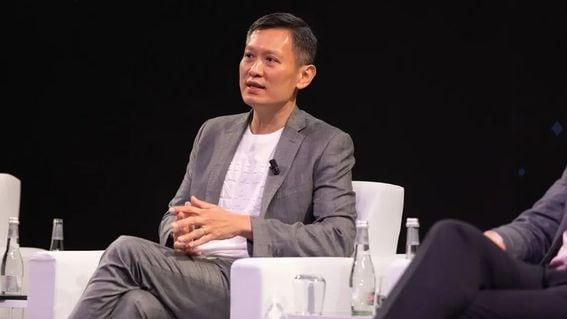
The fourth and final stage of approval comes almost a year after the crypto exchange secured a third-stage license. Binance has been awarded a full crypto services license in Dubai by VARA. This license upgrades its existing minimum viable product license awarded in mid-2023. Binance, the world's largest crypto exchange by trading volume, said it has been awarded a full virtual-asset services provider (VASP) license by Dubai's Virtual Assets Regulatory Authority (VARA) almost a year after entering the third stage of the emirate's four-stage process. "As we secure the esteemed full market VASP Licence, it notably amplifies our unwavering commitment to advancing the financial landscape through compliance and innovation," CEO Richard Teng said in a statement. "This achievement embodies our dedication to transparency, regulatory compliance, and responsible growth in the dynamic digital assets domain." Binance's local unit, Binance FZE, obtained an Operational MVP license in mid-2023, a VARA filing shows. That allowed it to serve institutional investors and qualified investors while engaging in broker-dealer services and exchange services including virtual-asset derivatives trading. The full VASP license "underlines Dubai's position as a forward-thinking city – acknowledging and embracing the financial potential that blockchain technology brings," Binance FZE General Manager Alex Chehade said in a statement. One condition of the license was for Binance's co-founder and former CEO, Changpeng "CZ" Zhao, to give up voting control with the local unit, Bloomberg reported, citing people with knowledge of the matter. CZ is in the U.S. awaiting sentencing after settling charges with the Department of Justice in November. He is expected to be sentenced on April 30. Neither Binance nor VARA had responded to a request for comment about these conditions by publication time. https://www.coindesk.com/policy/2024/04/18/binance-secures-full-virtual-asset-services-provider-license-in-dubai/
2024-04-18 08:38
The bank’s analysis of open interest in bitcoin futures shows that the cryptocurrency is still considered overbought. JPMorgan said it expects bitcoin to fall after the reward halving. The bank’s analysis shows that the cryptocurrency remains overbought. Miners will be most affected by the event, the report said. The bitcoin (BTC) price is likely to weaken after the reward halving, a quadrennial event that slows the rate of growth in bitcoin supply and looks set to occur around April 19-20, Wall Street giant JPMorgan (JPM) said in a research report on Wednesday. The bank sees downside for the world’s largest cryptocurrency after the halving because the market is still in overbought conditions, according to its analysis of open interest in bitcoin futures. Furthermore, the cryptocurrency price of about $61,200 is still above the bank’s volatility-adjusted comparison with gold, which sets it at $45,000, and its projected production cost of $42,000 after the halving. The bitcoin production cost has historically acted as a lower boundary for BTC prices. JPMorgan also notes that venture-capital funding remains subdued despite the recent crypto market resurgence. The biggest impact of the halving will be felt by mining companies: “As unprofitable bitcoin miners exit the bitcoin network, we anticipate a significant drop in the hashrate and consolidation among bitcoin miners with a highest share for publicly-listed bitcoin miners,” analysts led by Nikolaos Panigirtzoglou wrote. “Post halving event, it is also likely that some bitcoin mining firms may look to diversify into low energy cost regions such as Latin America or Africa to deploy their inefficient mining rigs to gain salvage values from those rigs which would otherwise sit idle,” the authors wrote. https://www.coindesk.com/markets/2024/04/18/bitcoin-likely-to-drop-after-the-halving-jpmorgan-says/