2024-04-16 11:52
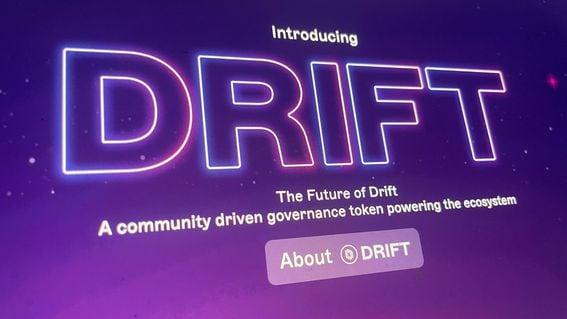
Some surprise winners in Drift's road to decentralization include MetaDAO. Drift Protocol is conducting an airdrop of 100 million tokens and spinning up a token-based governance structure. A surprise winner of the highly anticipated announcement is MetaDAO. Its futarchy tech is being partly implemented in Drift. Solana-based decentralized exchange (DEX) Drift protocol plans to launch a DRIFT governance token and airdrop the asset to its users within weeks, according to Drift's website and people familiar with the matter. The new token follows a three-month points program that enticed traders, borrowers, lenders—and, of course, airdrop farmers—into Drift, one of the largest venues for trading perpetuals in Solana DeFi. But contributors to the protocol said most of the 100 million tokens earmarked for this airdrop will go to longtime Drift users. Airdrops, within the world of cryptocurrencies, refer to the distribution of free tokens or coins to individuals. Drift is the latest piece of financial infrastructure on Solana to attempt to decentralize its operations by creating a token whose holders can vote on key decisions at the exchange, like which tokens to list or when to upgrade software. In this airdrop, ten percent of DRIFT's total supply will go to its users. Venture backers are set to get a far larger allocation of DRIFT: 22%. Massive crypto VCs Polychain Capital and Multicoin Capital, as well as a smattering of angel investors that include Solana's founders Anatoly Yakovenko and Raj Gokal have since 2021 poured over $25 million into the protocol's development. Forty three percent of tokens will go toward "ecosystem development" that could include trading rewards, liquidity incentives and future airdrops. And 25% of tokens are reserved for "protocol development" payouts to Drift's contributors, according to Drift's website. Drift protocol's developers plan for the trading service to become a one-stop venue for crypto investors on Solana. Its main product is perpetuals trading for price speculators to long and short cryptos with up to 20x leverage. Drift also hosts spot trading and a range of exotic financial instruments that give investors exposure to high-risk, high-reward plays. Its newest product lets traders place bets on tokens that haven't launched yet, though for legal reasons it won't offer the service for DRIFT token). "Our goal was never to just be a perps DEX," core contributor Cindy Leow said in an interview. Instead, Drift Labs (the main company building the protocol) has spent over two years, tens of millions of dollars and its 25 personnel building the "entire value stack" for DeFi. Some of those were stress tested during last week's crypto market crash. Lenders to Drift's insurance fund, a high interest-paying USDC vault that protects the protocol against bad debt, saw $11,600 in socialized losses during crypto's biggest multi day liquidation event since November 2021. But the insurance fund was designed as such a backstop, and amid a wave of liquidations and bankruptcies that came with the sudden price plunge Drift held up. "We had $200 million in open interest" on Friday morning, Leow said amid the market crash, and "10% was liquidated." She called it the biggest single day market move since December. Nevertheless "liquidations are going fine." Governance Changes Control over Drift will shift from Drift Labs to a three-pronged governance structure. At the top is a security council that will wield upgrade authority over the protocol, basically, day-to-day control. Members of this council will at least initially come from inside Drift, people familiar with the matter said. They'll need approval from Drift's "Realms DAO," where token holders get to vote. A third prong of Drift's governance, the Futarchy DAO, will operate much like the MetaDAO does. In short, traders here will get to pull the levers of decision-making by bidding up, or against, the price of DRIFT token in a pair of conditional markets. The winning market is that which ends with a higher price: its trades settle (those in the losing market revert) and the associated decision executes. Leow said Drift developers learned about futarchy during the mtnDAO hacker house in Salt Lake City in February and came back insistent that Drift implement its wonky notion that markets make better decisions than democracies. "We're using MetaDAO in the background," she said. Futarchy DAO decisions will address ecosystem grants: who gets money (in DRIFT tokens), for what and how much. A press release shared with CoinDesk outlined "new ecosystem initiatives" including the development of trading bots, validator clients and alternative frontends – the user interface through which people access Drift's open source trading service – as possible areas of investment. "One idea for us is looking at how Solana has decentralized over time," Leow said. "We want to invest in teams that are building frontends on their own. https://www.coindesk.com/tech/2024/04/16/solana-dex-drift-to-airdrop-100m-tokens-in-weeks/
2024-04-16 11:25
Geopolitical factors could see investors allocate funds to alternative assets such as bitcoin, some analysts say. Geopolitical events and the search for an investment hedge led some traders to say bitcoin could surge in the coming months, despite a recent 10% weekly drop in its value. The correlation between bitcoin and traditional market assets remains high, but some investors see the cryptocurrency as a viable hedge and investment option, with expectations its price could reach $120,000 in the coming months. International politics and the search for an investment hedge could fuel a bitcoin (BTC) surge in the coming months, even after confidence in the largest cryptocurrency was dented by a 10% weekly drop, some traders say. Bitcoin has long been considered a possible hedge against geopolitical events and was originally created in the wake of the 2008 financial crisis. Some traders say the hedging narrative remains viable despite BTC being highly correlated with traditional market assets for several years. “Bitcoin remains a viable doomsday asset in 2024, as its correlation to Gold recently increased, and investors continue to diversify away from traditional financial assets,” Edouard Hindi, the chief investment officer at Tyr Capital, said in an email to CoinDesk. “The ETF is currently spearheading this Doomsday rally and we should expect $120,000 to be hit in the coming months as global geopolitics continues to deteriorate and the middle classes continue to find ways to protect their wealth,” Hindi said. Crypto markets were shattered over the weekend as tensions between Iran and Israel increased alongside profit-taking ahead of the bitcoin reward halving, a technical event expected on April 20 that will cut network rewards by 50%. Major tokens lost as much as 18% on the weekend compared to last week’s peak prices before reversing some of the losses on Monday. The slide resumed in Asian morning hours on Tuesday as Israel considered its response to Iran's firing of more than 300 drones and missiles at its territory. Elsewhere, inflows to bitcoin exchange-traded funds (ETF) have slowed in the past week. Data shows only one product, BlackRock’s IBIT, saw inflows on Monday, while 10 other ETFs all saw outflows. Some market observers say bitcoin’s short-term price action will set the course for the broader crypto market in the coming weeks. “The sell-off in US stock markets affected global risk appetite late on Monday, reversing initial positivity. The market is hovering near the lows of March,” Alex Kuptsikevich, an FxPro senior market analyst, wrote in a daily note. “This is a key moment in choosing the market’s direction for the coming weeks. A bounce out of this area will allow for the expectation of an early recovery to the recent highs. A dip below would likely trigger a broader liquidation of positions.” https://www.coindesk.com/markets/2024/04/16/bitcoin-could-surge-to-120k-on-doomsday-rally-trader-says/

2024-04-16 10:44
The Open League program, announced on April 1, is bringing users on-chain in "unprecedented numbers," TON Foundation's Justin Hyun told CoinDesk. Telegram's pivot to toncoin payments for advertisements and the Open League reward program are boosting the token's adoption. TON has gained 15% this month, outperforming the broader market. A toncoin (TON)-based economy is starting to take root in the messaging app Telegram, and that explains the token's recent outperformance of the broader crypto market, according to Justin Hyun, director of investments at TON Foundation. TON has gained 15% this month, clocking record highs above $7, while bitcoin (BTC), the leading cryptocurrency by market value, declined 11% and the CoinDesk 20 Index, a broader market gauge, dropped 16%, CoinDesk data show. Open interest, or the dollar value locked in the number of perpetual futures tied to TON, has increased by over 17% to $160 million in the same period, CoinGlass data show. At one point, open interest topped $200 million. An uptick in open interest alongside a price rise reflects an influx of new money and confirms the uptrend. Toncoin is the native cryptocurrency of The Open Network (TON), a decentralized, layer-1 network popularly known as the TON blockchain. In February, Telegram, which has 800 million users, introduced an advertising revenue-sharing system for channel owners that pays out exclusively in TON. Telegram channels generate over 1 trillion views a month, and owners of public channels with at least 1,000 subscribers stand to receive 50% of the revenue generated from the display of ads in their channels. "Telegram has launched its ad platform, which only accepts Toncoin instead of fiat, choosing the principles of Web3 and paying 50% of the revenue they make from advertising back to Telegram channel owners, Hyun said in an interview over email. "The move will mean channel owners can distribute Toncoin in giveaways to their audiences, growing awareness of TON's ecosystem even further, and over time, decentralizing the token supply to Telegram's best and brightest creators." Last week, TON Foundation partnered with HashKey Group, the parent entity of the Hong Kong-licensed crypto exchange of the same name, to facilitate hassle-free and seamless conversion of fiat currencies into digital assets and vice versa for its wallet users from the Asia Pacific region. Hyun added that the Open League program, announced on April 1, is bringing users on-chain in "unprecedented numbers." The program is a reward strategy to encourage user participation in developing the ecosystem. Under the program, TON Foundation is set to distribute 30 million TON, worth $188 million, to community members through quests, airdrops, and liquidity pools on TON's decentralized exchanges. "This strategy of focusing on developers who understand what's required to build consumer applications that engage millions of users is going to be key for the future of crypto adoption. TON is really the only hope of mass adoption for Web3 technologies. It will do for Web3 tech what the Apple Mac did for personal computing. Not a computer in every home, but crypto in every pocket," Hyun said. The program aims to bring millions of Telegram users on-chain, establishing TON as the home for consumer product markets and creating a self-reinforcing flywheel for Ton-based projects. The league's pilot season caused a 47% increase in the daily active wallets and a 244% increase in the dollar value of crypto assets locked in the TON ecosystem. https://www.coindesk.com/markets/2024/04/16/ton-based-economy-starting-to-take-root-in-telegram-ton-foundation-says/

2024-04-16 09:30
The two largest digital dollar providers have chosen different paths in dealing with a perceived lack of global clarity on stablecoin rules: Circle is looking to U.S. lawmakers to provide guidance, while Tether is taking a hands-on approach to tackling fraud and money laundering. The influx of traditional finance into crypto and the emergence of international variations in regulations is prompting contrasting responses from stablecoin issuers such as Tether and Circle. Circle admonishes what it sees as U.S. lawmakers’ inaction and wants greater alignment in crypto rules between nations. Tether, more focused on developing countries, says it is frustrated by the slow movement of law enforcement when it comes to crimes involving crypto. It’s an interesting question: How will Tether and Circle, the largest issuers of U.S. dollar-denominated stablecoins, evolve and expand as the rule-bound systems of traditional finance become increasingly enmeshed in the crypto economy? So far these crypto power players have taken different paths. Circle, which casts itself as the compliance-friendly option, echoes many regulators’ calls for global coordination. Tether, for its part, has adopted a hands-on, reactive approach that can be flexibly adapted for national variations, especially when it comes to fighting crime. Rules on stablecoins should be harmonized, not balkanized, Dante Disparte, head of global policy and chief strategy officer at Circle, said in an interview. “It’s not that those countries are making a mistake or doing something wrong; U.S. policy inaction is actually the gap,” and other countries are legislating to fill it, he said. “So that's the trend we should expect: A balkanization of the industry as more countries erect barriers and establish rules that favor having a local advantage.” The imposition of the Travel Rule on digital asset transactions has created a standard in which the endpoints of crypto can be defended, Disparte said. “Now, imagine if there was also legislation imposed on stablecoins where the currency the stablecoin references set a floor on expectations around financial integrity, financial crime, compliance and a whole host of other standards,” he said. Tether, which doesn’t serve U.S. customers and doesn’t intend to do so, views the stablecoin market in the image of the Eurodollar – Eurodollar deposits are held outside the U.S. and thus not subject to U.S. regulation. Tether sees the future in emerging markets and underbanked countries and is formulating its own approach to law-enforcement collaborations. The company could claim that U.S. law agencies have no jurisdiction over it, but that would be stupid, CEO Paolo Ardoino said in an interview. Tether, in fact, volunteers to work with U.S. authorities like the Federal Bureau of Investigations (FBI) and the Department of Justice (DOJ), as well as some 40 law forces around the globe, he said. “I think the Treasury should work with stablecoins in a proactive way,” Ardoino said in an interview. “We have tools like Chainalysis to follow whatever happens on the secondary market. And, by the way, almost everywhere there are no laws that stablecoins issuers are responsible for the secondary market. But I think it's our duty to monitor them just the same.” Need for speed Attempting to deal with crime in a speedy, hands-on manner is a source of frustration for the crypto industry, according to Ardoino. The Tether chief says his firm takes a proactive approach compared to its competitors by collaborating directly with law enforcement, bypassing the need for a lengthy judicial process that could take up to six months, during which the funds could be already dispersed. It's better to act swiftly to freeze funds upon contact from law enforcement, he said. 'When the DOJ needs to freeze assets, they reach out to us," Ardoino said. (He pointed out that Tether has successfully frozen over 600 million USDt in collaboration with U.S. law enforcement.) "We possess the capability to freeze assets with surgical precision. However, when the Treasury adds entities to the OFAC SDN list, it's instantaneous—they're gone in a minute. Ideally, they could approach us beforehand, saying, 'We're investigating these individuals, planning to impose sanctions. Could we freeze their assets before making it public?' This way, we can effectively lock down the funds." OFAC is the Treasury’s Office of Foreign Assets Control and SDN stands for specially designated nationals. Both firms have had their travails. A lot has been written over the years about the integrity of tether (USDT), the largest stablecoin, with a current market cap of $107 billion. The durability of Circle, whose USDC is one-third its size and with its ties to the U.S. banking system, looked rather touch and go at one point during the collapse of Silicon Valley Bank in 2023. Terra Lunacy The contrast between Circle’s appeal to traditional financial values and Tether’s hands-on, reactive approach to crypto’s slings and arrows is illustrated in their reflections on the collapse of Terra’s UST stablecoin and its backing currency, Luna – arguably the first step that brought down a house of cards. Some time before Terra blew up, Ardoino suggested the project was a “bad idea,” he said. His denouncement was met with scorn: Obviously he was going to be negative about the algorithmic stablecoin, he recalls people saying at the time, because it was a competitor that was going to steal some of Tether's market. “Of course, Terra Luna happened and Tether was subjected to a lot of pressure, with people saying they would short us into the ground and cause a bank run,” he said. “But we managed to redeem $7 billion in 48 hours; $20 billion-plus in 20 days.” Circle’s Disparte laments crypto’s avoidable “own goals” and how it managed to acquire such a “checkered scorecard” for a relatively young industry. “If you comported with e-money rules or money transmission rules, which in the U.S. is a state-based regime, you would have protected principal, for example, with Terra Luna. People wouldn't have broken the buck,” he said. CORRECTION (APRIL 16, 2024): Clarifies Paolo Ardoino’s comments regarding freezing assets https://www.coindesk.com/policy/2024/04/16/tether-circle-diverge-on-how-to-tackle-global-patchwork-of-stablecoin-rules/

2024-04-16 08:07
Bored Apes were one of the most globally hyped NFTs in the last bull market, but have suffered amid a general lack of demand for NFT collections. The Bored Apes Yacht Club NFT collection experienced a significant price decline of over 90%, dropping from a peak of 120 ETH to just over 10 ETH. This decline reflects a broader waning interest in Ethereum-based NFT collections. Despite the hype and celebrity endorsements, the Bored Apes collection has seen a substantial decrease in value, with factors such as waning retail interest and the rise of newer collections on Bitcoin and Solana contributing to the decline. Digital artwork that was once the talk of the town is now selling at a 90% haircut compared to prices during its peak popularity in 2021, showcasing the fragility associated with viral crypto trends. The minimum price of the non-fungible token (NFT) collection, Bored Apes Yacht Club (BAYC), is just over 10 ether (ETH) as of Tuesday, a stark drop from a lifetime average of 120 ether in May 2022. It’s roughly the same decline in dollar terms as well. Ether was worth around $3,000 in May 2022 as it is in Asian morning hours on Tuesday – meaning a single NFT was worth over $400,000 then compared to just over $30,000 as of writing. Data from CryptoSlam shows trading volumes have generally remained around the $1 million daily mark since 2022. Nearly 20% of the collection is held by ten individual wallets. The decline comes alongside generally waning retail interest in Ethereum NFT collections, Google search data suggests. Meanwhile, newer collections on Bitcoin and Solana have started to gain more interest among investors. The rise of the apes and subsequent decline Bored Apes is a collection of 10,000 digital monkeys on the Ethereum blockchain. It features pictures of cartoon apes procedurally generated by an algorithm. Each monkey has certain traits—some more rare than others—that give it value. Owners are granted certain benefits, such as access to a private online club or in-person events. Using the NFT for a profile picture is also prominent as a show of wealth online. Bored Apes amassed quick popularity in the 2021 bull market, with several prominent celebrities claiming to purchase the NFTs for over $300,000 apiece. Popular rappers performed with their Bored Apes on virtual worlds, while singer Justin Bieber bought a Bored Ape deemed “rare” for over $1.2 million. However, in June 2023, reports suggested that crypto services company MoonPay may have gifted the Bored Apes to some of those celebrities, likely denting investor confidence. MoonPay denied the claims at the time. As such, Bored Apes remains the top Ethereum NFT collection as of Tuesday, with a $340 million market capitalization. https://www.coindesk.com/web3/2024/04/16/bored-ape-nft-prices-tank-to-august-2022-levels-down-90-from-peak/

2024-04-16 05:50
Markus Thielen, founder of 10x Research, has de-risked his portfolio in the wake of rising Treasury yields. Dwindling odds of Fed rate cuts and rising bond yields have weakened the bullish case in cryptocurrencies and stocks. Flows into the U.S.-listed spot BTC ETFs have dried. The analyst who predicted bitcoin’s (BTC) bottom in November 2022 and the recent pre-halving surge to record highs has turned bearish on risk assets, including technology stocks and cryptocurrencies. “Our growing concern is that risk assets (stocks and crypto) are teetering on the edge of a significant price correction. The primary trigger is the unexpected and persistent inflation. With the bond market now projecting less than three cuts and 10-year Treasury Yields surpassing 4.50%, we may have arrived at a crucial tipping point for risk assets,” Markus Thielen, founder of 10X Research, said in a note to clients Tuesday. “We sold all our tech stocks last night (at the open) as the Nasdaq is trading very poorly and reacting to the higher bond yield. We only hold a few high-conviction crypto coins. Overall, we are bearish risk assets (stocks + crypto).” Thielen added. Traders have recently scaled back pricing for 25 basis point Fed rate cuts this year to less than three from six at the beginning of the year, data from CMEGroup show. The so-called hawkish repricing, spurred by sticky U.S. inflation and a resilient labor market and economy, has lifted the 10-year Treasury yield 40 basis points to 4.61% this month, the highest since November 2023. The sharp rise in the so-called risk-free rate has dented the appeal of investing in high-risk/high-return assets like technology stocks and cryptocurrencies. "Most of this 2023/2024 bitcoin rally is driven by expectations that interest rates would be cut, and this narrative is being seriously challenged now," Thielen noted, adding that inflows into the spot exchange-traded funds (ETFs) have dried. The U.S. Securities and Exchange Commission (SEC) greenlighted nearly a dozen spot BTC exchange-traded funds (ETFs) in January, allowing investors to take exposure to the cryptocurrency without having to own and store it. Since then, nearly $12 billion has flowed into these investment vehicles. However, most flows happened last quarter, powering the cryptocurrency higher, and the demand has faded this month. The 5-day average of the net inflows into the spot ETFs has dropped to zero. "After an initial novelty hype, ETF flows tend to run out unless prices continue increasing—which they have not done since early March. With two—to 17% drawdowns, those investors might stay on the sidelines," Thielen explained. Some observers expect the correction to gather pace once the hype surrounding the Bitcoin network's quadrennial mining reward halving due on April 20 fades. The inbuild code will reduce the per-block coin emission to 3.125 BTC from 6.25 BTC, effectively halving the pace of supply expansion. Bitcoin changed hands at $62,600, representing a 42% year-to-date gain, CoinDesk data show. The CoinDesk 20 Index, a broader market index, stood at 2119 points at press time, up 17% for the year. https://www.coindesk.com/markets/2024/04/16/analyst-who-called-bitcoins-pre-halving-rally-to-70k-turns-bearish/