2024-04-15 11:48
One analyst firm said over $13 billion in open interest was wiped out as $1.5 billion in bullish bets were liquidated. Meme coins and AI-linked tokens experienced significant sectoral gains in the past 24 hours, outperforming major tokens including bitcoin. Bitcoin and other major tokens began to recover from weekend losses, with BTC trading around $66,600 in European morning hours, buoyed by claims of approval of spot bitcoin and ether ETFs in Hong Kong. The market-wide decline had been caused by profit-taking ahead of the bitcoin halving and macroeconomic tremors, leading to the liquidation of over $2 billion in futures positions and a drop in open interest as bets were closed. Meme coins and artificial intelligence (AI)-linked tokens led gains in the past 24 hours as bitcoin and other major tokens started to reverse weekend losses. Bitcoin (BTC) added 3.3% to trade around $66,600 in European morning hours, buoyed by reports prospective ETF providers said they had been approved to offer bitcoin and ether exchange-traded funds in Hong Kong. Solana meme coins, dog-themed meme coins and Base network meme coins jumped over 15% on average, CoinGecko category data shows, while AI tokens zoomed over 17%. There was no apparent catalyst for the jumps. Tokens of layer-1 blockchains, such as ether (ETH), Solana’s SOL and Avalanche’s AVAX, were among the worst-performing categories, with an average rise of 5.5%. The broad-based CoinDesk 20, a liquid index of major tokens, minus stablecoins, rose nearly 6%. On-chain analysis tool Lookonchain said in an X post that whales, a colloquial term for wealthy traders whose actions can move token prices, picked up millions of dollars worth of meme tokens cat in a dogs world (MEW) and slerf (SLERF). Prices for the two rose almost 80% in the past 24 hours. Profit taking ahead of the halving, due later this week, and macroeconomic tremors weighed on the market since late Friday, with bitcoin dropping from last week’s highs around $70,500 to as low as $62,800. That caused a market-wide decline as majors dropped as much as 18%. As a result, $2 billion in futures positions were liquidated over the weekend, the most since March. Over $1.5 billion of those positions were betting on higher prices, data from analysis tool Coinalyze shows. A Coinalyze representative told CoinDesk in an X message that the leverage flush caused open interest – or the number of unsettled futures contracts – to drop $13 billion since Friday, indicative of bets being closed. Some traders said the price fall was expected ahead of the halving, a much-anticipated event on April 20 that will cut the rewards offered to network miners by half. “While previous halving events have historically been followed by 9-12 months of uptrend, they have often triggered short-term 'sell the news' reactions before and after the event,” Matteo Greco, a research analyst at digital asset investment firm Fineqia International, told CoinDesk in an email. “This short-term bearish sentiment is also reflected in the net outflow of $85 million from Bitcoin Spot ETFs during the week, signaling increased profit-taking and investor caution following the strong uptrend in both Q4 2023 and Q1 2024,” Greco added, referring to bitcoin ETF products in the U.S. https://www.coindesk.com/markets/2024/04/15/meme-coin-ai-tokens-lead-gains-after-bitcoin-drop-causes-2b-in-weekend-liquidations/

2024-04-15 10:17
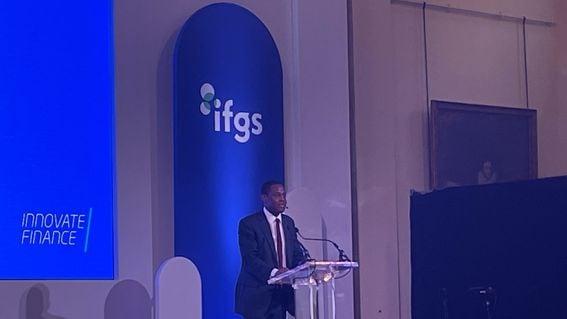
The country passed a landmark bill in June 2023, which laid the foundation for stablecoins and other crypto to be treated as regulated financial activities. The U.K. will issue new legislation for stablecoins as well as crypto staking, exchange and custody by June or July this year, Economic Secretary Bim Afolami said. The Conservative-party-led government has said it wants to make the U.K. a global hub for crypto and passed legislation last year to recognize crypto and stablecoins as regulated financial activities in the country. The U.K. government is set to put forward legislation for stablecoins as well as for crypto staking, exchange and custody by June or July, Economic Secretary Bim Afolami said at the Innovate Finance Global Summit on Monday. "We are now working at pace to deliver the legislation to put our final proposals for our regime in place," Afolami said. "Once it goes live, a whole host of crypto asset activities, including operating an exchange, taking custody of customers’ assets and other things, will come within the regulatory perimeter for the first time." In 2023, the U.K. passed a landmark financial markets bill that laid the foundation for stablecoins and crypto broadly to be treated as regulated financial activities in the country. Local regulators, the Financial Conduct Authority and the Bank of England, both consulted on what a stablecoin regime would look like last February. The BoE said it would oversee stablecoin providers that were large enough to affect the financial system, while the FCA said it would regulate the wider crypto space. Afolami teased the coming of secondary stablecoin legislation in February, adding that the government was pushing to get it done within six months. The U.K.’s Conservative Party-led government has said it wanted to be a crypto hub and has since consulted on its ambitions to regulate crypto. The U.K. is expected to have an election this year, which could see the Conservative party ousted and some crypto plans left in limbo, meaning the party could have a limited time left to execute its plans. The Labour party is the current favorite to win. https://www.coindesk.com/policy/2024/04/15/uk-to-issue-new-crypto-stablecoin-legislation-by-july-minister-says/
2024-04-15 08:15
The miner earned 50 bitcoin in April 2010 during the network’s early weeks and has held on to them for the entire time. An early crypto miner moved 50 BTC, worth over $3 million, after 14 years of inactivity, with part of the transfer ending up at crypto exchange Coinbase. The transaction joins the few instances of "Satoshi era" bitcoin movements, following other significant transfers in 2023. An early crypto miner moved 50 bitcoin (BTC) today after 14 years of leaving the holdings untouched, data shows, joining the rare instances where bitcoin from the “Satoshi era” have been transferred. The holdings, worth over $3 million as of Monday, were transferred to two wallets in Asian morning hours. Part of these transfers were eventually sent to crypto exchange Coinbase (COIN), analysis tool Lookonchain said in an X post. Blockchain data shows the miner received 50 bitcoin as a reward in April 2010, months after the network first went live and the token was worth only a few dollars. That period is colloquially known as the Satoshi era, referring to the months when bitcoin’s pseudonymous creator, Satoshi Nakamoto, was active on online forums from late 2009 to 2011. Several bitcoin wallets from that era have been active since the start of 2023. In July, a wallet that had been dormant for 11 years transferred $30 million worth of the asset to other wallets, while in August, another wallet transferred 1,005 BTC to a new address. In December, over 1,000 bitcoins from an early miner were moved to trading desks and custodian services after a 13-year dormancy. https://www.coindesk.com/markets/2024/04/15/bitcoin-from-rare-satoshi-era-miner-moves-after-14-years-of-dormancy/
2024-04-15 07:54
The Securities and Futures Commission, Hong Kong's markets regulator, has not made an official announcement. Bitcoin (BTC) has risen 2.8% over 24 hours, trading above $66,500, and ether (ETH) has advanced to $3,240, according to CoinDesk Indices data, as multiple issuers in Hong Kong said they'd been approved for spot crypto exchange-traded funds (ETFs). China Asset Management, Bosera Capital and other applicants posted to social-media platform WeChat (Weixin) that they had been approved to list spot bitcoin and ether ETFs in Hong Kong. However, these announcements seem to have front-run an official statement from the Securities and Futures Commission (SFC), which has not posted a list of approved issuers. Some of the posts have since been deleted. The SFC did not return emails or phone calls asking for comment. Singapore-based digital assets trading house QCP Capital said in a message shared with CoinDesk that it believes the ETFs, when approved, will unlock some institutional demand during Asia trading hours. "Participants who wanted exposure have always been limited to US hours, but this now gives institutional investors an Asia-based alternative," QCP wrote. "We believe this will be bullish short term, but there are more important narratives and drivers such as macro events." https://www.coindesk.com/policy/2024/04/15/btc-eth-rise-as-hong-kong-bitcoin-etf-applicants-say-theyve-been-approved/

2024-04-15 07:48
A meme coin trading frenzy and a rapid spike in users has stressed the network in recent months. Version 1.17.31 is the first in a series of planned updates to address network congestion in recent months. Congestion issues plagued the network in recent months amid a meme coin frenzy, causing a bump in user activity and significantly high demand for the network. Solana developers said a new software update to tackle the congestion problem on the popular blockchain is “now recommended” for general use by mainnet validators, as per an X post. “The v1.17.31 release is now recommended for general use by MainnetBeta validators,” they said. “This release contains enhancements which will help alleviate the ongoing congestion on the Solana Network.” Version 1.17.31 is the first in a series of planned updates to address network congestion in recent months, Rex St John, head of developer relations at Anza, which rolled out Monday’s update, said in an X post. Validators are entities that run nodes or software that confirms transactions and secures any blockchain network. These entities need to continually upgrade their node to newer releases to deal with any issues that may arise when a network is running. Congestion issues plagued the network in recent months amid a meme coin frenzy, causing a bump in user activity and significantly high demand for the network. Transactional volumes reached as much as $4 billion in March from the usual figures of under $500 million per day in 2023. The high use of bots caused a spike in “failed” transactions on the network, Solana developer @0xMert_ previously explained on X. A fail, in this context, meant a smart contract flagged certain transactions as a “bad request,” even as they were successfully submitted to the Solana network. Broadly speaking, the final version prioritizes transactions from “good” validators, or those with a sizeable stake, to a node leader, where transactions are ultimately confirmed. Such a priority would allow validators with a higher stake to receive higher quality of service – preventing lower-quality validators from maliciously flooding the network with transactions. Version 1.18 is currently being run on a testnet or a network that mimics the main blockchain to test for bugs and other issues. https://www.coindesk.com/tech/2024/04/15/solana-rolls-out-update-to-tackle-network-congestion/
2024-04-15 07:00
Bitcoin's once-every-four-years "halving" this week may be very different from those of earlier epochs, typically ho-hum affairs. Now, an intense competition is underway to mine the first block after the halving, which could contain a rare and collectible fragment of a bitcoin known as an "epic sat." This is the first bitcoin rewards halving in which value can be assigned to individual sats, which can now be traded like NFTs following last year's launch of the Ordinals protocol. The first sat to be mined after this month's halving could theoretically attain a value of $1 million or more on marketplaces for digital collectibles. "It's kind of a lottery ticket," said an executive of the crypto mining firm Marathon Digital. With Bitcoin's fourth quadrennial "halving" now as little as a week away, cryptocurrency mining companies are jockeying to capture what could be the most valuable data block of all time, worth millions of dollars potentially. Almost two years ago, Casey Rodarmor, creator of the Ordinals protocol atop the Bitcoin blockchain, developed a system for categorizing the rarity of individual satoshis, or "sats" – the smallest denomination of the digital asset, similar to cents on the dollar or pence on the pound. This feature is part of CoinDesk's "Future of Bitcoin," package published to coincide with the Halving in April 2024. The reason for the system was because, following the launch of Ordinals in early 2023, these satoshis could be numbered and traded as if they were unique tokens. But each one could also be thought of as collectibles, or a non-fungible token (NFT). And as any collector knows, the price of a collector's item is often linked to its rarity. Rodarmor's scale went from "uncommon," the first sat of each block, all the way up to "mythic," which is the first sat of the first-ever block on Bitcoin — presumably lodged safely in Bitcoin creator Satoshi Nakamoto's possession. So don't even think about obtaining that. Somewhere in between, but on the higher end of the scale, ranks the first sat after a Bitcoin rewards halving — the start of a new "epoch," in the blockchain jargon. It is classed as "epic." Tristan, the founder of Ordiscan, thinks this sat could be "conservatively" valued at $50 million by prospective Ordinals enthusiasts. So what's happening now is the first-ever race for an epic sat since Ordinals was introduced, prior Bitcoin halvings were much more ho-hum, because there was little more than bragging rights at stake for crypto miners. And bets are on that this first-ever epic sat could be valued very highly on Ordinals marketplaces. "So if we take that satoshi that is produced in an event that happens every two weeks, to a sat that's produced just once every four years, I don't know what that's going to be worth, but it could be millions," Adam Swick, chief growth officer of mining firm Marathon Digital Holdings (MARA), said in an interview. The race for the 'epic' sat Mining companies making a concerted effort to win this race could ramp up their operations to ensure they account for a high a percentage of the global hashrate — the total computing power working to confirm Bitcoin transactions — right at the point it becomes clear the halving is imminent. Just as the miners responded to BTC's surge to new all-time highs last month in order to cash in on the higher prices, they might run flat-out to maximize their chances of catching the first block after the halving. This might involve bringing new, more powerful equipment online and even reinstalling older and soon-to-be-obsolete kit. The halving, the fourth in Bitcoin's 15-year history, is programmed to occur when the network reaches block height 840,000, sometime next week; it's looking like April 19 or 20. The miner who adds that block to the blockchain rewarded with 3.125 BTC, about $219,000. It's not chump change, but it's a step change down from the 6.25 BTC, or $440,000 prior to the halving But such calculations also show what's at stake if a single satoshi, which is one-hundred-millionth of 1 BTC, might be worth more than $1 million. This miner would then need to send 546 satoshis – the minimum amount able to be sent over the blockchain in a transaction, also known as the "dust limit" – to a cold storage wallet. The first of the sats contained in this unspent transaction output (UXTO) would be retroactively labeled as the first sat post-halving, since the Ordinals protocol defines sats on a first-in-first-out basis. "They'd essentially break the 3.125 BTC into two: one of which is incredibly small and has the first sat in it, the rest is just bitcoin and doesn't have anything special about it," Tyler Whittle, of Ordinals project Taproot Wizards, said in an interview. What would the first sat after the halving be worth? Tristan, founder of Ordinals project tracker Ordiscan.com, wrote in a blog post that under the “Rodarmor Rarity” system, the first sat in the block alone could be worth at least $1 million. Miners have now had a year or so of experience, since Ordinals was launched, to cash in on the full value of their bitcoin rewards, including any especially valuable sats that are buried within. "We have thousands of these uncommon sats – the first satoshi of every block for example – and we've often looked at the market to see if we should sell them or hold them," Marathon Digital's Swick said.. Marathon has also mined the first sat after a difficulty adjustment, which at one point "was worth hundreds of thousands of dollars," according to Swick. Another publicly-listed mining firm, Hut 8 (HUT), has been scouring its balance sheet for rare sats that it may already own and monitoring what interest there may be in the market, its CEO told CoinDesk. Asher Genoot compares the concept to demand for "virgin" bitcoin – BTC that has never been transacted. "When we first started mining, people were saying that they would pay a premium for virgin bitcoin, but it's not a very liquid market, so there's not a very clear price," he said. How much effort are miners putting into mining the rare first sat after the halving? The major miners, those that command a relatively significant percentage of global hashrate, may feel they have the resources to actively chase that first epic sat to be mined in the Ordinals era. Marathon, for example, has around a 5% share, therefore could be said to have a 5% of winning it. "We recognize that it's kind of a lottery ticket," Swick said. "But we're being careful to make sure all our machines are online, which is our goal anyway. But it's something we're acutely aware of coming up to the halving." Some comparatively smaller firms might recognize that the structure of their operations make the trophy far too unrealistic. Marathon, for example, operates its own mining pool, but many other firms do not. Thomas Chippas, CEO of Argo Blockchain (ARGO), believes that miners can only realistically chase it if they are in Marathon's position. Most miners are members of a pool and some pools will often drop the top two or three blocks and the bottom two or three blocks over a period of time when they commence their calculation of the payout to miners, Chippas explained in an interview with CoinDesk. "They do that as a way to avoid both positive and negative outliers," Chippas said. "So in a pool like that, if there's some crazy block because someone paid up for a particular sat, you might not benefit from it because that pool might drop that block." "So, we are interested in that revenue that a rare sat could bring, but we're also very practical," he said. What interest is there outside of mining firms? Swick imagined a use case for a futures market to develop around the mining of rare and epic sats, whereby miners with substantial hashrate share are paid up front for rare sats they could theoretically obtain. Read More: Ordinals Defy Bitcoin's Design Principles but Offer Miners Huge Post-Halving Advantages Marathon's 5% global hashrate, for example, could lead an Ordinals trader to pay the company 5% of what they think the epic sat will be worth. So, if the first post-halving sat could fetch $100 million, the trader pays Marathon $5 million with the promise that the firm hands over the epic sat if their pool does win it. "It could be super interesting if someone runs round to all the publicly-listed mining firms pre-paying them for the epic sat, and then they have a 40% chance of winning it," Swick said. "This has never been done before and I'm frankly fascinated that a futures market like this has not emerged yet," he added. https://www.coindesk.com/consensus-magazine/2024/04/15/bitcoin-halving-has-crypto-miners-racing-for-epic-sat-potentially-worth-millions/