2024-04-05 15:38
Authorized participants in ETFs are responsible for the creation and redemption process of the fund through which they create liquidity. BlackRock has added Goldman Sachs, Citigroup, UBS, Citadel Securities and ABN AMRO as authorized participants for the iShares Bitcoin Trust. This brings the total number of APs to nine as they join Jane Street Capital, JPMorgan, Macquarie and Virtu Americas. Popular ETFs tend to have over a dozen APs. BlackRock (BLK) has added five additional authorized participants (APs) to the iShares Bitcoin Trust (IBIT), bringing the total number to nine as the fund continues to attract billions of dollars from investors. The new APs include Wall Street banking giants Goldman Sachs, Citadel Securities, Citigroup and UBS as well as clearing house ABN AMRO, according to a prospectus filed with the U.S. Securities and Exchange Commission (SEC). They join Jane Street Capital, JP Morgan, Masquarie and Virtu Americas. CoinDesk reported in January that Goldman Sachs was looking to play a key role for the bitcoin ETFs and was in talks with issuers about becoming an AP. APs are an integral part of the ETF process as they help create liquidity by changing the supply of shares when there’s a shortage or a surplus. Large ETFs typically have dozens of APs, and in less than three months of existence, IBIT has become fairly sizable with nearly $18 billion in assets under management as of the close yesterday. The participation of Goldman Sachs is particularly notable as its wealth management chief investment officer just this week said the bank believes that crypto has "no value" and feels no pressure to participate in the space even as other TradFi giants are taking major steps. The Goldman news recalls that of JPMorgan, whose CEO Jamie Dimon publicly bashed cryptocurrencies for years, but became one of the original APs for BlackRock's IBIT when the fund launched in January. CORRECTION (April 5, 2024, 17:51 UTC): Corrects the mention of Citadel, the hedge fund, to Citadel Securities, the market maker as an authorized participant. https://www.coindesk.com/business/2024/04/05/blackrock-adds-goldman-sachs-citigroup-citadel-as-aps-for-bitcoin-etf/

2024-04-05 12:34
The ETF-led bitcoin rally has stalled over the past three weeks, at least in part thanks to economic indicators pointing to higher than expected interest rates. The U.S. jobs market continues to exhibit strength with the government reporting the addition of 303,000 jobs last month. That's the strongest headline number since May 2023 and easily topped economist forecasts for 200,000 and February's 270,000 additions (revised from a previously reported 275,000). The unemployment rate in March dipped to 3.8% against expectations for 3.9% and February's 3.9%. The price of bitcoin (BTC) fell about 0.5% in the minutes following Friday morning's report to $66,000. In traditional markets, U.S. stock index futures gave up a chunk of earlier gains, but are still modestly higher. The 10-year U.S. Treasury yield rose 6.5 basis points to 4.38% and the dollar index added 0.5%. Coming into 2024, markets had priced in as many as five or six U.S. Federal Reserve rate cuts to begin as soon as March. The economic data, however, hasn't cooperated. Inflation has actually risen somewhat in the first quarter of the year and job growth has remained robust. March has obviously come and gone with no rate cut and traders ahead of today's numbers had moved expectations of the first rate cut to June or July, according to the CME FedWatch Tool. A total of just three rate cuts are expected for the full year and even that could be too much. Speaking yesterday, Minneapolis Fed President Neel Kashkari suggested the possibility of no rate cuts at all in 2024. His remarks prompted a sharp reversal in stocks, with the major averages closing down more than 1%. Just following today's numbers, swaps trading indicated expectations for the first rate cut had moved out to September. Checking other report details, the labor force participation rate rose to 62.7% from 62.5%, suggesting sizable numbers of people returning to the workforce. Average hourly earnings rose 0.3% in March, in line with expectations and up from 0.2% in February. On a year-over-year basis, average hourly earnings rose an in line 4.1%, down from 4.3% in February. https://www.coindesk.com/business/2024/04/05/us-added-303k-jobs-in-march-outpacing-expectations-for-200k/

2024-04-05 09:36
A death cross occurs when a short-term moving average drops below the long-term moving average, signaling a potential long-term bearish shift in momentum. The ETH/BTC ratio is on the verge of slipping into a death cross on the weekly chart. Ether underperformance could be a signal of risk aversion and reduced demand for alternative cryptocurrencies. Technical analysis is flashing several warning signals to alternative cryptocurrency (altcoin) bulls, with the ether-bitcoin (ETH/BTC) ratio dropping below a support level and on the verge of falling into an ominous death-cross technical pattern. The options market shows investors are taking the hint. A death cross occurs when a short-term moving average drops below the long-term moving average, signaling a potential long-term bearish shift in momentum. The ratio's 50-week simple moving average (SMA) appears on track to cross below the 200-week SMA, according to charting platform TradingView. The impending death cross signals risk aversion or prolonged underperformance of ether (ETH) and other altcoins relative to bitcoin (BTC). Since 2017, the crypto market has oscillated between bitcoin-led regimes and altcoin-led regimes. More importantly, altcoin leadership has been characterized by a rising ETH/BTC ratio. In other words, traders are willing to take more risk when ether is outperforming bitcoin and vice versa. The ETH/BTC ratio has dropped nearly 10% to 0.048 this year, TradingView data show . "The ETHBTC cross is testing a critical support level after breaking below 0.05," Singapore-based QCP Capital said in a market note Friday. "There has been a persistent large selling of ETH calls which has crushed [volatility] and also put some downside pressure on price. Could this again be a very early signal of [bullish] FOMO turning into fear in ETH as a proxy for alts." The way bitcoin and ether options are currently priced on Deribit, the leading derivatives exchange, also points to expectations for ether underperformance in the near term. At press time, ether puts expiring in seven days, one and two months traded at premiums of 5%, 3% and 0.3%, respectively, to calls. A put option gives the purchaser the right, but not the obligation, to sell the underlying asset at a predetermined price at a later date. A call option gives the right to buy, so the premium for puts – which provide protection against a price decline – indicates a bearish outlook. In bitcoin's case, the bias was for calls across maturities, excluding seven-day options. https://www.coindesk.com/markets/2024/04/05/warning-for-altcoin-bulls-the-ether-bitcoin-ratio-is-about-to-flash-death-cross/

2024-04-05 08:12
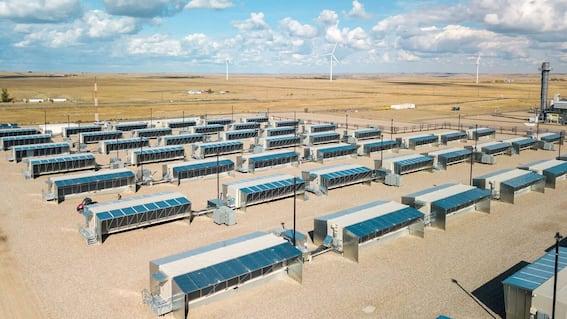
The broker cut its price target to $14 from $17.50 while maintaining its buy rating. Canaccord said Hut 8 is more diversified following its merger with US Bitcoin Corp. The broker reduced its price target to $14 from $17.50, while it maintained its buy rating. The company’s stash of over 9,000 bitcoin gives it significant flexibility, the report said. Bitcoin (BTC) miner Hut 8 (HUT) is a much more diversified company with multiple revenue streams following the completion of its merger with US Bitcoin Corp. (USBTC) at the end of last year, broker Canaccord Genuity said in a research report on Thursday. “New Hut 8 has ~7 exahashes per second (EH/s) of self-mining capacity and revenue from self-mining accounts for ~68% of revenue today with the remaining coming from managed services, hosting and high-performance computing (HPC),” analysts led by Joseph Vafi wrote. The broker lowered its price target on the stock to $14 from $17.50 while maintaining its buy rating. Hut 8 closed at $9.69 on Thursday. After the business combination was completed, Hut 8 launched a restructuring program to lower costs and increase cash flow, Canaccord noted. “To that end, the company has deployed USBTC’s proprietary technology across all the facilities,” the authors wrote. “By using an energy management software, the company now only mines BTC when it’s profitable.” With the bitcoin halving event expected later this month, management is taking a more considered approach to buying new mining machines, which indicates it is “prioritizing efficiency over scale at least in the near term," the report said. Canaccord said it was encouraged by the scale of the managed services business, noting that the partnership with Iconic Digital will generate more than $20 million in cash a year. “Finally, a HODL of over 9,000 BTC also provides significant flexibility to the company,” the report added. Hut 8’s former CEO Jamie Leverton left the company in February, just weeks after the firm was hit by a short-seller report. She was succeeded by the company’s president, Asher Genoot, who co-founded U.S. Bitcoin Corp., and became president and director of Hut 8 in November after the merger. https://www.coindesk.com/markets/2024/04/05/bitcoin-miner-hut-8-has-larger-more-diversified-business-model-following-usbtc-merger-canaccord/
2024-04-05 08:10
The Monochrome Bitcoin ETF is a flagship product of the firm and was initially expected to be listed with Cboe Australia's larger rival, ASX, where larger volumes are available. The asset manager has taken one step closer to giving Australia its first spot Bitcoin ETF to allow direct holding of bitcoin. Monochrome has chosen to list its flagship product, a spot bitcoin ETF, with the global listing exchange, Cboe Australia, instead of ASX, and expects a decision before mid-2024. Australia-based Monochrome Asset Management has applied for a spot bitcoin (BTC) exchange traded fund (ETF) with the global listing exchange, Cboe Australia, the firm announced on Friday. If approved, the Monochrome Bitcoin ETF could be the first spot bitcoin ETF in Australia which allows direct holding of bitcoin. Australia already has two exchange-traded products providing exposure to spot crypto assets on Cboe Australia but they do not hold bitcoin directly. The Monochrome Bitcoin ETF is a flagship product of the firm. It could have also been listed with Cboe Australia's larger rival, ASX, where larger volumes are available. In January 2024, Monochrome Asset Management's head of legal and compliance Derek Vladimir Henningsen told CoinDesk that they anticipated their bitcoin ETF would be listed in the second quarter of the year. The announcement said the firm selected Cboe Australia as the listing venue for its bitcoin ETF because it aligns with its strategic goals to work with a market operator with an established reputation, strategic position and expertise across Asia, and broader investor access. In Australia, unlike the U.S., firms have to first get approval from the regulator, the Australian Securities & Investments Commission (ASIC), and then apply to an exchange for listing the product. Monochrome has already got approval from ASIC for its product. "We expect a decision from Cboe Australia about our bitcoin ETF application before the middle of the year," said Jeff Yew, Monochrome Asset Management CEO. Cboe Australia is one of five of Cboe Global Markets' global listings exchanges. Read More: Bitcoin ETFs in and Around Asia After U.S. Approvals? Analysts Are Optimistic About Momentum https://www.coindesk.com/policy/2024/04/05/australian-asset-manager-monochrome-applies-with-cboe-australia-for-a-spot-bitcoin-etf-eyes-decision-by-mid-year/

2024-04-05 07:03
The platform will use a cash-and-carry trade to short bitcoin futures and pocket funding rates to generate yield on its USDe tokens. The platform has generated yields by shorting ether (ETH) futures and pocketing funding rates since its January rollout. Ethena's USDe is supposed to maintain a $1 peg at all times. Since its release, over $2 billion in USDe has been issued, with demand continuing to grow. Ethena Labs will start purchasing and shorting bitcoin (BTC) as part of a cash-and-carry trade in a move that developers say will create a “safer” USDe synthetic dollar product for users. The controversial platform is currently generating an annual yield of 37% (a seven-day rolling average that can change) by shorting ether (ETH) futures and pocketing funding rates since its January rollout. Funding rates are periodic payments either to traders that are long or short based on the difference between perpetual contract markets and spot prices. While such a strategy has attracted detractors, demand has continued to grow — as over $2 billion in USDe, its synthetic dollar, has been issued since its release. USDe is supposed to maintain a $1 peg at all times, mimicking a stablecoin but with a different backing mechanism. Developers say adding bitcoin to the mix will boost user yields while helping USDe issuance grow further. “After the unprecedented growth or USDe since launch, Ethena hedges represent ~20% of ETH open interest as of today,” Ethena developers said in an X post. “With $25bn of BTC open interest readily available for Ethena to delta hedge, the capacity for USDe to scale has increased >2.5x.” “BTC derivative markets are growing at a faster pace than ETH and offer better scalability and liquidity. As Ethena scales closer to $10bn this provides a more robust backing, and ultimately a safer product for users,” they added. How Ethena Works On Ethena, users can deposit stablecoins such as tether (USDT), frax (FRAX), dai (DAI), Curve USD (crvUSD) and mkUSD to receive Ethena’s USDe, which can then be staked. Unstaking takes seven days. The staked USDe tokens can be supplied to other DeFi platforms to earn additional yield. It uses a futures mechanism similar to a “cash and carry" trade, in which a trader takes a long position in an asset while concurrently selling the underlying derivative. Such a trade, in theory, is directionally neutral and earns money from funding payouts instead of the underlying asset’s price movement. Here's how it works: First, someone mints USDe with some amount of money, say $10 million tether (USDT). Ethena then exchanges this USDT for BTC. However, because bitcoin’s value can swing wildly, there is a further step to stabilize the value of USDe. Ethena then shorts or bets again on $10 million worth of BTC perpetual futures contracts. If BTC's price drops by 20%, for example, the losses from holding BTC are balanced out by the gains from the short position in BTC perps, keeping the overall value stable. This combination of holding BTC while also shorting it effectively creates USDe. Plus, by shorting BTC, they earn a funding yield that is paid out to users. Ethena’s ENA tokens are down 8% in the past 24 hours, data shows, alongside a slight market selloff. https://www.coindesk.com/markets/2024/04/05/ethena-onboards-bitcoin-as-backing-asset-to-make-usde-safer/