2024-04-01 06:00
All eyes are on the upcoming Bitcoin halving event. Bitcoin is trading above $70K, while Ether was above $3600 on Monday. Bitcoin halving event keeps options volatility high while perpetual futures funding rates remain inflated. Bitcoin (BTC) and ether (ETH) began the trading week fairly flat, as many major financial centers around the world remained closed for the long easter weekend. At the time of writing, bitcoin was stable at $70,000, while ether was trading near $3600, according to data from CoinDesk Indices. The CoinDesk 20 (CD20), a measure of the largest and most liquid digital assets, was up 1.9%, trading at 2,750. “BTC and ETH showed relatively calm movement last week compared to other weeks in March, with weekly realized volatility hitting below 50%,” Jun-Young Heo, a derivatives trader at Singapore-based Presto Labs, said in an email interview. “However, as the Bitcoin halving event is expected to happen around April 20, implied volatility of front-month options remains elevated above 75%.” He also noted that funding rates remain inflated, with most of the large-cap perpetual futures in major exchanges recording 6bps to 8bps funding rates and global open interest for BTC and ETH perpetual futures hitting 35 billion dollars. “The markets may return to a more volatile regime again,” he continued. Meanwhile, QCP Capital wrote in a telegram note that bitcoin was rallying before the long weekend because of positive inflow on bitcoin ETFs to the tune of $243.5 million on March 27. Coinglass data shows that this inflow continued on March 28 with $182 million in additional inflow. https://www.coindesk.com/markets/2024/04/01/crypto-market-in-zen-mode-as-bitcoin-remains-stable-at-70k-ahead-of-halving/

2024-03-29 15:01
The two Binance executives held in Nigeria after being invited for consultations filed suit against two government agencies for allegedly violating their human rights. Tigran Gambaryan and Nadeem Anjarwalla filed suit in the Federal High Court saying their human rights had been violated. They had been invited to the country to discuss issues related to Binance and were detained on arrival in February. Anjarwalla, who escaped last week, and Gambaryan are seeking to be released, their passports back and an apology. The two Binance executives who have been held as guests of the Nigerian government since arriving in the country in February, have sued the National Security Adviser, Nuhu Ribadu, and the Economic Financial Crimes Commission for violating their fundamental human rights, local media reported Friday. In separate filings, Tigran Gambaryan, head of financial crime compliance at the world's largest crypto exchange, and Nadeem Anjarwalla, regional manager for Africa, urged the Federal High Court in Abuja to order the agencies to release them, return their passports and issue a public apology, Leadership reported, citing the government-owned News Agency of Nigeria. The two executives were charged alongside the company earlier this month with four counts of tax evasion by Nigerian authorities. They were detained on arrival in the country after being invited to meet officials to discuss issues related to the company. Anjarwalla reportedly escaped last week after being taken to a mosque for prayers. Central bank governor Olayemi Cardoso has said the company enabled the untraceable movement of billions of dollars worth of naira, and contributed to instability in the currency's exchange rate. At a hearing on Thursday, the agencies were not represented, Punch reported. The matter was adjourned until April 8. The suits are FHC/ABJ/CS/356/24 and FHC/ABJ/CS/355/24. https://www.coindesk.com/policy/2024/03/29/binance-executives-file-suit-against-nigeria-local-media/
2024-03-29 12:43
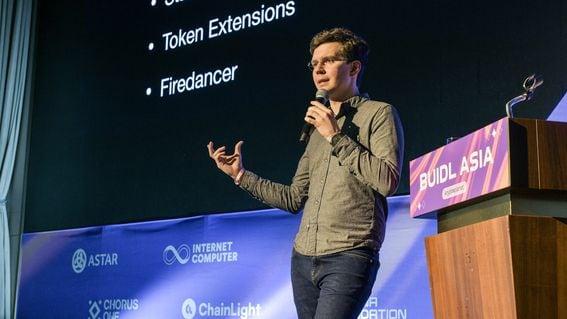
Panelists at a BUIDL Asia summit argue racist meme coins can be handled with a filter. In the past few months, many meme coins have appeared containing racist terms. Panelists during a discussion at BUIDL Asia debated on how to best deal with this problem. As funny and irreverent as meme coins are, the category also has a problem with an explosion of tokens with names containing the N-word and other racist themes. During a panel discussion on meme coins at the recent BUIDL Asia summit in Seoul, panelists debated how to deal with the problem. Should wallet apps and decentralized exchanges screen out banned words? Or do the nodes have a duty to stop these tokens dead in their tracks? "Choice means the right for a wallet developer to institute a block list," Austin Federa, the Solana Foundation's head of strategy, said during the panel. "Almost every wallet in every ecosystem filters out spam NFTs and spam tokens. Users always have the ability to reveal something if they want to, but the core network needs to remain permissionless." Federa made an analogy to the internet: It's unreasonable to expect an internet service provider (ISP) to filter out content that some might find offensive, he said. After all, the internet, like crypto, operates on a largely permissionless basis. "No one expects Verizon to have a legal obligation to prevent a phishing email from landing in your inbox or to prevent you from accessing something that is potentially racist material," he said. "Solana is all on the application level. It's wallets making decisions about the kind of content they want to show and display." Marc Zeller, founder of the Aave Chan Initiative, an Aave DAO delegate and service provider, had a different perspective, pointing out that under European Union law, there's an obligation to filter content. "In France, for instance, there are legal obligations for ISPs to block certain content," he said, giving the example of Holocaust denialism. "I'm not saying it's a good thing, nor am I trying to be political. It's interesting to point out that different cultures have different approaches to the same issue," he said. "Focusing on the blockchain ethos, we tend to support free speech and believe that censorship resistance is more important than eliminating displeasing content." Federa said that some validators and nodes believe they have a legal obligation to censor some content, citing the U.S. Office of Foreign Assets Control (OFAC) imposing sanctions on Ethereum Tornado Cash transactions and North Korean and other crypto wallets. This wasn't without significant debate within the Ethereum community, and some proposed countermeasures to slash – or sanction – nodes that participated in "censoring" transactions in line with OFAC guidance. Federa also mentioned that despite the attention racist meme coins have gotten, in the grand scheme of things, they are minuscule compared with crypto's scale. "This is very much akin to in the United States, when there's a hate group that has 20 members that goes and protests in front of a church. And they're on national news, and it's a big thing. But if you look at it, there's 20 people, and all they want is attention," he said. CORRECT (March 29, 14:59 UTC): Corrects Federa's job title. An earlier version of this story said he was head of communications, a position he previously held. https://www.coindesk.com/tech/2024/03/29/solana-foundation-says-it-can-filter-through-the-offensive-meme-coin-problem/
2024-03-29 11:35
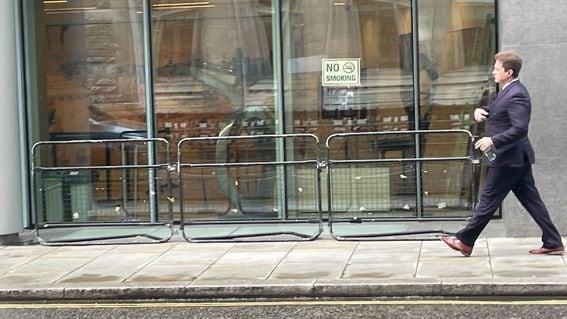
Judge James Mellor found earlier this month that Wright was not, as he'd claimed, Bitcoin inventor Satoshi Nakamoto. Judge James Mellor ordered a worldwide freeze on 6 million British pounds of Craig Wright's assets. In a court case brought by COPA, Mellor found earlier this month that Wright was not Satoshi Nakamoto, the inventor of Bitcoin. The judge ruled there was a risk Wright would move his assets offshore to avoid paying costs related to the case. A U.K. judge imposed a worldwide freezing order on 6 million British pounds ($7.6 million) of Craig Wright's assets to prevent him moving them offshore and evading costs arising from a court case that found he was not, as he'd claimed, Bitcoin inventor Satoshi Nakamoto. In a March 14 decision, Judge James Mellor, who heard the case brought by the Crypto Open Patent Alliance (COPA), also found Wright didn't author the Bitcoin white paper nor the initial versions of the Bitcoin software. Shortly after that, Wright notified Companies House, the U.K.'s register of companies, that shares in his RCJBR Holding company had been transferred to DeMorgan, a company organized under the laws of Singapore. According to a judgment dated Wednesday and posted on the website of the Bitcoin Legal Defense Fund, COPA's costs amount to about 6.7 million pounds. "Understandably, that gave rise to serious concerns on COPA’s part that Dr Wright was implementing measures to seek to evade the costs consequences of his loss at trial," Mellor wrote in the judgment, referring to the share transfer. "Dr Wright has a history of default in relation to orders for the payment of money," Mellor wrote, before detailing some examples. " ... COPA has a very powerful claim to be awarded a very substantial sum in costs ... I consider there is a very real risk of dissipation." https://www.coindesk.com/policy/2024/03/29/uk-judge-freezes-craig-wright-assets-to-prevent-him-evading-court-costs/
2024-03-29 10:00
A judge sentenced Bankman-Fried to a quarter century after a brief hearing. Sam Bankman-Fried is going to prison. He won't be spending time in a maximum security facility, and he'll be placed as close to his family in the San Francisco Bay Area as possible, but he's going to prison nonetheless – and he'll be there for the next 25 years. Bankman-Fried was sentenced to 25 years in federal prison yesterday, nearly six months after being convicted on a host of fraud charges tied to his role in the implosion of the FTX exchange and Alameda Research trading firm in November 2022. The sentence is lengthy, but it could have been much harsher – it’s only a quarter of the 105 years recommended by the Department of Probation, and roughly half of the 40-50 year sentence prosecutors pushed the New York court overseeing Bankman-Fried’s case to impose. That said, it’s also much higher than the five to 6.5 year sentence Bankman-Fried and his lawyers were hoping for. The defense relied on a combination of arguments – most importantly, that no one actually lost money in the FTX collapse because the estate has pledged to pay them back – and character statements about Bankman-Fried to support their conclusions that it was, essentially, unfair to compare their client to other “stone cold financial assassins,” as lead defense attorney Marc Mukasey put it, like Bernie Madoff and Karl Greenwood. Kaplan tossed out the first argument as bunk, saying he “reject[ed] entirely” the defense’s argument that no one was hurt in the collapse and describing it as “misleading… logically, flawed…and speculative”. The assertions that Bankman-Fried had a heart of gold – that he was motivated solely by altruistic impulses and was a “beautiful puzzle” with “a terrible sadness at his core” – were equally unpersuasive to Kaplan. So too were attempts to use Bankman-Fried’s autism diagnosis as an explanation for some of his poor choices, including attempted witness tampering. In Kaplan’s eyes, Bankman-Fried’s effective altruism was “an act” – instead of the gentle-souled, “awkward math nerd” his lawyers and family attempted to paint him as, the Bankman-Fried of Kaplan’s courtroom was power-hungry, a liar, someone drawn to reckless gambling who’d insufficiently expressed remorse for his crimes and had an "exceptional flexibility with the truth." "When he wasn't outright lying, he was often evasive, hairsplitting, dodging questions and trying to get the prosecutor to reword questions in ways that he could answer in ways he thought less harmful than a truthful answer to the question that was posed would have been," he said. "I've been doing this job for close to 30 years. I've never seen a performance quite like that." Kaplan pointed out three instances of perjury during Bankman-Fried’s trial testimony taking care to stress repeatedly that they were not the only instances, just enough to make his point. Kaplan seemed particularly struck by Caroline Ellison’s testimony that Bankman-Fried was drawn to coin-flips, that he was willing to take enormous risks as long as there was a miniscule chance he’d succeed. "In other words, a man willing to flip a coin as to the continued existence of life and civilization on earth, if the chances were imperceptibly greater that it would come out without that catastrophic outcome, that's really a leitmotif in my judgment of this entire case," Kaplan mused. Though Mukasey said his “awkward math nerd” client had been sufficiently deterred by his six-month stint in a Brooklyn jail to prevent him from ever committing another financial crime, Kaplan disagreed, arguing that a longer sentence was necessary to deter Bankman-Fried from committing another serious financial crime. Bankman-Fried is persistent, Kaplan said, and “a great marketing guy” who’d already used his “skills and drive” to attempt to shift the media narrative surrounding his case. “It doesn’t take much imagination to see the outlines of the campaign [Bankman-Fried could use to rehabilitate his reputation],” Kaplan said. “The risk that this man will be in the position to do something very bad in the future – it’s not a trivial risk. It’s not a trivial risk at all.” Kaplan also seemed to take seriously his duty to the public, to hand down a sentence that most people agree means Bankman-Fried gets his just desserts. “At the end of the day, the criminal justice system in this country can enjoy the support of the public … only if, on the whole, people think it works fairly,” Kaplan said. “That’s what we depend on. If that’s not happening, we’re back to trial by combat, folks.” With trial by combat out of the question (at least, for now), Bankman-Fried will have to serve his time the old-fashioned way. Kaplan did take his autism diagnosis and gentle nature into account in one regard – he recommended that Bankman-Fried be placed in a medium or low-security federal prison, preferably one that’s close to San Francisco, where his parents live, arguing that his autism, notoriety, and perceived wealth would make him vulnerable in a maximum security facility. For those wondering if Bankman-Fried will get out early on good behavior, he won’t – not really. Thanks to the Sentencing Reform Act of 1984, Bankman-Fried – like all other federal prisoners – will only be eligible for a maximum 15% reduction for good behavior. Of course, everything could change in the (unlikely) case his lawyers successfully appeal the verdict, which they told the court Thursday they plan to do. His lawyers have 14 days to submit an appeal. — Cheyenne Ligon (Nikhilesh De contributed reporting) Courtroom scenes While only 65 people lined up by 8:30, the courtroom and overflow room were packed by the time the sentence was actually read. There were roughly 100 people in the overflow room, and the courtroom was standing-room only. Bankman-Fried's parents were present, as they have been through the trial. Judge Lewis Kaplan spoke in a gentle tone, but was pretty harsh toward Bankman-Fried while reading the sentence: "What we did not hear is accepting responsibility for lying, for stealing, or for fraud. He recognizes errors were made. He does not recognize, though, that they were because of wrongs he committed. He didn't swear off doing it again. As a matter of fact, I was struck at the end by the comments that there is an opportunity here, that there is an opportunity that someone, maybe his former coworkers, maybe someone else, could relaunch FTX, or something of an equivalent and, without the mismanagement or the liquidity crisis, things could work out. And that, I submit, tells the Court exactly where things could be. We cannot see into the future." Similarly, while the judge used three specific examples of where he believed Bankman-Fried committed perjury (citing Bankman-Fried's testimony about Alameda spending FTX customer funds, Alameda having an $8 billion liability or about Alameda needing customer funds to repay third-party loans), he said those were not the only times. Thursday's hearing was relatively brief. The judge walked through the sentencing guidelines (finding they added to 1,320 months, or 110 years, in prison), gave victims a chance to speak, heard closing arguments from the defense and prosecution and then announced his sentence. The entire hearing lasted roughly two hours. What we're expecting Bankman-Fried may have been sentenced in his criminal trial, but this process isn't over yet. He has 14 days to file an appeal, and his attorney said he would in court on Thursday. In the meantime, Bankman-Fried technically still faces civil cases brought by the U.S. Securities and Exchange Commission (SEC) and Commodity Futures Trading Commission (CFTC). The agencies might still seek to ban Bankman-Fried from being an officer or having a role in publicly-traded companies that participate in derivatives markets in future. They'll also have to sort out any additional forfeiture or restitution issues that may be in play. Separately, now that Bankman-Fried has been sentenced, we should start seeing sentencing hearings and memos for his fellow former executives turned prosecution witnesses. Namely, Caroline Ellison, Gary Wang, Nishad Singh and Ryan Salame (who didn't testify). Still, this is it for now. If there's enough reader interest, we'll absolutely bring this back for that as well. Until then, we'll put a bow on this newsletter (again). If you have questions about the trial, sentencing or overall process here, feel free to reply to this email. — Nikhilesh De https://www.coindesk.com/policy/2024/03/29/sbf-is-going-to-prison-for-25-years/
2024-03-29 08:51
WIF touched the $4 mark early Friday before retreating as the meme coin sector showed the most volatility in a little-changed market. Meme coins led by Solana-based dogwifhat surged, outpacing other niches such as DeFi and exchange tokens. Bets on DOGE-tracked futures jumped to a record $2 billion, and some trading firms warned of a pullback in recent gains as bitcoin and ether price action showed signs of exhaustion. Meme coins led by Solana-based dogwifhat (WIF) surged for the second day to lead as a category as the broader market remains little changed ahead of the long weekend in the U.S., Europe and parts of Asia. Bitcoin (BTC) traded around $70,000 million during the Asian morning hours on Friday, showing little change in the past 24 hours. Ether (ETH), Solana’s SOL and Cardano’s ADA slid 1%, while Bitcoin Cash (BCH) added 4% to continue its Thursday rally. The broad-based CoinDesk 20, an index of the largest tokens minus stablecoins, was down 0.56%. CoinGecko data shows that the meme coin category surged 8% on average, outpacing more serious niches such as decentralized finance, yield farms, and exchange tokens. Meme tokens started to run early Thursday amid speculations of DOGE being used on an upcoming payments service of social application X, although there has been no official communication from the company. Bets on DOGE-tracked futures jumped to a record $2 billion, indicative of expectations of future price volatility with a bias toward longs. Dog-themed tokens such as floki (FLOKI) and WIF jumped as a beta bet to dogecoin. WIF flipped pepecoin (PEPE) to become the third-largest meme token by market capitalization, crossing the $4 mark on Thursday. Meanwhile, some trading firms warned of a pullback in recent gains as bitcoin and ether price action showed signs of exhaustion. “The price rally has been exponential in Q1, and there are signs of exhaustion,” Singapore-based QCP Capital said in a Telegram broadcast Friday. “ETH risk reversals are skewed to the downside at -8%, indicating some fear. Funding and forwards remain very elevated, which means that speculators are still paying high prices to keep their leveraged longs.” “While we remain bullish, we are cautious about leverage,” the firm concluded. https://www.coindesk.com/markets/2024/03/29/dogwifhat-becomes-third-largest-meme-coin-as-bitcoin-clings-to-70k/