2024-03-27 11:17
Fetch.ai, SingularityNET and Ocean Protocol agreed to combine their crypto tokens into one and create an alliance for decentralized AI. The three firms are seeking to create an AI collective to provide a decentralized alternative to existing projects that are controlled by Big Tech. FET, the native token of AI-focused Web3 platform Fetch.ai, will become ASI, which will have a total supply of around 2.63 billion tokens and a starting price of $2.82. The native tokens of SingularityNET and Ocean Protocol will merge into ASI. Fetch.ai, SingularityNET and Ocean Protocol agreed to merge tokens and create an alliance for decentralized artificial intelligence (AI). The three are seeking to create an AI collective, providing a decentralized alternative to existing projects that are controlled by large technology companies, according to an emailed announcement on Wednesday. (FET), the native token of AI-focused Web3 platform Fetch.ai, will become ASI – "artificial superintelligence" – with a total supply of around 2.63 billion tokens and a starting price of $2.82. The native tokens of decentralized AI network SingularityNET (AGIX) and data platform Ocean Protocol (OCEAN) will merge into ASI, both at conversion rates of around 0.433 to 1. ASI will have a fully diluted market cap of around $7.5 billion. The proposed combined entity plans to create an open decentralized AI infrastructure at scale, as compared to existing systems whose inner workings may be hidden from the public, the companies said. AI has seen a surge in mainstream interest since the start of 2023 thanks to tools such as ChatGPT. However, there have been concerns that the largest companies – Microsoft, Alphabet, Amazon, Apple and Meta – will establish an oligarchy over the space. That has spurred blockchain and Web3 companies to throw their hats into the ring to present an alternative where data is more transparent and shared between contributors. Read More: Tether to Establish AI Unit, Starts Recruitment Drive https://www.coindesk.com/business/2024/03/27/three-decentralized-platforms-to-merge-ai-tokens-create-ai-alliance/

2024-03-27 09:50
The 304,000 euro ($329,000) “goodwill” settlement with MFSA related to OKX’s Okcoin Europe subsidiary. The MFSA agreed to settle pending matters with OKX after the demonstration of goodwill in the form of a 304,000 euro ($322,000) penalty. OKX and the MFSA also agreed on a number of measures, including the appointment of an independent third-party service provider to review the adequacy of the exchange's governance arrangements. Last month, OKX, the second-largest cryptocurrency exchange, reached a little-noticed 304,000 euro ($329,000) settlement with the Malta Financial Services Authority (MFSA) for certain "failings" related to its Okcoin Europe subsidiary. The Malta regulator's investigation found failings with respect to Article 41 of the MFSA Virtual Financial Assets Act, according to a filing. The article, while vague, seems to say that a regulated financial services or digital asset firm must follow the Maltese government's directives or risk a fine or being booted from the country. "On 22 January 2024 the MFSA agreed to settle pending matters with the Company after demonstration of goodwill by the Company," the regulator said. "Additionally, the Company and the MFSA have also agreed on a number of measures, including the appointment of an independent third-party service provider, to inter alia, review the adequacy of the Company's governance arrangements." Asked by CoinDesk to unpack what OKX's regulatory failings amounted to, MFSA said: "The information which the Authority is in a position to divulge has already been made public through the notice." OKX declined the opportunity to elaborate on what the regulatory problem involved when contacted by CoinDesk. An OKX representative said there would be no further comment on the nature of the exchange's shortcomings or the goodwill settlement. OKX has been sunsetting its Okcoin entities in Europe and the U.S. and rebranding them under the OKX banner. https://www.coindesk.com/business/2024/03/27/okx-quietly-settled-regulatory-failings-with-malta-financial-services-authority/

2024-03-27 09:25
The crypto firm’s fourth quarter was solid, and commentary about the performance through the end of February was even better, the report said. Galaxy continues to evolve its business model focused on institutional trading, Canaccord said. Further roll-out of the company’s prime brokerage product, Galaxy One, is viewed positively. Broker maintains its buy rating on the stock and its C$17 ($12) price target. Galaxy Digital (GLXY), the crypto financial services firm headed by Michael Novogratz, had a strong end to 2023 with solid operating results across its diversified business, broker Canaccord Genuity said in a research report on Wednesday. Canaccord notes that while the fourth quarter was solid, commentary about the performance of the Toronto-listed business through the end of February was even better. Positive highlights include an almost doubling of assets under management (AUM) from year-end to more than $10 billion, equity capital growing to over $2.1 billion versus about $1.5 billion at the end of the third quarter, and quarter-to-date income before tax of around $300 million, the report said. “Also, importantly, Galaxy continues to evolve its business model focused on institutional trading,” analysts led by Joseph Vafi wrote, adding that “we were pleased to see further maturation and rollout of the company’s unique crypto-specific prime brokerage product, Galaxy One.” “We view the continuing evolution of Galaxy One to be a real driver of not taking but creating market share as more traditional asset managers look to make some allocation to crypto,” the authors wrote. The crypto firm’s increased relationship with the FTX estate drove a material increase in AUM in the asset-management unit since the end of the year, Canaccord said, adding that higher AUM results in increased trading revenue over time as FTX sells its digital assets at spot prices. Exchange-traded fund (ETF) activity is also a tailwind. Canaccord said it is “quite encouraged by ETF rollouts with European partner DWS both in bitcoin (BTC) and ether (ETH) as well as the gradual ramp-up of the U.S. BTC ETF with partner Invesco.” The broker maintained its buy rating on Galaxy shares with an unchanged C$17 ($12) (price target. Galaxy shares closed at C$13.46 on Wednesday. https://www.coindesk.com/markets/2024/03/27/galaxy-digital-has-several-positive-catalysts-in-play-this-year-canaccord/
2024-03-27 05:41
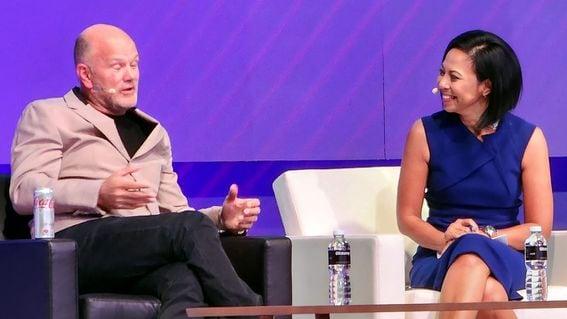
Metaverse tokens have a $18 billion market cap, but we're not quite at Ready Player One yet. The Metaverse needs a better definition for it to work properly, Vitalik Buterin said at the BUIDL Asia conference in Seoul. People associate the metaverse with VR, but there’s more to it than that. Ethereum’s Vitalik Buterin says that Metaverse isn’t what we think it is. The Metaverse is broadly understood as a virtual decentralized world with immersive social settings and experiences that utilize avatars, virtual reality (VR), and augmented reality (AR) technologies, with blockchain technology being the tie that binds this all together. “The Metaverse is poorly defined and often seen more as a brand name than a product. It’s envisioned as a virtual universe where everyone can participate and is not owned by anyone,” Buterin said on stage during the BUIDL Asia conference in Seoul. "It’s frequently associated with virtual reality, where needs are simpler, akin to wanting a laptop without the laptop.” Buterin continued, arguing that while the Metaverse is often associated with virtual reality, it's not the be-all and end-all of the metaverse. “It’s super useful but not really a-verse," he said. For the metaverse to work properly, we need something that combines “all the different virtual world elements we already have, including crypto, virtual reality, and some AI parts, in the right way," he said. Also, on stage at BUIDL Asia, Buterin said that if account abstraction is going to become mainstream, it must balance security and convenience, something that Ethereum doesn’t yet have in place. https://www.coindesk.com/tech/2024/03/27/vitalik-buterin-takes-a-dig-at-the-metaverse-calls-it-a-branding-ploy/

2024-03-27 05:19
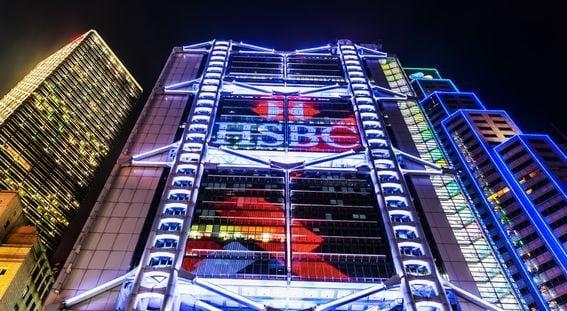
HSBC is claiming bragging rights for being the first bank to create a blockchain-based real world asset aimed at retail investors. The tokenized gold product is available via HSBC Online Banking and HSBC HK Mobile App. HSBC Gold Token is minted on the bank’s Orion digital assets platform. Financial powerhouse HSBC (HSBA) is tokenizing gold for everyday investors in Hong Kong and claiming bragging rights as the first bank to create a blockchain-based real-world asset aimed at the retail marketplace. The HSBC Gold Token, minted on the bank’s Orion digital assets platform, is available via HSBC Online Banking and HSBC HK Mobile App, the bank said in a press release on Wednesday. Banks and financial institutions are bringing a range of real-world assets (RWA) onto blockchains, both private ledgers and public networks like Ethereum, in a process known as tokenization. In November of last year, HSBC teased a tokenized gold offering planned as part of the bank’s new digital asset custody platform, created in partnership with Swiss-based crypto safe-keeping specialist Metaco. “We are proud that HSBC Gold Token, powered by HSBC Orion, is the first retail product in Hong Kong that is based on distributed ledger technology, as authorized by the Securities and Futures Commission,” said HSBC Hong Kong head of wealth and personal banking Maggie Ng in a statement. https://www.coindesk.com/policy/2024/03/27/hsbcs-gold-token-goes-live-for-retail-investors-in-hong-kong/
2024-03-27 03:25
The broader crypto community is calling for a controversial chain rollback in a bid to recover funds. Munchables, a Web3 project on the Blast blockchain, suffered a hack that resulted in a loss of $62.5 million worth of ether (ETH). The attacker manipulated a contract and transferred stored user funds before upgrading the platform’s smart contracts. Blockchain sleuth ZachXBT linked the attacker to North Korea, with the hacking group allegedly stealing $3 billion worth of tokens since 2017. Web3 project Munchables was drained of an estimated $62.5 million worth of ether (ETH) early Wednesday after a contract was maliciously manipulated, blockchain data shows. Munchables said on X that the developer had shared all private keys to recover the funds. The attacker apparently transferred the stored users’ funds to themselves before upgrading the platform’s smart contracts. Blockchain sleuth ZachXBT said the attacker was likely North Korean, based on their GitHub commit activity. They are listed on GitHub as “Werewolves0493” and allegedly worked for the Munchables team. North Korean hacking groups have stolen an estimated $3 billion worth of various tokens since 2017, as per a UN Security Council report earlier this month. Meanwhile, several crypto developers and traders called for a chain rollback to help recover the funds. A blockchain rollback reverses a series of confirmed transactions. It is typically done to undo the effects of a hack or other malicious activity that resulted in the theft of funds or other assets. https://www.coindesk.com/tech/2024/03/27/munchables-exploited-for-62m-ether-linked-to-rogue-north-korean-team-member/