2024-03-26 20:26
The chairmen of two House committees want SEC Chair Gary Gensler to describe how the first special purpose crypto broker-dealer can legally handle ETH. Influential House Republicans are demanding answers from Gensler on how ETH could legally be treated as a security by Prometheum. A total of 48 members of Congress signed a letter to Gensler, expressing concerns about how listing ETH as a security could threaten the crypto industry. As Prometheum Inc. nears an unprecedented moment in U.S. crypto history by beginning a custody operation that intends to hold customers' Ethereum tokens (ETH), the industry's friends in Congress are demanding the Securities and Exchange Commission (SEC) explain what it means to do about this first U.S. special purpose broker-dealer (SPBD) for digital assets. "We are faced with an alarming scenario in which a SPBD has announced that it intends to offer custodial services for ETH under a regime that does not permit such activity," the Republican chairmen of the House Financial Services and Agriculture committees wrote in a letter to SEC Chair Gary Gensler, also signed by 46 other members of Congress. "This action, if allowed to proceed, could have irreparable consequences for the digital asset markets." Prometheum had announced a plan to begin custody of ETH as a customer asset. The initial plan was to start in the first quarter of this year, though the launch is now likely to happen next quarter, a spokesman said on Tuesday. Rep. Patrick McHenry (R-N.C.) and Rep. Glenn "GT" Thompson (R-Penn.), the chairmen of the two committees, and the other Republican lawmakers – many of whom have been staunch supporters of the crypto industry – argued in Tuesday's letter that ETH is not a security, making the asset illegal to handle by a securities firm like Prometheum. The lawmakers also slammed Gensler's unwillingness to directly say ether is a security. "Your unwillingness to clarify the treatment of ETH only exacerbates the confusion and uncertainty regarding ETH’s classification as demonstrated by the Prometheum announcement," the letter said. An SEC spokesman declined to comment, saying Gensler would "respond to members of Congress directly," and the spokesman for Prometheum said company officials are still reviewing the letter. ETH has represented a tug-of-war between the SEC and the Commodity Futures Trading Commission, which has openly declared ETH to fit into its commodities jurisdiction, much like bitcoin does. While the SEC in earlier days seemed to agree, agency officials later suggested the decision on ETH isn't yet clear, especially after the Merge, a 2022 code update that shifted Ethereum from a so-called proof-of-work consensus mechanism to a proof-of-stake one. Meanwhile, ETH futures products have traded on CFTC-regulated platforms, and the SEC approved ether futures exchange-traded funds (ETFs) to begin trading last year. The SEC has reportedly been probing the nature of ETH and the firms tied to it, potentially readying an answer to whether it's a security or not in the regulator's eyes. Read More: Ethereum Foundation Faces Inquiry From a Government; Fortune Says SEC Investigating ETH Prometheum itself also represents a potential turning point in the U.S. treatment of the crypto sector. Gensler has more than once offered up Prometheum as an example of a firm seeking to leap through the necessary regulatory hoops to handle crypto legally in the U.S. If the SEC allows Prometheum to operate as a custody provider and trading platform for tokens the firm concludes are securities, it undermines the industry's core argument that it's impossible for crypto firms to do business under existing SEC rules. If the SEC instead puts a stop to Prometheum's business, it could demonstrate that the agency's request for crypto firms to come in and register was hollow. ETH is not registered as a security with the SEC, which the lawmakers suggest make it impossible to handle as a security for Prometheum. The company's leaders, though, have argued in the past that it's not their job to register the assets that'll be held and traded in their business. Congress has been working on legislation to better map the regulatory road for crypto in the U.S., but while some legislation has moved closer to floor votes in the House of Representatives, the Senate has been more sluggish. "Allowing one market participant and regulation by enforcement to dictate the future of digital asset regulation is unacceptable," the lawmakers argued in their letter. Read More: The Crypto Industry’s New Favorite Punching Bag – Prometheum – Asks for a Chance https://www.coindesk.com/policy/2024/03/26/house-republicans-demand-sec-explain-whats-up-with-crypto-platform-prometheum/

2024-03-26 18:14
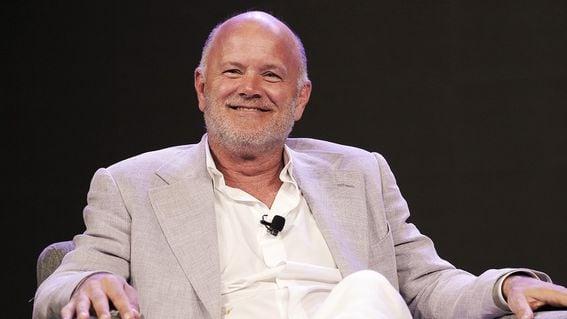
Improved crypto market conditions due to anticipation of spot bitcoin ETF approval helped boost earnings, Stifel Canada said in a report. Galaxy Digital saw growth across its three operating segments. The company’s strong performance has followed into the current quarter, Stifel said. The stock should be a core holding for equity investors looking for exposure to the digital asset ecosystem, the report said. Digital asset financial services firm Galaxy Digital’s (GLXY) results showed significant sequential growth across its three operating units, driven by improved crypto market conditions in anticipation of the approval of spot bitcoin (BTC) exchange-traded funds (ETFs), a Stifel Canada analyst said in a research report on Tuesday. “As a result, strong performance has followed into the current quarter as spot prices, volumes and volatility remain elevated in Q1/24, while the ETF launch approvals help open the door to new pools of capital,” wrote analyst Bill Papanastasiou. Stifel has a buy rating on the Toronto-listed company headed by Mike Novogratz with a C$20 price target. The stock was trading 5% lower at around C$13.67 at the time of publication. The shares have risen over 30% year-to-date. The crypto firm should be a “core holding for equity investors seeking exposure to the broad digital asset ecosystem given the attractive asymmetric return profile across a diverse group of revenue-producing operating segments and longer-term outsized growth potential through its infrastructure solutions arm,” the report said. Galaxy is expected to perform strongly for the full year 2024, given improved crypto market sentiment following the Securities and Exchange Commission’s (SEC) approval of spot bitcoin ETFs as well as several other tailwinds, the report added. https://www.coindesk.com/business/2024/03/26/galaxy-digitals-strong-earnings-will-carry-into-current-quarter-analyst-says/

2024-03-26 15:11
The exchange was charged under the Bank Secrecy Act. Crypto exchange KuCoin and two of its founders were charged with violating anti-money laundering laws by U.S. federal prosecutors. Homeland Security Investigations Special Agent Darren McCormack called KuCoin "an alleged multibillion-dollar criminal conspiracy." KuCoin’s native token (KCS) dropped by 5% after the announcement. U.S. federal prosecutors charged crypto exchange KuCoin and two of its founders with violating anti-money laundering laws on Tuesday, saying the exchange operated in the U.S., lied to at least one of its investors about operating in the U.S. and failed to both register with U.S. government entities and maintain an anti-money laundering program. The U.S. Department of Justice said in an indictment that KuCoin and founders Chun Gan and Ke Tang operated KuCoin as a money-transmitting business with over 30 million customers but did not implement a know-your-customer (KYC) or AML program until 2023 – and even then, its KYC program did not apply to existing customers. Neither Gan nor Tang were arrested, the DOJ said in a press release. The DOJ indictment said that KuCoin did not register with the U.S. Financial Crimes Enforcement Network as a money services business. Because it did not implement any KYC or AML programs, KuCoin "made itself available to be used, and in fact was used, as a vehicle for laundering the proceeds of suspicious and criminal activities, including proceeds from sanctions violations, darknet markets, and malware, ransomware, and fraud schemes," the indictment said. The indictment pointed to allegations that KuCoin "indirectly received a total of more than $3.2 million worth of cryptocurrency from Tornado Cash," a sanctioned crypto mixer. KuCoin was mentioned in criminal filings against two of Tornado Cash's developers, Alexey Pertsev (whose trial in The Netherlands began earlier Tuesday) and Roman Storm (who's set to go on trial in the U.S. later this year). The Commodity Futures Trading Commission also filed a suit against KuCoin Tuesday, alleging the company, which offers both spot and futures trading services, did not register as a futures commission merchant, swap execution facility or designated contract market. Its suit also charged that KuCoin didn't implement the CFTC's equivalent of a KYC program. The CFTC is seeking monetary penalties, trading and registration bans and an injunction, while the DOJ is seeking forfeiture alongside criminal penalties. In a statement, Homeland Security Investigations Special Agent in Charge Darren McCormack called KuCoin "an alleged multibillion-dollar criminal conspiracy," noting it was one of the largest crypto exchanges. U.S. Attorney Damien Williams said in a statement that KuCoin actively tried to hide that "substantial numbers of U.S. users were trading" on its platform. "Indeed, KuCoin allegedly took advantage of its sizeable U.S. customer base to become one of the world’s largest cryptocurrency derivatives and spot exchanges, with billions of dollars of daily trades and trillions of dollars of annual trade volume," he said." As alleged, in failing to implement even basic anti-money laundering policies, the defendants allowed KuCoin to operate in the shadows of the financial markets and be used as a haven for illicit money laundering, with KuCoin receiving over $5 billion and sending over $4 billion of suspicious and criminal funds." KuCoin’s native token (KCS) dropped by 5% following the announcement. Bitcoin's (BTC) price dropped 1% but has been volatile throughout the day and is trading around $70,000. Tuesday's actions come just months after the DOJ, CFTC and Treasury Department settled similar charges against Binance, the world's largest crypto exchange by trading volume. https://www.coindesk.com/business/2024/03/26/crypto-exchange-kucoin-violated-anti-money-laundering-laws-us-charges/

2024-03-26 14:28
At the current price just above $70,000, the nation now holds about $400 million worth of bitcoin. El Salvador, the nation that made bitcoin legal tender in 2021, continues to up its bitcoin (BTC) holdings. The country’s president, Nayib Bukele, said on Monday that the nation now owns 5,700 bitcoins versus mid-March's roughly 5,690. At bitcoin's current price just above $70,000, El Salvador's bitcoin stack is worth more than $400 million. Bukele earlier this month said his country's bitcoin holdings had been moved to cold storage and published the address of its bitcoin wallet. That wallet showed just under 5,690 BTC, significantly more than what public trackers of El Salvador's holdings had estimated. The trackers were off because in addition to the country's long-standing policy of purchasing one bitcoin per day, El Salvador was also adding tokens via the sale of passports, currency conversions from businesses, and from mining and government services. Consistently positioning itself as a bitcoin-friendly nation, El Salvador also this month eliminated income tax on money coming into the country from abroad, making it an attractive destination for foreign investment and bitcoin enthusiasts. The nation also introduced a law in December granting citizenship to bitcoin investors who make a donation to the government. https://www.coindesk.com/business/2024/03/26/nayib-bukele-update-on-el-salvador-bitcoin-holdings-shows-growing-stack/

2024-03-26 12:12
Bitcoin and gold may already be pricing in a crisis scenario. Both recently set new record highs amid an elevated interest-rates environment worldwide. Unattended mounting U.S. debt concerns means potential for a Liz-Truss style market chaos, Phillip Swagel, director of the Congressional Budget Office told Financial Times. Debt concerns may have helped bitcoin and gold rally to record highs amid elevated interest rates worldwide, analysts said. In 2022, former U.K. Prime Minister Liz Truss announced radical economic measures, including deep tax cuts and billions of pounds of spending even as surging government debt called for fiscal prudence. The result was market chaos, with the British pound (GBP) crashing to record lows against the U.S. dollar (USD) and the collapse of Truss' government, the shortest in the country's history. Now, the U.S. faces a similar risk if the government continues to ignore mounting debt concerns, according to Phillip Swagel, director of the Congressional Budget Office (CBO). “The danger, of course, is what the U.K. faced with former Prime Minister Truss, where policymakers tried to take an action, and then there’s a market reaction to that action,” Swagel said in an interview with the Financial Times. Swagel added that the U.S. is not yet in the same position, but higher interest rates could raise the debt servicing cost to $1 trillion in two years, and bond markets could "snap back." A pound-like crash in the U.S. dollar, a global reserve currency with an outsized role in international finance, could boost demand for alternative assets with a haven appeal like bitcoin and gold. Trading volumes in bitcoin-pound pairs spiked during the U.K. crisis in September 2022. Both bitcoin and gold may already be pricing in a crisis scenario. Despite elevated interest rates and bond yields worldwide, the two so-called zero-yielding assets have rallied to new record highs above $70,000 and $2,000, respectively. Both have surpassed their previous peaks set in 2020-21, when interest rates in the U.S. and other parts of the world were pinned near or below zero. "Rising debt levels and geopolitical turmoil may have contributed to offset the impact of higher yields on both assets," Paris-based crypto data provider Kaiko said in Monday's edition of its newsletter. U.S. federal debt totaled $26.2 trillion at the end of 2023, about 97% of gross domestic product, according to the CBO. The non-partisan, independent agency expects the debt-to-GDP ratio to rise past the Second World War high of 116% by 2029 and reach as high as 166% by 2054. The bigger the debt, the greater the pressure to keep real – or inflation-adjusted – interest rates and bond yields artificially low. Higher rates and higher debt levels push the government's interest expenses higher, aggravating debt concerns. Negative real rates often lead investors to move money out of fixed-income investments and into high-risk, high-return assets like technology stocks, cryptocurrencies and havens like gold, as seen in 2020-21. "In a highly indebted economy, negative real [inflation-adjusted] rates and financial repression are a necessary condition to keep the system running, and fiat currency debasement remains the escape valve," the founders of newsletter service LondonCryptoClub said in Monday's edition, explaining debt concerns as a macro tailwind for bitcoin and gold. According to the founders, Federal Reserve Chairman Jerome Powell's recent decision to stick to forecasts of three rate cuts in the coming months despite continued labor-market strength and a renewed uptick in inflation shows the central bank is now "focused on the U.S. debt spiral." "Gold continues to signal that the macro sands are shifting. Should net ETF inflows turn positive this week, don’t be surprised if Bitcoin catches the macro winds and accelerates to new highs," the founders noted. The Nasdaq-listed spot ETFs accumulated over $15 million in Monday, snapping a five-day streak of outflows. Bitcoin changed hands at $70,780 at press time, representing a 5% gain on a 24-hour basis, according to CoinDesk data. The CoinDesk 20 Index, a measure of the broader crypto market, added 5.5%. https://www.coindesk.com/markets/2024/03/26/soaring-us-debt-means-potential-for-liz-truss-style-market-shock-cbo-warns/
2024-03-26 11:32
The reversal marks a thawing of the crypto winter that occurred in 2023. Galaxy reported net income of $302 million for the fourth quarter. The company has benefited from increasing crypto prices this year, with AUM nearly doubling since the start of 2024. GLXY shares have risen almost 40% this year. Digital asset financial services firm Galaxy Digital (GLXY) reported net income of $296 million in its full-year financial result for 2023. This marks a substantial change from the year-earlier $1 billion loss, an indication of the thawing of the crypto winter that occurred in 2023. The full-year figure was carried by fourth-quarter net income of $302 million, compared with a loss of $288 million in the equivalent quarter a year earlier. The fourth-quarter performance also overturned a third-quarter net loss of $94 million. In the current year, the company has benefited from increasing crypto prices – the CoinDesk 20 Index, a measure of the broader crypto market, has rallied 52% since the start of the year. Galaxy Digital's assets under management (AUM), having already increased over 200% from $1.7 billion to $5.2 billion in 2023, have now almost doubled to $10.1 billion as of the end of February 2024. “Since the end of the fourth quarter 2023, digital asset prices materially changed and our business has benefited from heightened market volatility and increased trading volumes,” the firm said in a statement. Shares in the Toronto-listed company headed by Mike Novogratz closed at $14.38 on Tuesday, up over 6.5% on the day, as bitcoin reclaimed the $70,000 mark following a downturn last week. They have risen almost 40% this year. https://www.coindesk.com/business/2024/03/26/galaxy-digital-reports-2023-net-income-of-296m-following-year-earlier-1-billion-loss/