2024-03-15 13:01
This capital raise comes just days after a similarly structured $800 million offering, the proceeds of which the company used to purchased another 12,000 bitcoin. Self-described Bitcoin development company MicroStrategy (MSTR) is set to add to its 205,000 bitcoin (BTC) stack after pricing a $525 million convertible debt offering. The private placement was upsized from an originally planned $500 million and the purchasers were granted an option to buy up to an additional $78.5 million of the paper, meaning proceeds are likely to be in the $600 million area. The convertible senior notes will have an interest rate of 0.875% per annum compared to 0.625% in a sale of $800 million of similar debt that took place just days ago. The conversion rate of the new notes will be equivalent to $2,327.31 per share, representing a premium of approximately 40% on MSTR's Thursday average price of $1662.20. MSTR shares dropped 5% on Thursday as bitcoin declined below $70,000. Shares are lower by 3.3% in premarket action alongside a continued fall in bitcoin, now trading at $67,700. Read More: 'Bitcoin Is Going to Eat Gold': MicroStrategy’s Michael Saylor https://www.coindesk.com/markets/2024/03/15/michael-saylors-microstrategy-prices-upsized-525m-debt-offering-to-buy-more-bitcoin/

2024-03-15 11:41
The CoinDesk 20, a broad-based index of the most liquid crypto tokens, was down 8.25%. Crypto market capitalization dropped 7%, with major tokens like bitcoin, ether, and others falling sharply in the past 24 hours. The decline was triggered by higher-than-expected inflation data and profit-taking by some traders, with some analysts predicting further losses before a potential rebound. Crypto market capitalization dropped 7%, its sharpest fall this year, as bitcoin (BTC) plunged 8% in the past 24 hours to wipe weekly gains and kickstart a marketwide decline. Bitcoin slumped from Thursday’s high of $73,000 to as low as $65,800 early Friday before slightly recovering. Meanwhile, Coindesk 20, a broad-based index of most liquid cryptocurrencies, was down 8.25%. Ether (ETH), Cardano’s ADA, BNB Chain’s BNB and XRP showed similar losses, while volatile meme coins dogecoin (DOGE) and shiba inu (SHIB) fell 13%. Solana’s SOL tokens were the only major token in green, up 1% since Thursday. The sell-off started during the U.S. trading hours on Thursday as the February Producer Price Index (PPI) came in 0.6% higher, doubling the pace in January and doubling economist forecasts, dousing hopes for a rate cut in May. Data shows that crypto-tracked futures suffered over $800 million losses, the second-largest figure this year. Longs, or bets on higher prices, suffered $660 million in liquidations, likely contributing to the sharp downturn. Liquidation occurs when an exchange forcefully closes a trader’s leveraged position due to a partial or total loss of the trader’s initial margin. Meanwhile, some traders warned of further losses in the coming weeks before an eventual price rebound. “New historical highs are a trigger for selling,” shared Alex Kuptsikevich, FxPro senior market analyst, in an email to CoinDesk. “Some players are taking profits, which raises the question of whether there will be enough hot buyers at current levels or whether the majority will prefer to wait for a deeper correction.” “In a corrective scenario, the $65.0-65.5K and $60.0-60.5K areas are of particular interest, as they contain important round levels (significant for retail) and the 76.4% and 61.8% Fibonacci retracement lines,” Kuptsikevich added. Fibonacci retracements are a technical tool to predict potential price support and resistance. https://www.coindesk.com/markets/2024/03/15/bitcoin-trader-sees-prices-slumping-to-60k-as-crypto-bulls-see-650m-in-liquidations/

2024-03-15 10:19
Binance Labs says it is "an independent venture and not part of the Binance Group." Binance spun off Binance Labs into a separate company at some point after Feb. 27. The divestment is one of the most notable actions of Binance CEO Richard Teng since he took over in November. The venture capital firm said it had a $10 billion valuation and was ranked as one of the most active crypto venture capital firms last year by CoinGecko. Cryptocurrency exchange Binance spun off its venture capital arm, Binance Labs, earlier this year, in one of the most notable actions of new CEO Richard Teng, who replaced Changpeng "CZ" Zhao in November, Bloomberg reported Friday. Binance Labs has a disclaimer on its website saying it is "an independent venture and not part of the Binance Group." The firm "is licensed by Binance to use its trademark but otherwise have no other relationship with the Binance Group." Teng took over after Zhao, who co-founded the company, pled guilty to charges of breaking sanctions and money-transmitting laws in the U.S. The appointment was seen as a sign of a steer toward greater regulatory compliance at Binance given Teng's background working for the Financial Services Regulatory Authority at Abu Dhabi Global Market (ADGM) and the Monetary Authority of Singapore (MAS). In a February blog post, in which Binance Labs still identified itself as "the venture capital arm and accelerator of Binance" the firm said it had a valuation of $10 billion and around 250 companies in its portfolio, including Ethereum sidechain Polygon and sports-focused blockchain provider Chiliz. Research by CoinGecko last year found that Binance Labs had made a total of 177 investments as of September 2023, ranking the ninth most active among its peers, a comparable figure to firms such as Pantera Capital and Digital Currency Group and slightly less than Animoca Brands. Coinbase Ventures was comfortably the most active crypto venture capital company in the period, with 372 investments, according to the research. The spinoff was reported earlier by Bloomberg. Neither Binance Labs nor Binance responded to CoinDesk's request for further comment. Read More: Detained Binance Executives to Remain in Nigerian Custody Until Hearing: WSJ https://www.coindesk.com/business/2024/03/15/binance-spun-off-venture-capital-arm-earlier-this-year-bloomberg/
2024-03-15 09:55
Outflows from gold exchange-traded funds and a surge in bitcoin ETF inflows fueled speculation investors were shifting from the precious metal into the cryptocurrency. JPM said retail and institutional investors have been buying both gold and bitcoin this year. The bank’s analysis shows a build-up in gold and bitcoin futures since February. MicroStrategy’s bitcoin accumulation amplified the cryptocurrency's rally. Institutional investors and individuals have been buying both gold and bitcoin (BTC) this year, not switching between the two, as some analysts have postulated, JPMorgan (JPM) said in a research report on Thursday. Outflows from gold exchange-traded funds (ETFs) and a surge in bitcoin ETF inflows raised the possibility that investors were shifting from the precious metal into the cryptocurrency, the report said. The bank said it disagreed. “Private investors and individuals have propagated both gold and bitcoin year-to-date rather than shifting from the former to the latter,” analysts led by Nikolaos Panigirtzoglou wrote. “Beyond retail investors, speculative institutional investors such as hedge funds including momentum traders such as CTAs appear to have also propagated the rally by buying both gold and bitcoin futures since February, perhaps more heavily than retail investors,” the authors wrote. The bank’s analysis shows a “sharp position build-up since February of $7b in bitcoin futures and $30b in gold futures.” The risk of mean reversion looks high, the bank said, which means both assets could fall back toward their average levels. Software developer MicroStrategy (MSTR), which has a corporate strategy of buying bitcoin, also played a part in amplifying the rally, the bank said. The company has bought over $1 billion of bitcoin this year, adding to the more than $1 billion acquired in the last quarter of 2023, the report noted. “We believe the debt-funded bitcoin purchases by MicroStrategy add leverage and froth to the current crypto rally and raise the risk of more severe deleveraging in a potential downturn in the future,” the report said. https://www.coindesk.com/markets/2024/03/15/gold-investors-arent-switching-into-bitcoin-jpmorgan-says/

2024-03-15 08:24
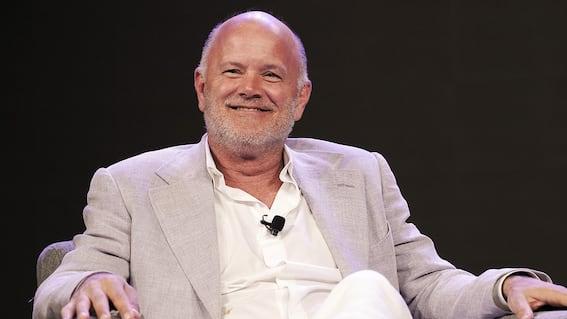
There are a number of key catalysts for the company, and these include ETF net inflows, the development of GalaxyOne and a potential Nasdaq listing, the report said. Stifel resumed coverage of Galaxy Digital with a buy rating and a price target of C$20. The investment bank says the stock should be a core holding for digital asset investors, highlighting a potential Nasdaq listing as a key catalyst. Galaxy Digital (GLXY) should be a core holding for equity investors looking to gain exposure to the digital asset ecosystem, investment bank Stifel (SF) said in a research report on Wednesday. Stifel resumed coverage of Michael Novogratz’s crypto financial services firm with a buy rating and a price target of C$20. Galaxy closed 4.7% lower on Thursday at C$13.11. “The company offers an asymmetric return profile with significant principle exposure to bitcoin (BTC) and ether (ETH); a diverse group of revenue-producing businesses across trading, investment banking and asset management; and longer-term outsized growth potential through its infrastructure solutions arms, which focuses on core technologies that power decentralized networks,” analysts Bill Papanastasiou and Suthan Sukumar wrote. “Galaxy has always taken an institutional-first approach with robust risk management practices, making it one of the few centralized operators to emerge relatively unscathed following the crypto implosions in the previous cycle,” the authors wrote. There are a number of key catalysts for the company, Stifel said, and these include exchange-traded fund (ETF) net inflows, the development of GalaxyOne and a potential Nasdaq listing. https://www.coindesk.com/business/2024/03/15/mike-novogratzs-galaxy-digital-should-be-a-core-holding-for-digital-asset-investors-stifel-says/
2024-03-15 08:16
Senators say that retail investors face "enormous risks" from such products because thin order books for some cryptocurrencies Senators Jack Reed and Laphonza Butler urge the SEC to block crypto ETPs, citing risks from poor disclosure and thin liquidity. Coinbase’s Paul Grewal counters, highlighting ether’s high trading volume and crypto’s role in financial modernization. Two Democrat Senators are urging the Securities and Exchange Commission (SEC) to block any further crypto exchange-traded products (ETPs) to protect retail investors from risks associated with poor broker disclosure and thin liquidity in major cryptocurrencies. Sen. Jack Reed (D-R.I.) and Sen. Laphonza Butler (D-CA) write that a FINRA survey disclosed that 70% of brokers’ communications with retail investors violated fair disclosure rules. “Brokers’ communications falsely equated cryptocurrency with cash; in others, they provided misleading explanations of cryptocurrency’s risks,” they wrote. “These alarming deficiencies raise significant concerns that brokers and advisers may now provide incomplete and deceptive information about bitcoin ETPs to retail investors.” The Senators also argue that by naming bitcoin exchange-traded funds as such, the name “obfuscates important characteristics about these investments.” “Retail investors should be made aware of how these ETPs differ from more common funds which they may have experience,” they said in the letter, writing that bitcoin is not subject to the same protections under the Investment Company Act of 1940 that ETFs which hold shares of various companies would have. The two lawmakers also say that bitcoin (BTC) – which they call the most established and scrutinized cryptocurrency – is displaying weakness, and other cryptos are far more susceptible to misconduct. “We do not believe that other cryptocurrencies show the trading volumes or integrity to support associated ETPs,” they wrote. “Retail investors would face enormous risks from ETPs…whose prices are especially susceptible to pump-and-dump or other fraudulent schemes.” Coinbase’s Paul Grewal hits back “Respectfully, Senators, the evidence points exactly the opposite way,” Coinbase chief legal officer Paul Grewal wrote in a post on X. Grewal pointed out that ether (ETH), thought to be the next digital asset to have an ETF, has a higher trading volume than many S&P 500 stocks. “ETH’s spot market is deep and liquid,” he wrote. “Only one S&P 500 stock has lower adjusted bid-ask spreads,” Grewal added that Coinbase had addressed the senators’ concerns when it sent a 27-page comment letter to the SEC. “Crypto is an important building block in updating our financial system for everyone,” he concluded. https://www.coindesk.com/policy/2024/03/15/democrats-ask-secs-gensler-to-block-approval-of-more-crypto-etps/