2024-03-12 09:18
Bitcoin ETF inflows could lead to a “sell-side” crisis in the coming months, one market observer said. Ether, Solana’s SOL, and other major tokens remaind little changed. XRP led the gains, rising 10% in the past 24 hours. Dogecoin (DOGE) and Shiba Inu (SHIB) gave back gains after a 25% rally last week, falling as much as 6%, as bitcoin (BTC) hovered above the $71,500 mark on Tuesday. Data shows that other major tokens ether (ETH), Solana’s SOL, BNB Chain’s BNB, and Cardano’s ADA were little changed in the past 24 hours. XRP led the pack among crypto majors with a 10% in the past 24 hours. The gains came amid a technical development announcement that would help developers provide better applications and services to users. The CoinDesk 20 index (CD20), a liquid index of the twenty biggest tokens minus stablecoins, rose 0.73%. Spot bitcoin ETFs crossed the $10 billion inflow mark for the first time since going live in January, BitMEX Research noted in a Tuesday post. Some market observers say this could lead to a “sell-side” crisis in the medium term should such flows continue. “Bears can’t win this game until spot bitcoin ETF inflow stops,” said CryptoQuant founder Ki Young Ju in an X post. “Last week, spot ETFs saw netflows of +30K BTC. Known entities like exchanges and miners hold around 3M BTC, including 1.5M BTC by U.S. entities.” “At this rate, we’ll see a sell-side liquidity crisis within 6 months,” Ki added. Meanwhile, Singapore-based trading firm QCP Capital said in a Telegram broadcast on Tuesday that the bitcoin options market flashed a bullish sign for traders but expressed caution ahead. “The volatility market continues to express bullishness in BTC as volatility remains very elevated for the calls, particularly in the backend of the curve,” QCP said. “We are wary of another washout with funding rates reaching elevated levels again, although we still expect dips to be bought up very quickly,” the firm added. Volatility is a dynamic figure that changes based on activity in the options marketplace. Funding rates are paid by leveraged traders to those on the opposite side of that trade, and the bias toward long or shorts can indicate a bullish or bearish view of the market. https://www.coindesk.com/markets/2024/03/12/doge-shib-rally-eases-as-bitcoin-bullishness-remains-elevated/

2024-03-12 07:48
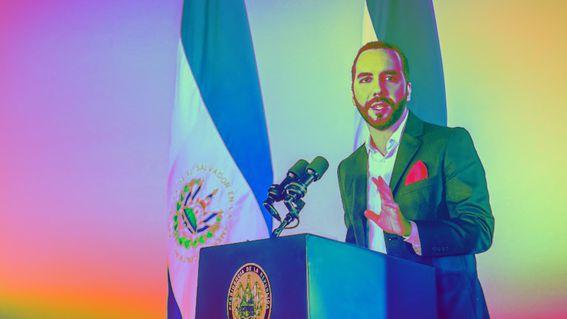
President Nayib Bukele said in an X post that the Central American nation is earning bitcoin revenue from four different avenues. El Salvador’s bitcoin (BTC) treasury is sitting on $84 million in unrealized profit on the holdings it first started acquiring in September 2021. Bitcoin’s 250% rise over the past year has catapulted the Central American nation’s bitcoin treasury to over $206 million as of Tuesday, a 69% gain on initial capital so far. It holds 2,681 BTC, data shows, acquired over 12 separate purchases at an average cost of $42,600. In 2021, bitcoin went on equal footing with the U.S. dollar in El Salvador after a historic “Bitcoin Law” made it the first country to recognize bitcoin as a legal tender. Since then, goods, services and taxes can all be paid for in bitcoin. As such, President Nayib Bukele indicated in a Tuesday post that the nation is earning even more bitcoin in the form of revenue from other services. These include revenue from a citizenship passport program, which converts bitcoin to U.S. dollars for local businesses, bitcoin mining, and revenue from government services. The country introduced its “Freedom VISA” in December, doling out residency to a maximum of 1,000 people per year who invest at least $1 million worth of bitcoin or tether (USDT) stablecoins. Successful applicants receive long-term residency permits and have a path to full citizenship, as reported. https://www.coindesk.com/business/2024/03/12/el-salvador-is-sitting-on-84m-profit-from-its-bitcoin-holdings/
2024-03-12 06:47
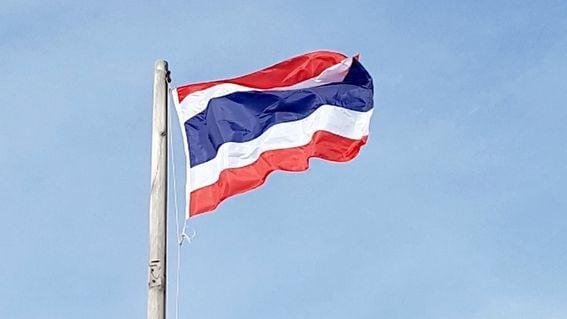
Earlier this year, the regulator had denied permission to trade bitcoin ETFs. Thailand’s Securities and Exchange Commission (SEC) has made an exception, allowing institutional investors and very high-net-worth individuals to invest in crypto exchange-traded funds (ETFs). The SEC will now allow asset managers to invest in spot bitcoin (BTC) ETFs on U.S. exchanges, said Pornanong Budsaratragoon, the SEC’s Secretary-General, on Monday. Spot bitcoin ETFs are classified as securities rather than digital assets under the SEC Act. This reclassification allows Thai securities firms to also partake in these investments. The SEC is contemplating extending this investment opportunity to individual investors in the future. “Asset management firms asked the SEC for them to have exposure in digital assets, especially bitcoin and spot bitcoin ETFs, but we need to consider carefully whether to allow asset management firms to invest in digital assets directly due to the high risk,” said Pornanong. In January 2024, the Thai SEC stated that they did not plan to allow asset management firms to launch spot bitcoin ETFs. Until now, the regulator has required individuals to invest in digital assets only through registered local exchanges. https://www.coindesk.com/policy/2024/03/12/thailands-sec-greenlights-investment-from-institutional-and-wealthy-individuals-in-crypto-etfs/
2024-03-12 06:41
"We are working collaboratively with Nigerian authorities to bring Nadeem and Tigran back home safely to their families,” a Binance spokesperson told CoinDesk. Binance’s Tigran Gambaryan and Nadeem Anjarwalla have been held against their will for the past two weeks by Nigerian authorities. The Nigerian government had invited the executives to discuss the current dispute with Binance, and the duo had landed in Abuja on February 25. Nigeria’s government and Binance have been involved in a dispute about some $26 billion of untraceable funds. Two senior executives of Binance, Tigran Gambaryan and Nadeem Anjarwalla, have been held against their will for the past two weeks by Nigerian authorities, according to reports from The Wall Street Journal and Wired. The executives appear to have been detained due to the accusations brought on against the crypto exchange by Nigeria. In the past few weeks, reports have emerged that the African country has demanded $10 billion from Binance in penalties for enabling some $26 billion of untraceable funds to be processed in the nation. The Nigerian government had invited the executives to discuss the current dispute with Binance. The duo had landed in Abuja on February 25, Wired reported, citing their families. After the first meeting with government officials, Gambaryan and Anjarwalla were “taken to their hotels, told to pack their things, and moved into a “guesthouse” run by Nigeria’s National Security Agency, according to their families,” the report said. The Financial Times was the first to report about the detentions without naming the two individuals. Gambaryan is Binance’s head of financial crime compliance and a U.S. citizen. Anjarwalla is Binance’s Kenya-based regional manager for Africa holding dual citizenships of the U.K. and Kenya. While they have been visited by a U.S. and U.K. government official, the meeting was in the presence of Nigerian government guards, Wired reported. Gambaryan is a former special agent of the U.S. Internal Revenue Service Criminal Investigation (IRS-CI) Cyber Crimes Unit. “While it is inappropriate for us to comment on the substance of the claims at this time, we can say that we are working collaboratively with Nigerian authorities to bring Nadeem and Tigran back home safely to their families,” a Binance spokesperson told CoinDesk. “They are professionals with the highest integrity, and we will provide them all the support we can. We trust there will be a swift resolution to this matter.” The office of Nigerian President Bola Ahmed Tinubu did not immediately respond to a CoinDesk request for comment. Read More: Nigeria’s SEC Updates Guidelines for Crypto Firms in Bid to Stop Criminal Activity: Report https://www.coindesk.com/policy/2024/03/12/nigeria-invited-then-detained-binances-compliance-head-and-africa-manager-for-two-weeks-reports/
2024-03-12 05:29
Currently, less than 2,000 millionaires, or wallets with $1 million worth of bitcoin, are created daily. That's significantly lower than the 2020-21 bull run. Wallet data tracked by Kaiko show slower growth in the on-chain bitcoin whales or millionaires. The slower growth rate indicates several things, including profit-taking by investors. The ongoing bitcoin (BTC) bull run is characterized by Wall Street’s embrace of the long-awaited spot exchange-traded funds (ETFs). Still, the rally is producing “millionaires," however, at a slower rate than the 2020-2021 uptrend. The leading cryptocurrency by market value has risen 70% this year, setting new record highs above $72,000. The rally follows the past year’s 155% surge from the depths of a brutal bear market. According to data tracked by Paris-based Kaiko, less than 2,000 millionaires, or wallets with $1 million worth of bitcoin, are created daily. That’s significantly lower than the last bull run, which bred over 4,000 millionaire wallets per day and over 2,000 wallets with a $10 million balance per day. The slower pace might mean the bull run is still in the early stages, and the pace of inflows is yet to peak. The conclusion is consistent with market consensus that prices could rise to $150,000 and higher in the coming months due to continued inflows into the spot ETFs and the impending halving-induced supply reduction. “This [slower growth rate of millionaires] could be due to a few things: (1) New capital has yet to arrive in full force. (2) Large whales are taking profit as BTC hits new highs. (3) Whales are storing their holdings with custodians, rather than personal wallets,” Kaiko said in the weekly newsletter. Recently, the gap between the liquidity on the ask and bid sides of the order book within 2% of the market price has widened to nearly five times as usual, hinting at a buildup of limit orders on the sell side – a sign of investors looking to take profit near record highs. https://www.coindesk.com/markets/2024/03/12/this-bitcoin-bull-run-is-breeding-millionaire-whales-at-slower-pace-data-show/

2024-03-12 05:06
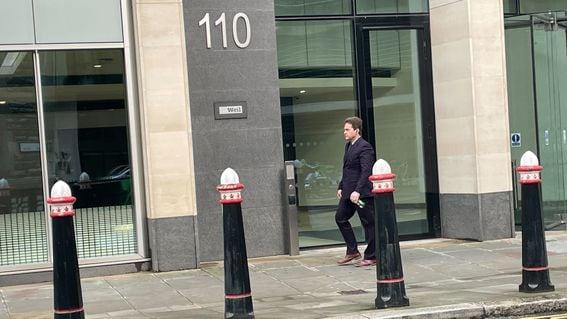
The Crypto Open Patent Alliance and Craig Wright will present their closing arguments this week in a case debating whether Wright is indeed Satoshi Nakamoto. The Crypto Open Patent Alliance and Craig Wright will present their closing statements in the trial to find out if Wright is Satoshi. Justice James Mellor has not yet said when his decision will be out. The results of the identity case against Wright could have implications on other ongoing cases. This week attorneys representing bitcoin developers and the Crypto Open Patent Alliance (COPA), an organization that says it is fighting for "freedom from threats" on crypto technology, will tell a judge that Craig S. Wright is not, in fact, Bitcoin creator Satoshi Nakamoto. Wright, who declared he was Nakamoto in 2016, will close his case arguing he did create what is now the world's largest and most valuable cryptocurrency. The closing arguments will wrap up a month-long trial brought by COPA, which seeks to prove Wright isn't Nakamoto and deny him the ability to claim copyrights or sue under the name Nakamoto again. If Wright succeeds, he'll have a huge leg up in other cases he has against exchanges Coinbase, Kraken and others. COPA, which is backed by industry heavyweights like Twitter founder Jack Dorsey, Coinbase and Microstrategy, filed to take Wright to court in 2021. During the trial, which began Feb. 5, COPA's attorneys from the law firm Bird and Bird tried to prove that Wright forged evidence supporting his claim to be Nakamoto and that Wright did not have the knowledge or expertise to create bitcoin. "We got into this for developers, we want to make sure that developers feel like they can develop without being threatened for the very act of helping to improve and iterate on bitcoin," a COPA spokesperson said. COPA's team will present its closing argument on Tuesday. During Wright's time on the stand so far, Wright and his supporting witnesses shared an anecdote about a ninja and acknowledgements that certain pieces of evidence were edited recently. Wright has a separate active lawsuit in the U.K. against a group of bitcoin developers, and has previously fought to gain sole intellectual property rights to the bitcoin whitepaper, because he believes that he is Nakamoto and that no other entity should host the paper. His team will present its closing argument on the identity case on Wednesday, and COPA will have a chance to rebut on Friday. What happens if COPA wins? February's trial is just the first part of the overall case, a COPA spokesperson told CoinDesk. "The first phase is, 'is Dr. Wright Satoshi Nakamoto?' If he's not, then it's over. And maybe he could consider whether he's going to appeal," the spokesperson said. If Wright does not mount an appeal, COPA will seek an injunctive relief – which is a legal remedy that can require a defendant to stop doing something. "It would seek to stop him from claiming to be Satoshi Nakamoto again, it would seek to stop him from asserting authorship of the bitcoin white paper, and it would seek various other remedies to try and sort of avoid him continuing to wage a war of litigation against developers and individuals on the basis of him being Satoshi Nakamoto," the spokesperson said. If Wright is not Nakamoto, then he does not have database rights in the bitcoin blockchain and he doesn't have file format rights in the bitcoin file format "and it also follows that he doesn't have standing to sue for… something that isn't his," a COPA spokesperson alleged. Presiding judge Justice James Mellor has two more cases to oversee – ones filed by Wright against several prominent crypto firms. Mellor decided to suspend those cases because their outcome depends on whether or not Wright is Satoshi, COPA said. "Justice Mellor recognizes there is efficiency to figuring out that identity issue first before moving forward with anything else," a COPA spokesperson said. One case that’s being held up is what COPA calls the "database rights case". Wright filed a suit against crypto exchange Coinbase, Dorsey’s the Block, open-source software BTC Core and a number of other individuals, saying that he has database rights to the bitcoin blockchain and file format rights. And there is the "passing off" case, also against Coinbase, as well as fellow crypto exchange Kraken. Wright – who spearheaded the Bitcoin Satoshi's Vision (Bitcoin SV) fork in 2018 – alleged that what these exchanges are selling is not, in fact, bitcoin and they are passing off what is Wright's intellectual property. What happens if Wright wins? If Wright wins – "if the court finds it's plausible that he's Satoshi Nakamoto," in the words of the COPA spokesperson – then the identity case would enter into its second phase. The original Bitcoin whitepaper was released under the Massachusetts Institute of Technology open-source license, a COPA spokesperson said. The second phase would question "whether or not publication of the white paper falls within the terms of the MIT open source license." Should it fall under the MIT open source license, then people would still have the right to publish the white paper, a COPA spokesperson said. Justice Mellor has not said when he will announce the decision on whether or not Wright is in fact the pseudonymous Nakamoto, but once he does, a decision on costs and remedies will follow shortly after. Wright and his attorney, barrister Craig Orr, both declined to comment about the implications for this trial. https://www.coindesk.com/policy/2024/03/12/copa-v-wright-whats-at-stake-as-the-trial-to-determine-satoshis-identity-wraps-up/