2024-02-21 19:30
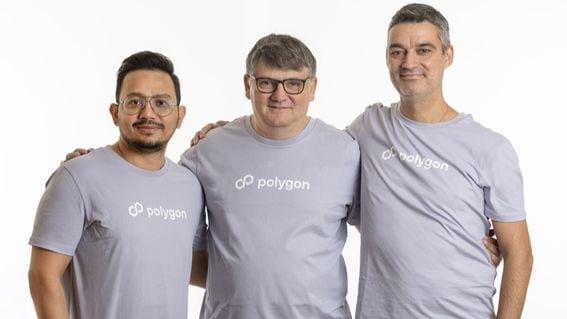
Circle STARKs are supposed to accelerate the proving process for zero-knowledge rollups, according to a white paper published by Polygon Labs and StarkWare. "Circle STARKs," the new cryptographic proofs, are supposed to make transactions faster than cheaper than under the current technology. The revelation marks a collaboration for Polygon Labs and StarkWare, typically rivals in the race to scale the Ethereum blockchain ecosystem with layer-2 networks. The blockchain teams Polygon Labs and StarkWare, nominally rivals in the race to build leading layer-2 networks atop Ethereum, have come together to build a new type of cryptographic proof called "Circle STARKs" designed to make transactions faster and cheaper than under the current technology. The teams hailed the new proofs as a breakthrough for zero-knowledge rollup technology, which is used to create auxiliary layer-2 networks that can process transactions more efficiently than on a base blockchain like Ethereum. According to a press release seen by CoinDesk, the new Circle STARKs are supposed to accelerate the proving process for rollups, thus enhancing the scalability and the efficiency of blockchains. In the proving process, a bunch of layer-2 transactions are bundled together and then passed back to the Ethereum mainnet blockchain, posted in what is known as a “validity proof.” A STARK proof is a type of validity proof, and was invented by StarkWare co-founder Eli Ben-Sasson. The new Circle STARK proofs are supposed to finalize much faster than the current STARK proofs do. StarkWare has been in the news this week because it's the primary developer behind the layer-2 blockchain Starknet, whose controversial airdrop of the native STRK tokens instantly gave the project a market capitalization north of $1 billion. Polygon's MATIC tokens boast a market cap around $8.5 billion. “This really is coming to play in Plonky3, which is our new proving system,” Brendan Farmer, co-founder of Polygon, said in an interview with CoinDesk. "It's really, really simple. This just leads to much faster proofs. We expect like seven-to-10x improvement." Plonky2 is the current proving system for Polygon, and was introduced in January 2022. The ultimate benefit is lower transaction fees to users and the ability to prove more types of applications, Farmer said. The collaboration between StarkWare and Polygon Labs might come as a surprise, since the two teams are often competing against each other in the wider Ethereum scaling landscape. The timing of the release of Circle STARKS is unspecified but the whitepaper, published on Wednesday and authored by Ulrich Haböck of Polygon Labs, along with David Levit and Shahar Papini of StarkWare, is currently available online. “I think this will lead to the most efficient proving systems for a while,” Eli Ben-Sasson, co-founder of StarkWare, said in an interview with CoinDesk. “Undoubtedly there will be more breakthroughs and even further improvements. I don't think this is the end of anything, but it's a very important next step and milestone.” https://www.coindesk.com/tech/2024/02/21/polygon-starkware-tout-new-circle-starks-as-breakthrough-for-zero-knowledge-proofs/
2024-02-21 17:02
'The most important stock on Earth' could disappoint on a weak PC market and AI saturation, with Wall Street wanting more from the GPU giant, pulling down crypto and equities, QCP Capital said. Nvidia's fourth-quarter earnings could trigger a broader correction for equities and crypto if it fails to live up to the hype. AI-related tokens such as OCEAN and FET may also trade off Nvidia's earnings and outlook for the sector. The bitcoin (BTC) and the broader crypto rally could come to a halt if Nvidia's (NVDA) fourth quarter earnings fail to live up to the lofty Wall Street expectations, Singapore-based QCP Capital said in a recent note. "A key event today that could trigger a wider correction is Nvidia earnings which will be released after the US close," QCP wrote in a note. "As a major part of the S&P500 Index, Nvidia's performance could set the tone for US equities in the near-term." Nvidia, the GPU giant that designs chips necessary for the AI revolution, is set to report its earnings on Wednesday after the market closes in the U.S. The chip-maker's stock is up nearly 220% over the last year. The market will be sharply focusing on the potential for the stock to sustain the face-melting rally. In fact, the rally has been so hot that Goldman even called it "the most important stock on planet earth" as options traders are betting on a move in either direction of 11%. "Nvidia is currently trading at 90x P/E and Q4 earnings expectations have been adjusted higher recently," QCP said. For comparison, Amazon.com (AMZN) currently trades at 52.4x and Tesla (TSLA) at 57.7x price-to-earning (P/E) ratio, according to FactSet data. With such a high valuation, the margin of error is very slim. "At these valuation multiples and high expectations on earnings, any disappointment could see a sell-off. That would certainly put a drag on U.S. equities and crypto prices as well," QCP continued. Another crypto sub-sector that could see a volatile trading session from Nvidia's earnings is the artificial intelligence (AI) -related tokens such as Ocean Protocol’s OCEAN and Fetch.AI’s FET. Given the influence the chip maker has on the sentiment of the AI industry, crypto traders will be keeping an eye on assessing Nvidia's outlook on the sector and trade accordingly. Analysts also stress how much of Nvidia's growth relies on the server industry at the core of the AI revolution. Data from IDC shows that the global PC market is facing short-term challenges, with 2023 shipment volume expected to decline by 13.8% after a 16.6% drop in 2022, marking two consecutive years of double-digit declines. However, IDC forecasts a rebound starting in 2024, driven by factors such as a commercial PC refresh cycle, AI integration, and recovery of the consumer installed base, leading to a projected growth of 3.4% in 2024 and a compound annual growth rate of 3.1% from 2023 through 2027. Meanwhile, Taiwan-based Digitimes Research recently wrote that the computing sector's growth will plateau due to saturated PC and notebook demand, but emerging data centers are key to the future of chip companies like Nvidia, boosting server shipments and HPC chip demand. Nvidia's stock is down 7% in the last week and is currently trading around $680. The majority of the Wall Street analysts have a buy rating on the stock with an average 12-month price target of around $751, according to FactSet data. Bitcoin is trading at $51,200, down 0.4% in the last 24 hours, according to CoinDesk Indicies data, while the CoinDesk 20 Index (CD20), which measures the performance of the largest 20 digital assets, is down 1.9%. https://www.coindesk.com/markets/2024/02/21/nvidias-hotly-anticipated-earnings-may-trigger-bitcoin-and-crypto-correction-analyst-says/

2024-02-21 16:09
The Starknet blockchain hit a record-high 1.06 million transactions on Tuesday, with a peak of 45.2 transactions per second. The STRK price slid to $1.77 from $5.00. Funding rates remain positive, showing bullish sentiment. Transactions per second and computational steps per second hit record highs on Tuesday. Robust demand for Starknet's newly released starknet (STRK) tokens means a full 71% of those available were snapped up in the first 24 hours after the mammoth airdrop went live. More than 490,000 individual users claimed 420 million tokens, Tokenflow data show, and while the price slumped to $1.77 from a debut high of $5, funding rates in the futures market are positive – a sign of bullish sentiment in the market. STRK is the native token of Starknet, a layer-2 network that aims to use zero-knowledge cryptography to scale the Ethereum blockchain by bundling transactions off-chain, reducing fees and speeding up transactions. The token demand compares with the roughly 55% claimed in the first eight hours of Jupiter's massive airdrop in January and Arbitrum's 77% first-day takeup in March last year. Daily transactions on Starknet hit a record high of 1.06 million on Tuesday, with 45.2 transactions per second being recorded at the height of the airdrop claim frenzy, data from voyager.online shows. By that measure, Starknet beat other layer-2 networks Arbitrum and Optimism, which reached 874,000 and 486,000, respectively. Another way to gauge network activity is to examine Cario, the native smart-contract language of Starknet. Cario steps measures the number of computational steps that occur on the blockchain within a certain time period. On Tuesday, Starknet recorded 7.8 billion cario steps, on par with a record high set in November. Trading data Trading volume over the past 24 hours is at $1.6 billion. Open interest, which measures the nominal value of all open derivatives positions, soared beyond $150 million, according to CoinGlass. Funding rates on Bybit are positive by 9 basis points, a signal that futures traders are leaning bullish on STRK despite heavy spot demand caused by airdrop claimants liquidating their positions. In terms of liquidations, traders have already notched up more than $7 million in liquidated positions across both long and short trades, and the token remains volatile despite high levels of liquidity on exchanges like Binance. Usually, higher levels of liquidity are reflected in lower volatility. The 2% market depth on Binance, which measures the amount of capital required to move a token by 2% in either direction, is between $1.38 million and $1.53 million, according to CoinMaketCap. In terms of total value locked (TVL) on Starknet, the figure of $56 million has remained relatively unchanged, though it's increased from $40 million since Feb. 1, according to DefiLlama. https://www.coindesk.com/markets/2024/02/21/strk-tokens-claimed-hit-420m-in-a-day-as-on-chain-metrics-soar/

2024-02-21 08:30
MATIC was overvalued at the start of the ongoing crypto bull run, one observer said. MATIC, which produced market-beating returns during the 2021 bull market, has been less loved in the past 12 months, significantly underperforming BTC, ETH and layer-2 coins ARB, OPT and SKL. Polygon zkEVM and other zero-knowledge rollups post fraud proofs far more frequently and, therefore, would not see the benefits of lower transaction data costs following Ethereum’s Dencun upgrade, Arca’s Katie Talati said. MATIC was overvalued at the start of the ongoing crypto bull run, and SwissOne Capital said other tokens are playing catchup. The native token of the Polygon ecosystem (MATIC), a market darling during the 2021 bull run, has been less of a hit with crypto traders over the past year, missing out on a big rally in cryptocurrencies. The cryptocurrency declined about 32% in 12 months, significantly underperforming rival layer-2 coins like OP and SKL, which have risen 216%, 46% and 50%, respectively, according to CoinDesk Indices. Arbitrum’s ARB, which has existed for less than a year, has seen more significant gains than MATIC in six months. Bitcoin (BTC), the largest cryptocurrency by market value, has more than doubled to $51,700 in one year, and the CoinDesk 20 Index, the broader market gauge, has risen 70%. Ethereum's native token, ether (ETH), is up 76%. MATIC’s dismal performance is in contrast to 2021, when the token was on a tear, producing market-beating triple-digit price gains even during the corrective phases of the bull run. Indeed, the excitement back then might have been due to the project's then-front-runner status as the leading sidechain – a type of auxiliary network – for Ethereum. But the technological race has since shifted, with investors and developers alike now favoring a different type of scaling networks known as "rollups." Polygon has pivoted, setting up Polygon zkEVM, employs ZK-rollup technology, bundling and processing transactions outside the Ethereum main chain. Polygon's biggest rivals, Arbitrum and Optimism, are other popular Ethereum scaling solutions, based on a slightly different but popular technology known as "optimistic rollups." But Polygon is still supporting its legacy chain, known as Polygon PoS, which uses the Plasma framework with a proof-of-stake (PoS) consensus mechanism. Polygon is now pushing Polygon CDK, a "chain development kit" built around the ZK tech that can be used by other developers to spin up their own layer-2 networks. Last week, Polygon claimed a technological feat with its release of a "Type 1 prover," a new component allowing any network compatible with Ethereum's EVM standard to become a layer-2 network powered by zero-knowledge proofs. Polygon officials declined to provide a comment for this story. It's possible the months-long turnaround strategy may be starting to show signs of a payoff. In the past month, MATIC has gained 24%, versus 14% climb during that period in the benchmark CoinDesk 20 index of the largest digital assets. Polygon is set to come out soon with a new protocol known as the "aggregation layer" or "AggLayer" aiming to unite "a divided blockchain landscape into a web of ZK-secured L1 and L2 chains that feels like a single chain." Along with the sprint to roll out Polygon CDK, such initiatives could shift the investor mood. But the lack of investor interest in the token over the past year could stem from a couple of reasons, including the way Polygon zkEVM ensures the validity of transactions, which puts it at a disadvantage to Optimism and Arbitrum when it comes to benefitting from Ethereum’s impending Dencun upgrade, according to Katie Talati, director of research at digital-asset management firm Arca. The Dencun effect Ethereum’s Dencun upgrade, slated for March 12, will introduce a new type of transaction called a blob, attaching large, fixed-sized data chunks to a regular transaction (imagine side carts on a motorcycle). Unlike call data or the memory permanently used to store transaction details, blob-carrying transactions only include a reference hash to the blob’s data stored off-chain and become inaccessible after three weeks or so. In other words, blobs will reduce transaction costs and boost efficiency by delivering large data packets to recipients without congesting the main net. The upgrade is particularly favorable for layer-2 scaling solutions like Arbitrum, Optimism, and Polygon zkEVM that use the rollup technology. Rollups bundle transactions together, process them off-chain and then submit the data to the Ethereum main chain for verification. The main chain, however, often faces congestion, which raises the cost of submitting data to the main chain. After the upgrade, rollups could store their transaction data using blobs, freeing up space on the mainnet and processing more transactions at a lesser cost. That said, Polygon zkEVM functions on the principle of “guilty until found innocent.” The rollup operators must provide proof of validity to finalize transactions on Ethereum. This resource-intensive task will continue adding to the overall transaction cost after the Dencun upgrade. On the other hand, Optimistic rollups operate on the “innocent until proven” principle and must produce a fraud-proof flag only when the transaction is challenged. Thus, they stand to benefit from the expected decline in transaction costs following the Dencun upgrade. “The upcoming Ethereum Dencun upgrade will decrease costs for layer 2's to post data back to the Ethereum mainnet. Although Polygon will benefit from the upgrade, other L2s like Arbitrum and Optimism, which use optimistic rollups, will see more significant cost reductions, which has caused these L2s to rally,” Talati told CoinDesk in an interview. “Most of the cost for optimistic rollups comes from posting transaction data back to Ethereum (which is what Dencun will reduce), but they hardly post fraud proofs. On the other hand, Zk rollups post fraud proofs far more frequently and, therefore, would not see the benefits of lower transaction data costs,” Talati explained. On the other hand, since Polygon typically posts more data to Ethereum, it might stand to benefit more from the Dencun changes. Key departure Former Polygon President Ryan Wyatt’s decision to move to Optimism could be another reason for the lack of a notable uptrend in MATIC. “The second reason for the underperformance is that Ryan Wyatt, the former president of Polygon, left last year to join as the head of business development for Optimism. Many believe that Wyatt was responsible for Polygon’s big partnerships, and his exit has been a considerable blow to Polygon’s growth efforts,” Talati said. The MATIC price rose 2.5% when Wyatt's departure was disclosed on July 7, the same day it was announced that Marc Boiron had been promoted to CEO. Arbitrum, a go-to blockchain for traders Data tracked by DefiLama shows that Arbitrum is the fourth-largest chain, with a 24-hour trading volume of $420 million. Polygon PoS ranks 6th, with a trading volume of $179 million, followed by Optimism’s $133 million. Arbitrum is also the leading rollup, with $3 billion worth of assets locked in its decentralized finance protocols. Optimism is the second largest, with $884 million, while Polygon ZkEVM ranks 12th, with total value locked at $14.7 million. “The toughest competitor to MATIC is Arbitrum (ARB), and unfortunately for MATIC, Arbitrum is the go-to blockchain for traders,” Kenny Hearn, chief investment officer at SwissOne Capital, said in an email, adding that Arbitrum is leading the surge in DeFi trading volumes. According to Hearn, MATIC was overvalued at the start of the ongoing crypto market uptrend, and other layer-2 coins are playing catchup. “Looking into the numbers, one can easily find the relative valuations stacking up. The top 10 apps’ TVL on each chain totals ARB $1.9bn, MATIC $800mn. Then, comparing their Fully-Diluted Valuations (FDV) of $20bn and $10bn, respectively, the relative valuations make more sense,” Hearn noted. “When comparing tokenomics, both ARB and OPT are still rewarding stakers though native token unlocks, and like it or not, it can add to reducing token supply on exchanges while rewarding Pool/TVL contributors,” he added. https://www.coindesk.com/markets/2024/02/21/polygons-matic-has-fallen-out-of-favour-with-crypto-investors-heres-why/
2024-02-21 08:05
A sudden trading volume on VanEck’s HODL product seemed “retail armyish,” one analyst said. The sudden jump in volume comes as VanEck is set to reduce its offering fees to 0.20% from 0.25% on Wednesday. HODL had the third-largest daily volume, behind Grayscale’s GBTC and BlockRock’s IBIT. Trading volumes of VanEck’s HODL, one of the ten spot bitcoin (BTC) exchange-traded funds in the U.S. (ETF), surged over 2,200% on Tuesday in a move driven by individual traders. HODL traded over $400 million in volumes on Tuesday, a 22-fold jump over its daily average of $17 million. The figures came ahead of a planned fee cut on Wednesday, when VanEck will reduce its offering fees from 0.25% to 0.20%, as per a filing. HODL’s volumes were the third-largest after Grayscale’s GBTC and BlockRock’s IBIT, the usual leaders. The ETF now holds nearly $200 million worth of bitcoin as of Feb.20, data shows. Bloomberg Intelligence analyst Eric Balchunas said on X that the volumes came from 32,000 individual trades instead of one big investor – showing signs of a retail mania. “Given how sudden and explosive the increase in the number of trades was (500 trades Friday, 50,000 trades today), I’m wondering if some Reddit or TikTok influencer type recommended them to their followers,” Balchunas said. “Feels retail army-ish.” HODL’s unusually large volumes contributed to the bitcoin ETFs posting their highest volume day since going live in January, as reported. https://www.coindesk.com/markets/2024/02/21/vanecks-bitcoin-etf-records-2200-volume-surge-in-a-day/

2024-02-21 06:59
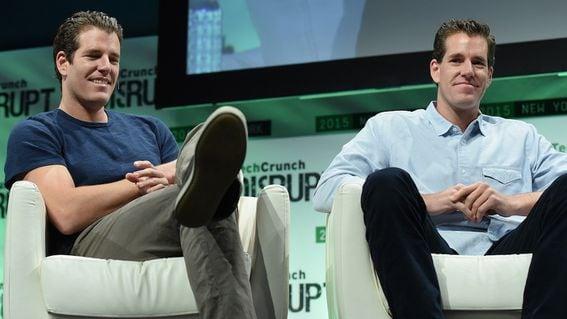
Overall, Fairshake has raised more than $85 million to support leaders who endorse crypto and blockchain. The twins were initial investors in Fairshake. Fairshake spent millions opposing California Senate Candidate Katie Porter. Fairshake, a Super political action committee (PAC) that is backing crypto-friendly candidates, has now received funding of a total of $4.9 million from billionaire twins Cameron Winklevoss and Tyler Winklevoss, Bloomberg reported, citing the latest federal filings. The Winklevoss twins, who are co-founders of crypto exchange Gemini and heavyweight bitcoin (BTC) investors, were initial investors in Fairshake, revealed in the first announcement on Dec. 18, 2023. The Winklevoss' join a list of high-profile crypto investors backing the Super PAC, such as Andreessen Horowitz (a16z), ARK Invest, as well as crypto companies like Circle, Ripple, Coinbase (COIN) and more. Overall, Fairshake has raised more than $85 million to support leaders who endorse crypto and blockchain, according to OpenSecrets.org. It has also spent millions opposing California Senate Candidate Katie Porter. Super PACs are prohibited from sending money directly to political candidates and Fairshake has emerged as one of the most prominent campaign finance forces supporting crypto. Read More: Fairshake Super PAC Raises $78M to Support Crypto Candidates in 2024 U.S. Election https://www.coindesk.com/policy/2024/02/21/crypto-super-pac-fairshake-raises-49m-from-winklevoss-twins-report/