2024-02-20 10:21
Ethena offers 27% annualized rewards to holders of its USDe stablecoins, a yield it generates mostly by shorting ether futures. More than $287 million of USDe has been minted since the platform's launch, with the 27% reward calculated on a rolling seven-day basis and subject to change. Users can deposit stablecoins to receive USDe, which can then be staked. The yield is generated by staking ether to a validator and earning 5% on the capital, as well as shorting ether futures to capture the funding rate, estimated to be above 20% based on historical modeling. CORRECTION (Feb. 20, 10:46 UTC): Corrects headline and first paragraph to say inflows from the first few weeks, not the first day. Decentralized finance platform Ethena has attracted massive inflows since going live amid some criticism around the model it uses to generate an annualized 27% yield to holders of its USDe tokens. It had operated as a beta platform so far, available only to a closed group. More than $287 million of USDe had been minted as of Tuesday morning, with over $50 million of that coming after the platform went live to the public on Monday. The 27% reward is calculated on a seven-day rolling basis and may change each week based on underlying factors. Users can deposit stablecoins such as tether (USDT), frax (FRAX), dai (DAI), Curve USD (crvUSD) and mkUSD to receive Ethena’s USDe, which can then be staked. Unstaking takes seven days. The staked USDe tokens can be supplied to other DeFi platforms to earn an additional yield. Ethena calls USDe a synthetic dollar, which largely mimics an algorithmic stablecoin: The tokens have a target peg of $1 that is minted as ether (ETH) tokens are deposited to the platform. The yield is generated from two sources: 1. Staking ether to a validator and earning 5% on the capital. 2. Shorting ether futures to capture the funding rate, which is estimated to be above 20% as of historical modeling. This futures mechanism is similar to a “cash and carry" trade, in which a trader takes a long position in an asset while concurrently selling the underlying derivative. Such a trade, in theory, is directionally neutral and earns money from funding payouts instead of the underlying asset’s price movement. While the flows have been significant, some parts of the crypto community say the concept has been tested – and failed to catch on – previously. “There's been 2 projects that tried this before and both gave up because they lost money due to yields inverting,” said @0xngmi, a co-founder at DeFillama in an X post. “When yields invert you start losing money, and the bigger the stablecoin is the more money it loses.” Others say the concept could face tests around how its risk is managed. “While new stablecoin experiments are welcome, there are several parts to Ethena that will likely be challenged, especially regarding its risk management,” Doo Wan Nam, founder of governance research firm Stable Lab, said in a Telegram chat. Ethena’s head of research, Conor Ryder, addressed some of these concerns in an X post on Monday, stating the protocol had gone live with its parameters based on historical testing that did not present far-fetched risks. Ryder said that because demand for going long on ether is currently high, the futures rates for shorting the cryptocurrency are expected to remain high. “There is a clear demand in crypto to go long with leverage. Deep pools of capital are unwilling to lend the capital on the short side of that long leverage,” he said. “Negative funding rates are a feature, rather than a bug of the system. USDe has been built with negative funding in mind. Ethena’s models have determined that $20 million per $1 billion of USDe would help survive “almost all bearish forecasts of funding rates, Ryder said, and the majority of Ethena’s $14 million funding round will be allocated toward an initial insurance fund of $20 million. https://www.coindesk.com/markets/2024/02/20/defi-platform-earning-yield-by-shorting-ether-attracts-300m-on-first-day/

2024-02-20 09:35
Order book liquidity indicates how easy it is to buy and sell large quantities at stable prices. Bitcoin order books are the most liquid since October, the 2% market depth indicates. U.S.-based exchanges are leading the uptick in the global order book liquidity. As predicted in December, the U.S.-based spot bitcoin (BTC) exchange-traded funds (ETFs) approved in January are impacting not only the cryptocurrency's price, but also order book liquidity, or the ability to trade at stable prices. These effects are increasingly evident a month after the nearly a dozen ETFs began trading. Early Tuesday, bitcoin's 2% market depth across 33 centralized exchanges, or the combined value of buy and sell orders within 2% of the market price, rose to $539 million. That's the highest since October and a roughly 30% increase since the spot ETFs hit the market on Jan. 11, according to data tracked by Paris-based Kaiko. The greater the market depth or liquidity, the easier it is to buy and sell large quantities without affecting prices, and the lesser the slippage, the difference between the prices at which trades are quoted and executed. U.S.-based exchanges have led the rise in the global bitcoin market depth, according to Kaiko. The share of the U.S.-based exchanges in the global 2% market depth has increased to 48% from 14.3% since spot ETF expectations gripped the market in October. While the market depth has improved, it remains well below the levels in excess of $800 million observed before the collapse of Sam Bankman-Fried's crypto exchange FTX and its sister concern, Alameda Research, in November 2022. https://www.coindesk.com/markets/2024/02/20/bitcoin-order-books-are-most-liquid-since-october-as-market-depth-nears-540m/

2024-02-20 07:02
Tyr investor TGT has brought claims against the hedge fund that it ignored several warnings over its ties with the now-bankrupt crypto exchange FTX. TGT alleges that Tyr withdrew funds from FTX the day it went bankrupt despite receiving several warnings in the days prior. The fund also claims that Tyr ignored an internal risk requirement not to have over 15% exposure with one firm. Crypto hedge fund Tyr Capital is battling a dispute with one of its clients over its exposure to bankrupt digital assets exchange FTX, the Financial Times reported on Tuesday. Tyr has been accused of “criminal” mismanagement by one of its clients, TGT, and had its offices raided by a Swiss prosecutor, the report said. TGT is now looking to close its account with Tyr and recover the remaining assets, including a $22 million claim against FTX. FTX, once the darling of the crypto industry, collapsed in 2022 after a CoinDesk report detailed how the exchange and its sister company, Alameda Research, used their native FTT token to manipulate their reserves. The subsequent fall of FTX founder Sam Bankman-Fried’s multi-billion dollar empire led to a string of bankruptcies and a year-long winter for the crypto market. The collapse of FTX impacted several companies directly or indirectly exposed to the exchange. TGT alleged that it had raised concerns around FTX between November 7, 2022, and November 10, 2022. However, Tyr, led by ex-Deutsche bank exec Edouard Hindi, only withdrew the assets from FTX the day it filed for bankruptcy, the report said, citing a court filing. TGT, which invests money from other companies, such as crypto platform Yield, also alleged that Tyr ignored an internal risk requisite, limiting exposure to any party to 15% of the assets. Tyr has denied the claims made by TGT, the report said. “The information made available to journalists is false and wholly disputed. There is no valid legal claim that can be asserted by Yield App (TGT LP/GP) against the company," said Adam Wurf, a representative for Tyr. TGT could not be reached for comment. https://www.coindesk.com/business/2024/02/20/swiss-crypto-hedge-fund-tyr-capital-clashes-with-client-over-ftx-exposure-ft/

2024-02-20 06:55
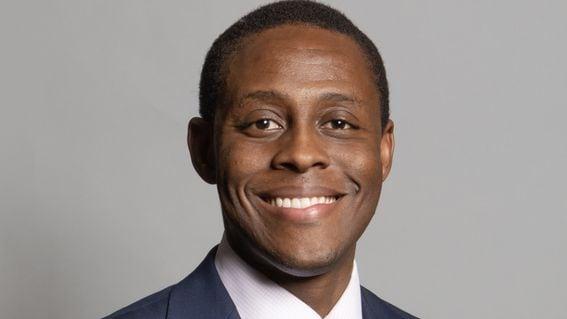
Economic Secretary to the Treasury Bim Afolami has said the U.K. government was "pushing very hard" to bring legislation for stablecoins and staking services for crypto assets within six months. The U.K. government expects to see stablecoin and staking services legislation for the crypto sector within six months, according to Economic Secretary to the Treasury Bim Afolami. In October 2023, The Bank of England and the Financial Conduct Authority (FCA) announced broad plans for overseeing the crypto sector in a coordinated fashion, revealing a similar timeline. A U.K. minister has signaled a fresh commitment to introduce stablecoin and other crypto-related legislation to the country this year. Economic Secretary to the Treasury Bim Afolami said that the U.K. government was "pushing very hard” to bring legislation around stablecoins and crypto staking services within the next six months, according to a Bloomberg report. “We’re very clear that we want to get these things done as soon as possible. And I think over the next six months, those things are doable,” said Afolami, speaking at an event hosted by cryptocurrency exchange Coinbase in London on Monday. In October 2023, The Bank of England and the Financial Conduct Authority (FCA) announced broad plans for overseeing the crypto sector in a coordinated fashion. The timeline for stablecoin rules indicated a consultation on final rules by mid-2024 and implementation of the stablecoin regime by 2025, CoinDesk reported. Afolami’s statement suggests the U.K. is marching ahead to bring crypto regulation in the election year. The governing Conservatives are behind in the polls to the Labour Party and could be under pressure to gain political mileage by passing specific legislation. Asked about a timeline on broader crypto regulation beyond stablecoins and staking, Afolami said he didn’t know and that “There’s just a huge amount going on, so I don’t want to commit to that now.” Read More: UK’s Planned Stablecoin Rules Need Reworking, Crypto Advocates Say https://www.coindesk.com/policy/2024/02/20/uk-minister-expects-stablecoin-and-staking-legislation-within-six-months-bloomberg/
2024-02-19 18:55
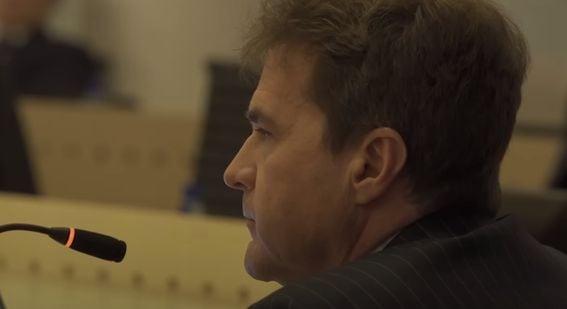
Stefan Matthews said the damning message referred to poor trial prep and not Wright’s claims to being Bitcoin inventor Satoshi Nakamoto. Three witnesses for Craig Wright took the stand on Monday as the third week of a trial that could decide if he's Bitcoin inventor Satoshi Nakamoto kicked off in a U.K. high court. A key witness, Stefan Matthews, had to defend a damning statement he made about the trial, which invited questions about whether he thought Wright was disingenuous. "We're heading into a f***ing train wreck." That's how Stefan Matthews, a witness for Craig Wright, described the U.K. trial probing the latter's claims that he invented the first cryptocurrency, bitcoin. Matthews, the co-founder of tech company nChain – where Wright was chief scientist – had to defend that January message when he took the stand on Monday along with two other witnesses for Wright as the third week of trial kicked off. Under oath, Matthews said he was referring only to how "uncooperative Craig was in his strategy and plan" for the trial and insisted he didn't think Wright was a "fake." A set of prominent crypto industry participants, comprising the Crypto Open Patent Alliance (COPA) and a grouping of Bitcoin developers, have challenged Wright's claims that he is the cryptocurrency's pseudonymous creator, Satoshi Nakamoto. Since the trial started on Feb. 5, Wright has been cross-examined for several days, followed by witnesses from his camp. Before Matthews took the stand on Monday, David Bridges, CIO of Qudos Bank, who met Wright in 2006, and Wright's cousin Max Lynam participated by video link. Both admitted that key events or conversations that convinced them Wright was Satoshi took place years ago and without material proof to back them up. Bridges has previously drawn parallels between Bitcoin's underlying technology blockchain and an event logging system created by Wright, saying both systems record transactions, and have "good traceability" and immutability. When asked by COPA counsel if the parallel Bridges had drawn between the two systems was a conceptual one instead of a technical one – specifically referring to code – he said he didn't have the expertise to make a detailed technical comparison. "Oh, I wouldn't know, mate," Bridges said. He also said he's not big on following the crypto, referring to Vitalik Buterin as the "Russian guy" who invented that "other one" – meaning popular cryptocurrency ether. "I'm not a fanboy or anything like that," he added. All three of Monday's witnesses testified on Wright's behalf at a previous Oslo trial, where Bitcoin developer Hodlonaut (who came out victorious) challenged Wright's assertions that he was Satoshi. Matthews will continue to testify until lunchtime Tuesday, after which Steve Lee and John MacFarlane, may take the stand for COPA, a spokesperson for the alliance told CoinDesk. The trial will continue at least until mid-March, according to tentative schedules shared by the court. https://www.coindesk.com/policy/2024/02/19/craig-wright-witness-defends-saying-headed-for-train-wreck-with-copa-trial/
2024-02-19 17:46
In Meta-DAO's conception of governance, every decision is based on what the market believes is the best outcome for its token, META. SALT LAKE CITY – Cryptocurrency developers gathered in a hacker house here are testing out a radical form of governance. Called "futarchy," it entrusts the market with total control. Behind this effort is the Meta-DAO, the latest "decentralized autonomous organization" to use blockchains as an experimental platform for creating novel governance mechanisms. DAOs are usually organizations controlled by their token holders, who vote for or against various proposals to move the group forward. That's not quite how Meta-DAO works. In its conception of governance, every decision is based on what the market believes is the best outcome for its token, META. "The goal of the DAO is to make number go up," said Proph3t, the creator of Meta-DAO. That goal caught fire at the Salt Lake hacker house in mid-February as META's price in the spot market soared from $50 to over $1,000 in a matter of days. Attendees of mtnDAO, a month-long coworking conference for devs building on the Solana blockchain, got hooked on trading (ahem, voting) on Meta-DAO's future by buying and selling META tokens in its increasingly contentious governance markets. ("Spot" in this context refers to trading outside those special governance markets.) "This is consuming my life," said Barrett, the head of mtnDAO and a self-proclaimed "futard." "This has been a war on the order books. A week of my life has been consumed by this order book. There has never been a more interesting DAO governance mechanism in crypto." Meta-DAO's breakneck acceleration has caught the attention of venture investors, including Pantera Capital. At the time of publication, the gigantic crypto investing firm has an active proposal to buy $50,000 of META tokens from the DAO at well below spot market price. Whether the purchase goes through is up to Meta-DAO's complicated, unique and highly experimental conditional markets, which, if successful, could provide a framework for better human coordination. If Proph3t has his way, the world will take note. "This is something that could entirely reshape human civilization," Proph3t said. "This could solve politics." What Is Futarchy? "The goal of the DAO is to make better decisions," Proph3t told one curious bystander at mtnDAO, "Markets are empirically better than experts." In an industry known for wild undertakings, futarchy is perhaps one of the wildest. But it isn't a new idea. Introduced in a 2007 paper by George Mason University Economics Professor Robin Hanson, it is based on the premise that speculative markets could be better decision-makers than pure democracies. Participants in speculative markets (think: stock and betting markets) are incentivized to do the research necessary to understand the optimal outcome to serve their interests, according to Hanson. They'll buy or sell accordingly. Futarchy is the most extreme use case for another Hanson brainchild, prediction markets, in which traders bet money on the verifiable outcome of an event in a specified time frame (e.g. "Taylor Swift engaged in 2024?"). More modest applications are to use them to forecast outcomes, or at least measure popular sentiment. Although prediction markets have mainly languished for years, analysts at Bitwise Asset Management (prediction No. 9 here) and Messari (page 169) have issued bullish forecasts for the crypto-based versions in 2024. Futarchy has been attempted in crypto before. In 2020 the Ethereum booster organization Gnosis DAO pledged to use futarchy via prediction markets to guide the group's decision-making. It's unclear how successful this effort was. The group named Hanson as an advisor in 2017 but still hasn't paid him, the father of futarchy told CoinDesk. Proph3t came to mtnDAO intent on building crypto's first true futarchy. The pseudonymous crypto developer calls himself a "markets nerd" and that's perhaps the best way to describe his physical appearance, too. (He requested CoinDesk not share any personal descriptions. No one at mtnDAO knows his real name). In an interview, Proph3t said he wants to disappear once Meta-DAO becomes self-sufficient – much like Satoshi Nakamoto did for Bitcoin. His creation revolves around order books, the piece of stock and crypto trading infrastructure where traders post "orders": how much they’re willing to pay to buy an asset, or what price they’d accept to sell it. In Meta-DAO's governance game, each proposal gets two conditional markets: the “pass” market and the “fail” market. Traders who want a proposal to pass might buy META in the “pass” market (this would push META’s price up) and sell META in the “fail” market (this would push META’s price down). Conversely, traders who want a proposal to fail might do the opposite. Whichever market has the higher price for META after a set time will execute. The trades placed on the unsuccessful market will revert. The idea is that traders will – through their trading – signal which outcome is better for META’s price. "We’re a philosopher-kingdom where the philosopher is the market. But the philosopher is not trying to increase our happiness, just our wealth," Proph3t said. 'Aspiring Cult Leader' There's nothing easy about pioneering an untested form of governance. But if there's any community where Proph3t's proposition that "markets are better than managers" might catch on, it's probably crypto. The self-described "aspiring cult leader" spends his days at mtnDAO evangelizing his fledgling futarchy to the co-working space's attending coders, many of whom are also building new kinds of markets on top of blockchains. "Somewhere around 2020, we decided that crypto was projects funded by a16z and staffed by Fenwick," Proph3t said, referring to the gargantuan VC and one of the most prolific law firms servicing crypto. He went in the radically opposite direction by creating a leaderless, markets-governed organization with no institutional backing and certainly no lawyers. "I bought in hook, line and sinker,” said Kollan House, a mtnDAO attendee who runs a crypto market-making operation and became one of Meta-DAO’s stalwart contributors even before arriving at Salt Lake City. “As innovative as crypto can be, we tend to revert to the mean," House said in a Telegram message. Proph3t's message "brought me back to the 2014 days when the possibility to change the world felt palpable, and it wasn’t about some egotistical maniacs lying through their teeth." The pair became Meta-DAO's power brokers at the WeWork office space in Salt Lake where mtnDAO is staged. On any given day, Proph3t can be seen tending to the organization's long-term goals before inevitably getting wrapped up in whatever chicanery is happening on its order books, while House manages the Discord server, chats about futarchy with other attendees and drafts proposals to go before the traders who govern Meta-DAO. A 'Spicy' Trade Proposal Everything was quiet at Meta-DAO (perhaps too quiet, if you asked Proph3t) until proposal 6, the first truly controversial proposition to stress-test its conditional markets. Ben Hawkins, an employee of the Solana Foundation who was passing through mtnDAO, learned about futarchy and wanted in. He'd just missed the DAO's first fundraising round, which sold $75,000 worth of META tokens to a handful of its early believers, a trio of mtnDAO attendees among them. So Hawkins crafted a proposal he knew would be "spicy." He proposed the DAO sell him $50,000 worth of META tokens at $33 apiece, a steep discount to the token's $50-$60 valuation on spot markets. He knew that Meta-DAO's rationally-minded traders would balk at giving this relative nobody (while Hawkins works for Solana Foundation, he was acting independently) such a steal. But Hawkins had one thing going for him: oodles of money to spend in Meta-DAO's conditional markets. He committed a little over $250,000 in an attempt to drive up META in the "pass" market. His broader goal was to "bring attention" to Meta-DAO and force people to think about “market-based decision making,” Hawkins said in an interview with CoinDesk. It worked. Within a day of its posting, proposal 6 had turned mtnDAO into a "war room" of traders marveling at Meta-DAO's order book-based governance and quaking at what would happen if Hawkins traded his way to victory. "He's getting a massive controlling interest for way below-market price," said Anders Jorgensen, the intern for decentralized finance project MarginFi. "That's about as bad as it gets." (MarginFi, along with fellow Solana-based DeFi project Cypher, hosted the mtnDAO confab.) On Friday, Jorgensen was plotting the demise of Hawkins' proposal 6. The "futards" took up arms against Hawkins. Some bought META on spot markets to sell in the "pass" market, driving down its price for META and making "fail" more likely to win. But one can spend a dollar only once. The futards ran into a liquidity wall; they only had so much crypto-ammo to spend. "I'm reaching out to size," Jorgensen muttered at one point in the fight, indicating he was contacting a trader with plenty of capital to bid on META in "fail." Enter Pantera Whether or not Anders found his size trader, Hawkins' proposal did ultimately fail. Before it did, "size" showed up. With one day left in proposal 6, the $4 billion crypto asset manager Pantera proposed to buy $50,000 worth of META from the DAO at a maximum price of $100 apiece. In a blog post Pantera said it viewed buying META "as an opportunity to test futarchy's potential as an improved system for decentralized governance." The investment would come from Pantera's liquid token fund. The market viewed Pantera's outreach as a stamp of legitimacy. Within one day of Pantera's proposal 7 going live, the spot price of META shot from $85 to over $1,000. Proph3t also met Pantera’s overture with excitement. On a Friday afternoon, he said the fund’s participation could increase Meta-DAO’s chance of success by 5% to 15%. That’s a pretty big jump for a single action, he said. If, at first, the participants of Meta-DAO's Discord server were open to partnering with a massive crypto trading fund, their open arms crossed as META's spot price soared. By late Sunday night, the "fail" market was showing strength. Why should Pantera, or anyone, for that matter, get a bargain deal? Because, according to Proph3t, the DAO should reward those who bring it value. "Pantera has just created a lot of credibility to the DAO," he wrote in Meta-DAO's Discord server Saturday. Throw in Pantera's promise to offer "futarchy consulting" to other portfolio companies if the proposal passes, and its participation could be tremendous for Meta-DAO and its mission, he told the others. "Whether the prop fails or not, we should pay Pantera," Proph3t told CoinDesk in a Telegram message late Sunday. "The DAO needs to pay people who provide value to it." https://www.coindesk.com/consensus-magazine/2024/02/19/the-goal-is-number-go-up-inside-a-daos-radical-governance-experiment/