2024-02-02 10:06
OPNX's volume peaked at just over $600,000, according to CoinGecko data. OPNX, the exchange for trading of bankruptcy claims set up by the founders of failed cryptocurrency hedge fund Three Arrows Capital, is closing because the bankruptcy process of failed crypto exchange FTX has reached "recovery," co-founder Su Zhu said. FTX said earlier this week that it planned to fully repay its customers, albeit using market prices from a date just after the crypto crash it caused. On some platforms, FTX bankruptcy claims were trading at 13 cents on the dollar in the months following its collapse. “The FTX recovery marks the end of crypto claims estates. The OX community will be focusing on Ox.Fun now, and wish to congratulate the FTX estate holders on their full recovery,” Zhu said in a statement provided by co-founder Kyle Davies on Telegram. Davies said the two are advisers to Ox.Fun, a recently launched derivatives exchange, focused around the Ox token. OPNX struggled to gain a foothold with the broader market, and trading volume peaked at $624,093, according to CoinGecko data. After its much-hyped launch, less than two dollars of trades were executed in its first 24 hours, CoinDesk reported at the time. OPNX CEO, Mark Lamb is facing legal challenges in Hong Kong from creditors of struggling Seychelles-based crypto exchange CoinFLEX, who allege the transition from CoinFLEX to OPNX was unauthorized. Lamb did not return a request for comment sent by Telegram. https://www.coindesk.com/markets/2024/02/02/opnx-founder-su-zhu-says-shutdown-comes-because-ftx-estate-claims-reached-recovery/

2024-02-02 08:54
Mark Zuckerberg's Meta said it was pivoting away from Metaverse to Artificial Intelligence in early 2023. Meta’s (META) stock is up nearly 14% after-hours as the company announced overall positive quarterly earnings with a significant revenue increase, a higher forecast, and an additional $50 billion stock buyback, sending artificial intelligence tokens up in its wake. “We had a good quarter as our community and business continue to grow. We’ve made a lot of progress on our vision for advancing AI and the metaverse,” said Mark Zuckerberg, CEO of the social media giant that was formerly known as Facebook. The company said it was also issuing its first-ever dividend. CoinDesk Indicies’ Computing Select Index (CPUS), which holds AI tokens like Render (RNDR) and Fetch.ai (FET), is up nearly 10% over the last 24 hours. In comparison, bitcoin (BTC) is only up 2% in the same period, according to CoinDesk Indices data. RNDR and Akash Network’s (AKT) tokens are up 4.1% and 5.2%, respectively, over the last 24 hours. They are some of the largest AI tokens by market cap. Meta has sustained over $20 billion in losses since 2021 due to its metaverse pivot, though Zuckerberg said he remains committed to the idea. Overall, Meta’s metaverse platforms have failed to capture the market's attention meaningfully, pushing the stock down nearly 60% throughout 2022. However, since Zuckerberg announced the company’s AI pivot roughly a year ago, its stock has been up over 100%. https://www.coindesk.com/markets/2024/02/02/ai-tokens-up-after-meta-beats-analyst-expectations/

2024-02-02 07:11
The ether-bitcoin forward term structure is downward sloping structure, which means that traders expect ETH to perform weaker than BTC as time goes by, one trader said. The way futures for ether and bitcoin are currently priced shows traders expect ether to underperform bitcoin in the months ahead. Whether spot ETH ETFs will go live this year remains a question, as the SEC has yet to clarify whether the cryptocurrency is a security or a commodity. Market makers are likely to trade against ether price rises, capping the upside. A week ago, Standard Chartered (STAN) said that ether (ETH) could surge to $4,000 in the next three months, potentially outperforming bitcoin (BTC), as the U.S. SEC could approve spot exchange-traded funds (ETFs) tied to ETH in May. Traders, however, continue to prefer bitcoin over ether, anticipating continued weakness in the ether-bitcoin (ETH/BTC) ratio in the months ahead, futures data show. The ETH/BTC forward term structure, calculated as the ratio between prices for ether futures and bitcoin futures over different maturities, has been sloping downwards, according to data tracked by crypto asset management firm Blofin. “The downward sloping structure is backward, which means that traders expect ETH to perform weaker than BTC as time goes by,” Griffin Ardern, volatility trader from crypto asset management firm Blofin, said. “This shows investors are relatively more bullish on BTC’s performance.” The ETH/BTC ratio surged 17% to 0.059 days after the SEC greenlighted the spot bitcoin ETFs. Ether’s outperformance primarily stemmed from hopes that the regulator will soon approve ether spot ETFs. While those hopes remain alive, the ETH/BTC ratio has since retreated to $0.053. Futures traders may be concerned about the SEC’s categorization of ether as a security or commodity. The SEC’s mid-2023 lawsuit against Binance and Coinbase for violating securities law did not mention ether, which has convinced markets that the cryptocurrency will be deemed a commodity, a necessary condition for spot ETF approval. Investment banking giant JPMorgan (JPM) is skeptical the SEC will classify ether as a commodity by May and sees no more than a 50% chance of the regulatory approving the spot ETH ETFs this year. “There is a lot of uncertainty around the ETH spot ETF, mainly because its Proof-of-Stake could place it in a different asset classification from BTC. Greater uncertainty could also mean greater volatility," Singapore-based institutional digital assets trading firm QCP Capital said in the Jan. 29 edition of the “Options Vol-cast” note. The SEC recently delayed decisions on Blackrock (BLK) and Fidelity’s spot ETF applications. According to Bloomberg analyst James Seyffart, delays could continue, and the next key date is May 23. Ardern said expectations for relatively weak ether performance likely stem from fears of market makers’ potential hedging activities. According to Ardern, continuous selling of ether higher strike call options or bullish bets has left market makers with a net long gamma exposure. As such, they are likely to sell the cryptocurrency as price rises to hedge their exposure back to neutral. The hedging could inadvertently cap the upside. “One of the reasons investors expect ETH’s relatively weak performance is that a large number of covered calls are dominating the ETH options market, and market makers are holding record positive gamma, which means that any price rise will be faced with strong resistance brought about by dealers’ selling hedging behavior,” Ardern said. https://www.coindesk.com/markets/2024/02/02/traders-prefer-bitcoin-to-ether-despite-developing-spot-eth-etf-narrative/

2024-02-01 23:22
Coinbase co-founder Fred Ehrsham's venture capital firm filed a friend-of-the-court brief in Kalshi's case against the CFTC. Paradigm, the venture capital firm led by Coinbase co-founder Fred Ehrsam, filed a legal brief supporting prediction market platform Kalshi in its suit against the Commodity Futures Trading Commission (CFTC). In the case, filed in November, Kalshi asked the court to vacate the CFTC's denial of its bid to list contracts on which party will control each house of the U.S. Congress after an election. The regulator concluded that Kalshi, based in New York, was pursuing unlawful gambling "contrary to the public interest." In a friend-of-the-court brief filed Thursday, Paradigm, which is not an investor in Kalshi, argued that such contracts could help businesses, including cryptocurrency startups, hedge their risks while producing positive spillover effects for the general public. Paradigm is weighing in at a time of optimistic forecasts for long-languishing prediction markets, particularly those that run on crypto rails (unlike the CFTC-regulated Kalshi, which settles bets in U.S. dollars). In such markets, participants bet on the outcomes of real-world events, from the weather to military maneuvers. Bullish outlook Bitwise Asset Management, for example, forecasted in a December report that "more than $100 million will be staked in prediction markets, which will emerge as a new 'killer app' for crypto." That figure would represent double the peak reached in late 2021, according to Bitwise's analysis of data from The Block and DefiLlama. Polymarket, the leading crypto-based prediction market platform, logged its biggest volume month in January, according to Dune Analytics data shared on X (formerly Twitter) by Rob Hadick, a general partner at Dragonfly, another VC firm. Hedging risk "Paradigm has an interest in this case because prediction markets could be an impactful use case for crypto and related technologies in which Paradigm invests," the firm said in the filing with the U.S. District Court for the District of Columbia. For example, the brief described a hypothetical "entrepreneur who is building a crypto startup in the U.S. The likelihood that Congress will pass legislation that will impact the viability of U.S.-based crypto startups is directly affected by which party is in control of Congress. … The entrepreneur may therefore want to buy an event contract that pays out depending on which party takes control." Echoing a longstanding argument in favor of prediction markets, the brief went on, "when market participants hedge substantial sums on a particular event contract, members of the general public—even those who never join the market—get valuable real-time information." Such markets "might even be better predictors of electoral outcomes than public opinion polling—precisely because they require participants to put their own skin in the game," Paradigm said. Public benefit Another friend-of-the-court brief filed Thursday supported Kalshi, this one by a prominent legal scholar. Joseph A. Grundfest, a professor at Stanford Law School, made a similar appeal to the public good. "In a world with miniscule poll response rates, sky-high polarization, and rampant fake news, prediction markets offer an objective indicator of the probability of particular election outcomes," he wrote. The CFTC has about a month to respond to Kalshi's motion for summary judgment and present its own friend-of-the-court briefs. Kalshi would respond to those filings in March and arguments in the case may conclude in early April. https://www.coindesk.com/policy/2024/02/01/prediction-markets-can-hedge-crypto-startups-regulatory-risk-paradigm-says/
2024-02-01 22:59
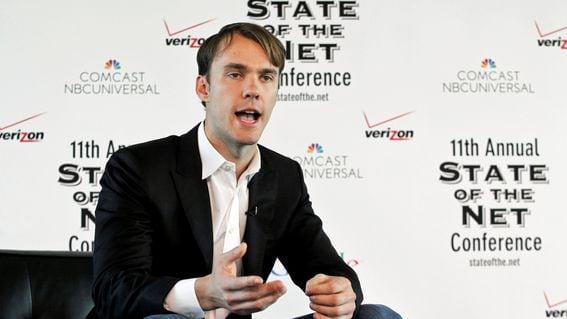
The federal indictment doesn't identify Sam Bankman-Fried's FTX as the pilfered company, but Bloomberg reported that's who it was. The U.S. federal government on Wednesday charged three people with a yearslong phone hacking conspiracy that culminated in the infamous theft of $400 million from FTX as Sam Bankman-Fried's crypto exchange was collapsing. In an 18-page indictment filed in D.C. court, prosecutors accused Robert Powell, Carter Rohn and Emily Hernandez with conspiracy to commit wire fraud and identity theft in their operation of a SIM swapping ring that targeted fifty victims between March 2021 and April 2023. Their most notable heist came on Nov 11, 2022, when the trio siphoned $400 million from an unidentified company. Bloomberg, citing sources familiar with the matter, said that company was FTX. They gained access to an employee of the crypto exchange through AT&T and transferred out hundreds of millions of dollars worth of crypto. The charges offer a solution to one of the most vexing questions left in the FTX saga: what happened to hundreds of millions of dollars in crypto that disappeared in the exchange's darkest hour, right after it filed for bankruptcy protection. https://www.coindesk.com/policy/2024/02/01/ftx-hack-mystery-possibly-solved-us-charges-trio-with-theft-including-infamous-attack-on-crypto-exchange/
2024-02-01 21:47
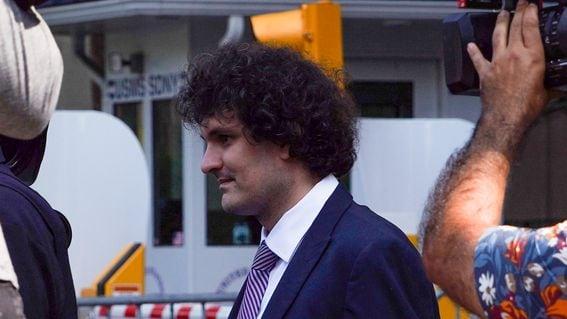
Customers were advised to settle their positions by Feb. 7 and withdraw their money by Feb. 14. OPNX, the exchange set up by the founders of failed cryptocurrency hedge fund Three Arrows Capital, is shutting down this month, according to a notice on the company's website. Customers were advised to settle their positions by Feb. 7 at 08:00 UTC and withdraw their money by Feb. 14. The exchange, created for the trading of bankruptcy claims, was opened last year by Kyle Davies and Su Zhu. Their previous company, Three Arrows Capital, or 3AC, blew up in 2022, creating strains throughout the industry. More than $1 billion in assets belonging to Zhu, Davies and Davies' wife, Kelly Chen, were frozen by a British Virgin Islands court last year, while Zhu was arrested in Singapore for failing to help liquidate 3AC. https://www.coindesk.com/business/2024/02/01/opnx-the-exchange-build-by-founders-of-doomed-hedge-fund-three-arrows-is-shutting-down/