2024-01-31 18:46
The new hire happens as digital asset markets are maturing and have become increasingly intertwined with traditional finance. Crypto trading firm GSR, one of the oldest digital asset market makers, appointed former JPMorgan executive Andreas Koukorinis as its new head of trading, the company said Wednesday in a press release. The hiring is part of GSR's push to cater to more conservative-minded clients interested in trading the largest cryptocurrencies, bitcoin (BTC) and ether (ETH), Rich Rosenblum, co-founder and president of GSR, said in an email interview with CoinDesk. "Our business has been highly focused on servicing crypto natives on their exposure to altcoins," Rosenblum said. "We want to expand our capabilities and offering to groups in TradFi, and they are more likely to trade BTC, and soon ether ETH." Koukorinis will lead the U.K.-based firm's trading platform and strategy that provides services to clients including token issuers, institutional investors, family offices and trading venues, the company said. Before the appointment, Koukorinis served as global head of credit and FICC eTrading at JPMorgan, and was responsible for global algorithmic credit trading including systematic market making, algorithmic trading in exchange-traded funds across fixed income, and portfolio trading across corporates and emerging markets. The announcement came as digital asset markets are maturing and have become increasingly intertwined with traditional finance. Wall Street asset management giants have entered the crypto space by issuing bitcoin ETFs and global banks started offering custody services and exploring tokenization of assets like bonds and credit on blockchain venues. "The next few years are going to be foundational in defining the market infrastructure for digital assets and I see GSR uniquely placed to take advantage of the trading opportunities this presents," Koukorinis said in a statement. https://www.coindesk.com/business/2024/01/31/crypto-market-maker-gsr-appoints-former-jpmorgan-executive-as-head-of-trading/

2024-01-31 17:16
Validators called the airdrop a success. "Surprisingly, nothing notable" broke, one operator said. One of the biggest token airdrops ever on the Solana (SOL) blockchain appeared to execute largely without major issues Wednesday with the chain staying upright as Jupiter started distributing roughly $700 million worth of its JUP token to nearly a million wallets. The token itself began climbing in price immediately after its debut at 10 a.m. ET (15:00 UTC). Early bids came in around $0.41 and by press time they'd climbed to $0.72, giving JUP a fully diluted market cap north of $6 billion. Perhaps more important than the token's value was the performance of the blockchain it trades on: Solana. The network held up to the barrage of activity around JUP, observers told CoinDesk, processing the masses who attempted to claim it and also quickly trade it on decentralized exchanges, or DEXs, without much incident. "Surprisingly, nothing notable" went wrong during the early moments of the airdrop, said 7Layer, the pseudonymous operator of the Overclock validator, part of the network of computers that process transactions for the Solana blockchain. "The server has looked pretty close to normal." However, the launch was not entirely without hiccups. Some RPC nodes – the go-betweens for wallets and the network – struggled to keep up with user demands, especially in the first 30 minutes of the airdrop, according to validators discussing the airdrop in Solana's Discord server. "The average end user had a lot of trouble in the first 30-45 minutes doing anything at all," one validator wrote on the server. "Glad the consensus layer held up great but let’s be real – the user experience wasn’t great." One hour into the launch over 20% of the 1 billion JUP reserved for Wednesday's airdrop had been claimed, per a Flipside dashboard created by Marqu. Jupiter has earmarked an unusually large portion of its token for distribution to people who traded through its routing service, which has a hand in the vast majority of on-chain swaps on Solana. Because of its size, Jupiter's own developers feared the airdrop would wreak havoc on their systems as well as Solana's. One of its pseudonymous founders – he goes by Weremeow and insists he is a cat – declared "Jupuary" (January) to be a month of systems testing to make sure the worst would not come to pass. Jupiter oversaw two other airdrops this month, mockJUP and WEN, that tested its designs for on-chain liquidity pools as well as the new "Launchpad" infrastructure Jupiter created for launching tokens, called LFG. Both rollouts informed Jupiter on Wednesday's launch. That turned into a bit of a free money parade for most plugged-in airdrop hunters. Even small-time traders received tens, and possibly hundreds, of dollars worth of tokens from Jupiter in January. The minimum payout on Wednesday was 200 JUP worth around $140 at press time. "But the real winners are the validators earning the MEV priority fees," said George Harrap, co-founder of Solana data service Step Finance. He was referring to the "few hundred validators" who run the Jito-Solana client, which enables MEV – short for maximal extractable value – bots to "tip" validators that include their arbitrage trades. Right at the beginning of the airdrop, when the launch pool on Meteora was just finding its footing, an trading bot known as roobot.sol paid validators a $50,000 tip to process its monster $625,000 trade: 1.56 million JUP at around $0.42 apiece, said Andrew Thurman, a contributor to the Jito Foundation. At press time, that trade was up about 69%. https://www.coindesk.com/markets/2024/01/31/jupiters-jup-token-soars-after-massive-700m-airdrop-to-solana-wallets/

2024-01-31 16:32
The renowned a16z VC talks to Daniel Kuhn about his new book, “Read Write Own: Building the Next Era of the Internet.” There is a growing divide between techno-optimists and pessimists. Growing up I vaguely remember a public debate between bible thumpers and people who wanted evolution taught in school. The same sort of argument is playing out in a number of different ways today — a media “Techlash” vs. Silicon Valley, humanists vs. nerds, progressivism vs. material progress — but recently, in his "Techno-Optimist Manifesto," venture capitalist Marc Andreessen boiled it down to a war between deccelerationists and accelerationists. That is, those who want the rate of technology to slow, stagnate or reverse and those who want the opposite. In Andreessen’s eyes, the debate has metastasized to touch nearly every corner of human endeavor. And in many ways it has: with the increasing rate of internet adoption, tech plays an ever-larger role in our daily lives. More and more of our interactions are mediated by social media and mobile apps. As cash falls by the wayside, almost all economic activity is routed through digital rails operated by banks or fintechs. We’re streaming more, playing more online games and even taking work online. While many of these developments have made modern life more convenient and efficient, tech also causes problems. Even if you buy into the idea that all technologies are neutral, just “tools” to be put to better or worse use, it’s hard not to think that there’s something dystopian about the past two decades of technological progress. As many crypto advocates point out, as the internet grows, our lives are put in the hands of a few monopolistic companies. This is the point of departure for Chris Dixon’s new book, “Read Write Own: Building the Next Era of the Internet,” published on Jan. 30. Dixon, a long-time colleague of Andreessen, who runs the independent crypto arm at storied VC firm Andreessen Horowitz (a16z), traces the lineage of the web to find what has gone awry. What started out as a network of interoperable and open protocols, what’s now known as Web1, has been sectioned off in Web2. It’s an era where essentially five companies control who gets to use what, when and why. Thankfully, Dixon argues, what comes next, Web3, offers real solutions. Web3 is a bit of a buzzword, Dixon admits. For him, it can be defined as the “ownership” layer that has been so far missing from the web. While Facebook and Twitter did connect the world in some sense, it never allowed users to own their identities or accounts. It’s a similar story across digital banking, blogging or really anything online with a sign-in and password. With the rise of blockchains, what Dixon refers to as virtual computers, users are finally in control over their digital lives — so long as they maintain control over their private keys. It might take a techno-optimist to think that blockchain can reverse the consolidation of the web, considering the trillions of dollars at play, how little adoption has taken place so far and the industry’s battered reputation in the mainstream. But for Dixon, apart from crypto’s ability to hand back control to everyday users, blockchains also offer a space for permissionless development. We may not know exactly what blockchains are useful for today, but so long as there are people as excited about the tech as Dixon is, we’re likely to find out eventually. CoinDesk spoke with Dixon to get a better sense of the three eras of the web, his work as a venture capitalist funding the next wave of crypto startups and whether he thinks direct democracy is over- or underrated, among other pressing issues. The interview has been lightly edited and condensed. The overall theme of the book is the evolution of the internet from Web1, composed of open source protocols, to Web2, which was walled off and siloed, to the re-decentralizing force of Web3 and crypto. Would you consider blockchain to be part of the wider open-source movement and in what ways are Web1 and Web3 different? In the book I talked about outside versus inside-out technologies, which is this idea that, if you look at the history of computing, there's things like the iPhone and AI that came from established institutions like Apple and Google and Stanford, and then there's a whole separate tradition of hackers at the fringe, building stuff. Early PCs — the Homebrew Computer Club was Steve Jobs. They were outsiders. Open-source software, Linux and the whole stack of open source software came from outside. There's no central casting for computing platforms. Tim Berners-Lee, creator of the World Wide Web, was a physicist at CERN. Blockchain is very much in that mold, inheriting that tradition of deep believers of openness and shared systems that’s motivated through a distinct ethos. A lot of people call Facebook a “platform” because you can technically build apps on it. Is there a better definition for what makes a platform, in the sense that blockchains won’t kick you off like Facebook did to Zynga? Facebook may be a platform, but it's very shaky. There's a long history of entrepreneurs who tried to build on top of Facebook and Twitter, and felt essentially robbed because they changed the terms-of-condition and APIs. I think we see this going on with Apple right now with Epic suing them and companies like Netflix and Spotify not creating apps for the Meta Quest Pro or Apple Vision headsets. A platform is supposed to be a predictable, safe place that developers can build a real business on and have some degree of certainty. If you think about the offline world, like starting a restaurant, when you spend all this time and money, you can still run your restaurant even if the landlord jacks up the rent. That's what we have today: essentially five big landlords that appreciably change the rules and change rents. That's created a very inhospitable environment for independent developers and startups. In the venture capital business, we invest in startups. We want to see a dynamic internet that's hospitable to startups. One of the reasons I'm excited about blockchains, is because I see them as a way to return us to predictable platforms, where entrepreneurs and creators can build direct relationships with their audiences. This is what the internet was supposed to be. I really worry that the way we're headed now, there's going to be three or four big platforms like broadcast TV in the 70s — ABC, NBC, CBS. And everyone's going to spend their time in one of those silos. To me, that's a tragic outcome for what was once this open, democratic network. We should be doing all we can to counter that. Are you willing to say anything about Oculus? You’ve hinted in interviews in the past that you've been sort of unsatisfied with how it's been managed by Meta. I made that investment for us back in November 2013. I'm glad Facebook is invested in VR and about Apple investing in VR. They’ve done a good job generally, and spent an incredible amount of money. I am concerned that, similar to the themes I'm talking about with the internet, we're going to end up with two new giant corporate platforms without an open-source alternative. There's no Linux of VR right now. They're both seemingly running the same strategy of a tightly controlled App Store with 30% payments, like the iOS ecosystem. I'm very bullish on VR. I think it's going to be a big deal. I just worry we're going to keep repeating the same cycle. Everyone initially dismisses technology as a toy, then they suddenly wake up to the fact that two companies control a very important resource — like social media. We should put up the alarm bells earlier this time. One of the major differences between Web1 and Web3 is the role of the government and academia developing the foundational internet protocols. Does Web3 need another DARPA like to succeed? I don't think so. There's enough sources of funding, that's not the shortcoming. We need more entrepreneurs, we need more academics, we need clear policy. Because many policy decisions are playing out in courts, and that takes many years; it creates uncertainty and disincentivizes entrepreneurs. We want to be as inclusive as possible. If folks in academia and government want to get involved in a constructive way, that's awesome. Our research team, led by Tim Roughgarden, who is a professor at Columbia, and Dan Boneh, a professor at Stanford, write academic papers and do seminars — everything's open-source. We try to get more people involved. Unfortunately, there's just a ton of misunderstanding around the blockchain space, which is a big reason I wrote the book. There's a lot more skepticism than is warranted. You write that software is more like fiction than anything, and have said that information wants to be free. Does this imply that fiction or other creative works should be priced at the level for commodity inputs or devalued broadly? I don’t think I said information wants to be free. In previous interviews you've suggested it. Okay, let me maybe add nuance. I don't know exactly what context I said it; I very strongly believe that creative people should be paid for their work. There’s a section in the book on the media business where I call attention to the attention monetization trade off, which is a trade-off in media between getting people to see what you do by sharing it on the internet and charging for it. The video game industry is the most pioneering in that it has figured out it’s a better business to, instead of charging for the game, charge for compliments to the game like virtual goods. League of Legends and Fortnight, two of the most successful games, are free. I suspect, as AI enables anybody to create high-quality illustrations for free, that's gonna put downward pressure on the prices of illustrations. So it's more important than ever to think about new business models for creative people that don't involve simply, quote-unquote, selling the game. They sell other things. Information can be free in the sense that content can be free, and creative people can still get paid. NFTs are an obvious example, right? How do artists get paid in the offline world? Artists don't get paid by copyrighting the image of a painting; they want that image to propagate and they sell the original paintings or photographs. They sell essentially the signed, authenticated version of the image, not the image itself. NFTs introduced a similar idea into the digital world. You can reconcile an internet where sharing content that drives the price of the content to zero with business models that make sure creative people get paid. NFTs help monetize work and build alternative revenue streams, but they don't necessarily fix the problems of distribution or building audiences. This is an idea that came up in your conversation with Bob Iger, who argued, if you have a brand identity, it doesn’t matter which technological medium you’re using to distribute work. Do you see potential solutions to this problem? I write about collaborative storytelling — where communities of people come together and create narrative worlds. Think of Star Wars, Harry Potter, but future versions of that. Creators work collaboratively, Wikipedia-style, to come up with storylines. You already see this happening on Reddit, where people critique Star Wars and suggest storylines. I read some of that stuff; people have really good ideas. Imagine those people got rewarded with NFTs and tokens that give them financial upside if the narrative world is successful? That also solves a distribution problem, right? Hollywood only does sequels of existing IP because it costs hundreds of millions of dollars to market new IP. If you have a million fans who own tokens, who helped to create a narrative universe, they now have an incentive to evangelize that universe. You could fork Star Wars, create your own version of it. It's an internet-native way to create genuine fans with skin in the game. Think about how people get excited about bitcoin or meme coins or something and apply it to narrative storytelling to propagate and generate movies, video games and comics. A few higher profile hires left a16z. Why do you stay instead of going solo? Well, look, I've been here for over a decade. Among other things, I'm close to my partners Marc [Andreessen] and Ben [Horowitz]. What we're trying to do at the firm is kind of the best of both worlds: a bigger firm with a platform that helps us save on administrative overhead and use our business as a network to build relationships with Fortune 500 companies, limited partners and policymakers — all the different kinds of relevant constituents. At the same time, with our crypto fund, we were able to go really deep and vertical and bring experts onto our team. Are there any fundamental disagreements you have with Marc? We argue in a very friendly way, and try to encourage a culture of healthy debate at the firm. The thing that we share that's the kind of uniting principle across the firm is we're “tech optimists.” I have been my whole life, frankly. It's important to recognize that all technology has pros and cons. You can use a hammer to build or destroy a house. We also believe smart regulation balances innovation and consumer safety. But we strongly believe technology is a force for good — and that's what we see as our mission. Furthermore, we believe that startups are an important part of technology, that new company formation has been an important part of the U.S. economic engine and we want to play a part in that. There aren't that many scaled institutions that are strongly pro tech and pro startup. I agree in general that technology is neutral, but also that specific things are designed for harm. Do you at all disagree with the firm's investments in military technology? Silicon Valley has a long history of being both supported by and supporting the U.S. government. Our view generally is that we're pro-U.S. and its allies. We want to do what we can to support the U.S. government more and it's not our place to decide on foreign policy. We don't have our own State Department. You describe blockchains as “near-Turing complete” computers whereas others often just call them Turing complete. Why split hairs? I have much smarter people on my team, computer scientists who get mad at me when I say Turing-complete. I think there's certain functions you can't do — recursion, random numbers, things you need oracles for. So I'm just trying to be academically precise. You still have a very rich design space as a developer. You said that the overreliance on advertising was the “original sin of the internet.” Advertising has paid for many wonderful things: a once-thriving newspaper industry; great TV, movies, stuff like that. Why is advertising uniquely poisonous on the web? I'm not against all advertising, but the pendulum swung way too far towards advertising and it's resulted in an adversarial relationship between companies and users. You're getting tracked constantly. You click on a lawn mower and then forever, you see more and more ads for lawn mowers. Google defaults all my preferences without asking me, storing all my searches forever. And the argument that ads pay for free services: there are other ways beyond freemium. Most SAAS software works this way — Slack, Discord, Spotify, a lot of software. Games also have free tiers, and upsell you stuff. That's a way for them to essentially give away the software for free to [the] 95% of the users [who] won't pay for it. I probably play Clash Royale too much; it's a free game. But some percentage of the users, including me, end up buying upgrades that pays for everybody else. So I think there are other ways. Free software is a very important thing. And we want software in the hands of billions of people. But I don't think advertising is the only way to go. The two biggest pure internet services, Meta and Google, are fully ad-based. But is there something unique about the architecture of the web that made advertising a problem? It was just a historical thing. I mentioned in the book, but it took a long lot longer for payments to develop. First you needed encryption. People forget this but there was a very controversial technology introduced by Netscape, SSL [Secure Sockets Layer] encryption, that caused arguments over encrypted internet communications. E-commerce didn't exist, online banking didn't exist, and so it seemed as if the only potential users of it would be terrorists and criminals. That was a common argument. Netscape was classified as munitions and was illegal to export; they had to have a special version for international users. There was also a big political debate in the 90s over the Clipper Chip, the Clinton administration chip that would have forced weak encryption on everybody. So, because it took a long time for encryption to develop, it took a long time for payments to develop, and advertising filled that void. And then it just sort of became the norm throughout the 2000s as social networking and search grew. Over the last decade, the pendulum has been swinging back very strongly. The vast majority of unicorns in the last 10 years have been paid services, enterprise software, prosumer software. But we're still overly reliant on advertising. There’s a lot I wanted to touch on, would you maybe want to do a round of overrated/underrated? I'm always gonna want to probably add nuance. Feel free definitely if something strikes. Web2 communities. You mean like Reddit and Discord and all that? Yeah, overrated/underrated? I think it's like I think the fact that we've built a system where five billion people can all communicate and congregate around shared interests is a great thing. It's an amazing accomplishment, I'm very pro. Direct democracy? You mean in DAOs or in the real world? Either, was thinking DAOs. I have a chapter in the book about network governance. It's an important direction to develop. Having community owned networks and digital services is a vast improvement over having corporate-owned networks and digital services. People are exploring new ways to do this governance, including through DAOs – from Uniswap and Compound. I don't think it's figured out yet, by the way. I don't think it's figured out in the real world either. If you talk to governance experts, it's a constant struggle to get large groups of people together to govern things in an orderly way, and I think we're seeing similar things in the online world. Point systems for airdrops. Overrated/underrated? I think that's an ambiguous word. As I understand points, it's sort of non-transferable tokens people use in different ways. There's just a lot of people experimenting. There's also regulatory reasons why points might be advantageous. They clearly behave much more like Starbucks points, or more traditional rewards. CBDCs? I'm not positive on those. What's happening with USDC, as an example; stablecoins show how popular digital dollars are, right? I mean, many trillions of dollars worth of transactions happen via stablecoins. There's been so much good work on the infrastructure layer, with L2s [layer 2s] and other blockchains, that I think the private sector will find high-quality technological solutions. Obviously, we need the use of dollars to be regulated. But that's different than having the government go and try to actually build the software. VC funding in crypto. Overrated, underrated? I mean — I know we get a lot of s**t on Twitter, but my view is, especially during the crypto winter… Let me tell you this, we started the first crypto fund beginning late 2017-18, and there just wasn't a lot of funding happening in crypto. We did the seed and Series A of Compound, did the Series A for Uniswap. We funded a bunch of NFT projects going back to I think 2017. I co-led the Series A of Dapper and CryptoKitties. So I just think that VC funding can play an important role in funding things. That might not be popular. The nature of VC funding is we have a very long term time horizon — 10 year funds — so we're able to fund things when other people aren't. That kind of persistence and commitment is sometimes overlooked, especially during boom times when funding is flowing. Of course, VC can mean a lot of things and there's a lot of different firms — some people call themselves VCs when they're really more like hedge funds or traders. But we roll up our sleeves, and I think play a valuable role in the startup ecosystem. Your fund at a16z operates autonomously. Say on a 10 year horizon, if crypto grows, do you see the Crypto Fund diversifying further to have specific multi billion dollar funds focused just on DeFi or blockchain social media? My hope is for blockchain to become synonymous with new internet innovation. In that case, I don't know exactly how we would structure it, but if you analogize it to the internet in the 90s, there were internet funds and internet investors and then, over time, there were more focused consumer internet, fintech and enterprise investors. Ideally, that would happen here. There's a million other questions I could ask, wish we had more time. How do you like the book? I loved it, really. Maybe the best general introduction to crypto I’ve come across. Anything you wish I asked? My hope is that crypto folks will like the book as much as you do. But really, I wanted a book that explains this all to the general public. There’s a big gap between why I'm excited and the general public, which has a more negative view. So, I really hope it becomes the book that people like to give to their friends and family and say, “Hey, this is why I'm excited.” Was it significantly different writing the book versus Twitter threads? I don't know if I fully understood what I was getting myself into. It was a ton of work. But it was gratifying and fun. https://www.coindesk.com/consensus-magazine/2024/01/31/chris-dixon-talks-techno-optimism-permissionless-innovation-and-the-need-for-crypto/

2024-01-31 16:20
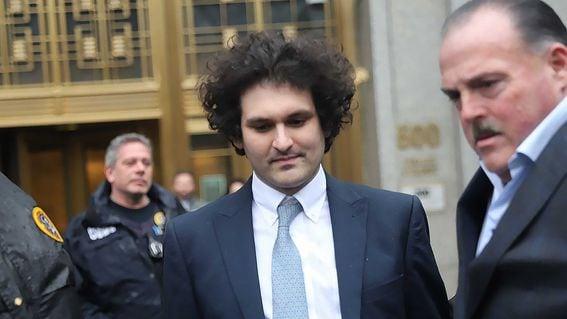
An initial surge in the FTT token after the news turned negative, leaving FTT plummeting 15% today. FTX, the bankrupt cryptocurrency exchange that was run by Sam Bankman-Fried, said it expects to fully repay its customers, according to a court hearing. However, the full recovery of customer assets is – unfortunately for those waiting for their money – based on the point of FTX’s actual bankruptcy, when the markets were already in turmoil. That date was preliminarily approved by U.S. Bankruptcy Judge John Dorsey, and it's a point of contention for some claimants. Bitcoin’s price has rebounded to more than $43,000 as of publication time, up 110% from its price of roughly $20,500 at around the time of FTX’s collapse in early November. “Many of those claims are premised upon currencies which declined dramatically in value in that tumultuous period leading up to the petition date,” FTX Creditor Committee lawyer Kris Hansen said Wednesday during the hearing. The repayment process under consideration in the U.S. bankruptcy court would require claimants to submit proof they held, and subsequently lost, assets on FTX, which will be vetted by restructuring advisers, said FTX lawyer Andrew Dietderich. The defunct exchange has shifted its focus to making its former clients whole as it abandons its plans to relaunch its platform due to a lack of buyers, according to the court proceedings. Today's efforts in court were aimed at pushing the case forward by allowing several camps of creditors to clinch approvals from individual investors to approve this latest approach to getting their money back. Roughly 15 million people lost a combined $30 billion to $35 billion worth of various cryptocurrencies in the wake of FTX's implosion, as of last fall, according to data from bankruptcy claims exchange Xclaim. FTX's native token FTT surged more than 11% just after the news on the company's plans, but it quickly fell sharply and is down about 15% for the day on Wednesday. Bankman-Fried was found guilty last year of pilfering customers' money before it collapsed in late 2022. https://www.coindesk.com/policy/2024/01/31/ftx-expects-to-fully-repay-customers-but-wont-restart-defunct-crypto-exchange/
2024-01-31 14:46
These private mempools – where blockchain transactions avoid the eyes of front-running "MEV" bots – promise to offer better settlement and lower fees to Ethereum users, but experts are sounding the alarm bell on some big risks. Ethereum is swarming with bots that are programmed to front-run transactions. The bots exploit the brief window of time between when transactions are submitted, and when they're officially finalized, to copy trades from other users, quickly execute them, and in doing so eat into any would-be profits. It's a practice called maximal extractable value (MEV), and it's a huge nuisance to novice crypto traders and to veterans alike. But Ethereum's transaction pipeline has undergone a quiet shift over the past two years as more of the chain's users have embraced "private mempools" to execute their trades – bypassing the blockchain's "public" transaction lobby to avoid broadcasting trades to the whole world before they're finalized. This helps to prevent MEV and help users get better settlement for their transactions. While there are obvious benefits to this stealthier mode of using Ethereum, experts say private mempools carry risks of their own. "I think most everyone, including myself, expects there to be more private transactions moving forward, not less," Matt Cutler, CEO of MEV firm Blocknative, told CoinDesk. "I think the big question in my mind is, would more private transactions be a good thing or a bad thing for the network?" What is MEV? Understanding transaction privatization requires understanding some quirks with how the second-largest blockchain network works today. Submitting a transaction to Ethereum (and similar blockchains) generally means sending it to the chain's "public" mempool, which is a giant waiting area for transactions that are still waiting to get executed. The thousands of validators that run Ethereum behind the scenes scoop those mempool transactions into blocks – usually with help from third-party "block builders" who organize them according to certain criteria, including how much they pay to validators in fees. Once they're added to a block, the transactions are officially written to the blockchain, where they are cemented permanently. With this system comes a clear issue: Transactions in Ethereum's public mempool are like sitting ducks. The seconds (or minutes) of queue time leaves enough for quick-witted trading bots, sometimes called "searchers," to front-run transactions or execute other strategies that eat into the profits of regular traders. "Private" mempools are presented as a stealthier alternative, a way for decentralized finance (DeFi) traders to transact without exposing their trades to the prying eyes of MEV (maximal extractable value) bots. Those bots preview mempool transactions to ink a profit. On average, roughly 10% of Ethereum transactions are routed through private mempools each day, which is double the share of private transactions the chain recorded in 2022, according to Blocknative. While the proportion of private transactions on Ethereum has oscillated a fair bit in recent months (private transactions peaked above 20% some days in 2023 before stabilizing closer to 10%), experts expect the trend toward mempool privatization to increase in the coming months. Why go private? The benefits of private mempools are clear. Private mempool services from firms like CoW Swap, bloXroute and Blocknative offer to hide transactions from MEV bots. These setups are useful for large organizations and individuals who want higher security and privacy for their transactions. They're also used by sophisticated trading firms that want quick, guaranteed transaction settlement and can't afford to broadcast their trades to competitors before they're filled. Mempools aren't just for big-time traders and privacy geeks, though. Some private mempool services, like CoWSwap, will pay direct kickbacks (sometimes called "refunds") to users whose transactions have the potential to net block builders their own MEV profits. There's also a growing field of products that use private mempools to guarantee better settlement for DeFi traders. UniswapX, which is run by Uniswap, the biggest decentralized exchange on Ethereum, uses a kind of private mempool to help retail traders get better prices for their token swaps. UniswapX's private mempool connects traders directly with market-makers, with the idea being that this direct connection can net traders better strike prices than they'd get on the open market. What are the risks? There are some risks, though. Most pressingly, there's the worry that private mempools might cement new middlemen at key areas in Ethereum's transaction pipeline: "I expect these to be centralizing in their nature," Cutler said. MetaMask, the most popular Ethereum wallet, is poised to introduce a transaction-routing feature in 2024 that could catalyze the biggest yet shift away from Ethereum's public mempool. But in a telling email exchange with CoinDesk when the feature was first reported, officials at Consensys, MetaMask's parent company, pushed back against the "private mempool" label – hinting at some of the term's baggage. The new feature from MetaMask dodges Ethereum's public mempool – ostensibly as a way to help users transact more cheaply and with better ease-of-use. MetaMask's specially-built sidetrack to the public Ethereum mempool is similar to the private mempool concept described in this article, but Consensys shies away from the "private mempool" moniker because it's associated with certain risks that MetaMask claims it's tech doesn't have. Private mempools frequently ask users to place their implicit trust into individual third parties, rather than the broader Ethereum network, to guarantee their transactions are executed. Unless private mempools are engineered carefully (and the details of MetaMask's system are not altogether clear), private mempools these third parties could upcharge users or front-run them just like a normal MEV bot would. Ethereum's public transactions lobby comes with downsides, but is also one of the main ways the network stays decentralized, and it provides users a clear window into the status of their transactions. Toni Wahrstätter, a researcher at the Ethereum Foundation, told CoinDesk via a direct message on X that "The impact of private mempools on Ethereum's network is a nuanced issue." On the positive end, Wharstätter noted that "more companies are now open-sourcing their data," meaning Ethereum's research community has been able to conduct more analyses into private mempool traffic. Also, "while they might lead to more centralization among builders and searchers, they are unlikely to affect the crucial aspect of validator decentralization," Wharstätter added. However, there are still some risks. "Looking ahead, I anticipate a rise in private order flow," Wahrstätter continued. "It's important to monitor and address any potential centralization issues among builders, as this could threaten key features like censorship resistance. If such centralization becomes significant, we'll need to take steps to mitigate its impact." https://www.coindesk.com/tech/2024/01/31/inside-the-private-mempools-where-ethereum-traders-hide-from-front-running-bots/

2024-01-31 14:24
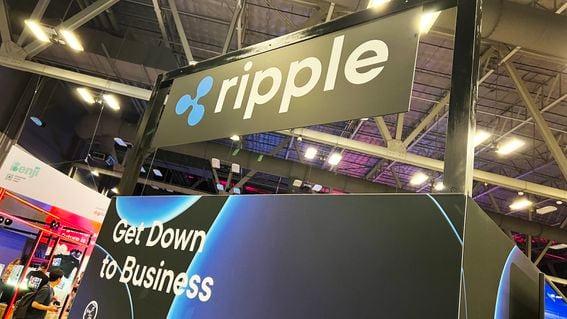
Ripple Executive Chairman Chris Larsen said the stolen funds all came from his "personal XRP accounts" in response to a report from blockchain analyst ZachXBT. Ripple's XRP token fell by more than 5% on Wednesday following speculation that the network might have been hacked to the tune of $112.5 million. Chris Larsen, Ripple's Executive Chairman, clarified in a post on X (formerly Twitter) that there had been a breach to his "personal XRP accounts," but not to Ripple itself. "We were quickly able to catch the problem and notify exchanges to freeze the affected addresses. Law enforcement is already involved," Larsen wrote. The incident was initially flagged by Blockchain sleuth ZachXBT, who claimed on X that 213 million XRP tokens had been siphoned out of a large wallet on the XRP Leger blockchain. The funds were subsequently laundered through multiple exchanges including Binance, Kraken and OKX. Ripple (XRP) is the sixth-largest cryptocurrency by market cap, according to CoinMarketCap, and it is the native token of the XRP Ledger, which is a blockchain that specializes in payments. Ripple Labs, the company that built the network, uses it to power tools like RippleNet, its cross-border payments platform focused on financial institutions. Ripple Labs was sued by the U.S. Securities and Exchange Commission in 2020 over claims that it committed fraud by selling XRP tokens without first registering them as securities. Larsen was directly named in the suit, but he and his company were handed a big victory in July 2023 when a judge stopped short of defining XRP as an outright security. XRP is currently trading at $0.497 having begun the day at $0.525, according to CoinDesk data. https://www.coindesk.com/business/2024/01/31/ripples-xrp-drops-5-amid-report-of-potential-112m-hack/