2024-01-31 12:12
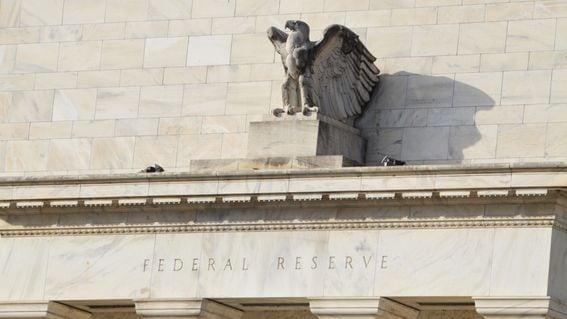
"The market may be too optimistic as we see limited evidence of disinflation in certain areas that are a focus for the Fed," strategists said, explaining a potential for a decline in risk assets. Markets seem overly optimistic about Fed rate cuts as critical data has yet to show meaningful disinflation. The Fed remains committed to combating the renewed inflation, a scenario that's underpriced by markets and has the potential to inject downside volatility into risky assets. Financial markets may be overly optimistic about how soon and how fast the U.S. Federal Reserve (Fed) will ease policy through interest rate-cuts this year, according to JPMorgan Asset Management. Expectations of lower rates became widespread as inflation receded in 2023 and the Fed hinted at a pivot to rate cuts at its December meeting. According to the Fed funds futures market, traders are anticipating 140 basis points of rate cuts this year, nearly double the amount signaled by the Fed's interest-rate projections chart, the so-called dot plot, in December. However, critical areas of inflation closely tracked by the Fed have yet to show meaningful signs of disinflation, according to JPMorgan Asset Management's macro strategy team led by Shrenick Shah. The Fed's commitment to combating a potential rebound in inflation remains underappreciated, leaving the door open for a correction in risk assets, they said. The Fed is set to publish the first rate review of the year later Wednesday. The central bank is likely to keep the benchmark interest rate steady between 5.25% and 5.5% and push back against heightened dovish expectations considering renewed inflation risks. "In our view, the market may be too optimistic as we see limited evidence of disinflation in certain areas that are a focus for the Fed, specifically core services inflation and wage data," the strategists wrote in a note titled "Macro Strategies Outlook" earlier this month. "Furthermore, continued resilience in U.S. growth may inhibit the disinflation process or even create upward pressure." Bitcoin has historically moved more or less in line with stocks, falling on the back of hawkish Fed developments. The cryptocurrency's fourth-quarter surge of 57% was partly fueled by rate-cut expectations and weakness in the U.S. dollar index. "While we do believe the Fed will stand ready to defend any emerging weakness in 2024, we also believe it remains committed to combatting inflation and would not hesitate to act if it were to rise again. We see this potential scenario as underpriced in markets and, if acknowledged, it may spark a correction down in risk assets and support bond yields," the strategists wrote. https://www.coindesk.com/markets/2024/01/31/markets-too-optimistic-about-fed-rate-cuts-jpmorgan-asset-management/
2024-01-31 09:13
Developers on Sui are building products that people are using to address real-world challenges, according to Greg Siourounis, Sui's managing director. Layer 1 blockchain Sui, created by the team that led Meta's Diem crypto project, climbed into the top 10 decentralized finance (DeFi) rankings Tuesday, less than a year after inception, the project said. The total value locked (TVL) has jumped by more than 1,000% in four months, catapulting the blockchain above more established incumbents such as Bitcoin and Cardano, as well as Coinbase's layer-2, Base. The dollar value of cryptocurrencies deposited in its decentralized finance (DeFi) protocols topped $430 million, making it the 10th-largest blockchain by TVL, Sui said. As of writing, it had slipped to No. 11, behind PulseChina, DeFi Llama data show. "This momentum validates both the technology and dedication of the Sui community,” Greg Siourounis, managing director of the Sui Foundation, said in an email. "Most importantly, what we are seeing in these numbers is developers on Sui building products that people are using to address real-world challenges. That dynamic will form the basis of a sustainable decentralized network that lasts well into the future." Sui's mainnet went live in May 2023. It's a layer-1 blockchain, much like Ethereum or Bitcoin, but with a specific type of proof-of-stake consensus named delegated proof-of-stake. Its native token, (SUI), is used for validator and delegator staking, to pay gas fees and as a right on governance. According to DeFi Llama, at press time, Sui was home to 22 DeFi protocols, two of which had a TVL of over $100 million and four protocols with more than $40 million each. The SUI price surged 109% in January, extending the two-month winning streak to hit a record-high $1.65, according to CoinDesk data. Early this week, Sui announced integration with crypto-compatible payments infrastructure provider Banxa to add seamless and low-cost fiat on-ramps. Additionally, Mysten Labs’ Sui Wallet will facilitate the purchase of SUI tokens through Banxa’s fiat on-ramp solution and utilize off-ramp solutions. https://www.coindesk.com/tech/2024/01/31/sui-becomes-a-top-10-defi-blockchain-in-less-than-a-year/

2024-01-31 08:55
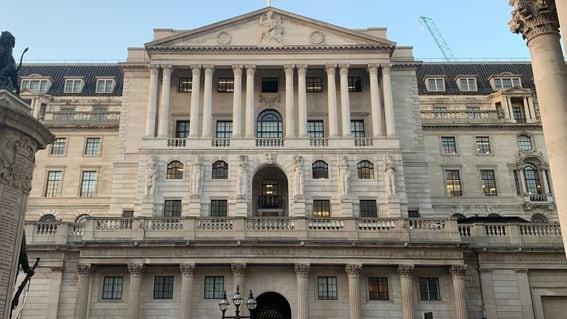
The Bank of England's recent consultation saw 50,000 responses, many welcoming the digital pound's design but sharing concerns about privacy. The U.K. released its results from its digital pound consultation on Thursday, and privacy was a key worry. The idea to tackle privacy concerns by having a platform model and releasing legislation should help, experts told CoinDesk. The U.K.'s approach to handling privacy concerns posed by a digital pound should help quench concerns, according to interviews with a wide range of crypto industry legal and technical insiders. The highly anticipated U.K. consultation on a digital pound closed in June last year, and the Bank of England (BoE) – alongside the government's finance arm, the Treasury – released the results from it on Thursday. Many of the 50,000 responses welcomed the proposed digital pound design, but chief among the concerns raised was privacy. Several experts that CoinDesk spoke with agreed that the government's approach to tackling these concerns could be effective. "It has recognized privacy concerns at every stage," Jannah Patchay, executive director and policy lead at the Digital Pound Foundation, said in an interview, praising the "really good job" the government did to keep this point in mind. Platform Model Respondents strongly agreed with the proposal that neither the bank nor the government should have access to personal data but were concerned this would not be enforced, the consultation response said. "On the face of it, the Bank of England's 'platform model' is an elegant solution to the privacy problem," Richard Gendal Brown, chief technology officer at R3, said in a statement. Private firms – instead of the government – would have direct and commercial relationships with customers, the consultation response said. The BoE's platform model would mean that the central bank only provides the core infrastructure and ledger for a digital pound while private firms would act as wallet providers. The private platforms would require the identity information of wallet account holders to comply with anti-money laundering regulations. Laws The government has said it's taking a cautious approach, and a decision on a digital pound could be made in 2025 or 2026. Before a digital pound is launched, Parliament would have to put through legislation that is meant to protect people's privacy. "Their commitment to enshrining individual privacy and control in law should reassure the public," Varun Paul, senior director for central bank digital currency and financial market Infrastructure at Fireblocks, said in a statement. Some industry lobbying groups are initially supportive of the government's approach. "We welcome the Bank of England’s and HM Treasury’s response to the digital pound consultation, and we are pleased to see that primary legislation would guarantee users’ privacy and control of a digital pound," a spokesperson from CryptoUK said in a statement. However, it is not yet clear what the government's legislation to safeguard people's privacy will actually look like. Plus, the digital pound is still in its design phase, meaning nothing is set in stone, said Louise Abbott, a partner at Keystone Law. "We would like to see much more detail from the government and the Bank of England on this important subject, including a clearer plan of action and timeline around the next steps for a digital pound," CryptoUK said. Before a final stamp is made on a digital pound's future, the government has committed to consulting more with the public. "It's not enough that the solution be technically correct and private-by-design; the key is ensuring that the population also believes that this is the case,” Brown said, adding that the design of a digital pound needs to keep personally identifiable data well away from the core ledger. "The goal should be ‘we can’t access your data’, rather than simply ‘we promise we won’t access your data’,” Brown said. https://www.coindesk.com/policy/2024/01/31/uks-digital-pound-approach-should-help-manage-privacy-concerns-experts-say/
2024-01-31 08:47
Ether prices are set to close the month just over 2% higher, while major NFT indexes have advanced almost 10%. Indexes tracking the prices of non-fungible tokens (NFTs) have risen almost 10% this month, outpacing ether (ETH), the cryptocurrency many are denominated in, which has gained just over 2%. Nansen's NFT-500 index, which tracks the 500 most valuable NFTs, has added 9.35% year-to-date, while the Blue Chip 10 is up a similar amount. Ether, according to CoinDesk Indicies data, advanced 2.2%. In an interview with CoinDesk at Taiwan Blockchain Week, Animoca Brands founder Yat Siu pointed to the newfound maturity and diversity of the NFT space as a reason why prices have recovered from their 2022-2023 crypto winter lows. "The majority of the speculators in the NFT and GameFi space have left, which strengthened the foundation as the remaining people are genuinely interested," he said. January's gains are unique because NFT prices in ether initially did not keep up with the cryptocurrency's year-end advance. Traders, however, seem to have changed their minds as the hunt for utility, or real-world uses, is on. The rally comes even as the average price of an NFT has dropped 13% to $107, according to data from CryptoSlam. The number of transactions has risen 30% while sales volume is down 36% to $1.1 billion for the month. Wash trading, a form of market manipulation in which a buyer and seller collude to give the appearance of demand, accounts for 39% of all volume, according to CryptoSlam data. Some NFT-adjacent crypto sectors aren't doing so well. The CoinDesk CoinDesk Culture & Entertainment Select Index (CNES), which includes metaverse tokens Axie Infinity, The Sandbox, and Decentraland, fell 22%. https://www.coindesk.com/markets/2024/01/31/nfts-outpaced-ethers-gains-in-january/

2024-01-31 05:20
The JUP-USD perpetual traded at 65 cents on Aevo at press time, implying a market capitalization of $700 million at the inception. Jupiter, a Solana-based decentralized trading aggregator, is scheduled to launch its native token, JUP, through an airdrop on Wednesday at 10 a.m. EST. The token will have an initial maximum circulating supply of 1.35 billion, Jupiter's pseudonymous founder Moew said Tuesday in a forum post, downwardly revising the total number of coins available for trading from the previously decided figure of 1.7 billion. In other words, the token could begin trading with a market capitalization of around $700 million, considering the JUP-U.S. dollar perpetuals traded at 65 cents on Aevo at press time. Of the initial circulating supply of 1.35 billion, 1 billion coins are for airdrops, 50 million each for loans to market makers on centralized exchanges and liquidity pool needs, and 250 million for a launch pool. Airdrop refers to crypto projects distributing free new or existing tokens en masse to their communities to boost adoption. About 955,000 wallets that interacted with Jupiter before Nov. 2 are eligible for the JUP airdrop, according to data source Airdrop Official. Read: Solana Trading Aggregator Jupiter Sees Trading Volumes Jump Ahead of JUP Issuance https://www.coindesk.com/markets/2024/01/31/solana-dex-jupiters-jup-token-to-debut-with-135b-circulating-supply/

2024-01-30 23:12
Next week, on Feb. 7, Dencun will go live on its final Ethereum testnet, Holesky. After that, developers will ink in a date to activate Dencun on the main blockchain. The Ethereum blockchains's biggest upgrade since early 2023 went live on the second of three test networks, bringing the much-anticipated "Dencun" project and its "proto-danksharding" feature a step closer to reality. Proto-danksharding is designed to reduce the cost of transactions for layer-2 blockchains as well as make data availability cheaper, through the introduction of a new compartmentalized space for data known as "blobs." The number of layer-2 chains atop Ethereum is expanding fast, so the upgrade is seen as an essential element of the ecosystem's roadmap for supporting the growth. The Dencun upgrade on the Sepolia testnet occurred Thursday at 22:51 UTC (5:51PM ET) and finalized at 23:10 UTC. Sepolia is the second of three testnets to run through a simulation of Dencun. Earlier this month, Dencun went live on the Goerli testnet, but initially failed to finalize. Next week, on Feb. 7, Dencun will go live on its final Ethereum testnet, Holesky. After that, developers will ink in a date to activate Dencun on the main blockchain. Testnets duplicate a main blockchain, and allow developers to make any changes to the protocol or to its decentralized applications in a low-stakes environment. Dencun, which was originally projected to happen in the final quarter of 2023, will be the biggest upgrade for Ethereum since the Shapella upgrade last March, which enabled the withdrawals of staked ether (ETH). https://www.coindesk.com/tech/2024/01/30/ethereums-dencun-upgrade-goes-live-on-second-testnet-with-just-one-remaining/