2024-01-22 19:17
Analysts at 10x Research are eyeing the $38,000 level for a potential bottom. The price of bitcoin (BTC) fell below $40,000 for the first time since December as selling continues to overwhelm buying despite sizable inflows into the new spot exchange-traded funds. A number of spot bitcoin ETFs began trading on Jan. 11, with bitcoin surging to $49,000 in the minutes after their launch. The rise was fleeting though, and the price has been heading south since, finally falling through $40,000 moments ago. Bitcoin is now at its weakest price since the beginning of December, but still more than a double from year-ago levels. At a glance, the new spot products are seeing a gusher of fresh cash, with two – BlackRock's (IBIT) and Fidelity's (FBTC) – topping more than $1 billion in assets under management (AUM) in the week since opening for business. That has to be balanced, however, against what's now a multi-billion dollar outflow from Grayscale's GBTC product as investors take profits or move to other lower-cost vehicles. In addition to outflows at GBTC, money has been exiting previously existing spot bitcoin exchange-traded products in Europe and Canada as well as futures-based ETFs like ProShares' (BITO). Searching for a bottom The bitcoin trend has turned bearish for the first time since Oct. 2 when the price was $27,530, said 10x Research in a Friday report. That news alone might be comforting to bulls who will remember Oct. 2 of last year as nearly the exact launching point for about a 70% run higher over the ensuing three months. 10x's central thesis for the first quarter of 2024 was that any ETF-related rally would be fake-out and for prices to decline into March towards $38,000, to this point a prediction that appears to be playing out, though perhaps faster than anticipated. https://www.coindesk.com/markets/2024/01/22/bitcoin-slides-below-40k-now-down-nearly-20-from-post-etf-euphoria/

2024-01-22 19:09
Flows of fresh investor money into the newly approved spot bitcoin ETFs may be far higher than previously thought. At least partly to blame for bitcoin's (BTC) poor price performance since the Jan. 11 debut of U.S.-based spot ETFs are sizable sales of bitcoin from the mammoth Grayscale Bitcoin Trust (GBTC). According to the Grayscale website, GBTC held roughly 567,000 bitcoin as of Jan. 19, down from just shy of 620,000 prior to Jan. 11 launch. So while the new spot ETFs have gathered more than 94,000 bitcoin and $3.9 billion in assets under management (AUM) since opening for trade (data through Jan. 19), the bears are pointing out that 53,000 of those tokens may just be GBTC holders moving their money into the lower cost vehicles. (GBTC charges a 1.5% management fee, at least 1 percentage point more than nearly all of the new funds.) A CoinDesk story Monday morning, however, reported the bankruptcy estate for failed crypto exchange FTX as having sold the entirety of its 22 million share holding of GBTC (the equivalent of almost 20,000 bitcoin) for nearly $1 billion. The news means a couple of things, both of which on first glance appear bullish. First, more than one-third of the selling of GBTC was due to one non-economic actor. Second, there was nearly $1 billion more of fresh investment into the new spot ETFs than previously thought. "$1 billion of GBTC sales was the FTX estate, which means the inflows we have seen into the new ETFs was not merely recycled funds from GBTC," said Swan Managing Director Steven Lubka, summing the information. For now at least, the sellers of bitcoin continue to have the upper hand, with the price Monday afternoon lower by 2.8% over the past 24 hours to $40,400. https://www.coindesk.com/markets/2024/01/22/bitcoin-bulls-buoyed-by-report-of-ftxs-1b-gbtc-sale/

2024-01-22 18:57
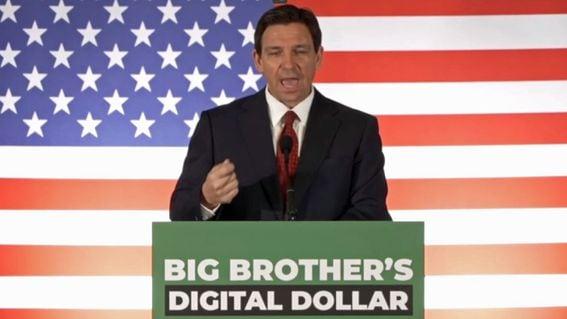
The Florida governor and Vivek Ramaswamy had been the most strident Republican voices on digital assets issues for 2024, but both gave way to the Trump political juggernaut. Ron DeSantis and Vivek Ramaswamy had the most to say about crypto in the 2024 presidential field, and as of this week, they've both returned to the political sidelines. Trump suddenly made noise about U.S. central bank digital currencies last week, but the issue remains a purely theoretical punching bag. Florida Governor Ron DeSantis may not have been a crypto authority, but he embraced digital assets as a political tool and ensured his influential state made moves to support the industry while he still had his eyes on the White House. His absence – and that of fellow candidate Vivek Ramaswamy – marks a sudden lack of crypto interest in this year's U.S. presidential race. Apart from Robert Kennedy Jr., a crypto-friendly independent candidate who has sought to start a third party to get on some of the 2024 ballots, DeSantis and Ramaswamy were the most eager politicians to make virtual assets part of the presidential conversation. Former President Donald Trump – who polls have as the dominant frontrunner in the Republican primary – did pick up one party talking point against a U.S. central bank digital currency (CBDC) at a campaign stop last week. "I will never allow the creation of a central bank digital currency," Trump said, acting surprised that the line whipped the crowd into enthusiasm. He warned – as DeSantis had many times before him – that a digital dollar run by the Federal Reserve would give the government "absolute control over your money." So, it's possible that this legacy digital-assets issue could survive the departures of DeSantis and Ramaswamy from the field, but besides his brisk personal business in non-fungible tokens (NFTs), Trump has shown no special interest in the field and once called Bitcoin a "scam." And the specter of a U.S. CBDC has so far been a one-sided debate in which Republicans paint President Joe Biden and his administration as pushing a government token to spy on the citizenry when there hasn't been any evidence that the Fed or Department of the Treasury have any such plans. Both say they're studying CBDCs and whether such a thing could even be viable in the U.S., a review made more urgent as rival jurisdictions such as China and Europe have moved to put government tokens in place. Fed officials have vowed that they won't move on a digital dollar without orders from the White House and Congress – an outcome that is highly unlikely in the near term. DeSantis had made this a major campaign issue, boasting that his state had banned such tokens – a claim that ignored much of the legal nuance regarding the minor changes his government made in Florida. And tech entrepreneur Ramaswamy, who suspended his campaign last week, similarly denounced any government effort along those lines. Crypto was never going to be a central topic in the 2024 battle for the White House, but the Republican primary field had at least kept it on the fringes. Even former Arkansas Governor Asa Hutchinson, a presidential candidate who wasn't an outspoken industry booster, had revealed in his appearance at a crypto forum in New Hampshire that he was supportive of virtual-sector innovations. But he also dropped out last week. Trump's top challenger for the 2024 Republican nomination is Nikki Haley, a former South Carolina governor and U.S. ambassador to the United Nations. Haley has steered clear of crypto topics in her run for president. If something derails Trump's bid to become the nominee, Haley offers a blank slate for the digital assets sector. Read More: A Crypto President? Top U.S. 2024 Contenders Aren’t Fans, and Rivals Are Way Behind https://www.coindesk.com/policy/2024/01/22/bailing-desantis-may-leave-deafening-crypto-silence-in-2024-presidential-race/
2024-01-22 16:26
The aim of the program is to continue the "growth of the pop-up city movement" and "support technology-driven projects,” according to a post on Gitcoin. Zuzalu, the two-month invite-only gathering that Ethereum blockchain co-founder Vitalik Buterin helped initiate last year at a seaside hamlet in Montenegro, has inspired a new grants program aiming to foster spinoff events known as "Zu-villages." The aim of the program is to continue the "growth of the pop-up city movement" and "support technology-driven projects,” according to a post on Gitcoin, a blockchain-focused crowdfunding platform for open-source software projects that has received funding in the past from Buterin. Some 250 ETH (about $590,000) is available during the first quarter of 2024 to be distributed to participants as part of a matching program, according to the post. The grants program runs Jan. 15-Feb. 15. The catch? In order to qualify for these matched funds, teams need to have one member that was invited to Zuzalu last year and participated in it for at least a week. Not stated in the proposal is whether Zuzalu is happening again this year, and if so, when and where. CoinDesk reached out to an Ethereum Foundation official to get a comment from Buterin as well as organizers with Zuzalu. Zuzalu organizers said they didn't want to comment until after the round of funding is closed. To qualify for grants in the first quarter of 2024, the program is split into two rounds: with an events Round that has a 166.5 ETH (ether) matching pool, and a technology round with a 83.5 ETH matching pool. According to the blog post, there will be one program per quarter in Q1 and Q2 this year. Buterin is contributing a "substantial amount" of ether (ETH) tokens to this grant program, in an email sent to CoinDesk by a representative of Gitcoin. But later, the representative wrote in a Telegram message that “it turns out there is no record of Vitalik committing funds and that was a misinterpretation on my part.” They added that “my understanding is that he’s involved but I don’t actually know if he personally provided the matching funds.” The amount of ETH wasn't specified in the original email. Zuzalu was co-created by Buterin, a co-founder of the Ethereum blockchain who now serves as de facto leading figure of the decentralized project, which has a market capitalization of nearly $300 billion. With an atmosphere representing a glorified camp, there were discussions on blockchain-focused topics like cryptography as well as tracks on longevity, interspersed with daily "cold plunges" in the Adriatic Sea, and dinner-dances in the evening. But the event, reportedly attended by roughly 200 people, remained somewhat of a mystery to the wider crypto community, and wasn't really publicized at all except for the many participants who tweeted out selfies with Buterin. There has been speculation that the creators behind Zuzalu hoped that pop-up events like this would happen in other areas of the world. According to a blog post on Gitcoin about the grants program, “Our aspiration for the current year is to see a proliferation of events inspired by Zuzalu, contributing to the growth of the pop-up city movement.” https://www.coindesk.com/tech/2024/01/22/zuzalu-vitalik-buterin-led-retreat-in-montenegro-inspires-grants-for-zu-villages/

2024-01-22 15:24
BTC's price has fallen since bitcoin ETFs were approved. In theory, now that FTX is done selling its substantial holdings, the selling pressure could ease since a bankruptcy estate liquidating holdings is a relatively unique event. Investors have sold more than $2 billion worth of the Grayscale Bitcoin Trust (GBTC) since it was converted into an exchange-traded fund earlier this month. A large chunk of that exodus was FTX's bankruptcy estate dumping 22 million shares, according to private data CoinDesk reviewed and two people familiar with the matter. A slew of spot bitcoin ETFs began trading on Jan. 11 after the U.S. Securities and Exchange Commission finally approved them following years of delays. But the Grayscale fund had already existed for a decade – structured as a less-attractive closed-end fund – and had accumulated close to $30 billion of assets when the SEC approved its conversion to an ETF, along with blessing 10 newly created bitcoin ETFs. While the new funds, issued by the likes of BlackRock and Fidelity, have seen inflows, billions of dollars worth of bitcoin have been pulled out of GBTC. The data CoinDesk saw suggests FTX accounted for much of that. The 22 million shares it sold – which took FTX's GBTC ownership down to zero – were worth close to $1 billion. Bitcoin's (BTC) price has tumbled since the ETFs were approved – a stark juxtaposition against the high hopes people had before the SEC announced its decision. Bitcoin ETFs have been touted as a much easier way for normal people to invest in bitcoin, triggering wildly optimistic forecasts for BTC's price. Instead, bitcoin has fallen. In theory, now that FTX is done selling its substantial holdings, the selling pressure could ease since a bankruptcy estate liquidating holdings is a relatively unique event. Like many large crypto trading entities, FTX capitalized on the disparity between the price of Grayscale trust shares and the net asset value of the underlying bitcoin in the fund. FTX held 22.3 million GBTC, valued at $597 million as of Oct. 25, 2023, according to a filing from Nov. 3, 2023. The value of FTX's GBTC holding rose to around $900 million, based on the first day of Grayscale's bitcoin ETF trading on NYSE Arca on Jan. 11, when it closed the trading session at $40.69. FTX held shares in five Grayscale trusts (as well as almost 3 million shares in a statutory trust managed by ETF provider Bitwise) in a brokerage account at ED&F Man Capital Markets, which is now known as Marex Capital Markets Inc., according to filings. Marex declined to comment. Galaxy Digital, a crypto trading specialist assisting in the sale of assets held by the FTX bankruptcy estate, also declined to comment. On Monday, Alameda Research – a trading firm tied to FTX – voluntarily dismissed a lawsuit alleging Grayscale charged excessive fees. Stephen Alpher contributed reporting. https://www.coindesk.com/business/2024/01/22/ftx-sold-about-1b-of-grayscales-bitcoin-etf-explaining-much-of-outflow-sources/

2024-01-22 08:24
Observers said BITO will remain an integral part of the market as a hedging instrument for authorized participants associated with the recently launched spot ETFs. Daily trading volume in the ProShares Bitcoin Strategy ETF has tanked since spot ETFs went live in the U.S. on Jan. 11. Observers said BITO will remain an integral part of the market as a hedging instrument. Activity in ProShares Bitcoin Strategy ETF (BITO), the world’s leading bitcoin (BTC) futures-based exchange-traded fund (ETF), has cooled significantly since the launch of ETFs directly investing in the cryptocurrency began trading in the U.S. on Jan. 11. On Thursday, BITO shares worth just over $500 million changed hands on the NYSE, a 75% slide from the record $2 billion registered on Jan. 11, according to data tracked by crypto exchange Coinbase. BITO has witnessed a net outflow of over $270 million over the same period, according to data source ETF.com. Meanwhile, 11 spot ETFs registered a cumulative trading volume of $14 billion in the first week, a tally bigger than all other ETFs launched in 2023, per Coinbase. These funds have amassed over $1.2 billion in investor money in one week since inception. These spot ETFs invest in bitcoin, allowing investors to gain exposure to the cryptocurrency while bypassing the hassles of storing the same and are considered a better alternative to futures-based ETFs like BITO. Because BITO invests in the CME BTC futures, it must roll over expiring contracts into new ones, incurring “roll costs,” which weigh over the fund’s performance in the long run. That said, the cash-creation structure of spot ETFs will likely ensure futures-based ETFs stay relevant, according to some observers. ETFs are created and redeemed in two ways: In-kind and cash creation. In the former, when the ETF issuer wants to create new shares, the authorized participant (AP) buys the underlying securities comprising the ETF and delivers the same to the issuer in return for a block of ETF shares, which can be sold in the open market. The process works in reverse when the ETF wants to redeem shares. The process remains the same in the cash-creation structure, except that APs provide cash to the issuer, and then the issuer purchases the actual asset. That exposes APs – institutions and market-making firms – to the risk of bitcoin price fluctuations between when they receive buy orders and when issuers purchase the asset to create new shares. As such, APs are likely to hedge the same with regulated products like BITO and CME futures, according to some observers. “It is not unusual for an AP to revert to regulated products such as BITO to hedge their positions (called deltas) as they may not have accounts with CME futures to do so. This is generally considered a good proxy if they can’t execute CME bitcoin futures or even outright bitcoin,” Laurent Kssis, a crypto trading adviser at CEC Capital and a former ETF market maker, told CoinDesk. “The risk of being exposed or unhedged is very high, so BITO will provide decent cover, although it is not a perfect hedge as there is slippage and a decent cost to buy BITO,” Kssis added. “But many APs won’t have a choice (since they can’t buy bitcoin or are not allowed to touch them by their compliance dept) or even won’t have the infrastructure, i.e., custodian, or back office system to reconcile their positions.” David Duong, head of institutional research at Coinbase, said in the weekly newsletter that despite the recent decline in BITO’s volume, it will remain an “integral part of the bitcoin ETF space.” “We believe some APs (namely broker-dealers) will continue to rely on regulated means of hedging themselves, such as long CME futures or long BITO when creating shares (or short CME futures if redeeming),” Duong said, adding some APs likely bought bitcoin ahead of the spot ETF launch and sold BITO to “to hedge potential client buys and sells intraday.” https://www.coindesk.com/markets/2024/01/22/trading-volume-on-proshares-bitcoin-etf-tanks-75-as-focus-shifts-to-spot-etfs/