2023-12-19 17:28
But does crypto care? S&P Global Ratings, the storied ratings agency known for assessing the stability of banks, credit facilities and other financial institutions and products, has turned its eyes to stablecoins, giving its first wide-ranging synopsis of the state of these supposedly moored blockchain-based assets. In an overview of the relative ability for eight stablecoins to be redeemed for one dollar, the currency to which they are all pegged, S&P has also — arguably and indirectly — affirmed that stablecoins are likely not going anywhere. “We always say our role is assessing if there are ways that we think that we can reduce the asymmetry of information in the market — that is really the way I see our role in the market,” Lapo Guadagnuolo, a senior analyst at S&P Global Ratings, said in an interview with CoinDesk. He added that crypto “is something we're putting strong resources towards, because we know it's a growing area both in traditional and new financial areas.” That said, of the eight stablecoins S&P reviewed, several received lackluster scores. Most notably Tether’s USDT, the largest stablecoin by market cap and most used crypto asset in terms of trading volume, was given the fourth-lowest score in range from 1 to 5. Meanwhile MakerDAO’s dai (DAI), popular across decentralized finance (DeFi), and the Justin Sun-backed TrueUSD, the fourth and fifth largest stablecoins, respectively, were also given low scores. At the end of 2023, crypto is not yet past the age where receiving any attention — positive or negative — from an institution like S&P is seen as a form of affirmation. A similar phenomenon happened two years ago, when the U.S. Treasury Department under Janet Yellen convened a study group to determine the risks that Tether’s stablecoin posed to the U.S. economy, which can be validating for industry actors with anti-establishment roots. Similarly, S&P’s report is a signal that these tools are important — whether or not they actually represent technical advancements. “The ratings are a very positive development in the normalization of stablecoins,” Nic Carter, a co-founder of VC firm Castle Island Ventures, who began his career as Fidelity’s first dedicated bitcoin (BTC) analyst. “I have quibbles with some of the methodology used, but the fact that the major ratings agencies are paying attention to stablecoins and developing bespoke methodologies is quite validating for the sector,” he said in a private message. Indeed, S&P’s mixed report might just be the analysis that the stablecoin sector needed, an independent review of one of the crypto industry’s only tools that could be said to have product-market fit. Stablecoins are big and growing bigger because they offer a way for people across the world to access the dominant U.S. dollar-denominated financial system, and are useful in the U.S. because they’re essentially wire transfers without the hangups. While the review will likely be cited by many firms on Wall Street looking to test the waters of stablecoins (and many are), not everyone in crypto is taken with S&P’s work. Perhaps for good reason. “I haven't been impressed with the efforts of S&P or Moody's in this space,” Austen Campbell, a Columbia Business School professor and former Paxos fund manager, said in a direct message. “They seem really out of their depth and not able to iterate on new products. Quite frankly, outside of regular debt, they haven't added a ton of value in new things.” It was a point echoed by Carter: “Ultimately I don't think crypto native clients of stablecoins will care much for the ratings — end of the day, traders like tether because it's convenient, lindy and is perceived to be remote from U.S. regulators.” He added: “But the ratings are positive in terms of institutional entities getting comfortable with the sector.” No stablecoin S&P assessed received the highest possible rating, though Circle’s USD Coin (USDC), Gemini’s gemini dollar and Paxos’s flagship pax dollar were rated as 2s on the list, for “strong.” Earlier this year, the Binance branded BUSD token issued by Paxos, which was the third-largest stablecoin at time, was targeted by U.S. authorities — it was not rated by S&P. Guadagnuolo explained that S&P’s ratings were not endorsements of any particular products, or even condemnations. Even “weak” assessments of stablecoins like TrueUSD (TUSD) or Frax (FRAX), which received the lowest possible score, should not be treated as “financial advice,” Guadagnuolo said. Both TUSD and FRAX are “algorithmic stablecoins,” which use cryptographic mechanisms rather than assets held in a treasury to support their peg to the greenback. “That's what sometimes people forget to focus on; the ratings are a relative ranking,” Guadagnuolo said. “We don't endorse and we don't condemn things when we give our opinion.” He clarified the rankings are “forward looking,” an attempt to determine “the likelihood” of the stablecoin maintaining its peg. (This is an important quality for a financial tool that promises to return every dollar deposited, and unlike banks gets to keep the accrued interest earned on those dollars rather than paying yield to users. It’s a lucrative business: Tether made profits of more than $1billion in Q3.) Notably, S&P did not use its traditional rating system commonly applied to government and corporate debt or assets like credit default swaps (CDOs), where products can be rated from AAA to D. Guadagnuolo said this isn’t unusual, and that the specific terms used “are not new for us.” “We believe that there is enough differentiation by using five scores,” he said. “Using more scores, we've felt at least at this stage would be probably alluding to a level of precision or specificity which is not there as of now.” Guadagnuolo, who was project lead on the “Stablecoin Stability Assessment,” also said that the ratings were made using only publicly-available data. He was not, for instance, in dialogue with Tether or Circle, and did not receive a snapshot of the stablecoin issuers’ assets held in a bank, in the way that an auditor might have privileged access to this information. He said he was one of the earliest employees at S&P to focus on the emerging world of crypto. The New York-based company hosts a number of crash courses on market sub-sectors including DeFi. For competitive reasons an S&P’s spokesperson could not disclose how many people contributed to the assessment, or how many employees focus on crypto full or part time at S&P. Stablecoins, in a sense, are a type of privately issued currency. For instance, the U.S. Comptroller of the Currency Michael Hsu, the top federal banking regulator, recently compared stablecoins to the “Wildcat” era of banking, when individual savings institutions printed their own unique dollars. There are theoretical risks to this form of currency expansion (the late-19th century saw a number of boom and bust credit cycles), as well as certain benefits like the transparency and settlement guarantees of blockchains. When asked if it is easier to look at on-chain assets than traditional credit ratings, Guadagnuolo said “yes,” with caveats. “There is surely much more information more easily available” for stablecoins than other “exotic” products, which might have “minimal documentation,” he said. “If you know where to go and look,” he added, there is a level of “transparency” in knowing “exactly how the workings of the smart contract work” or “what the volumes are — you can see that in a second.” However blockchains often obscure as much as they reveal. Investors and users frequently do not know who built a protocol, if it was properly audited or other information that they might have access to “in a regulated space,” Guadagnuolo said. Ironically, crypto, which was created to reduce trust and the need for intermediaries in online transactions often requires users to act more on blind faith and place their trust in strangers than when using a credit card or opening a bank account. There were many other questions Guadagnuolo could not answer or that an S&P communications rep interjected to say he could not answer, including whether he would use any particular stablecoin, if he was personally interested in any DeFi mechanisms or whether he felt the weight of responsibility publishing information that — intended or not — will likely be taken as financial advice. Guadagnuolo was also not able to directly address why it is S&P, of all institutions, has legitimacy to comment on the credibility of stablecoins (see the Great Financial Crisis that birthed Bitcoin). “We have a strong, strong history. I don't think we need to … It's kind of for you guys,” Guadagnuolo said. Whether or not intended, S&P has validated crypto to the extent that the stablecoin industry is now big, lucrative and fascinating enough that companies like S&P cannot look away. And however much it wants to say that its assessments are “opinions,” they are undoubtedly read as informed statements of fact that will go on to influence trading and investment decisions. That may not exactly be the case at the level of a “DeFi degen,” who at this point is likely inured to criticisms of Tether or who has reasons of convenience to choose USDT or FRAX or TUSD, but S&P’s comments are influential when it comes to publicly-traded companies or esteemed institutions that must be accountable for its decisions and actions. Say Tether collapses, Cantor Fitzgerald, a Wall Street broker that recently gave the offshore company a massive public vote of confidence, will take much more than just a financial hit. Likewise, crypto as a whole is dependent on its relationships with traditional power brokers and crown makers — even as it nominally sets out to dethrone the king. (How much of bitcoin’s price action this year resulted from BlackRock’s unexpected spot bitcoin ETF application? There’s no definitive answer, but it’s not zero.) It’d be a mistake to read too much into S&P’s report; afterall, blockchains are open systems and S&P did not need anyone’s approval to do its research into stablecoin trustworthiness. The one thing Guadagnuolo might say S&P truly confirmed is that there is a mix of stablecoins, each with their relative risks and benefits. And so long that holds true, they’ll always have a mix of users — including people today who need to be convinced of their importance. https://www.coindesk.com/consensus-magazine/2023/12/19/sps-stablecoin-report-is-a-vote-of-confidence-for-crypto/
2023-12-19 17:21
More than 20 countries have passed comprehensive crypto regulatory frameworks over the past year, a PwC report shows. More than 40 countries have taken aim at advancing crypto-focused regulations and legislation this year, signaling wider cryptocurrency adoption globally may be underway. That’s according to a new report from professional services firm PriceWaterhouseCoopers. The report, released on Tuesday, said 42 countries have engaged in myriad initiatives to develop crypto-focused regulations and legislation, from holding discussions to passing laws. Those regulatory and legislative pushes are divided into four key focus areas: stablecoin regulation, travel rule compliance, licensing and listing guidance, and crypto framework development, according to PwC. While the report identified several key areas of consideration for promoting cryptocurrency adoption, some issues proved more popular than others. According to the report, only 23 countries, including Japan, the Bahamas and several EU states, engaged in initiatives across all the focus areas. Meanwhile, Ugandan, Indian and Brazilian lawmakers and regulators focused on just one or two of those areas, underscoring their chillier attitudes toward the crypto industry. Of the four focus areas, the Financial Action Task Force's travel rule was the most widely considered among the report's countries, with 40 of the 42 jurisdictions at least discussing the matter. By comparison, establishing guidelines for stablecoin issuances was the least considered regulatory issue among the nations. Eight countries, including India, Brazil, Turkey, the UAE and Taiwan, did not broach the subject of stablecoin legislation in 2023, PwC's report said. Among the countries included in the report, Turkey was the only one to make no progress toward any sort of crypto-related initiatives at a national level. "Notable advancements have been made in global digital asset regulation," PwC said Tuesday in a report summary. "However, that significant progress… indicates that there is still much work to be done." https://www.coindesk.com/policy/2023/12/19/42-different-countries-discussed-or-passed-crypto-regulations-legislation-in-2023-pwc/

2023-12-19 16:46
Also among those gazing into next year are Bitwise, VanEck and Hashdex. Possible spot bitcoin ETF approval and the halving of the bitcoin block reward are obvious picks, but a number of investment houses share their ideas on what else may lie in store for 2024. VanEck: 15 Crypto Predictions for 2024 Bitwise: 10 Crypto Predictions for 2024 Fidelity: Is the crypto bear market over? 5 Things to Watch for in 2024 Hashdex: 2024 Crypto Investment Outlook Coinbase Institutional: 2024 Crypto Market Outlook Crypto.com: 2023 Year Review & 2024 Year Ahead Pantera: A Year of Progress a16z: A few of the things we’re excited about in crypto (2024) https://www.coindesk.com/markets/2023/12/19/crypto-market-outlooks-for-2024-from-a16z-fidelity-coinbase-pantera-and-more/

2023-12-19 11:07
Binance uses a third-party service called Kodex to validate law enforcement requests. A poster on Breach Forums is advertising access to Binance’s law enforcement request panel for $10,000 in crypto. Access to this panel seems to be from compromised email accounts belonging to law enforcement officials, a common vulnerability in these systems. A bad actor is selling access to Binance’s law enforcement request panel, which provides lawful access to account data, for $10,000 in bitcoin (BTC) or monero (XMR). Binance provides access via a third-party service called Kodex, commonly used by online financial institutions or social media platforms to validate law enforcement requests and facilitate access. InfoStealers, a publication covering the Darknet and data breaches, reported that three computers belonging to law enforcement officers from Taiwan, Uganda, and the Philippines were compromised in a global malware campaign in 2023, leading to stolen browser-stored credentials and unauthorized access to Binance’s login panel. “The reported illicit sale of access to the Law Enforcement Request Portal does not represent a breach of Binance's system. Instead, it may involve compromised law enforcement accounts. With a thorough documentation process in place and constant monitoring for any compromised accounts, we remain committed to safeguarding our user data against any form of unauthorized access,” according to a spokesperson. The poster that is advertising the data did not respond to a request for comment sent to their account on Breach Forums. Third-party vulnerability This sort of attack is becoming increasingly common, and it doesn’t mean that Binance itself has been compromised. Instead, the quality of network security at law enforcement organizations worldwide is the achilles heel. In 2022, security consultant and journalist Brian Krebs reported on this trend where criminal hackers were targeting and compromising email accounts of police departments and government agencies. “Some hackers have figured out there is no quick and easy way for a company that receives one of these EDRs to know whether it is legitimate. Using their illicit access to police email systems, Krebs wrote. “The hackers will send a fake Emergency Data Request along with an attestation that innocent people will likely suffer greatly or die unless the requested data is provided immediately." The vulnerability of EDRs to falsification by hackers, due to inadequate verification mechanisms and the vast number of police jurisdictions highlights the urgent need for a more secure and reliable process to handle these requests and mitigate the risks of fraudulent activities, Krebs writes. In an earlier interview with CoinDesk, Jarek Jakubcek, head of Binance Law Enforcement Training, said his team often encounters fraudulent requests, such as from private investigators posing as police, including one case where a dissatisfied private investigator used a fake domain to mimic an official request for customer data from Binance. “We are very lucky to have a team of almost 30 ex-law enforcement people because we know how law enforcement requests should look like," he said. Working on a fix The Digital Authenticity for Court Orders Act seeks to prevent the illegal use of forged court orders by requiring digital signatures for court-approved surveillance, domain seizures, and content removal. This bill has been introduced in the Senate but hasn’t moved forward since July 2021. However, this bill would only cover the U.S. and not the tens of thousands of other law enforcement agencies around the world. https://www.coindesk.com/tech/2023/12/19/access-to-binances-law-enforcement-request-panel-is-for-sale-for-10k/
2023-12-19 10:29
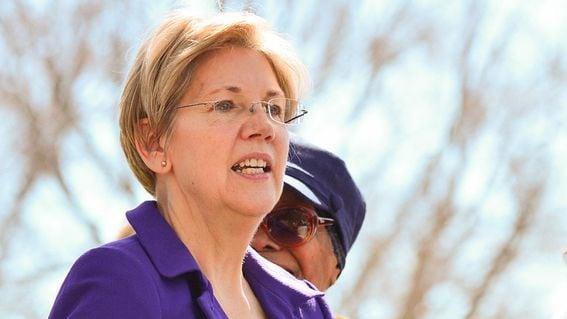
In a letter to the Blockchain Association, the U.S. senator accuses the group of undermining Congress. The Blockchain Association's efforts to lobby the U.S. Congress, in what Politico called a "not-so secret weapon," is an affront to efforts to stop Hamas and other terror groups using crypto to finance themselves, Sen. Elizabeth Warren (D-Mass.) said in a letter to the group's chief executive, Kristin Smith. "I write regarding a troubling new report that your association and other crypto interests are … working to undermine bipartisan efforts in Congress and the Biden Administration to address the role of cryptocurrency in financing Hamas and other terrorist organizations," Warren wrote. The narrative that crypto provides material support to Hamas, however, has been disproven. Blockchain analytics firms contest the Wall Street Journal claims of extensive crypto funding that Warren cites in her letter, saying the actual amount is in the thousands of dollars rather than tens of millions. U.S. lawmakers have asked President Biden and Treasury Secretary Yellen to assess the extent of cryptocurrency use by Hamas for fundraising, amidst debates about the scale and impact of such activities, CoinDesk previously reported. "The response of the crypto industry appears to be focused on delaying and denying new rules that would restrict crypto’s use by terrorists and criminals," Warren wrote. Revolving doors and ethics In the letter, Senator Warren took aim at a "revolving door" that the industry uses to "give itself a veneer of legitimacy." The industry is "fighting tooth and nail to stonewall common sense rules designed to restrict the use of crypto for terror financing – rules that could cut into crypto company profits," Warren wrote. Warren asked for information on the employment of former government officials by crypto firms, highlighting concerns about the "revolving door" of public officials moving into private-sector roles and potentially influencing legislation and regulatory activities related to crypto, anti-money laundering and terrorist financing. Nearly two-thirds of former members of the 115th U.S. Congress, which ended in January 2019, found employment outside politics, with many influencing federal policy through lobbying or strategic consulting jobs, a 2019 study from Public Citizen found. https://www.coindesk.com/policy/2023/12/19/elizabeth-warren-pushes-back-at-blockchain-lobbying-efforts/
2023-12-19 10:18
The country's dynamic crypto market has been a focus for politicians looking to use it to fuel economic growth. Gibran Rakabuming Raka, a vice presidential candidate in Indonesia's upcoming election, said he plans to create blockchain and crypto experts in the country during an event last week. Gibran, the eldest son of Indonesian President Joko Widodo, was chosen by presidential candidate Prabowo Subianto to be his running mate in the February election. The 36-year-old politician plans to boost tech education in the country to provide more opportunities for young people, including in digital assets. "We are preparing blockchain experts, we are preparing cyber security experts, we are preparing crypto experts," Gibran reportedly said at a political gathering on Dec. 10. Indonesia is a fast crypto adopter not just in Southeast Asia but the world, placing seventh on Chainalysis’ 2023 global crypto adoption index. The country has an estimated 18 million crypto investors and a powerful industry association that also acts as a self-regulatory body. Widodo’s government has tried to leverage this interest in crypto to generate revenue and interest in the country, even setting up a local “stock market” for crypto assets. Although Gibran is the first to mention crypto, other candidates could also address the topic in an upcoming political debate on Feb. 4. Prabowo and Gibran are the election frontrunners, according to recent polls, and their interest in the sector could rub off on other candidates. Gibran’s comment also reflects his wider goal of positioning Indonesia at the forefront of the global digital revolution. The presidential election is expected to start on Feb. 14. https://www.coindesk.com/policy/2023/12/19/indonesia-vice-presidential-candidate-promises-to-create-crypto-experts-as-election-looms/