2023-12-14 08:59
Ether is expected to outperform bitcoin and other cryptocurrencies next year due to the Ethereum blockchain’s EIP-4844 upgrade, the report said. Wall Street giant JPMorgan (JPM) said it is cautious about cryptocurrency markets into 2024, but expects ether (ETH) to outperform bitcoin (BTC) and other cryptocurrencies due to an upgrade that will make the Ethereum blockchain more scalable. The U.S. Securities and Exchange Commission's (SEC) decision on whether to approve spot bitcoin exchange-traded-funds (ETFs) is unlikely to spur major gains, it said in a report on Wednesday. There is a “high chance of buy-the-rumor/sell-the-fact effect once the SEC approves spot bitcoin ETFs early next year,” analysts led by Nikolaos Panigirtzoglou wrote. “Excessive optimism by crypto investors arising from an impending approval of spot bitcoin ETFs by the SEC has shifted bitcoin to the overbought levels seen during 2021,” JPMorgan said, adding that the 2024 bitcoin halving event is “largely priced in.” Ether is likely to shine due to the EIP-4844 upgrade, or proto-danksharding. That's a development of sharding – splitting the network into shards to improve transaction speed – by way of Danksharding, which uses the shards to increase space for groups of data. Proto-danksharding involves adding a new transaction type to Ethereum: the “blob-carrying transaction.” The bank notes that there has been some “reinvigoration” in venture capital (VC) funding in the fourth quarter of 2023, but it appears “rather tentative.” While there has been some improvement in decentralized finance (DeFi) activity, the “biggest disappointment continues to be the inability of DeFi to encroach into the traditional financial system, which is necessary for the crypto ecosystem to transition from crypto native to real world applications,” the report added. https://www.coindesk.com/markets/2023/12/14/jpmorgan-is-cautious-about-crypto-markets-into-2024/

2023-12-14 08:56
The firm has sold over $150 million worth of stake in COIN since Dec. 5. Cathie Wood’s investment firm, ARK Invest, offloaded a sizeable chunk of Coinbase (COIN) as the shares of the Nasdaq-listed crypto exchange rose to a 20-month high on Wednesday. ARK sold 283,104 shares worth $42.59 million based on Coinbase’s last close of $150.46, draining holdings from its ARK Innovation (ARKK) and ARK Next Generation Internet (ARKW) exchange-traded funds (ETFs). The firm has sold over $150 million worth of Coinbase shares since Dec. 5. On Wednesday, COIN rose more than 7.7% to top $150 for the first time since April 2022. Despite recent sales, Coinbase still constitutes over 10% of ARK’s portfolio and retains the top spot on the investment firm’s list of top 10 holdings. Coinbase shares have rallied by 325% this year, beating the S&P 500’s top performer and tech giant NVIDIA (NVDA) by a significant margin. NVDA has gained 226%, mainly on the back of the artificial intelligence narrative. The investment firm also sold some $1.63 million shares of Grayscale Bitcoin Trust (GBTC). According to some observers, COIN’s rally has legs, and prices could rise to $200 in the coming months. https://www.coindesk.com/markets/2023/12/14/ark-sells-426m-coinbase-shares-as-coin-hits-20-month-high/

2023-12-14 08:18
The total value locked (TVL) of all Cardano-based tokens jumped to over $440 million late earlier this week, crossing the previous peak of $330 million set in April. Value locked on Cardano’s ecosystem grew rapidly in the past few weeks as a recent boost in Ethereum alternatives, such as Solana and Avalanche, is likely pushing crypto investors and users toward other blockchains in search of returns and capital allocation. The total value locked (TVL) of all Cardano-based projects jumped to over $440 million late earlier this week, crossing a previous peak of $330 million set in April. Most growth seemingly occurred over the past week, with lending protocol Indigo and on-chain exchange Minswap seeing their TVL surge by over 50% to nearly $100 million each. Djed DJED stablecoin, a token pegged to the U.S. dollar, saw a supply increase of over 45% in the past week – indicative of capital inflows toward the token as investors looked to capitalize on yields. Meanwhile, value locked on relatively smaller protocols LendFi and Spectrum Finance, has surged by 90%, suggesting users were starting to take riskier bets. Such on-chain growth has boosted the price of Cardano’s ADA token, which is used to pay for network activity. The tokens surged some 17% in the past 24 hours, helping extend monthly gains to nearly 80%, data shows, and a 100% growth in leveraged futures bets on further ADA price volatility in the same period. As such, Cardano’s DeFi ecosystem has surged alongside those of other blockchains. The total amount of capital locked or staked across all decentralized finance (DeFi) protocols reached $50 billion at the start of December for the first time in six months, led by Solana ecosystem protocols as optimism around the blockchain has picked up in recent weeks. https://www.coindesk.com/markets/2023/12/14/total-value-of-cardano-defi-ecosystem-nears-450m-amid-layer-1-push-ada-rockets-17/

2023-12-14 07:48
Key indicators tracking Bitcoin's blockchain activity, miner flows, and the 200-day moving average suggest bitcoin is far from being overvalued and could continue to rally in 2024. Cognitive biases like anchoring may see investors anticipate a BTC price slide in the wake of this year’s 150% rally. Indicators like Puell Multiple, MVRV Z-Score, and Mayer Multiple suggest bitcoin is far from being overvalued and could continue to rally in 2024. Bitcoin (BTC), the leading cryptocurrency by market value, has surged over 150% this year, beating traditional assets like the S&P 500, gold, and the U.S. dollar by a huge margin. That may have some investors, particularly those who haven’t seen the previous crypto bull runs and are “anchored” to the brutal bear market of 2022, intuitively view the cryptocurrency as being overvalued and anticipate a price slide in the coming months. Anchoring is a cognitive bias that causes investors to rely overly on recent or initial data while making future judgments. Traditional finance investors who want exposure to bitcoin could fall victim to the anchoring bias and intuitively wait for cheaper entry prices. That’s because, in conventional markets, assets rarely double in value in less than a year. Besides, investors, in general, are vulnerable to loss aversion, a cognitive behavior of booking out of winning trades early and holding on to loss-making bets for longer. Believing in the aforementioned cognitive biases, however, could prove costly as three indicators – tracking activity on the Bitcoin blockchain, miner flows, and the 200-day moving average – suggest the cryptocurrency has plenty of upside left. Let’s discuss these indicators in detail. Puell Multiple The Puell Multiple measures the U.S. dollar value of the daily bitcoin issued relative to the 365-day moving average of the dollar value of the issuance. The issuance here refers to the current supply, i.e., minted or new coins released to the network. Since the last halving in early 2020, miners have minted roughly 900 tokens per day. Elevated readings indicate that the present profitability of miners is high compared to the yearly average, and hence, they could liquidate their holdings at a faster pace, adding to bearish pressures in the market. Low readings suggest otherwise. In the past, readings above four have coincided with market peaks, with values reaching as high as 10 in early bull cycles. Meanwhile, multiples of less than 0.5 have hinted at market bottoms. As of the time of writing, the Puell Multiple stood at 1.53, well short of the red zone above four, according to data tracked by Glassnode. The indicator could slide back into the accumulation zone (below 0.5) early next year after bitcoin’s mining reward halving. The inbuilt code will cut the per-block issuance of bitcoin to 3.25 BTC from 6.5 BTC. “Because the quantity of BTC issued in the subsidy literally gets cut in half, the only way for this metric to recoup so quickly is for the price of BTC to rapidly increase,” analysts at Blockware Intelligence said in the latest edition of the weekly newsletter. “The next halving is estimated for March 2024. That’s not too far away at all,” analysts added. MVRV Z-score The Z-score of bitcoin's market value-to-realized value (MVRV) ratio shows how many standard deviations the assets' market capitalization differs from its realized or fair value. The market capitalization is obtained by multiplying the total number of tokens in circulation by the going market price. The realized value is a variation of the market cap, which can be calculated by dividing the value of all bitcoins at the price they were last moved on-chain by the number of coins in circulation. The metric excludes coins lost from circulation and is said to reflect the fair value of the network. At press time, the Z-score stood at 1.6, indicating that the cryptocurrency is far from being overvalued and may continue to rally next year, as anticipated by several analysts. Historically, Z-scores above eight have signaled overvaluation and signaled bull market tops, while negative values have signaled discounted prices and bear market bottoms. Mayer Multiple The Mayer Multiple, developed by bitcoin investor and podcast host Trace Mayer, measures the difference between bitcoin's going market price and the 200-day simple moving average (SMA). The indicator helps identify overbought and oversold conditions by comparing the present market price with its 200-day moving average. The assumption is that the market will revert to its mean or the 200-day SMA after extended bullish/bearish trends push the multiple above 2.4/below 0.5. As of the time of writing, the Mayer Multiple was 1.404, meaning bitcoin’s price at $42,937 was 1.4 times its 200-day SMA at $30,563. In other words, bitcoin has plenty of room to rally before we can say it’s overbought relative to its 200-day SMA. The 200-day SMA is one of the most widely tracked gauges of long-term trends. As per technical analysis, an asset is said to be in a bull market once its value drops above the 200-day SMA and vice versa. https://www.coindesk.com/markets/2023/12/14/bitcoins-bull-run-has-plenty-of-steam-left-these-indicators-suggest/

2023-12-13 22:33
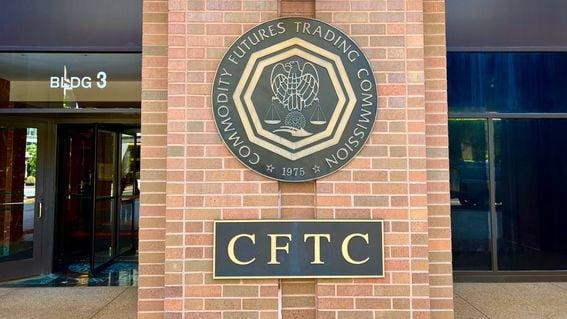
Commissioners took a step toward requiring derivatives clearing organizations, a key type of middleman in the industry, to keep their customers' money segregated from their own funds. The U.S. Commodity Futures Trading Commission took a step toward requiring derivatives clearing organizations, a key type of intermediary in the industry, to keep their customers' money segregated from their own funds. The CFTC's move is at least partially inspired by FTX's collapse last year, designed to prevent derivatives firms from meddling with money belonging to their clients. In FTX's case, billions of dollars of customer money was stolen. In a vote Wednesday, CFTC commissioners voted to publish the proposal for public feedback, a key step in the process to enact a rule that would apply to any companies under the commodities regulator's umbrella. If a DCO faces a liquidity crunch, such as a crypto exchange facing high number of withdrawal requests, customer funds would be protected, according to the proposed rule's goals. "It's an important proposal because I think there are a lot of outstanding questions about policy risk and the law," said Chairman Rostin Behnam, who voted for the proposal. "In the past two or three years, we've seen an advent of new market participants with new ideas about how markets function and what they view as the most efficient sort of execution models for for their business, whether it's in traditional finance or obviously we're seeing this in a lot of the crypto space." The proposal would allow DCOs to commingle "proprietary funds" from different clearing members, referring to any funds or property held by a DCO on behalf of a clearing member, but the regulator would not let any commingling of proprietary funds, customer funds or the DCO's funds. The collapse of FTX – the company whose one-time LedgerX affiliate tried to blaze a trail at the CFTC in clearing customer transactions without middlemen – was a "significant motivation" for this proposal, said Commissioner Kristin Johnson, who offered "a full-throated" vote in favor of the proposal. Johnson said FTX illustrates "the magnitude of losses that customers may experience in the absence of regulation that prohibits commingling of customer funds or member property." Commissioner Summer Mersinger, who cast one of the two "no" votes, said during her round of questioning that she would have liked more time to review some of the issues in the proposal and expressed concern that some issues hadn't been addressed. She would have liked to have seen a discussion comparing the proposal's requirements with existing DCOs, as well as a cost-benefit analysis for the proposal. "Customer protection is foundational to the work we do here at the CFTC, but that does not absolve us of our responsibility to perform a cost-benefit analysis," Mersinger said. Commissioner Caroline Pham, who voted to concur (essentially an abstention that supports the majority of the votes cast), opened her statement by saying the agency "already has extensive rules in place" for protecting customer customer funds at futures commission merchants – essentially, a broker in the derivatives industry – and warning that the regulator must be careful in how it changes existing regulatory frameworks. "If the commission anticipates this type of DCO clearing model to proliferate, we should step back and consider all issues these direct clearing DCOs raise," she said. Commissioner Christy Goldsmith Romero, who also voted against the proposal, commented on how the actual crypto investors using a platform would be the members of a clearing organization that did not have FCMs as intermediaries, rather than customers as they would typically be defined in CFTC regulations. "We're basically sort of putting these regular people – in, like, retail – in the role of an FCM," she said, referring to the disintermediated companies seeking to cut futures commission merchants out of the process. "Do you think that the regular people, the individuals who are involved in these matters, understand that they're not a customer, they don't have this access to to all the customer protections?" https://www.coindesk.com/policy/2023/12/13/cftc-pushes-ftx-inspired-rule-to-protect-customers-money/
2023-12-13 19:56
Vitalik Buterin, a member of the Ethereum Foundation's executive board, once pushed "layer-2" networks as a way to provide faster and cheaper transactions. Now he's got ideas for "enshrining" some of those functions on the main chain. Ethereum co-founder Vitalik Buterin, who argued three years ago for pushing more of the blockchain's computational load onto affiliated networks known as "layer-2 networks" or "rollups," has just outlined a plan to take some of the functions back onto the main chain. His idea for an "enshrined zkEVM" could prove disruptive, since prominent layer-2 projects, including "ZK-rollups" from Polygon, Matter Labs and Scroll, have invested heavily in fulfilling the earlier roadmap. The new networks are already up and running, and the project leaders have been working to recruit developers and already attracted billions of dollars in user deposits. The acronym "zkEVM" is a mash-up of "zk," which stands for "zero knowledge," a type of cryptography that is seen as the leading technology for powering future generations of blockchains; and "EVM," which stands for Ethereum Virtual Machine, the programming environment that most Ethereum applications run on. The new rollup networks from Polygon, Matter Labs and Scroll each have some version of a zkEVM baked into their systems. The networks work by bundling up transactions from users – to lessen the load on Ethereum and speed things up for end-users. They pass the bundled transactions back down to the "layer 1" Ethereum network with a cryptographic guarantee, called a zero-knowledge proof, that they have been recorded correctly. In his latest blog post, posted on the Ethereum Foundation's website, Buterin wrote that so-called "light clients" – a skimpier and less data-intensive way to read and verify data on a blockchain, as opposed to hardware-heavy full nodes – will get "more and more powerful" over the next few years. Ethereum's light clients will "pretty soon get to the point" where they can use zero-knowledge cryptography to fully verify transactions executed on the layer-1 chain. "At that point, the Ethereum network will effectively have a built-in zkEVM," Buterin wrote. "So the question arises: Why not make that zkEVM natively available for rollups too?" What's left for layer-2 blockchains? Buterin's comments come as ether (ETH), the native cryptocurrency of the Ethereum blockchain, has lagged behind tokens from rival blockchains as digital-asset markets rallied this year. Ether has climbed by 84%, while Solana's SOL has jumped more than eight-fold in price and Avalanche's AVAX has tripled. Bitcoin, the biggest cryptocurrency, has gained 153%. According to Buterin, who has for years pushed Ethereum down a "rollup-centric" roadmap, there would still be a role for the layer-2 networks under his new plan. "The EVM verification functionality, which layer-2 teams currently implement by themselves, would be handled by the protocol, but layer 2 projects would still be responsible for many important functions," he wrote. It gets pretty technical, but those would include "fast pre-confirmations," "MEV mitigation strategies," "extensions to the EVM" and "user and developer-facing conveniences," according to Buterin. "Layer 2 teams do a lot of work attracting users and projects to their ecosystems and making them feel welcome," Buterin wrote. "They are compensated for this by capturing MEV and congestion fees inside their networks. This relationship would continue." https://www.coindesk.com/tech/2023/12/13/ethereums-buterin-floats-prospect-of-taking-some-layer-2-functions-back-on-main-chain/