2023-12-07 10:38
The bull market has been clearly spot-driven, with all major derivatives data relatively flat, one observer said, adding the rally has limited downside. BTC's bull run is characterized by stair-step price action, comprising a series of price gains and horizontal consolidations. A spot-led rally and low leverage ensure the famed double-digit bull-market pullbacks remain elusive. At least half of bitcoin's (BTC) 160% surge this year has materialized in just the past eight weeks. The trend looks more impressive given its stepwise structure of a series of price rallies and horizontal consolidation runs. That starkly contrasts with past rallies, including the rally in late 2020-early 2021, when pullbacks of 20% or more were common. Those pullbacks have remained elusive this time around, possibly because spot-market buyers have been in the driver's seat. "The bull market has been a clearly spot-driven bull market, with all major derivatives data relatively flat, futures premiums holding around 10%, and options IVs implied volatility not showing significant gains," options data tracking website Greeks.Live said on X. "We have to put this rally and the news of the impending passage of the ETF in perspective; this spot bull market is very healthy, the downside is limited, and the bull market is here to stay." A spot market is where an asset is traded for immediate delivery. Derivatives involve futures and options, whose value is derived from the underlying asset, and these instruments are settled in the future. According to CCData, spot and derivatives trading volume on centralized exchanges rose to an eight-month high of $3.61 trillion in November, with the share of derivatives declining for the third straight month to 73%. Data tracked by analytics firm CryptoQuant show bitcoin's spot-to-derivatives trading volume ratio jumped to nearly 0.10 from 0.05 last month, indicating increased activity in the spot market. While derivatives still account for the majority of market volume, the degree of leverage in the system remains low, supporting the stair-step price ascent. Derivatives are usually leveraged instruments, allowing traders to take bullish (long) or bearish (short) positions worth more than the amount they have deposited as a margin at the exchange. Leverage is a double-edged sword, magnifying both profits and losses. It also exposes traders to liquidations, or forced unwinding, due to margin shortfalls. Furthermore, mass liquidations often lead to exaggerated bullish or bearish moves, so the greater the use of leverage, the higher the probability of liquidations injecting volatility into the market. The estimated leverage ratio, calculated by dividing the dollar value locked in active open perpetual futures contracts by the total value of coins held by derivatives exchanges, remains near April's low of 0.20, having peaked above 0.40 last year, according to data source CryptoQuant. Most leading exchanges, including Binance, now offer 20x or lower leverage in derivatives trading, allowing speculators to establish long positions controlling 20 times the value of their collateral. That's significantly below the 100x available during previous bull runs. Such high use of leverage meant less staying power when things turned bad and vulnerability to liquidations-induced downside volatility, as observed during the 2020-21 bull run. Besides, activity is now more concentrated in standard futures on the regulated Chicago Mercantile Exchange (CME), where institutions and sophisticated traders rarely employ extreme leverage. Derivatives trading on the CME rose 18.4% to $67.9 billion in November, the highest in two years, according to CCData. CME also overtook Binance as the largest derivatives exchange, with open interest in BTC rising 21% to $4.11 billion. Lastly, the use of coins as margin for trading peaked in 2021-22. Now, cash or stablecoin-margined contracts account for most of the open interest in BTC futures. Cash-margined contracts offer a linear payoff, while coin-margined contracts, where the collateral is as volatile as the trading position, create a greater liquidation risk. https://www.coindesk.com/markets/2023/12/07/heres-why-bitcoins-famed-bull-market-pullbacks-have-been-elusive-during-the-recent-price-surge/
2023-12-07 08:50
"Many important countries, whether it's the US, the UK, India, are going in for elections and so, I'm not sure in 2024 the standards will develop," Sinha said. India is unlikely to bring a crypto or Web3-specific legislative bill anytime soon and perhaps up to mid of 2025, said one of India's senior politicians, who oversees the financial evolution of the nation. Jayant Sinha, Chair of the Standing Committee on Finance in India's Parliament and a Minister of Parliament from the ruling Bharatiya Janata Party (BJP), was answering a question during a CoinDesk interview at India Blockchain Week in Bengaluru about when India could see a Web3-specific bill. "Regulators and policymakers are responsible, not just on the innovation side, which of course we want to encourage, but also on the safety side," Sinha said. "We have to really find that balance and that balance is going to evolve over the next 12 to 18 months." Considerations for a crypto bill Three specific considerations don't make it suitable for any crypto-specific bill to be introduced in parliament any time soon – considerations around evolving use cases in the space, the evolution of global standards given 2024 is the year of elections in India, U.S. and potentially U.K., and the emerging reality of industry evolution after the collapse of FTX and regulatory action against Binance. "I'm a bit of a broken record on this, which is whether it is Web3 or crypto, I want to first see the use cases that will really be powerful for India and that's point one," Sinha answered on a question from CoinDesk about when India could see a Web3-specific bill. "Point number two is global standards are still evolving and 2024 is the year of elections around the world. Many important countries, whether it's the U.S., the U.K., India, are going in for elections. So, I'm not sure in 2024 the standards will develop. We also have to see what's going to emerge from the (crypto) meltdown about whether some of these companies are going to survive," Sinha opined. India's position on crypto came under increased scrutiny after Sept. 2023, when it pushed the G20 during its presidency to accept global guidelines for crypto without having its own legislation in place. India has kept a crypto bill in cold storage since 2021 but did indicate it will decide its position in the coming months. However, that position is unlikely to come through in the form of a bill at least in 2024, Sinha's remarks suggest. Instead, India is likely to bank on a string of policy decisions that act as a defacto regulatory framework for the space and also align with the Financial Stability Board's recommendations by end-2025, Indian officials have told CoinDesk previously. India has already brought in anti-money laundering rules and a tax structure for crypto and that may be enough, an official told CoinDesk in August. "Cautious about crypto" Sinha reiterated concerns sounded by India's central bank around crypto. "In India where we have capital controls when you can't freely trade the rupee for us to enable crypto assets is not really feasible," Sinha said. "Unlike other economies like Singapore, or Korea or the US that have freely tradable currencies, and can get into crypto with a lot less trepidation. As far as India is concerned, we have to be very, very careful, very, very cautious when we talk about crypto. But crypto friends is just one use case for what is a revolutionary set of technologies that underlie Web3." Sinha also encouraged the audience which was made up of Web3 entrepreneurs, developers and enthusiasts in the space to propose a white paper or regulatory framework for India to consider. Read More: India's Controversial Crypto Tax Should Be Cut After Failing to Achieve Aims, Think Tank Urges https://www.coindesk.com/policy/2023/12/07/india-wont-see-crypto-or-web3-bill-for-another-18-months-senior-lawmaker-tells-coindesk/

2023-12-07 08:30
GEC token prices have more than quadrupled in the past week, while XI tokens are up 35% in the same period. Two tokens tied to space logistics and energy company Geometric Energy Corporation are jumping ahead of its mission to put DOGE-1, a Dogecoin-themed satellite, into orbit around the moon. The launch is scheduled for Jan. 12 aboard a SpaceX rocket from the Kennedy Space Center in the U.S. GEC, a token issued by the company, has more than quadrupled in the past week. Another token, XI, which is said to be used to pay for ads displayed on the satellite, has climbed 36%. Together they have a market capitalization of just over $30 million and more than 6,000 individual holders, on-chain data shows. Geometric Energy announced the DOGE-1 satellite in May 2021 as the payload of a SpaceX Falcon 9 rocket originally scheduled for 2022. The mission has been paid for entirely in dogecoin (DOGE) – a dog-themed meme coin that enjoys SpaceX founder Elon Musk’s vocal backing. SpaceX has since received the requisite regulatory approvals to clear the launch, finally bringing DOGE-1 a step closer to reality, according to Geometric Energy founder Samuel Reid. DOGE-1 is one of the two dogecoin-related missions planned in the coming months. Earlier this month, Dogecoin developers said a physical dogecoin token could reach the moon in a space payload mission planned by Pittsburg-based firm Astrobotic. The mission is planned for Dec. 23 and carries 21 payloads from governments, companies, universities, and NASA’s Commercial Lunar Payload Services (CLPS) initiative https://www.coindesk.com/markets/2023/12/07/tokens-tied-to-dogecoin-funded-doge-1-satellite-jump-ahead-of-spacex-launch/

2023-12-07 08:10
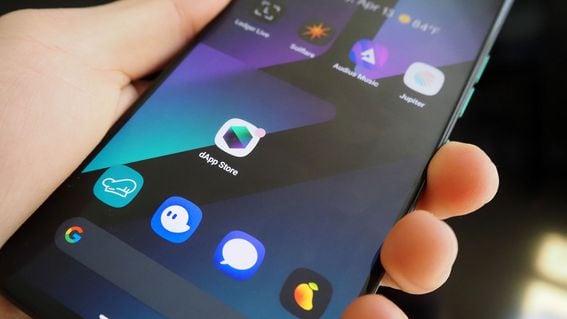
Yakovenko emphasizes the importance of reaching a user base of 25-50K to sustain the Solana phone's development in an interview with Laura Shin. Solana's Saga Phone has an uncertain future because of disappointing sales and changing market dynamics, Solana founder Anatoly Yakovenko said during a recent appearance on Laura Shin's Unchained podcast. “We have to decide if there’s a place for a smart wallet, a much cheaper version that an iPhone user could use as a secondary device. We haven’t seen a ton of signal whether that’s a compelling enough thing to sell 50,000 units,” he said, saying that this was the magic number to determine the success of the phone. "I think 25,000 to 50,000 units to feel like there is a hardcore user base for developers to be compelled to ship applications," he continued. The phone first went on sale earlier this year, and in August, its price was cut to $599 from $1000. Yakovenko noted during the interview that advancements in mobile interfaces, particularly Progressive Web Apps and pass keys, have significantly reduced the gap between specialized and regular smartphones. "Progressive Web Apps bypass the App Store so developers don't need to pay the fees. They kind of have that side-loading feature even on iOS now," he continued. Crypto phones have been previously tried by some companies but have seen limited success outside of their cult followers. Phone maker names from the big – HTC – to the small – Sirin Labs have previously failed in their efforts to create a crypto-forward smartphone. Meanwhile, Yakovenko also said that he doesn't use his Solana Saga phone as his primary device. "I flip between this one and my iPhone because I've got too many business apps and stuff and connections," he said. "So it's hard for me to support all the security certificates and stuff like that are kind of hooked up to my iPhone." The Saga phone is "my NFT phone," he continued. Solana's SOL token is up over 500% year-to-date, according to on-chain data. https://www.coindesk.com/tech/2023/12/07/future-of-solanas-hyped-saga-phone-is-under-internal-discussion-as-sales-figures-fail-to-wow/
2023-12-07 07:16
These bitcoin were mined at the very early stages of the network for an estimated $100, as per CryptoQuant. A significant amount of bitcoin acquired by mining during the network’s early stages was moved earlier this week, joining the rare instances where bitcoin from the “Satoshi era” has been transferred. Over 1,000 bitcoins from an early miner were moved to trading desks and custodian services on December 4, on-chain data firm CryptoQuant shared with CoinDesk in a Thursday report. These tokens were previously moved thirteen years ago, between August and November 2010, and were mined from block rewards at an estimated total cost of $100. Address 35BRV3y2tEJNCHbmVtAe3kXNckYgu8X7av received 999.99 Bitcoin in a single transaction and sent the holding to several addresses shortly after receiving them. The Bitcoin transferred was eventually consolidated in address 1CzBL1pEudgqeTtoyPLtrVQHo7nYAZxmKZ, which now holds a balance of 1,028 Bitcoin. These bitcoin holdings have a market value of $40 million at current prices. Satoshi era refers commonly to the period when bitcoin’s pseudonymous creator, Satoshi Nakamoto, was active on online forums from late 2009 to 2011. “We speculate this early miner has sold the 1,000 Bitcoin, sending them into an OTC or custodian service,” CryptoQuant analysts told CoinDesk in a note. “Because of the transaction patterns of the receiving address, there is a possibility that the bitcoin was sent into an OTC or custodian service.” Several ‘Satoshi era’ bitcoin have been active since the start of 2023. In July, a wallet that had been dormant for 11 years transferred $30 million worth of the asset to other wallets, while in August, another wallet transferred 1,005 BTC to a new address. Such activity comes amid renewed optimism for bitcoin adoption as prices have more than doubled on a year-to-date basis. It's believed bitcoin's price has been rising dramatically over the last few weeks because of anticipation around the approval of a possible spot exchange-traded fund (ETF) approval in the U.S., traders pricing in expected rate cuts in the U.S. – which buoys risky bets such as technology stocks and bitcoin – and possible sovereign adoption as bitcoin-friendly leaders take the helm in major economies. https://www.coindesk.com/markets/2023/12/07/early-bitcoin-miner-apparently-sent-1000-satoshi-era-btc-to-trading-desks-this-week/
2023-12-07 02:37
Republican leadership contender Vivek Ramaswamy got the first crypto question. Crypto got a mention at the Republican presidential debate Wednesday night held in Tuscaloosa, Alabama, when Vivek Ramaswamy was asked about his crypto policy. The question directed towards Ramaswamy referenced the recent guilty plea of former Binance CEO Changpeng "CZ" Zhao, who was recently charged with breaking sanctions and money-transmitting laws. "Fraudsters, criminals, and terrorists have been defrauding people for a long time," Ramaswamy began. "Our regulations need to catch up with the current moment." "The fact that SBF was able to do what he did FTX shows that whatever they have is the current framework isn't working," he continued. Ramaswamy is one of the few politicians to specifically make crypto part of his campaign. Ramaswamy announced a plan to drastically reduce the SEC workforce and relax regulations on the crypto industry, advocating for most cryptocurrencies to be treated as commodities outside the U.S. Securities and Exchange Commission's (SEC) jurisdiction, CoinDesk recently reported. "It's nothing short of embarrassing that Gary Gensler, the SEC chair, couldn't even confirm in front of Congress whether Ethereum is a regulated security," Ramaswamy said. "This is another example of the administrative state going too far." Robert F. Kennedy Jr. – who originally ran for president as a Democrat and is now a declared Independent – proposed exempting bitcoin from capital gains tax, backing the dollar with assets like gold and bitcoin, and supporting the right to self-custody bitcoin and run blockchain nodes, aiming to strengthen the dollar and encourage financial innovation and privacy. Central Bank Digital Currencies (CBDCs) also got a mention during the debate, with Florida Governor Ron DeSantis saying that they'll be "dead on arrival" if he's elected president. CBDCs were apparently one of the hottest issues in Florida's politics over the summer, with more phone calls reportedly coming into his office on the topic than the usual wedge issues. DeSantis signed a bill purporting to ban CBDCs into law, though experts cast doubt that the law would actually do anything. Later during the debate, Ramaswamy claimed the Jan. 6, 2021 assault on the U.S. Capitol was an inside job and that the great replacement theory is "a basic statement of the Democratic Party's platform." https://www.coindesk.com/policy/2023/12/07/binance-sbf-eth-and-gensler-get-mentions-at-republican-debate/