2023-11-22 05:55
The overnight price volatility in bitcoin and other cryptocurrencies washed out a notable chunk of leverage from the market, with bitcoin alone seeing more than $65 million worth of liquidations in futures markets. Binance’s settlement with the U.S. Securities and Exchange Commission (SEC) on multiple charges spurred a market decline, with the impact felt most by futures traders betting on further growth. Data from CoinGlass show, exchanges have liquidated crypto perpetual futures positions worth $227 million in the past 24 hours. Bullish longs accounted for nearly 80% of the tally. Meanwhile, over $67 million worth of bitcoin longs and shorts, referring to bets on and against price rises, respectively, have been liquidated in the past 24 hours. This was among the highest liquidation events in 2023. Traders of ether (ETH) futures took on $27 million in losses, while Solana’s SOL traders were hit for $10 million. BNB saw a comparatively smaller $6 million in liquidations. BNB is the token of the BNB ecosystem, which was created by Binance, and traders usually link the token with the exchange's fortunes. Traders at crypto exchange Binance took on $100 million in liquidations, the most among counterparties, with OKX taking $62 million. Liquidation refers to when an exchange forcefully closes a trader's leveraged position due to a partial or total loss of the trader's initial margin. It happens when a trader is unable to meet the margin requirements for a leveraged position (fails to have sufficient funds to keep the trade open). Large liquidations can signal the local top or bottom of a steep price move, which may allow traders to position themselves accordingly. Such data is beneficial for traders as it serves as a signal of leverage being effectively washed out from popular futures products – acting as a short-term indication of a decline in price volatility. Binance, the world's largest crypto exchange, was criminally charged with breaking sanctions and money-transmitting laws and agreed to pay $4.3 billion to settle the allegations in "one of the largest penalties" the U.S. has ever obtained from a corporate defendant. Founder Changpeng "CZ" Zhao pleaded guilty in Seattle to charges he personally faced and agreed to pay a $50 million fine and step down from the CEO job. Richard Teng, a former Abu Dhabi regulator and later Binance's regional markets head, will take over as CEO. https://www.coindesk.com/markets/2023/11/22/over-200m-in-crypto-futures-bets-liquidated-as-bitcoin-slumped-under-36k-on-binance-settlement/

2023-11-22 04:27
Some observers believe Binance's downfall has boosted the spot-ETF approval odds. Bitcoin (BTC) and BNB trim losses suffered Tuesday as Binance's CEO Changpeng "CZ" Zhao's guilty plea and the exchange's criminal settlement are seen boosting odds of an eventual approval of a spot-based bitcoin exchange-traded fund (ETF) in the U.S. As of writing, BTC traded close to $36,400, having tanked over 4.5% to $35,700 Tuesday. BNB changed hands at $234, recovering from the overnight low of $223, CoinDesk data show. Both currencies, however, were still down 3.3% and 11.5% on a 24-hour basis, nursing hangover from Tuesday's events, which saw Binance agree to a $4.3 billion settlement for violating sanctions and money-transmitting laws. Binance's founder CZ pleaded guilty and stepped down as CEO in what's called one of the largest corporate penalties ever, CoinDesk previously reported. Binance illegally relied on U.S. customers as a significant source of revenue and trading activity, recently unsealed documents show, with the criminal complaint revealing years of compliance failures and deliberate obfuscation to protect these crucial yet off-limits users. CZ's lawyers said that his sentencing will be delayed by 6 months and he has agreed to waive his right to appeal if the sentence does not exceed 18 months. Some traders believe CZ's downfall may be a blessing in disguise, boosting the probability of the U.S. SEC approving one or more spot bitcoin ETFs in the coming months. "With this plea deal, the expectations for a spot Bitcoin ETF might have increased to 100% as the industry will be forced to follow the rules that TradFi firms must follow. More importantly, this industry's whitewashing will strengthen the Bitcoin adoption case for institutional players and will likely become a safe-haven asset in investors’ portfolios," crypto services provider Matrixport said in a Telegram message. Still, the price volatility spurred by the action against Binance and CZ looks to have proved costly for leverage traders. Data from Coinglass shows that in the 12 hours since the settlement was announced, $110 million in bitcoin long positions were liquidated compared to $37.2 million in short positions. In the last hour, that number has reversed with $4.26 million in short positions being liquidated compared to $111,000 in longs. BNB, which doesn't trade as actively as bitcoin because most users stake it, saw $3.73 million in long positions liquidated compared to $1.61 million in short positions, according to Coinglass. Data shows that options volume for BNB has surged by 68% to $2.41 million, while options open interest has surged 29% to $3.47 million. Elsewhere in the market, dYdX, the native token of the decentralized exchange, is up by 7%, according to CoinDesk Indicies data and Uniswap's UNI token is up by 1.6% on-day. https://www.coindesk.com/markets/2023/11/22/bitcoin-and-bnb-recovery-as-binance-plea-seen-boosting-spot-etf-odds/
2023-11-21 23:36
We probably will never see another company quite like Binance. Crypto itself might be borderless, but crypto companies are not beyond the reach of US law. Tuesday marks the end of an era. Binance's Changpeng Zhao stepped down and pleaded guilty to violating U.S. anti-money laundering requirements, despite the fact that Binance was never a U.S. exchange. With that, the myth of “borderless” crypto companies is truly over. To be sure, this is not the first time that U.S. law enforcement nailed a crypto exchange that was not officially in the country. The same thing happened with FTX. But no company exemplified the “borderless” myth more than Binance, which will also pay a $4.3 billion dollar fine to settle an investigation from the United States Department of Justice. Binance defied the boundaries of a traditional company. It served traders everywhere, eventually becoming the world’s largest cryptocurrency exchange, and yet for a long time no one seemed to know where it was located. The very idea of a headquarters was antithetical to Binance’s whole identity. In 2018, I asked CZ where he was based. “People still have this really strong concept of where your company is, and where you are,” he told me at the time. “A company is a concept. An organization is a concept.” When I asked where he called home, he just said, “I don’t really have any answer to that. Earth?” Binance made a point of not being based in the United States, outside of its much smaller US entity, Binance.US. I can’t remember the last time CZ publicly appeared on American soil. But the company was clearly not exempt from U.S. law. The United States accused Binance of not having a proper anti-money laundering program, of operating an unlicensed money-transmitting business and of violating sanctions law, CoinDesk reported. “Binance became the world’s largest cryptocurrency exchange in part because of the crimes it committed — now it’s paying one of the largest corporate penalties in U.S. history,” Attorney General Merrick Garland said. The SEC and the CFTC have also taken enforcement actions against Binance. The overall theme of the allegations is that Binance had U.S. customers, told those customers how to avoid U.S. regulations and took steps to hide their activity from U.S. regulators. Some in the crypto community criticize the long arm of U.S. law. Binance itself pushed back against the CFTC in a filing in a U.S. court, saying, “U.S. law governs domestically but does not control the world.” U.S. law might disagree. In 2022, BitMEX Founders pled guilty to violating U.S, anti-money laundering laws, even though BitMEX was based in the Seychelles. And then, of course, came FTX. FTX was based in Hong Kong and then moved to the Bahamas. Sam Bankman-Fried desperately wanted to make it in the United States, paying huge sums of money for celebrity endorsements and stadium naming rights, all while trying to woo politicians in Washington. In the end, FTX’s global operation never made it into the U.S., with the exception of the much smaller and less powerful FTX.US. Instead, Bankman-Fried ended up getting torn apart by U.S. prosecutors in a U.S. court. The U.S. still has allure for crypto businesses. Despite the pull of dynamic regions such as Asia or the Middle East, it’s hard to avoid the U.S. Did an overseas exchange have U.S. users? Did it mislead U.S. investors? Or did the CEO have meetings in the United States? “The burden for venue is not very high,” Samson Enzer, a former Manhattan federal prosecutor, told the WSJ last year. “The government would argue that if a single email went through New York, that would suffice.” We probably will never see another company quite like Binance. Crypto itself might be borderless, but crypto companies may find it increasingly hard to operate outside of legal or geographical boundaries. In the early days of crypto, it seemed possible to launch a massive exchange that slipped through the grasp of any jurisdiction. Those days are gone. https://www.coindesk.com/consensus-magazine/2023/11/21/binances-cz-and-the-end-of-the-borderless-crypto-company/

2023-11-21 20:37
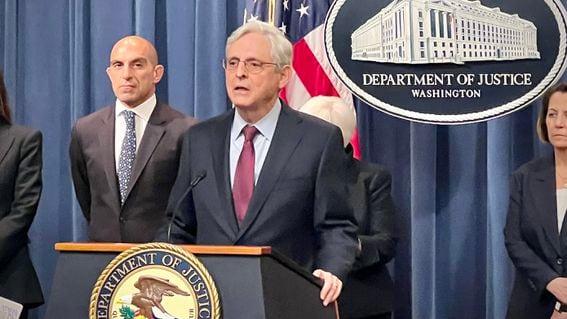
The crypto exchange, which is settling charges with the Department of Justice, will appoint a monitor as well. Crypto exchange Binance will leave the U.S., pay billions in fines and appoint a monitor for five years to settle charges with the Financial Crimes Enforcement Network (FinCEN) and Office of Foreign Asset Control (OFAC), the U.S. Treasury Department's money laundering and sanctions watchdogs, according to press releases shared Tuesday. The exchange will pay $3.4 billion to FinCEN and $968 million to OFAC as part of these settlements, which saw both agencies accuse Binance of violating the Bank Secrecy Act and sanctions programs. Binance had already said it will pay $4.3 billion in fines and forfeitures to the U.S. Department of Justice to settle charges it violated sanctions law and failed to maintain a proper know-your-customer program. Changpeng "CZ" Zhao, the exchange's founder and CEO, is resigning from his role as part of that settlement. In addition, Binance will make a "complete exit" from the U.S. as part of its settlement with FinCENand appoint a monitor for five years who will oversee the exchange's sanctions compliance program. The U.S. Treasury Department will have access to Binance's record and systems during that time. Treasury Secretary Janet Yellen said that Tuesday's action was the largest settlement in the department's history. "I want to make sure that folks really understand how unprecedented this monitorship is," a senior official told reporters earlier on Tuesday. "We're not just going after the egregious conduct … but we're also … getting Binance out of the U.S. entirely." The official clarified that the separate exchange called Binance.US, which is the operating name for BAM Trading Services, a U.S. affiliate for Binance, is a registered money services business and therefore is not affected by Binance's exit. Binance allowed individuals associated with Hamas, the Islamic State of Iraq and Syria, people in North Korea and other sanctioned jurisdictions, money launderers and malicious cybersecurity actors to use its platform, the agencies said. "By failing to comply with AML and sanctions obligations, Binance enabled a range of illicit actors to transact freely on the platform," the press release said. https://www.coindesk.com/policy/2023/11/21/binance-to-make-complete-exit-from-us-pay-billions-to-fincen-ofac-on-top-of-doj-settlement/
2023-11-21 20:27
Charging documents unsealed Tuesday against the crypto exchange and founder Changpeng "CZ" Zhao detail years of compliance failures and obfuscation in the name of protecting Binance's most valuable – and off-limits – users. Binance relied in its early days on American customers for the bulk of its revenue, its trading activity and thus its status as the world's largest crypto exchange. Charging documents unsealed Tuesday against the exchange and its founder Changpeng Zhao – better known as CZ – detail years of compliance failures and obfuscation in the name of protecting Binance's most valuable – and off-limits – users. But Binance wasn’t allowed to service those customers because it wasn't a registered U.S. business, according to the government. Binance targeted growth in the U.S. market, especially among "VIP" users who drove the exchange's trading volume and thus its revenue. These power users and their liquidity helped make Binance a juggernaut in crypto trading. According to the government, Binance's executives "tracked and monitored" the exchange's performance in the U.S. market and even touted their success. As much as 30% of the exchange's web traffic (and just as much revenue) originated in the U.S. in early 2018, the filing said. When CZ learned about this, he said Binance should block IP addresses and implement know-your-customer requirements because "it's better than losing everything." In spite of this, CZ and Binance squirreled away their most valuable U.S. users through an API that allowed them to keep using the main exchange, according to the government. This came even as Binance launched a separate U.S. exchange – Binance.US – that implemented KYC requirements lacking on the main exchange. In June 2019, CZ and other high-ranking Binance officials "encouraged" the high-value U.S. clients to "conceal and obfuscate their U.S. connections." The Binance officials discussed these strategies on recorded calls and directed staff to assist these customers in compliance evasion, like dropping hints that they should use a different IP address. By September 2020, some 16% of the main exchange's customer base came from the U.S. – making it Binance's most important country despite its prohibitions. "The following month" Binance relabeled its corresponding pie chart, replacing the "United States" userbase label with "UNKWN." These customers generated "trillions of dollars in transactions" for Binance and generated $1.6 billion in profit between August 2017 and October 2022. Failure to AML Binance's compliance failures also led it to process hundreds of millions of dollars in transactions originating from darknet marketplaces including Hydra and crypto mixing services including BestMixer. Sometimes Binance's staff would become aware that criminals were using the site but let them continue anyway, "particularly if they were VIP users." Instead of booting the illicit exchange users, they were instructed to check their status and maybe give a slap on the wrist with a warning not to route money from the darknet market again. The fast and loose mindset had massive ramifications for Binance's compliance with the U.S. sanctions regime. To put it bluntly, it did nothing to ensure money wasn't flowing between the U.S. and Iran. Inside the belly of every exchange is a matching engine: the piece of computer code that helps move coins between buyers and sellers. Binance's engine matched users in the U.S. to those in Iran. According to the filing, Binance caused "at least 1.1 million" illegal transactions worth nearly $900 million. CZ and his deputies knew their matching engine could lead to Binance violating U.S. laws but did little to stop it, the government said. The only solution was to implement KYC on all users, a step they did not fully take until May 2022. Internally, CZ recognized the risks of sanctions violations and the need for remediation as early as 2018, per the document. But Binance "refused to devote significant resources to" fixing the hole. Amid all this was the question of where Binance was actually based. CZ and his company were "intentionally vague" about their HQ for years, with executives hopping between Asia and the Middle East. Their hope was the globetrotting would "make Binance more difficult to regulate." https://www.coindesk.com/business/2023/11/21/binance-got-huge-due-to-us-customers-that-was-illegal-us-says/

2023-11-21 19:58
One-time Abu Dhabi regulator Teng was appointed to oversee Binance's regional markets outside the U.S. back in June of this year. Editor's note: Less than an hour after this story was published, Richard Teng posted on X that he was now Binance's CEO. News that Binance CEO Changpeng "CZ" Zhao is stepping down after pleading guilty to U.S. criminal charges puts the spotlight firmly on rising star Richard Teng, who was promoted to the top ranks at the exchange earlier this year and who is viewed as the heir apparent at the world's largest crypto exchange. Teng, a one-time Abu Dhabi regulator, was appointed to oversee Binance's regional markets outside the U.S. in June of this year. At that time, he gave an interview to CoinDesk, pointing out that he wanted to show that Binance could be "a new organization." Binance representatives did not respond to requests for confirmation that Teng would be taking over as CEO of the exchange. Teng's strength is regulation and compliance, an area that has been a primary focus for Binance for the last couple of years. Before heading up the Financial Services Regulatory Authority at Abu Dhabi Global Market (ADGM), he was chief regulatory officer of the Singapore Exchange (SGX) and spent 13 years with the Monetary Authority of Singapore (MAS). The need for someone with Teng's expertise at Binance has become even more apparent as regulatory scrutiny has intensified this year, leading to Tuesday's explosive news that the U.S. charged the exchange with breaking sanctions and money-transmitting laws and agreed to pay $4.3 billion to settle the allegations. It's worth noting that CZ himself said the firm had a succession plan when he hired Teng in August 2021. Teng initially joined Binance as CEO of the Singapore business and quickly rose through the ranks during a turbulent period in the digital assets sector. Asked back in June if he was being groomed to take the helm, Teng said: "To speculate on such things would be premature." https://www.coindesk.com/business/2023/11/21/after-cz-quits-as-binance-ceo-richard-teng-looks-like-the-heir-apparent/