2023-11-17 10:38
Trading interest in DOGE bets rose more than 40% in the past 24 hours to reach the highest level since April. Trading interest in DOGE bets rose over 40% in the past 24 hours to reach the most since April. An increase in leveraged bets came after a 12% surge on Thursday as one company said it planned to send a physical Dogecoin token to the moon. However, a spike in DOGE prices could be considered a generally bearish indicator A key metric of dogecoin (DOGE) futures jumped about 40% in the past 24 hours, an indication of higher risk-taking behaviors among traders and one that has historically marked local price tops in crypto markets. Open interest, or the number of unsettled futures bets, spiked to more than 7 billion DOGE tokens on Friday, reaching levels previously seen in April. These positions are worth $600 million at current prices. Nearly half of the bets, $275 million worth of futures positions, are placed on Binance, followed by Bybit at $134 million and OKX at $85 million. The longs-to-shorts ratio is 50% on either side, implying traders may have hedged all their bets. Rising open interest usually signals a bullish bias among futures traders. However, if it grows too high or spikes suddenly, it can be a bearish signal that indicates a coming change in market trends as traders may be building short positions. The increase in DOGE open interest is an outlier to the general market. Futures tracking major tokens, such as bitcoin (BTC) and ether (ETH), saw a 5% drop. DOGE prices jumped over 12% on Thursday amid reports of a space payload mission planned by Pittsburg-based firm Astrobotic to take a physical dogecoin token to Earth’s moon in a December mission. Moreover, some traders say sudden jumps in meme coins such as DOGE are generally bearish events that indicate heightened risk-taking behavior synonymous with the end of a broader crypto rally. https://www.coindesk.com/markets/2023/11/17/dogecoin-futures-open-interest-jumps-to-7b-doge-indicating-risky-bets/

2023-11-17 10:20
Notable booms include Loom Network’s LOOM, whose price surged approximately ten times over two months, and HIFI, whose prices spiked by 6,600% in September alone. South Korean traders are known to drive speculative frenzies in smaller cryptocurrencies. One such token rose as much as 6,600% in September before being listed on international exchanges. However, bitcoin has remained king for the larger part since September, as its dominance over the overall market increased. Part of the rapid surge in prices for alternative cryptocurrencies (altcoins) in the past few months may be traced back to South Korean traders, known for their high risk-taking behaviors that often spark speculative frenzies in tokens. Spot volumes on local exchange Upbit have nearly doubled since September, analysts at on-chain data firm CryptoQuant shared in a Friday note to CoinDesk. Upbit, which constitutes over 85% of the Korean trading volume, experienced an 82% growth in October compared to September, with trading volume rising from $32.8 billion to $59.8 billion. This possibly created a flywheel effect as rising volumes attracted market makers and traders, who, in turn, invested profits to continue buying in a rising market. Notable booms include Loom Network’s LOOM, whose price surged approximately ten times over two months, and HIFI, whose prices spiked by 6,600% in September alone. “For coins that are only listed on Korean exchanges, if there is a significant increase in trading volume, listing futures on them has been popular on overseas exchanges,” CryptoQuant's analyst Bradley Park told CoinDesk in a message. “From an on-chain perspective, market makers are the buying power.” Park added that HIFI's reserves on Upbit rose Hifi reserves on Upbit rose 27.5% from 62 million tokens to 82.9 million tokens. It's a sign of South Korea playing a pivotal role in altcoin rallies, Park told CoinDesk. The chart shows Upbit led the volume growth in LOOM markets as prices surge 238% in September and another 100% in early October before reversing gains in the later half of the month. The major part of the rally in decentralized lending and borrowing platform HIFI happened before Binance launched perpetual futures tied to HIFI in mid-September. Post the launch, the token's price turned lower. While altcoin activity has spiked on South Korean exchanges, bitcoin has maintained its dominant position worldwide. Bitcoin's market dominance – a ratio of bitcoin’s capitalization compared to the rest of the market – rose to 53% from 49% in this period, suggesting the premier cryptocurrency remained the most favored bet among traders. Overall market capitalization has risen to $1.4 trillion as of Friday from just over $1 trillion at the start of September, data shows. 10:30 UTC: Adds additional comments from CryptoQuant in the sixth para. https://www.coindesk.com/markets/2023/11/17/recent-altcoin-rally-powered-by-south-korean-traders-cryptoquant-says/

2023-11-17 09:43
Plots related to global central banks, U.S. financial conditions and the 10-year U.S. Treasury yield suggest the path of least resistance for the cryptocurrency is upward. The global central bank tightening cycle that rocked financial markets, including bitcoin, last year seems to have peaked. U.S. financial conditions have eased despite the Fed's higher-for-longer interest-rate mantra. The U.S. 10-year Treasury note looks set to extend its recent slide in a positive development for risk assets. Bitcoin's (BTC) price has risen by 120% this year and most analysts foresee further gains in the near term. They point to expectations the U.S. Securities and Exchange Commission (SEC) will approve one or more spot exchange-traded crypto funds (ETFs) soon and the halving of the Bitcoin blockchain's mining reward, which is due April next year. The bullish case is also gaining support from the wider economy. The charts below show a positive turnaround in the macroeconomic factors that played a role in last year's price crash. Global central bank policy cycle The chart by TS Lombard shows the balance of central banks tightening versus those loosening since 1947. Positive values suggest a net bias for tighter monetary conditions, while negative values indicate a preference for easing. A loose policy involves boosting liquidity, that is releasing more money into the financial system, through interest-rate cuts and other measures and spurs risk-taking, as observed in 18 months following the coronavirus crash of March 2020. A tighter monetary policy involves sucking liquidity out with interest-rate increases and other tools to tame inflation. It often disincentivizes risk-taking in financial markets, as seen last year. The plot has recently turned lower, indicating that last year's global tightening cycle that rocked financial markets, including cryptocurrencies, has peaked, and there is now an increasing bias toward liquidity easing. With inflation rates slowing worldwide, central banks have room to take their feet off the tightening pedal. The move away from tightening could lead to an increased inflow of money into the crypto market. Bitcoin is known to be extremely sensitive to changes in global liquidity conditions and tends to rally when there's more money around. U.S. financial conditions ease The chart below shows investment banking giant Goldman Sachs' U.S. Financial Conditions Index (FCI) since January. The index has tanked from the year's high of 100.74, seen only a few weeks ago, to just under 100, undoing all the tightening witnessed in September and October. The decline stands opposite the Federal Reserve's higher-for-longer interest-rate stance and hints at a resilient U.S. economy ahead, a positive development for risk assets, including cryptocurrencies. Most of bitcoin's year-to-date gains have occurred during the U.S. trading hours. The FCI is a weighted average of short-term interest rates, long-term interest rates, the trade-weighted U.S. dollar exchange rate, an index of credit spreads, and the ratio of equity prices to the 10-year average of earnings per share. A 1% fall (rise) in the index is known to bring about a 1% positive (negative) GDP impulse in the subsequent three to four quarters. According to Fed analysts, financial conditions are a “constellation of asset prices and interest rates” that change based on economic health and monetary policy, and which can also potentially affect the economy itself. Breakdown in the 10-year Treasury yield Another positive development for bitcoin is the yield on the U.S. 10-year Treasury note, which has declined by 50 basis points to 4.43% since the Treasury announced a slower pace of bond purchases at the beginning of the month. A decline in the 10-year yield, the so-called risk-free rate, often forces investors to seek higher returns through other assets like stocks and cryptocurrencies. The 10-year yield could drop further, as the daily chart shows a bearish head-and-shoulders technical analysis pattern. "10-year yields delivered a lower high (as expected) and broke lower, clearing a head and shoulders top. The pattern yields a target of about 3.93%, but current levels (uptrend) and 4.33% (breakout point) are potential supports too," EFG Bank's research team said in a note to clients this week. Potential risks The reversal of tighter financial conditions signaled by Goldman's FCI index could introduce a more hawkish tone into Fed comments, forcing markets to reconsider the possibility of another rate hike in the coming months. That might slow down the pace of bitcoin's rally. Bulls should also keep an eye on Japan's exit from ultra-easy monetary policy, geopolitical issues, U.S. commercial property concerns, and potential flare-up in inflation as sources of price volatility in risk assets. https://www.coindesk.com/markets/2023/11/17/here-are-3-charts-supporting-the-bull-case-for-bitcoin/

2023-11-17 04:54
AVAX is up 8% in the last 24 hours, while bitcoin is trading below $36,500 Avalanche's native token AVAX and Near Protocol's NEAR held early solid Friday as the broader market trimmed gains from early this week, taking cues from equities. AVAX boasted a 24-hour gain of 8.2% at press time, with NEAR trading 6% higher. Meanwhile, bitcoin was down 2.5% in the last 24 hours, trading below $36,500, while ether is down 3.3% and changing hands under $2,000. Avalanche's inclusion in the Monetary Authority of Singapore's (MAS) tokenization initiative Project Guardian likely galvanized investor interest in its native token AVAX. Under MAS's Project Guardian, Onyx by J.P. Morgan and Apollo Global demonstrated a blockchain Proof of Concept for revolutionizing asset management, paralleling Citi's use of similar technology for FX trade simulations, according to announcements from Avalance and the MAS. Onyx is JP Morgan's blockchain-based fixed-income trading network. These demonstrations showcase how tokenization and smart contracts can automate and enhance the efficiency and scalability of financial services, a priority for the Singaporean regulator's push towards utilizing blockchain for FinTech and not crypto. Meanwhile, NEAR likely drew strength from a series of positive announcements during the Nearcon conference. Elsewhere, the decline in market leaders saw sizeable liquidations of leveraged positions. Coinglass data shows that $48 million in bitcoin long positions have been liquidated in 24 hours, while $30 million in ether long positions have been liquidated in the same time period. https://www.coindesk.com/markets/2023/11/17/avax-near-beat-ether-and-bitcoin-as-wall-of-red-continues-in-asia/

2023-11-16 21:44
The SEC delaying a decision about spot BTC ETFs could leave the market without a catalyst until early January, K33 analysts said this week. The bitcoin (BTC) yo-yo of the past week continued on Thursday, with Wednesday's rally completely reversed, leaving the crypto down 5% for the session and trading under $36,000. It was just 24 hours ago that bitcoin was surging and within a few dollars of crossing the $38,000 level for the first time in more than 18 months. As has been a familiar trend during the upswing over the past six weeks, a wave of sell orders was likely sitting close to a round number. When bitcoin approached $38,000, the sell orders took over, sending the price lower. That, in turn, triggered liquidations of leveraged long positions, sending the price hurtling further downward. Indeed, the crypto market's two-day rollercoaster hit derivatives traders heavily, liquidating some $340 million of leveraged positions over the period, CoinGlass data shows. SOL, LINK give up gains; AVAX extends rally Most cryptocurrencies followed bitcoin lower during the day, with ether (ETH) dropping 4% over the past 24 hours to $1,960. Solana's (SOL) and Chainlink's native token (LINK) declined 6% and 9%, respectively. Fading the plunge today was Avalanche's native token (AVAX), extending yesterday's double-digit rally with another 7% gain. The CoinDesk Market Index (CMI), which tracks the performance of a basket of almost 200 cryptocurrencies, dropped 4% during the day. Spot bitcoin ETF delay slows momentum The U.S. Securities and Exchange Commission (SEC) Wednesday delayed a decision about HashDex's spot BTC ETF application, increasing the odds that it won't approve any such vehicles this year. Crypto market analytics firm K33 Research noted earlier this week in a report said that a lack of an SEC decision this week could halt momentum in the crypto market until the next deadline early in 2024. Heightened optimism about spot ETFs and what are hoped to be sizable institutional and retail inflows helped propel bitcoin from $25,000 in September to just shy of $38,000. There still could be news this week as Franklin Templeton has a decision deadline of tomorrow. Few, though, are expecting anything except another delay from the SEC. https://www.coindesk.com/markets/2023/11/16/bitcoin-dips-5-to-under-36k-as-crypto-rally-runs-into-wall-liquidating-340m-in-2-days/

2023-11-16 18:43
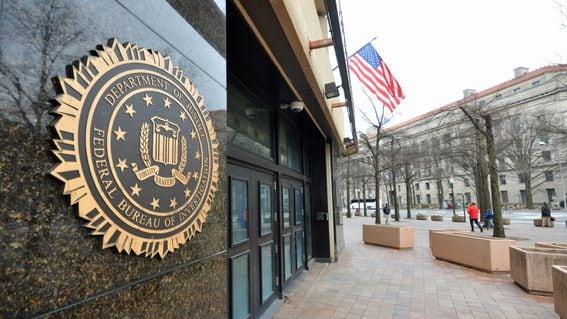
Three men allegedly used foreign crypto exchanges to launder the proceeds of a scheme that targeted nearly a dozen financial institutions in the New York metro area. Three men duped New York-area banks into shelling out more than $10 million and tried to make off with the money by converting it to crypto, U.S. Attorney Damian Williams said Thursday in a statement. Zhong Shi Gao, Naifeng Xu and Fei Jiang allegedly stole millions of dollars from nearly a dozen financial institutions throughout the New York metropolitan area between 2018 and 2022, law enforcement officials said. The trio bilked banks out of the funds by posing as victims of fraudulent money transfers, prompting institutions to credit them in the amount of the supposed unauthorized transfers and "effectively doubling their money," according to an indictment. "These charges should serve as a warning to fraudsters and cybercriminals who think they can turn to cryptocurrency to hide their identities – together with our partner agencies, we will find you and hold you accountable for your crimes," Williams said in the statement. Each of the accused men has been arrested by the Federal Bureau of Investigation and faces four criminal charges in U.S. District Court for the Southern District of New York: bank fraud conspiracy, conspiracy to commit wire fraud affecting a financial institution, money laundering conspiracy and aggravated identity theft. The maximum sentence for all the charges combined could amount to nearly 100 years, the release shows. Authorities said the men enlisted foreign nationals from China and Taiwan to open U.S. bank accounts that the trio could use to manage the transfers that they'd pretend were unwanted. Read More: FBI Charges 6 for Allegedly Running $30M Money Transmitting Business Using Crypto https://www.coindesk.com/policy/2023/11/16/fbi-arrests-trio-accused-of-bilking-banks-out-of-10m-converting-funds-to-crypto/