2023-11-06 09:55
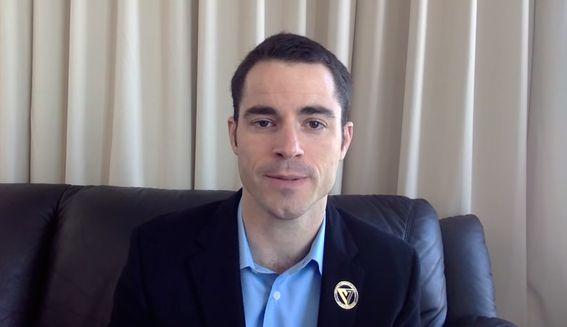
The investor launched a suit last year in Seychelles against Matrixport subsidiary Smart Vega, which runs Bit.com, for confiscating $8 million, which he says is being kept because Matrixport's Jihan Wu blames him for the collapse of CoinFLEX. While CoinFLEX's creditors and OPNX's management await their day in a Hong Kong court, another legal scuffle is brewing between Roger Ver – whom some call 'Bitcoin Jesus' – and Jihan Wu, the co-founder and chairman of Matrixport. The feud is over $8 million Ver says Wu took from him as punishment over his supposed role in the demise of unrelated crypto exchange CoinFLEX. Ver’s counsel, in a lawsuit filed in Seychelles last year, alleges that bit.com, a crypto exchange owned by Matrixport, will not let him withdraw $8 million, as Wu – a creditor of CoinFLEX – suffered financial losses when the exchange filed for restructuring. “CoinFLEX’s insolvency lies at the heart of the reason Wu ordered Matrixport to convert my Funds," the court docket reads. "CoinFLEX’s insolvency has nothing to do with the sums Matrixport owes to me.” Ver was also named in the writ against OPNX, which was filed by CoinFLEX’s creditors in Hong Kong. Ver says CoinFLEX’s demise was not his fault In the aftermath of CoinFLEX’s collapse, a narrative emerged that the exchange's demise was because a large individual customer failed to meet a margin call, whom the exchange’s management later named Ver, in hopes of recovering the position’s value of $84 million via arbitration. For his part, Ver says in the Seychelles suit that the whole narrative emerged only because of “flagrant breaches of confidentiality” involving arbitration between CoinFLEX and himself. “I started the arbitration against CoinFLEX in June 2022, seeking $200,000,000 in damages. I was the plaintiff, not CoinFLEX. CoinFLEX was the defendant and only later filed a counterclaim for $84,000,000,” Ver told CoinDesk in an email. Ver said he began an arbitration case against CoinFLEX in June 2022, seeking $200 million in damages he sustained from trading on the platform, CoinDesk reported. Ver alleged he had “evidence that certain third parties were provided with knowledge of my sizable positions on CoinFLEX and traded against them to my detriment.” “The arbitration was in Hong Kong, where the law is clear that the arbitration is required to be kept confidential,” he continued in an email to CoinDesk. Despite this, he says that Lamb, CoinFLEX’s founder and CEO, broke confidentiality to “intentionally misrepresent to the entire world that CoinFlex was the plaintiff and give their side of the case.” “CoinFLEX went insolvent due to a combination of the May 2022 market turmoil and its co-founders’ poor risk management,” Ver wrote in a Seychelles court filing. Matrixport doesn’t deny withholding crypto In exhibits attached to court filings, and statements Matrixport made to CoinDesk, neither Wu nor the company denies that crypto is being withheld from Ver. Still, the dispute is over the rationale behind it. “My position is very simple. I am a creditor of CoinFlex, and CoinFlex is a creditor of you. You just send your USDC back to CoinFlex to repay the debt there, and CoinFlex releases the $5 million USDC to me,” Wu wrote. In earlier correspondence with CoinFLEX’s Mark Lamb, Wu discussed selling the debt to him. “Roger chatted with me and insisting that CoinFLEX owes him money because you refused to liquidate,” Wu wrote. “In no way I will release the USDC to Roger.” Ver also alleges that Matrixport is struggling with liquidity issues, quoting a statement that Wu made to him, in which he said he “needs to gather every possible liquidity have to Matrixport.” “If I had an easier situation, I would not have done this,” Wu is quoted as saying. “Wu’s statement further indicated to me that Respondent was insolvent or on the brink thereof, and therefore was unable to permit me to withdraw the Funds,” Ver wrote in the Seychelles filing. Matrixport says the funds are being held because of an investigation into Ver’s “margin trading irregularities.” “Subject to a penalty fee for margin call defaults, Mr. Ver was free to withdraw his funds but instead disputed the penalties payable,” Matrixport spokesperson Ross Gan told CoinDesk. “Ver continues to make unreasonable demands to bit.com other than the withdrawal of his funds.” Ver has filed in Seychelles to wind up (liquidate) Matrixport “based on Jihan’s written admission that Matrixport was forfeiting funds it owed me for his own personal reasons.” Correspondence between Ver and Matrixport shows that the exchange wants to withhold $1.29 million as a penalty for defaulted margin calls and legal fees. Disputes over Terms of Service In emails between Matrixport executive Mo Zhou and Ver’s attorney, Daniel Kelman, Matrixport wrote that the firm is committing significant legal resources to fight Ver’s case in Seychelles and “our counsel has advised us that bit.com has the right to claim set off against your balance given these costs/damages.” Kelman countered that bit.com’s terms of service, which Ver agreed to before opening an account, do not allow such penalties. “There is no set-off permitted by your terms," Kelman wrote. “Matrixport has put forth no legal justification for the continued retention of the approximately $6.54 million left after deducting your fake penalty — not even a phony one invented after the fact to give yourself cover from allegations of criminal theft and conversion." “Given the ongoing litigation, our counsel has advised the funds be withheld until a court decision provides clarity on the proper course of action,” Matrixport’s Gan wrote to CoinDesk. In an April 2023 email between bit.com and Kelman, a company representative said that it was willing to put the disputed $8 million into a third-party escrow account pending the resolution of both side’s contractual differences. https://www.coindesk.com/business/2023/11/06/roger-ver-seeks-winding-up-of-matrixport-in-seychelles-lawsuit/
2023-11-06 09:27
Big Tech companies like Meta and PayPal will be able to issue payments-focused stablecoins under the proposed rules provided they meet the criteria. The Bank of England (BOE) will regulate “systemic stablecoins” that are in wide enough circulation to potentially disturb financial stability, while the Financial Conduct Authority (FCA) will oversee the wider crypto sector according to discussion papers published by the two regulators Monday. The proposals followed broader plans for overseeing the crypto sector published by the U.K. government last week. Proposals from Big Tech companies like Facebook, now Meta (META), and PayPal (PYPL) to issue stablecoins and last year's collapse of stablecoin empire Terraform Labs have propelled related regulation worldwide, with major jurisdictions such as the European Union and Japan recently finalizing regimes. While the EU's Markets in Crypto Assets (MiCA) regulation seeks to limit potentially wide-use stablecoins such as the one proposed by Meta, a person familiar with the matter said the BOE's proposals would allow companies to issue payments-focused, fiat-backed stablecoins in the U.K. if approved to do so. No existing stablecoin, however, qualifies as "systemic" under the proposals. The U.K., which has expressed a desire to become a global crypto hub, successfully brought stablecoins into the scope of the country’s payments regulation in June. Legislation for fiat-backed stablecoins is expected early next year. The discussion papers published Monday represent "an exploratory phase in developing the new regime," and after regulators receive feedback from stakeholders on these proposals, they will consult on the final rules, the BOE said. The FCA and the central bank aim to consult on final rules by mid-2024, and implement the stablecoin regimes by 2025, according to a document published alongside the discussion papers. Protections for stablecoin issuers The BOE’s plans focus on stablecoins pegged to the value of the British pound because the central bank considers these to be likely to be used widely for payments, the bank said in a press statement. Among other things, the central bank is considering limits on individual stablecoin holdings. The BOE paper was published Monday alongside a letter from the country’s Prudential Regulations Authority (PRA) to deposit-takers. The PRA expects lenders in the country to mitigate risks “of contagion,” it said in the letter, which clarified that the protections available to traditional deposit takers differ from those available for stablecoin users. “Contagion risks will be lower for stablecoins used in systemic payment systems regulated by the Bank, than for e-money or other regulated stablecoins captured by the FCA’s regime,” the letter said. FCA plans Meanwhile, the FCA said issuers will need to seek authorization to circulate fiat-backed stablecoins in or from the U.K. It wants stablecoins to be backed by “appropriate” assets to equal the value in circulation. It also wants issuers to make sure that the crypto can be easily redeemed for fiat currencies regardless of technical or liquidity issues. The watchdog also proposed that regulated stablecoin issuers should be allowed to retain revenues derived from “interest and return from the backing assets,” which will help set a “clear distinction between stablecoins and deposits.” The FCA is also of the view that regulated stablecoin issuers should not be permitted to pay income or interest to consumers. “We are conscious that this may be perceived as unfair to consumers, in the event that interest rates continue to remain high and/or go up significantly (given that the regulated stablecoin backing assets are expected to be protected as client assets),” the paper said. https://www.coindesk.com/policy/2023/11/06/bank-of-england-publishes-plans-to-regulate-wide-use-stablecoins/

2023-11-06 07:43
We’re seeing decent progress on the CPI and hourly earnings trends, giving room for the Fed to speak in a continued dovish tone, Amberdata's Greg Magadini said. Bitcoin (BTC) has seen little upside momentum since Friday’s dismal U.S. nonfarm payrolls (NFP) release. Still, market sentiment remains positive, with weak data signaling an end of the Fed tightening. “There’s no reason not to be bullish BTC,” Greg Magadini, director of derivatives at Amerdata, said in an email, citing Friday’s payrolls figure and the recent decline in stock market volatility indices as the likely catalyst for continued gains in the cryptocurrency. The Labor Department’s closely watched employment report on Friday showed that job creation slowed to 150,000 jobs in October after rising by 297,000 in September. Meanwhile, the jobless rate rose to 3.9% while wage growth, as measured by average hourly earnings, softened, hinting at continued disinflation. The data has made it more likely that the Federal Reserve will not hike interest rates again, supposedly a positive development for risk assets, including cryptocurrencies. The central bank has raised rates by 525 basis points to 5.25% since March last year. The so-called tightening aimed at taming inflation was partly responsible for last year’s crypto market slide. “This NFP print was also accompanied by revisions lower for both September (+336k→ +297k) and August (+227k → +165k). We’re also seeing decent progress on the CPI and hourly earnings trends, giving room for the Fed to speak in a continued dovish tone,” Magadini noted. Supporting the case for continued upside in bitcoin is the dwindling volatility in the U.S. stock and bond markets. The S&P 500 VIX indicator has tanked from 21.13 to 14.19 in the past five trading days, while the MOVE index, an options-based measure of volatility in the Treasury bond market, has dropped from 132 to 118, according to charting platform TradingView. Perhaps tensions in the Middle East are no longer the focal point for the market. Reduced volatility in traditional markets, especially bonds, alleviates liquidity stress in the global market, incentivizing risk-taking. "The Middle Eastern war (something beyond my understanding) seems to have taken a backseat in terms of market-driving news. I expect a continuation of the relief rally for risk assets. Especially given the massive drop in VIX and VVIX week-over-week and the classic end-of-year rally narrative that traders look for in Q4," Magadini said. Bitcoin changed hands at $34,890, representing a 0.4% decline on the day. Prices have gained nearly 25% in four weeks, reaching highs above $36,000 at one point. https://www.coindesk.com/markets/2023/11/06/there-is-no-reason-not-to-be-bullish-on-bitcoin-after-payrolls-data-crypto-expert-says/

2023-11-06 06:30
Apart from using an investment adviser, the debtors have proposed setting up a pricing committee in which all stakeholders are represented. Bankrupt crypto exchange FTX and its debtors have asked the U.S. bankruptcy court of Delaware to approve the sale of some trust assets, funds of Grayscale and Bitwise valued at an estimated $744 million, through an investment adviser, according to a court filing on Friday. “The Debtors’ proposed sale(s) or transfer(s) of the Trust Assets will help allow the estates to prepare for forthcoming dollarized distributions to creditors and allow the Debtors to act quickly to sell the Trust Assets at the opportune time,” the filing said. “Additionally, because the Debtors may sell the Trust Assets to one or more buyers in one or more sales, sales pursuant to the Sale Procedures will alleviate the cost and delay of filing a separate motion for each proposed sale.” FTX was one of the world’s largest crypto exchanges before it went bankrupt in November last year after a CoinDesk report shed light on customer fund misappropriation by the firm. Last week, FTX founder Sam Bankman-Fried was found guilty of defrauding his customers and lenders by a jury. A sentencing date has been tentatively set for March 28, 2024. Theoretically, he could face 115 years in jail, but realistically, that could be between 15-20 years, according to experts. The “trust assets” are held in five Grayscale Trusts, totaling an estimated $691 million, and one trust managed by Bitwise, amounting to $53 million, based on the market value as of October 25, 2023. The trusts allow investors to gain exposure to digital assets without owning the digital assets. “The debtors’ judgment is that proactively mitigating the risk of price swings will best protect the value of the Trust Assets, thereby maximizing the return to creditors and promoting an equitable distribution of funds in the debtor’s’ plan of reorganization,” the filing said. Apart from using an investment adviser, the debtors have proposed setting up a pricing committee in which all stakeholders are represented. The investment adviser shall also be required to obtain a minimum of two bids from different counterparties before the sale of assets. Grayscale and CoinDesk are part of the same parent company, Digital Currency Group (DCG). Read More: FTX Debtors Revise Settlement Proposal After Objection From U.S. Trustee https://www.coindesk.com/policy/2023/11/06/ftx-wants-to-sell-744m-worth-of-grayscale-bitwise-assets/

2023-11-06 05:17
"Remember how we were always saying we wish Bart was less fungible," Homer asks Marge after he puts his son on-chain. Non-fungible tokens (NFTs) and the blockchain made a special appearance on The Simpsons, Sunday night U.S. time. During Treehouse of Horror 34, the Halloween special episode of the iconic animated series, the show made numerous references to the overvaluation of on-chain NFTs in the first chapter of the episode titled “Wild Barts Can’t Be Token.” NFTs are a special type of crypto asset that allows holders to prove their ownership of real or digital items. In the episode, Marge battles through the blockchain to rescue Bart, now a living NFT, while the city’s mayor declares that Springfield’s art gallery will be digitized. There are also plenty of appearances by blue chip NFTs, like the Beeple, the Bored Ape Yacht Club, and second-tier PFPs being shown as nearly worthless. On X, Noah Bolanowski, an NFT collector and adviser to Crypt Gallery, an IRL NFT gallery, analyzed how the show portrayed NFTs. “I loved how the episode had an incredible art emphasis - the PFPs were painted largely as the bottom of the barrel, whereas art was positioned at a level of prestige. They even had BAYC holders cleaning their feet,” he posted on the social networking platform. The episode, which has plenty of references to the NFT crash of last year, isn’t the first time that crypto – or NFTs – has appeared on the show. In 2020, the episode “Frinkcoin” features Jim Parsons educating viewers on cryptocurrency, complete with a singing ledger book and teases to the identity of Satoshi. “For cryptocurrencies to work, we need a record of every transaction that occurs. These are recorded in what’s called a distributed ledger,” Parsons explains during the episode, which aired just before the Covid crypto crash of March 2020. “When you use the currency, the transaction is recorded in the ledger, and when one ledger book gets filled up, we add to a chain of previous books – that’s the blockchain.” Last year’s “The King of Nice” had a gag where Krusty the clown is forced onto the celebrity-for-hire app Cameo because he blew all his money on NFTs. “Non-funny TV shows” is how the clown describes it. This isn’t the first time Simpsons creator Matt Groening’ has snubbed crypto and blockchain. Earlier this year, Futurama, another popular animated series by Groening, mocked crypto miners in an episode titled “How the West Was 101001.” The latest episode appeared to have a minor impact on the floor prices of the Bored Ape Yacht Club, up 0.3% in the last 24 hours, according to CoinGecko data, and the Mutant Ape Yacht Club, with its floor prices up 2.9%. In comparison, the cost of ether is down 0.14%. https://www.coindesk.com/markets/2023/11/06/the-simpsons-take-a-dig-at-nfts-crypto-in-treehouse-of-horror-episode/

2023-11-06 03:35
The move comes a month after authorities in the City updated financial regulations to allow for retail investors to buy spot crypto ETFs. Hong Kong’s securities regulator, the Securities and Futures Commission (SFC), is moving towards allowing retail investors to buy spot crypto Exchange Traded Funds (ETFs). “We welcome proposals using innovative technology that boosts efficiency and customer experience,” SFC Chief Executive Officer Julia Leung is quoted by Bloomberg as saying. “We’re happy to give it a try as long as new risks are addressed. Our approach is consistent regardless of the asset.” Hong Kong regulators are continuing to take a progressive approach to crypto, and their opinion on retail exposure to digital assets has shifted throughout the year. In January, the SFC tightened regulations by restricting retail investors from accessing crypto spot ETFs, limiting them to professional investors with portfolios of at least 8 million HKD ($1 Million). Then, in October, the SFC updated its rule book to allow a broader range of investors to engage in spot-crypto and ETF investing, stipulating that they pass a knowledge test and meet net worth – though less than the professional investor threshold – requirements. “The policy is updated in light of the latest market developments and enquiries from the industry seeking to further expand retail access through intermediaries and to allow investors to directly deposit and withdraw virtual assets to/from intermediaries with appropriate safeguards,” the SFC said in a circular. Issuers of listed crypto products would need to publish risk disclosure statements. “As the crypto ecosystem evolves step-by-step to the point where we’re comfortable, then we’re happy to open up more access to the wider investing public,” Leung is quoted by Bloomberg as saying. https://www.coindesk.com/policy/2023/11/06/hong-kong-now-considering-spot-crypto-etfs-for-retail-investors-bloomberg/