2023-11-01 11:02
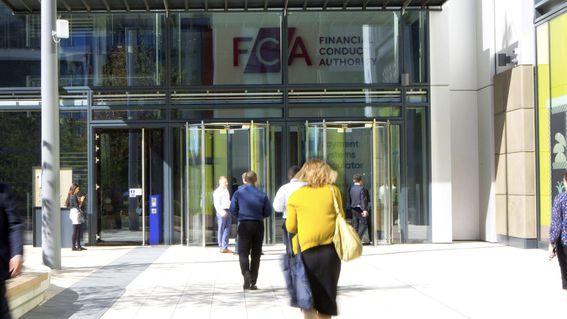
Those approving promos for unregistered crypto companies are already facing regulatory scrutiny – and will soon have to seek new permissions to continue. Unregistered crypto firms looking to serve U.K. clients have to rely on other companies to approve local communications. These ad approvers are facing heavy regulatory scrutiny and will soon have to apply for new permissions. The U.K.’s tough new rules for advertising crypto have firms rushing – and even struggling – to comply. More rules planned for ad approvers augur further trouble for companies looking to draw local customers. Local regulators require firms to be admitted to the country’s crypto register to be able to approve their own communications or – failing that – have their ads approved by authorized firms. It sounds pretty straightforward, but in reality, firms with the right powers aren’t easy to come by. Binance exchange, for instance, teamed up with a U.K. firm called Rebuildingsociety.com to have its promos approved, but the country’s financial watchdog slapped the local firm with new restrictions in October limiting its ability to approve crypto-related communications. As a result, Binance announced it won’t be taking on any new U.K. clients until it finds an authorized ad approver. Now, as much as 10 crypto businesses including Coinbase and OKX are relying on exchange platform Archax to approve their ads in the U.K. But even Archax’s future as a crypto promotions approver is not guaranteed. Archax can only temporarily approve crypto ads for other companies while it applies for the Financial Conduct Authority’s (FCA) permission to continue approving. It can apply for this authorization within three months starting Nov. 6. Should the regulator reject Archax's application, companies that are relying on it for ad approvals will be forced to find alternative means of complying. “Everyone is in the same state as us. We're all applying and we're all allowed to provide the service while we apply,” said Simon Barnby, Archax’s chief marketing officer, in an interview with CoinDesk. “If at the end of it, someone passes then that's all well and good and if someone doesn't, then they would have to stop providing the service.” Authorization not enough Archax was one of the first companies to get on the FCA crypto register in 2020 and it received authorization from the regulator as an exchange, broker and custodian for tokenized and traditional assets. Although the FCA has previously said authorized entities can approve crypto ads, this didn’t prove enough in the case of Binance’s ad approver. Rebuildingsociety.com was told in October that it could not approve crypto ads despite the company being an FCA-authorized entity. The FCA said at the time that the decision was made to ensure consumer protection. The confusion over which entities have the right powers to help crypto firms communicate to U.K. clients is only part of the struggle for unregulated platforms that have historically – and quite liberally – accessed customers across jurisdictions. The FCA is monitoring compliance carefully, and has added around 221 crypto platforms to its warnings list since the ad rules took effect on Oct. 8. The regulator is also putting pressure on ad approvers. In a recent notice, it told approvers to expect enforcement action should they fail to notice “common issues” like illegible or insufficient risk warnings. New permissions Firms approving crypto ads for other companies must apply for new permissions with the FCA. To get the greenlight, firms have to prove they have the appropriate expertise to approve promotions for crypto companies and demonstrate they have the resources to do so, the regulator said. “It's a resource-intensive area, but we have been growing the team appropriately to match client demand,” Nick Donovan, chief revenue officer at Archax said, adding that the firm is preparing its application. Firms that have been approving other companies’ communications can continue doing so after they apply for the new permissions, and only keep going if they get a positive decision from the FCA. “If we refuse a firm's application or the permission granted does not cover approvals for certain types of product for which they have applied for permission, the firm will need to cease the relevant S21 approval activity once we have determined their application,” the FCA said in September. https://www.coindesk.com/policy/2023/11/01/upcoming-uk-rules-for-crypto-ad-approvers-spell-uncertainty-for-industry/
2023-11-01 09:53
"You have people talking about bitcoins, about equity, being the safe asset," El-Erian told CNBC. Bitcoin (BTC) is emerging as a safe haven asset, with the U.S. Treasury bonds falling out of favor in the wake of the Israel-Hamas conflict, according to Mohamed El-Erian, chief economic advisor at German financial services firm Allianz. “You have people talking about bitcoins, about equity, being the ‘safe asset’ because they’ve lost confidence in government bonds being the safe asset because of the nature of the interest rate risk,” El-Erian told CNBC on Tuesday. A safe haven asset is expected to retain or increase in value during periods of economic and political uncertainty. For decades, investors have treated government bonds, particularly those issued by the U.S. Treasury, as safe havens. Recently, however, the Treasury bonds have failed to live up to their reputation. At 4.9%, the yield on the U.S. 10-year Treasury note is at least ten basis points higher than where it was a day before Hamas attacked Israel on Oct. 7. In other words, the price of the 10-year note has declined, a sign of investors seeking safety in other assets. Bitcoin has risen 23% to $34,460 since Oct. 7. “We haven’t seen the flight to quality of flight to safety that you would expect given what’s happening in the world,” El-Erian said, noting the uptick in the 10-year yield since the outbreak of tensions in the Middle East. The Treasury bond market has seen higher volatility this year, with yields charting sharp two-way moves in recent weeks due to uncertain government bond auctions, concerns about the economy, federal debt and the Fed’s policy path. The central bank has raised the benchmark borrowing cost by 525 basis points since March 2022 and intends to hold it higher for longer. https://www.coindesk.com/markets/2023/11/01/bitcoins-safe-haven-status-bolstered-by-treasury-underperformance-mohamed-el-erian-says/

2023-11-01 07:55
Elmaani pleaded guilty in April 2023, agreeing that he caused a tax loss of over $5.5 million. Amir Bruno Elmaani, aka “Bruno Brock,” founder of the blockchain protocol Oyster Pearl, has been handed a four-year jail term for tax offenses, the U.S. Department of Justice (DOJ) announced on Tuesday. Elmaani, 31, of Martinsburg, West Virginia, was also sentenced to one year of supervised release and ordered to pay restitution of $5.5 million, the estimated tax loss. Elmaani pleaded guilty in April 2023. He had initially been charged in 2020 separately by the Internal Revenue Service (IRS) and the Securities and Exchange Commission (SEC) with assistance from the Federal Bureau of Investigation and the Commodity Futures Trading Commission. Elmaani used a coin mixer to conceal the true destination of cryptocurrencies on the blockchain before transferring funds to family members and friends and then to himself, according to the DOJ. The origins of the case go back to 2017 when Elmaani made “millions of dollars” from an initial coin offering of its pearl (PRL) cryptocurrency, but instead of reporting the income from sales, he falsified his tax return and then used $10 million in proceeds to buy multiple yachts (where he stored gold bars), real estate and home renovations. “I stated in public forums that after the ICO, the supply of PRL would not increase, and that the smart contract that created PRL would be “locked,” Elmaani admitted in the plea agreement, according to the announcement. "Contrary to these statements, on or about October 29, 2018, I used the smart contract to mint new PRL, without telling anyone, including others who worked on the Oyster Protocol project.” “Amir Elmaani violated the duty he owed to pay taxes on millions of dollars of cryptocurrency profits, and he also violated the trust of investors in the cryptocurrency he founded," said U.S. Attorney Damian Williams. "Participants in the cryptocurrency markets must play by the rules, and this Office will be tireless in prosecuting those who do not.” Read More: IRS Proposed Rule on Digital Asset Broker Reporting Could Kill Crypto in America https://www.coindesk.com/policy/2023/11/01/bruno-brock-founder-of-oyster-pearl-gets-4-year-jail-term-for-tax-evasion/
2023-11-01 07:14
Turkey has been on the "gray list" of the Paris-based global money laundering and terror financing watchdog since 2021. Turkey is in the “final stage" of bringing crypto legislation to its parliament, a last step required for it to be removed from the Financial Action Task Force’s (FATF) “gray list,” its finance minister Mehmet Şimşek told the nation’s planning and budget commission late on Tuesday. The FATF’s "gray list” is seen as a reprimand to address strategic deficiencies in regimes to counter money laundering and terrorist financing. Turkey has been on the “gray list” of the Paris-based global money laundering and terror financing watchdog since 2021, breaking confidence in the Turkish economy, which has already been under a dark cloud of high inflation, making crypto remarkably popular, "basically a saviour." Turkey has complied “with 39 out of 40 FATF standards,” Simsek said, according to CoinDesk Turkey. “Regarding technical compliance, the only ongoing preparations are related to work on crypto assets. Our necessary efforts in this regard have reached the final stage." Last week, Turkey’s finance ministry announced it would carry out a study on regulating crypto asset service providers and taxing and defining virtual assets, but the latest revelation refers to its motivation to bring crypto legislation to parliament as a final step to fulfill FATF's technical requirements to be removed from the “gray list.” “We will submit a law proposal on crypto-assets to the parliament as soon as possible,” Simsek said, according to CoinDesk Turkey. “After that, there will be no reason for Turkey to stay in that gray list, if there are no other political considerations.” Read More: 11,196 Years Jail Sentence for Faruk Özer, CEO of Collapsed Turkish Crypto Exchange Thodex https://www.coindesk.com/policy/2023/11/01/turkey-in-final-stage-of-bringing-crypto-legislation-as-last-step-to-get-off-fatfs-grey-list-minister/
2023-11-01 06:45
Bitcoin options dealers or market makers are likely to trade in the direction of the market above $36,000, accelerating price gains. Bitcoin (BTC) could see rapid price gains once it tops the $36,000 mark, the recent positioning of options market makers suggests. Options are derivative contracts, offering the purchaser the right but not the obligation to buy or sell the underlying asset at a preset price at a later date. A call or a bullish bet gives the right to buy, while a put confers the right to sell. The demand for higher strike price call options has recently increased, with bitcoin rallying nearly 27% in the past four weeks. That has left market makers with a significant net short gamma exposure above $36,000, according to data tracked by Amberdata and Galaxy Digital. Options gamma is the rate that delta will change based on a $1 change in bitcoin’s price. Delta measures the sensitivity of options prices to the change in bitcoin's price. When market makers or dealers are net short gamma, they buy the underlying asset in the spot market as its value increases to stick to their mandate of maintaining an overall delta or market-neutral exposure. The hedging activity often accelerates the rally, often called a “gamma squeeze,” and likely played a role in BTC’s recent quick ascent from $30,000 to $35,000. “If BTCUSD moves higher to $35,750-$36,000, options dealers will need to buy $20 million in spot BTC for every 1% upside move, which could cause explosiveness if we begin to move up towards those levels,” Alex Thorn, head of firmwide research at Galaxy Digital, said on X. Dealers or market makers are entities tasked with creating order book liquidity and are always on the opposite side of investors’ trades. They make money through the bid-ask spread and always strive to maintain a direction-neutral portfolio. The present positioning of market makers and its expected impact on the spot price contrasts the situation early this year when market makers were net long gamma and bought low and sold high in the spot/futures market to keep their books neutral. That further added to the volatility lull in the market. https://www.coindesk.com/markets/2023/11/01/bitcoin-could-go-crazy-above-36k-options-data-suggests/

2023-11-01 04:23
Frax's founder Sam Kazemian says the Frax websites are safe to use, and the domain registrar is investigating what happened. Decentralized cross-chain protocol Frax Finance's domain was hijacked early Wednesday, but the team behind the project has gotten it back under their control with help from their domain registrar. "Name.com has reached out to us and confirmed the domains are now routed back to their proper DNS under our control. We’ve been told they will let us know what led to the incident after they conduct a full investigation tomorrow," the project posted on X. Domain Name System (DNS) hijacking occurs when the domain name registrar redirects users to a malicious site that looks exactly like the authentic one to phish users into giving up their credentials. This type of attack is increasingly common in crypto. In 2022, the decentralized finance (DeFi) project Convex Finance had to set up new website addresses after its original URLs were taken over and misdirected users to malicious sites. So far, no user funds have been stolen by the attacker. Earlier, Kazemian told CoinDesk that his team is in the dark about what happened, and it doesn’t seem to be a compromised email or password. "It doesn’t seem like we did anything wrong at all. So until they tell us the account is secure, it’s not possible for us to say it’s safe," Kazemian said. Name.com hasn’t responded to a request for comment from CoinDesk but told Kazemian and the Frax team that they'll be conducting a full investigation into what exactly happened. https://www.coindesk.com/markets/2023/11/01/frax-finance-says-its-domain-name-has-been-hijacked/