2023-10-30 23:29
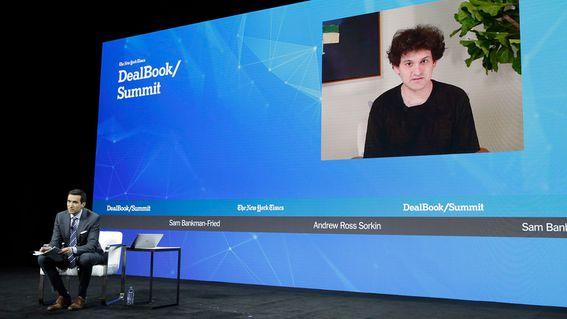
The FTX founder was grilled Monday by a prosecutor, who used the many words he said to journalists after his crypto company's collapse against him. A reminder, dear reader: If you're accused of committing massive fraud and risk facing the rest of your life in prison, you should probably turn down that interview with "Good Morning America." Such advice might've served Sam Bankman-Fried, the disgraced crypto founder who couldn't keep quiet last year following the collapse of his FTX crypto empire, after he allegedly stole billions of dollars of customers' money. To the chagrin of his lawyers (Asked by journalist Andrew Ross Sorkin on Nov. 30 if his attorneys were "suggesting this is a good idea for you to be speaking," he replied: "No, they're very much not."), the crypto founder went on a media blitz following FTX's collapse – seemingly desperate to dish out his side of the story to practically anyone who would listen, be they journalists, Twitter personalities or vexed crypto day traders. Bankman-Fried was asked during his direct questioning last week why he spoke to so many journalists. "I felt like it was the right thing for me to do," he told his lawyer. Right or wrong, the FTX founder's media strategy seemed as perplexing as ever on Monday, when prosecutors spent hours peppering him with questions about potential criminality at FTX — using his countless post-collapse interviews as corroborating evidence. The bulk of Bankman-Fried's exchanges with Danielle Sassoon, the assistant U.S. attorney who led the questioning, followed a strikingly similar pattern. Sassoon would ask the defendant a question: "In private, you said things like 'f–k regulators,' didn't you?" Bankman-Fried would respond to the effect of "I don't recall saying that," or in the case of the comment disparaging regulators: "I said that once." Then, whether or not Bankman-Fried could remember making a statement, Sassoon was always ready with corroborating evidence – like the defendant's ill-advised, viral text exchange with a Vox reporter expressing his distaste for regulators. SBF's friendliness with journalists Bankman-Fried's proclivity for speaking with the press had worked well for him historically. His trademark curly mop of hair, T-shirt and cargo shorts were complemented by a nerdily irreverent speaking style that lent him an air of earnest eccentricity in interviews. This public image was beamed around the world by his frequent media appearances, which may have played a key role in helping him woo users and investors to FTX. Bankman-Fried acknowledged as much during his trial, confessing that he became the public face of FTX by happenstance after it became clear that he had a knack for press. In the lead-up to Bankman-Fried's cross-examination this week, prosecutors have scrutinized his policy of customarily deleting written communications – a practice he testified to picking up during his time as a quantitative trader at Jane Street, where junior employees were advised to consider the "New York Times Test." "Anything that you write down," he recalled during his direct questioning last week, "there's some chance it could end up on the front page of The New York Times." He added: "A lot of innocuous things can seem pretty bad" without context. Bankman-Fried had an odd interpretation of this rule. While he set most internal FTX chats to "auto-delete" — apparently to prevent them from showing up in The New York Times — he often spilled his secrets directly to the Times and other news outlets. The results of these post-collapse conversations, when presented in a courtroom, still looked "pretty bad." Sassoon's grilling excerpted interviews with Sorkin of The New York Times, George Stephanopoulos of "Good Morning America" and Bloomberg's Zeke Faux, among others – just a handful of the journalists Bankman-Fried spoke to immediately after FTX's fall. At least five journalists whose names showed up in pieces of evidence pulled up for the jury Monday were physically present at the Manhattan courthouse. Although he left prosecutors with a sparse written record of his conversations at FTX, his press appearances after FTX collapsed, wherein he walked step-by-step through the fall, contained more than enough material for Sassoon to puncture his credibility, and to rip apart the sympathetic image he painstakingly constructed for himself in early media interviews and hours of direct questioning from his own lawyers. Another inconvenient interview A key moment in Monday's cross-examination revolved around the allegation that Alameda Research, a trading firm Bankman-Fried founded before starting FTX, had "special privileges" on the exchange that allowed it to steal billions of dollars in user deposits. Bankman-Fried has generally been evasive when asked if Alameda had special privileges on FTX, since admitting that would be a huge boon to the government's case against him. "Isn't it true that as CEO of FTX you were aware that Alameda had more leeway than other traders on the exchange?" Sassoon asked him at one point on Monday. Initially, he pushed back: "Not in those words specifically, and I don't know what context it was in." With some prodding from Judge Lewis Kaplan, Bankman-Fried conceded that Alameda had "put on a far larger position than I had anticipated" but he said it was due to a banking relationship between Alameda and FTX that he maintains was kosher. He made no mention of any Alameda special privileges or extra "leeway." Sassoon drilled further: Alameda's large position "was also the result of the margin rules that did not apply to Alameda, correct?" "I'm not sure that's how I see it, no," Bankman-Fried responded. Sassoon, unphased, moved right ahead with her questioning. She pulled up an interview between Bankman-Fried and Bloomberg's Faux. The article was dated December 2022, a few weeks after FTX fell apart: "When I ask if Alameda had to follow the same margin rules as other traders, he admits the fund did not," Faux wrote. "'There was more leeway,' Bankman-Fried says." Although most of his internal communications have been deleted – perhaps a wise move depending upon what they contained – a remarkable amount of the prosecution's evidence was drawn from media appearances like this one that Bankman-Fried did after he stepped down from his role at FTX. Had he stayed quiet – adopting some variant of the New York Times Test to avoid letting his words come back to haunt him in court – one imagines this portion of the case could have taken a strikingly different course. https://www.coindesk.com/policy/2023/10/30/sam-bankman-frieds-post-collapse-media-blitz-has-clearly-backfired/
2023-10-30 20:11
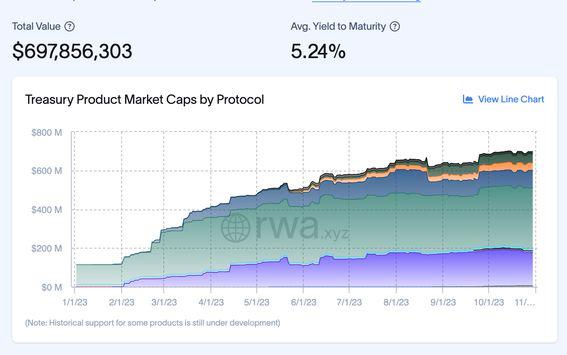
Ethereum has toppled Stellar as the top blockchain for tokenized government bonds while more recent entrants Solana and Polygon also grew. Tokenized versions of U.S. Treasuries grew nearly seven-fold so far in 2023 as competition between investment offerings and blockchain venues intensified. According to real-world asset (RWA) monitoring platform RWA.xyz, the tokenized Treasury market surged to $698 million as of Monday from around $100 million at the start of the year. The expansion was spurred by new entrants into the space as well as from existing platform growth, Charlie You, co-founder of RWA.xyz, noted in the Our Network newsletter. Existing protocols including Ondo Finance, Maple and Backed enjoyed a sizable increase over the past few months, RWA data shows. Meanwhile, new protocols launched just in September such as Tradeteq and TrueFi's Adatp3r offering attracted $4.5 million and $8.5 million deposits, respectively. Ethereum (ETH) has recently toppled the Stellar (XLM) network in value of Treasury tokens on-chain, while later entrants Polygon (MATIC) and Solana (SOL) also attracted over $40 million of assets combined, according to blockchain data. This indicates "a diversifying blockchain landscape for tokenized assets," RWA.xyz's You said. Permissionless yield-bearing stablecoin alternatives emerged as a fresh avenue for tokenization, You added, as Ondo Finance debuted its USDY token and Mountain Protocol unveiled USDM. These offerings differ from leading stablecoins – Tether's USDT and Circle's USDC – in that they directly pass on the yield earned from the backing assets. Tokenization of Treasuries was spearheaded the effort to put real-world assets to blockchain rails. Crypto investors seek these offerings in order to capture higher returns as global interest rates soar alongside declining decentralized finance yields. Investment firm 21.co forecasted that the market for tokenized assets could grow to $10 trillion by the end of the decade. https://www.coindesk.com/markets/2023/10/30/tokenized-us-treasury-market-grows-nearly-600-to-698m-as-cryptos-rwa-race-intensifies/
2023-10-30 19:23
The foundation, formed in November 2022 after the initial developer StarkWare minted 10 billion STRK tokens, is now awarding early contributors to the Ethereum layer-2 network – even though they're locked for trading at least until next April. The STRK tokens from Starknet, a so-called layer-2 blockchain atop Ethereum, aren't even trading – and in fact they're locked up at least through next April. But a foundation devoted to supporting Starknet is already allocating the tokens to early developers and other contributors, as incentives for them to help build out the network. The 11-month-old Starknet Foundation announced Monday that it had allocated some 50 million STRK tokens to a new Early Community Member Program, or ECMP for short. According to a blog post, the program's focus is on individual contributors, including those who have: "significantly contributed to technical discourse." are involved with key projects in the ecosystem. organized events such as meetups, conferences and workshops. "Regularly published Starknet-branded content." The application process runs through Nov. 19, with decisions made by Dec. 29. The Starknet Foundation's tokens come from its original grant of 50.1% of the initial minted supply of 10 billion STRK, so that works out to a hoard of about 5 billion STRK. Since the tokens aren't trading, there's no easy way to estimate the value – especially with any potential payday still many months away. But the awards could help Starknet grow and retain its community, especially during the current "crypto winter" where resources are tight – and as rival projects including Arbitrum, the biggest layer-2 blockchain atop Ethereum, move forward with their own incentive programs. "The Starknet Foundation recognizes the pivotal role played by the Starknet community," according to the blog post. Starknet is the sixth-biggest layer-2 blockchain, with $143 million of deposits or "total value locked," according to the website L2Beat. Initially developed by the crypto startup StarkWare, certain responsibilities for the network were turned over to the foundation after it was launched in November 2022 with the mission of "supporting a thriving Starknet." Mandates for the foundation, which is overseen by a seven-member board that includes StarkWare co-founder and President Eli Ben-Sasson, include "fostering the community of Starknet users, developers and researchers" along with "overseeing the continued development of the network and advancing research," according to a blog post at the time. The initial supply of the 10 billion tokens was "minted off-chain by StarkWare," with some 17% earmarked for its own investors, 32.9% to "core contributors" including StarkWare employees and consultants and 50.1% to the foundation. https://www.coindesk.com/tech/2023/10/30/starknet-foundation-showers-strk-tokens-on-contributors-though-theyre-not-trading-yet/
2023-10-30 15:04
More than $35 million has been stolen in total, according to recent reports. Hackers siphoned a total of $4.4 million worth of crypto from at least 25 LastPass users on Oct. 25, according to blockchain analyst ZachXBT. LastPass is a platform that stores and encrypts password information for users. Its cloud-based storage service was breached in an attack last year that involved targeting an employee and stealing their credentials. ZachXBT and MetaMask developer Taylor Monahan have tracked at least 80 crypto wallets that have been compromised in relation to the hack. Funds have been stolen from the Bitcoin, Ethereum, BNB, Arbitrum, Solana and Polygon blockchains, according to a list published by Monahan. "Cannot stress this enough, if you believe you may have ever stored your seed phrase or keys in LastPass migrate your crypto assets immediately," ZachXBT wrote on X, formerly Twitter. Cryptocurrency wallets are often targeted by hackers because a common attack vector is obtaining a private key, which gives the hacker complete access to funds. In July more than $300 million was stolen from crypto users in a string of hacks and exploits. Cybersecurity journalist Brian Krebs reported that more than $35 million worth of crypto had been stolen in relation to the LastPass breach. https://www.coindesk.com/business/2023/10/30/lastpass-hack-victims-lose-44m-in-a-single-day/
2023-10-30 14:41
The token is set to be listed on Oct. 31 by Binance, Bybit and Kucoin. TIA, the native token of modular blockchain network Celestia, is trading at $3.15 on decentralized derivatives exchange Helix ahead of the mainnet launch later this week. Binance has set a tentative listing date of Oct. 31 at 16:00 UTC for TIA, which is expected to be airdropped to around 600,000 wallets. Kucoin and Bybit said the token will be available to trade at 14:00 UTC. Celestia's native token will have a total supply of 1 billion, putting its fully diluted value at $3.1 billion based on the futures price. The network said it plans to airdrop 60 million tokens to early adopters, although it is unclear how much of the remaining total supply will be circulating on release. Liquidity for TIA is thin on Helix with daily trade volume equating to around $3,000. Celestia raised $55 million in October last year in a combined Series A and B round led by venture capital firms Bain Capital Crypto and Polychain Capital. Described as a modular data availability network, Celestia aims to become a platform that will allow others to build their own blockchains. https://www.coindesk.com/business/2023/10/30/celestias-tia-token-trades-at-315-on-futures-market-ahead-of-airdrop/
2023-10-30 13:52
Assistant U.S. Attorney Danielle Sassoon repeatedly cornered the FTX founder on his public statements about his involvement with his affiliated trading firm Alameda and the safety of exchange customer assets. NEW YORK — Sam Bankman-Fried's risky choice to testify in his fraud and conspiracy trial exposed him to a tough line of questions Monday from prosecutors, focused on a core question: Did the former FTX crypto mogul lie to customers, investors, the public and even Congress? Following dozens of questions from Assistant U.S. Attorney Danielle Sassoon, Bankman-Fried said he did not remember telling FTX customers that his exchange was a safe place to trade, that customers would be protected or that Alameda Research (his trading firm that played a central role in the former billionaire's demise) did not have special privileges on the platform. Unfortunately for him, the U.S. Department of Justice has receipts; Bankman-Fried's prolific tweeting caught up with him. Sassoon repeatedly cornered the FTX founder on his public statements both before and after the crypto empire's collapse about his involvement in Alameda and the safety of FTX customer assets. The prosecutor immediately demonstrated that what he was saying in public diverged from his private statements, whether it was about the role of regulators or about the strength of FTX's risk engine, which was one of the exchange's internal tools intended to prevent major losses by automatically liquidating untenable positions. While Bankman-Fried was more careful in his replies on Monday than he was Thursday when testifying without jurors present – many of his Monday answers were initially just variations of "yes" or "no" – he still gave off the impression he resented having to answer some of these questions. The former FTX CEO was less loquacious during cross, dishing out curt, one-word affirmatives and the occasional denial. When he spoke about his companies' operations in more than just those clipped utterances, his answers usually riffed on the same chord: He simply couldn't remember what he’d said prior to his companies' collapses. Around 30 minutes into his cross-examination on Monday, Sassoon asked Bankman-Fried repeatedly if he publicly said FTX's international arm was "safe relative to other crypto exchanges." Sassoon offered to jog his memory, summoning a message Bankman-Fried tweeted to his followers in August 2021: "As always, our users' funds and safety come first." After several non-answers, including one where he said he didn't understand what she was referring to, even Judge Lewis Kaplan told Bankman-Fried to just answer the questions being asked. But the main theme of Sassoon's rapid-fire questioning on Monday was clear: Bankman-Fried was not telling customers or investors the truth when discussing Alameda's access to FTX, his role overseeing the company or the safety of customers' assets. To this point, Sassoon pulled up multiple exhibits listing both his public and private statements saying Alameda operated by "the same rules as other traders" – which wasn't true, the DOJ has spent weeks arguing in court. The early hours of the government's cross-examination were punctuated by quips from the government's lawyers that might have felt out of pocket at other criminal trials. At one point, when Sassoon proposed showing a piece of evidence to the jury, one of Bankman-Fried's lawyers piped up to remind the court that the evidence be entered "not for its truth" but rather for the simple fact that the defendant had said it. Sassoon agreed with the defense: The evidence – Bankman-Fried's sworn testimony before Congress – did indeed contain "inaccurate" statements from the defendant, she offered dryly. The ghost of publicity tours past Following the collapse of his crypto empire last year, Bankman-Fried couldn't seem to keep quiet. Instead, to the possible chagrin of his lawyers, the FTX founder went on a media blitz – seemingly desperate to dish out his side of the story to practically anyone who would listen, be they journalists, Twitter personalities, or vexed crypto traders. Bankman-Fried's post-collapse press tour came back to bite him on Monday, with the bulk of his exchanges with Sassoon following a strikingly similar pattern. Sassoon would ask the defendant a question: "In private, you said things like 'f**k regulators, didn't you?" Bankman-Fried would issue a response to the effect of "I don't recall saying that," or in the case of the comment disparaging regulators: "I said that once." Then, whether Bankman-Fried could remember making a statement or not, Sassoon would jump to show the jury her corroborating evidence – like the defendant's ill-advised, viral text exchange with a Vox reporter expressing his distaste for regulators. Sassoon's grilling excerpted interviews with Good Morning America's George Stephanopoulos, the New York Times' Andrew Ross Sorkin and Bloomberg's Zeke Faux, among others – just a handful of the journalists Bankman-Fried spoke to in the immediate wake of FTX's collapse. At least five journalists were physically present at New York's Southern District courthouse on Monday when their names were included in evidence shown to the jury. SBF's lawyer wraps up questioning him Before Sassoon's cross-examination, Bankman-Fried's lawyer finished up questioning him earlier Monday. Continuing a trend from Friday, when Bankman-Fried's lawyers kicked off their direct examination, the FTX founder corroborated some details from company insiders who testified against him earlier in the trial while providing alternate explanations – downplaying his culpability – for certain key events. Toward the end of his defense lawyer's questioning, Bankman-Fried walked the jury through the events of August through November of 2022, when FTX rapidly descended into bankruptcy. Bankman-Fried zoomed in on the aftermath of a Nov. 2, 2022, CoinDesk scoop that revealed Alameda's secretly precarious financial position, characterizing the events that followed as a "run on the bank," an interpretation that prosecutors moved to strike for the jury. (It was the same phrase former Enron CEO Jeff Skilling used to explain his company's spectacular collapse to Congress more than 20 years ago; he ended up serving 12 years in prison for fraud.) The defendant rephrased his description as a "run on FTX," which the judge accepted. Bankman-Fried also defended an infamous subsequent Twitter thread shown by prosecutors in which he told the world that "assets are fine" – a seeming plea to slow down withdrawals from the platform just days before it filed for bankruptcy on Nov. 11, 2022, and failed to return billions of dollars in user deposits. Bankman-Fried has argued throughout his testimony that he had a vague picture of his empire's finances in the run-up to FTX and Alameda's collapse, and he said that by November 2022, when he tweeted, he still believed that FTX didn't have any "hole" in its balance sheet, and Alameda still had assets in excess of liabilities. Bankman-Fried's read on the direness of the situation only changed a few days after his tweet thread, he testified, when key assets on Alameda's balance sheet – namely FTX's FTT token and Solana's SOL token – dropped drastically in price. SBF started testifying to jurors on Friday The one-time crypto exchange CEO began sharing his story with a jury of New Yorkers on Friday, arguing that FTX's collapse was the result of mistakes, including by some of his lieutenants who held key positions running the companies, including former Alameda CEO Caroline Ellison. He'd previously testified before Judge Kaplan on Thursday without jurors present, though much of that testimony won't make its way to the jury. "We thought that we might be able to build the best product on the market, an exchange that would combine the elements that we thought were best from traditional financial products with the elements we thought were best from the big crypto ecosystem, that it could move the – move the ecosystem forward," he testified Friday. "It turned out basically the opposite of that." The MIT graduate walked through his work at Jane Street and the origin of FTX and Alameda, before delving into some of the missteps he said led to last year's bankruptcy. These included Alameda's lack of hedges against the risks it was exposed to. Bankman-Fried also walked through some of his companies' investments, his political donations and other issues prosecutors have said show he intended to defraud his customers and investors. At points, the FTX founder seemed to contradict testimony provided by government witnesses – namely, his friends and former executives like Ellison and FTX Head of Engineering Nishad Singh. Read all of CoinDesk's coverage here. https://www.coindesk.com/policy/2023/10/30/live-sam-bankman-fried-takes-the-stand-for-a-third-day-in-ftx-fraud-trial/