2024-08-16 06:38
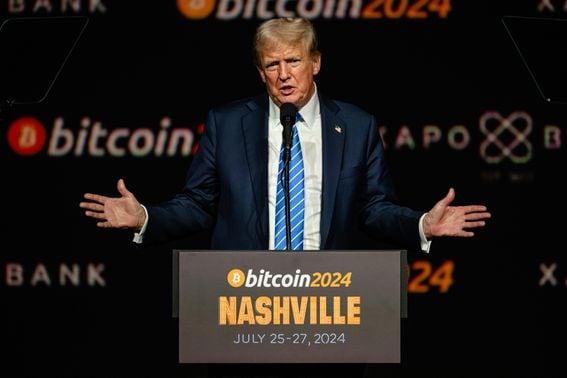
Filings show he has over $1 million in Ether. Disclosures show Trump has between $1 million-$5 million in Ether, and made over $7 million in an NFT licensing deal. Trump recently said he plans to launch another NFT collection. Donald Trump holds between $1 million -$5 million in Ether (ETH), and has significant income from non-fungible tokens (NFT) licensing fees, according to election disclosures While the filings list a non-specific amount of Ether, Arkham Intelligence lists the holdings of Trump's wallet at $3.6 million. Aside from the Ether holdings filings show that Trump made $7.15 million through a licensing agreement with a firm called NFT INT, and the former first lady, Melania Trump, had $330,609 in income from the sales of NFTs. OpenSea data shows that the Trump Digital Trading Cards have had over 15,808 ETH in trading volume since their debut. In July, Trump said he plans to release another NFT collection. Despite Trump's earlier endorsement of crypto, the former President didn't mention it during a X space interview with Elon Musk nor did he mention it during a recent press conference where he addressed a variety of other topics related to his campaign. Recently, the Trump Organization, the holding company for former U.S. President Donald Trump’s business ventures, announced it will unveil a cryptocurrency initiative, CoinDesk reported. https://www.coindesk.com/policy/2024/08/16/donald-trump-holds-over-1m-in-ether-also-receives-nft-licensing-fees/
2024-08-16 06:11
Other exchanges have also withdrawn their applications, but some have re-filed. The NYSE has withdrawn a proposed rule change to trade options based on bitcoin ETFs. Other exchanges have also withdrawn similar applications, but have also refiled. The operator of the New York Stock Exchange has withdrawn its application to list and trade options based on the Bitwise Bitcoin ETF and the Grayscale Bitcoin Trust, according to a Securities and Exchange Commission (SEC) filing. The SEC extended its review period multiple times after publishing the NYSE proposal for public comment in February 2024, eventually initiating formal proceedings in April, but the proposal was withdrawn by the exchange before a final decision was made. CBOE, where a number of the Bitcoin (BTC) ETFs are traded, also withdrew its application, but has since re-filed with a much more extensive proposal, according to documents spotted by Bloomberg's James Seyffart. The SEC hasn't provided public comment or feedback on the issue. In May, the NYSE announced a plan to list index options tracking Bitcoin prices, using the CoinDesk Bitcoin Price Index as a benchmark. https://www.coindesk.com/policy/2024/08/16/nyse-scrubs-plan-to-list-bitcoin-etf-options/

2024-08-15 21:20
Last October's publication of the "BitVM" paradigm inspired a wave of projects aiming to build layer-2 networks and protocols secured by the largest and oldest blockchain. The latest version brings efficiency gains and overcomes critical shortcomings. New "BitVM2" paper from Robin Linus and a team of co-authors marks a leap forward from the initial design. Project would rely on advanced cryptography and a novel design to facilitate a secure "bridge" for transferring bitcoins from the main network to auxiliary networks known as "rollups." Unlike the earlier incarnation, BitVM2 is "permissionless," allowing anyone to challenge suspicious transactions, not just a fixed set of operators. Robin Linus, the Bitcoin developer who shook up the crypto tech landscape last year with a theoretical method of making the oldest and original blockchain more programmable, is out with a second iteration called "BitVM2" – boasting dramatic improvements that could bring the concept closer to real-world implementation. The basic setup involves using cryptography to compress programs into sub-programs that can then be executed within Bitcoin transactions, according to a white paper published Thursday by Linus along with five co-authors. The programs are then "verified" – basically making sure nobody is trying to cheat or steal – in three on-chain transactions. In the previous version, the verification could take upwards of 70 transactions, according to one of the co-founders, Alexei Zamyatin, who separately works for a project called BOB, short for Build on Bitcoin. A key improvement of the new version is that anyone can call into question a suspicious transaction, in a feature known as "permissionless challenging." In the original BitVM, which was published last October but never really put into any practical implementation, only a fixed set of operators could initiate challenges. "This design gives us these major improvements," Zamyatin said in a video interview with CoinDesk. "We now have a full and comprehensive writeup of the BitVM paradigm." Linus is a core contributor at ZeroSync Association, a Swiss non-profit organization based in the canton of Zug. The other co-authors besides Zamyatin included Lukas Aumayr, Andrea Pelosi, Zeta Avarikioti and Matteo Maffei. Linus's project has been hailed as a breakthrough partly because it doesn't require any changes to the underlying Bitcoin code. That's crucial since Bitcoin is, more so than most subsequent blockchain projects, fully decentralized in its governance; there isn't really a guiding foundation or governing body or lead developer as there is with, say, Ethereum or Solana. Even seemingly modest proposals like the much-discussed OP_CAT have faced difficulty getting adopted by the maintainers of the Bitcoin code, since nearly total consensus has evolved to be the de facto standard for suggested updates. The initial application of BitVM2 would be to enable a "rollup" – essentially a separate auxiliary network atop Bitcoin that could handle faster and cheaper transactions, but with similar security guarantees. Just the publication of Linus's original design helped to inspire a fervor for building projects on Bitcoin; as of July, CoinDesk counted at least 83 Bitcoin layer-2 projects in the works, with a variety of setups, including rollups as well as sidechains. The new paradigm could be used to create a blockchain "bridge" that could be used to securely transfer bitcoin to the rollup, and later safely bring it back so the deposits could be withdrawn. While Bitcoin's proof-of-work consensus mechanism – the method of confirming transactions, essentially involving data centers working nonstop to solve cryptographic puzzles, with heavy electricity consumption – has been criticized for its environmental impact, most blockchain experts agree that it is the most secure blockchain. Such a virtue is underscored by the $1.2 trillion market value of all bitcoin outstanding – more than all other cryptocurrencies combined. "Our new bridge design is simpler and more capital efficient," Linus told CoinDesk in a Telegram message. "The previous design caused liquidity issues both in terms of how much and for how long bridge operators had to lock collateral. Now, it requires less capital, which is locked for a shorter duration." https://www.coindesk.com/tech/2024/08/15/bitcoins-programmability-draws-closer-to-reality-as-robin-linus-delivers-bitvm2/

2024-08-15 19:06
The blame this time can't be laid on macro jitters, as stocks are up big again, with the Nasdaq and S&P 500 both more than erasing early August declines. Several days of mostly quiet price action came to a fast end during U.S. trading hours Thursday afternoon, with cryptocurrencies suddenly plunging and sending bitcoin (BTC) to its weakest level since just after the early August market panic. At press time, bitcoin was changing hands at $57,700, down nearly 3% from its price just about an hour earlier. Other majors saw even steeper declines, including ether (ETH) and solana (SOL). The broad market gauge CoinDesk 20 Index was lower by 3% from 24 hours ago. Summer 2024 has been notable for two previous panicky declines, the first of which occurred as the U.S. was enjoying its July 4 break. The catalyst for that selloff was a German government entity moving to begin selling the first of its 50,000 bitcoins which had been seized as part of a criminal probe. The second major tumble was just about two weeks ago, when what seemed like a benign rate hike by the Bank of Japan triggered a global plunge in equity markets that spread to all risk assets, crypto included. Today's selloff, for now, appears to have no obvious catalyst. U.S. equity markets are again soaring, with the Nasdaq ahead 2.4% and the S&P 500 1.6% – both of those indices now having returned to levels seen well before the early August panic. Ignoring good news Bulls could be forgiven for their frustration with the recent action as the positive catalysts continue to roll in, but prices aren't responding. Catalyst number one would be the above-mentioned rally in the stock market. The stock market rally, in part, can be attributed to what's now nearly certain to be a U.S. Federal Reserve easing cycle. Short-term interest rate markets for more than two weeks have priced in a 100% chance that the first Fed rate cut will be coming in September. While past monetary easing campaigns have proven to a boon for crypto, prices have failed to respond so far in this cycle. Another seemingly positive catalyst would be what's become speedier institutional adoption of bitcoin. The latest batch of 13F filings (which covers the quarter ended June 30) showed 1,924 institutional holders of the spot bitcoin ETFs, according to ETF Store President Nate Geraci. That's up from 1,479 in the first quarter even as prices fell during the April to June period, noted Geraci. And the list of publicly traded companies willing to tap capital markets to boost bitcoin holdings continues to expand. Marathon Digital (MARA) – already in the business as a bitcoin miner – this week raised $300 million in convertible debt and immediately took the funds to smash buy more than 4,000 bitcoins for about $59,000 each. Medical equipment maker Semler Scientific (SMLR) – which months ago announced its bitcoin treasury intentions – this week received approval from the SEC to move ahead with more than a $150 million capital raise, the proceeds of which will be used to buy additional tokens. https://www.coindesk.com/markets/2024/08/15/bitcoin-tumbles-back-under-58k-as-crypto-quickly-crumbles-thursday-afternoon/

2024-08-15 15:55
Stablecoin issuer Tether has attracted regulatory scrutiny in the past due to its lack of transparency about the composition of its reserves, the JPMorgan report said. Stablecoin regulations pose a threat to Tether's dominance, JPMorgan said in a report. Complying with MiCA means Tether may have to change its reserve management strategy, the bank said. Tether told CoinDesk in a response that "JP Morgan analysts seem to still have a fundamental misunderstanding about how our industry works." Increasing regulation could pose a notable challenge for Tether, issuer of the largest stablecoin, USDT, which has dominated the crypto market in recent years, JPMorgan (JPM) said in a research report on Wednesday. A stablecoin is a type of cryptocurrency that is usually pegged to the U.S. dollar, though some other currencies and assets such as gold are also used. USDT has a market cap of about $117 billion, more than three times that of its nearest rival, Circle's USDC. JPMorgan notes that Markets in Crypto Assets (MiCA) legislation in Europe mandates that 60% of stablecoin reserves should be held with European banks. "Given Tether's composition of reserves, complying with MiCA's stringent requirements could necessitate significant changes to its reserve management strategy," analysts led by Nikolaos Panigirtzoglou wrote. The stablecoin issuer has previously been subject to regulatory scrutiny due to lack of transparency about the composition of its reserves, the bank said, adding that the "new regulations would intensify pressure on Tether to provide more detailed disclosure and audits." Non-compliance with these new rules could threaten Tether's dominance in the stablecoin market, the report said. Furthermore, JPMorgan said that stablecoin legislation in the U.S. is still pending, but when it is finally introduced, most likely in 2025, adoption is expected to increase, making the cryptocurrency more mainstream. "U.S. compliant stablecoins stand to benefit, while non-compliant stablecoins would be challenged, potentially leading to consolidation in the industry," the report said. However, Tether refuted JPMorgan's arguments and said the firm remains optimistic about how MiCA will impact the industry in the long term. "We recognize that the effects of these regulations, which will impact every stablecoin issuer, will unfold gradually. However, certain aspects of the regulation present challenges that could complicate the role of stablecoin issuers and increase the operational risks for EU-licensed stablecoins. Tether firmly believes that stablecoin regulations must ensure safety improvements rather than posing systemic risks," a Tether spokesperson told CoinDesk in a statement. The stablecoin issuer also criticized how Wall Street firms such as JPMorgan view the digital assets sector. "JP Morgan analysts seem to still have a fundamental misunderstanding about how our industry works. Tether has been very public about our processes and risk management procedures, proving ourselves to be safer, more transparent, and more secure than recent history has shown traditional financial institutions themselves to be," the spokesperson said. "While we are sure JP Morgan is enviously looking at Tether’s profit margins and frantically attempting to catch up in the crypto space, Tether remains committed to serving its 350 million customers worldwide and shaping the future of money," the statement added. https://www.coindesk.com/policy/2024/08/15/stablecoin-regulations-could-pose-problems-for-tether-jpmorgan-says/

2024-08-15 14:00
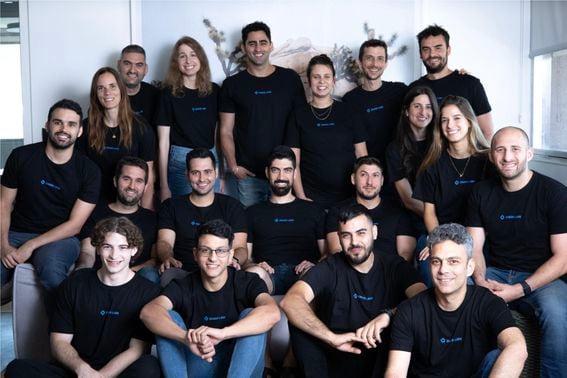
The influx of capital comes as Chaos Labs, founded in 2021, looks to expand its platform, designed to address the growing need for automated risk management in decentralized finance (DeFi). Chaos Labs is known for its tools for on-chain risk management, addressing growing demand for such services in decentralized finance (DeFi). The fundraising was led by venture capital firm Haun Ventures. Chaos Labs, a New York crypto startup known for its suite of on-chain risk management tools, has raised $55 million in a Series A funding round led by the venture capital firm Haun Ventures. The influx of capital comes as Chaos Labs, founded in 2021, looks to expand its platform, designed to address the growing need for automated risk management in decentralized finance (DeFi). The project has tripled its customer base in the past year, helping more than 20 protocols including Aave, GMX and Jupiter to secure, monitor and grow their products, according to a statement. The funding round attracted a mix of familiar faces and new backers, with participants including F-Prime Capital, Slow Ventures and Spartan Capital, alongside larger investors like Lightspeed Venture Partners, Galaxy Ventures and PayPal Ventures. Chaos Labs was also backed by angel investors such as Solana’s Anatoly Yakovenko and Phantom’s Francesco Agosti. While DeFi protocols continue to grow in popularity, their susceptibility to market volatility and risk remains top-of-mind for many investors, particularly those from the traditional financial world. Chaos Labs is positioning itself as a key player in tackling these challenges by offering real-time data and risk assessment tools, areas where DeFi tends to lag behind centralized finance. DeFi platforms – like on-chain lending markets and futures exchanges – are subject to similar risk considerations as legacy financial services: When market conditions change, DeFi platforms need to update certain parameters, like collateral requirements and liquidation ratios, to keep customers safe. But even in the "decentralized" world of blockchains, the task of managing risk is frequently offloaded to companies or select individuals, which can cause errors and slowdowns – not to mention centralization concerns. "Today, all applications on DeFi on-chain are basically static and have stale parameter configuration," said Omer Goldberg, Founder and CEO at Chaos Labs. "On average, it takes 72 to 96 hours from the moment that a risk manager detects that changes needed to be made until they're actually propagated on-chain." Chaos Labs – with its dashboards, real-time data oracles, risk alerts and other tools – aims to automate certain risk management tasks to make DeFi platforms more responsive to market volatility, and less susceptible to human error. https://www.coindesk.com/tech/2024/08/15/chaos-labs-raises-55m-as-demand-grows-for-on-chain-risk-management/