2024-07-19 15:57
The exchange has been offline since February. BitForex will come back online to process withdrawals. The exchange's team were detained and investigated by police in China on Feb. 23. All operations and services will cease after withdrawals take place. Cryptocurrency exchange BitForex said it will open for withdrawals following a five-month outage spurred by an investigation by the Jiangsu Province police in China. The exchange said in an X post that trading and deposits will remain suspended, but that withdrawals will be open for clients that complete know-your-customer (KYC) verification. BitForex went offline on Feb. 23 after experiencing a $57 million outflow. User withdrawals and access to the site was blocked, leading to a warning by Hong Kong's regulator for securities and futures markets (SFC). "On February 23, 2024, the Bitforex team was detained and investigated by the Jiangsu Province police in China," the post read. "This unexpected event caused the platform to become inaccessible, and users were unable to withdraw asset on that day." BitForex said that after returning assets to users it will cease all operations and undergo a "comprehensive rectification." https://www.coindesk.com/business/2024/07/19/bitforex-to-open-for-withdrawals-following-chinese-police-investigation/

2024-07-19 15:11
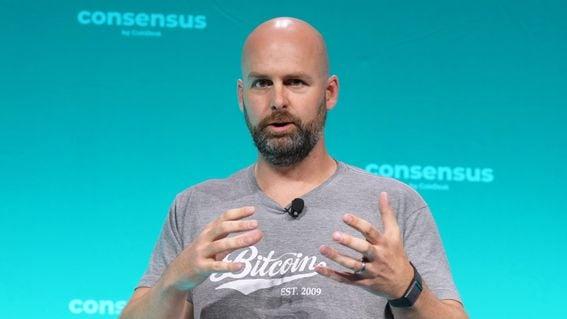
"This week was the first week in 6.5 years that my politics and rhetoric put the team in [harm's] way," he wrote. "As such, I have decided to step aside as CEO." Ryan Selkis stepped down as CEO of Messari, the crypto data and research firm he co-founded, following a series of inflammatory tweets about politics, civil war and his desire for an immigrant to get expelled from the country. He announced his departure Friday on X, the social media platform where he pumped out a flood of controversial messages this week. "This week was the first week in 6.5 years that my politics and rhetoric put the team in [harm's] way," he wrote. "As such, I have decided to step aside as CEO." Never a stranger to launching insults on X, he amped up his comments after last weekend's assassination attempt on Donald Trump. "Anyone that votes against Trump at this point can die in a f*cking fire," he posted on X the afternoon of the shooting. "Literal war." He also told an immigrant via X: "I hope we send you back. ... You are not entitled to citizenship. I hope it stays that way." On Friday, as he announced his resignation, Selkis said that following the attempt on Trump's life, he had "been disgusted at the media and administration's abject failures at pressing for answers in the attack's aftermath, as well as their failure to tamp down divisive rhetoric that contributed to the attack in the first place." In addition to building Messari, Selkis laid much of the groundwork for the crypto industry's political fundraising in the U.S. this year. He is a former CEO of CoinDesk. A decade ago, as an independent blogger, Selkis published documents revealing the insolvency of Mt. Gox, the crypto exchange that later went bankrupt. Messari said Friday that Chief Revenue Officer Eric Turner will serve as interim CEO. "Ryan recently let us know of his decision to step back from an operational role as the CEO of Messari so that he can focus his time fully on crypto policy and national issues of importance to him," the company posted on X. Selkis was back tweeting about "national issues of importance to him" right after quitting. "I beat @JoeBiden. Again," he wrote. Marc Hochstein contributed to this story. https://www.coindesk.com/business/2024/07/19/ryan-selkis-quits-as-messari-ceo-following-inflammatory-tweets/
2024-07-19 15:00
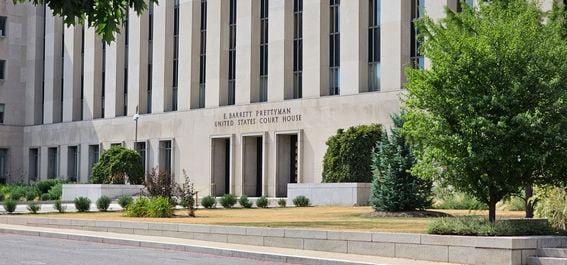
A federal judge is reviewing what role third-party tokens may play in the SEC's ongoing case against Binance. Last week, a federal judge convened a hearing for the U.S. Securities and Exchange Commission's case against Binance after publishing her ruling on Binance's motion to dismiss the SEC lawsuit. Third-party questions The narrative Last week, a federal judge said she would review her ruling in the U.S. Securities and Exchange Commission's (SEC) case against Binance and affiliated entities (namely Binance.US and founder Changpeng Zhao) after attorneys for the world's largest crypto exchange said they interpreted the ruling in a specific way beneficial to them. During a hearing on July 9, attorneys for Binance said they interpreted Judge Amy Berman Jackson's June 28 ruling on Binance's motion to dismiss the SEC's case as moving third-party tokens – digital assets alleged to be unregistered securities by the SEC that were issued by various companies not named Binance – out of the case. The judge said that was not her intention, which kicked off a nearly hour-long back-and-forth over whether she had sufficiently addressed both Binance and the SEC's written arguments over these specific tokens. Why it matters The SEC's June 2023 lawsuit against Binance alleges the exchange offered and sold BNB, Binance's token, as an unregistered security; that it sold its BUSD stablecoin as an unregistered security; that it failed to register as a broker, clearing agency or exchange; that its staking service violated federal securities laws; and that it commingled customer funds. As part of its allegations, the SEC named 10 different cryptocurrencies including solana (the rest are listed below) it alleged were unregistered securities. It's the status of the specific claims about the 10 tokens that were discussed during last week's hearing – and it's difficult to say how exactly this may resolve or what the implications are for the case. On the one hand, if the judge decides that the third-party tokens should be removed from the specific charges against Binance, that's one less thing for the exchange to have to defend itself against and it may limit or otherwise shape the scope of discovery. On the other hand, the judge seemed to indicate she did not believe her order moved the tokens out of the case, which goes the other way in terms of how much discovery the SEC may be entitled to. Breaking it down In her June 28 ruling, Judge Jackson said the SEC had brought plausible charges against Binance, Binance.US and Zhao tied to staking, the initial coin offering and ongoing direct sales of Binance's BNB token, the BNB vault (a staking and rewards program) and failing to register, as well as fraud. Charges against Binance's Simple Earn savings accounts, its BUSD stablecoin and secondary sales of BNB from parties other than Binance were dismissed. The SEC alleged that Binance in particular listed 10 tokens that it viewed as securities, as examples of how the exchange was violating federal securities laws by being a broker, dealer and clearinghouse: SOL, ADA, MATIC, FIL, ATOM, SAND, MANA, ALGO, AXS and COTI. In its motion to dismiss, Binance argued that the SEC couldn't plausibly allege that they were securities, saying they didn't meet the tenets of the Howey Test. Two of Binance's arguments – that the claims failed under the Major Questions Doctrine and that there needed to be a formal contract – were already "soundly rejected," the judge said during the hearing. SEC attorney Matthew Scarlato said Binance's arguments were addressed in the regulator's opposition memo, which pushed back on the exchange's Howey arguments and said that the tokens were also tied to a common enterprise where investors could reasonably expect a profit. Ultimately, the judge said she'd take another look at both the motion to dismiss, which Binance filed in September, and the SEC's opposition memo, filed in November, to review the arguments made about the third-party tokens. Last week's hearing also saw the two parties (and judge) agree to a July 29 deadline for jointly filing a proposed schedule for the next steps, which may address other ongoing discovery efforts. The judge also took aim at bloggers who she said misinterpreted her opinion as a "grand ruling" on stablecoins or secondary crypto transactions in general, suggesting it was closely focused on the actual case in front of her. "I wasn't asked to decide and I didn't decide whether a stablecoin could ever" be an investment contract, nor did the judge rule that secondary transactions of tokens by third parties could never be investment contracts, she said near the end of the hearing. Stories you may have missed It's Not Germany Selling Bitcoin. It's One of Its States and It Has No Choice: Germany maybe sparked a selloff in bitcoin by selling a bunch of bitcoin. Helene Braun reported that it's actually the state of Saxony, which had to sell seized assets – like BTC – within a certain time frame. U.S. House Fails to Override Biden's SEC Veto of Bill That Would End Controversial SEC Guidance: The House of Representatives held another vote on a resolution that would overturn the SEC's Staff Accounting Bulletin 121, but fell short of the two-thirds majority needed to override President Joe Biden's previous veto of the measure. Pro-Crypto Ohio Senator J.D. Vance Is Donald Trump's Vice President Pick: Donald Trump picked Ohio Senator J.D. Vance as his running mate for the 2024 presidential election. Conduct Versus Code May Be the Defining Question in Roman Storm Prosecution: Judge Katherine Polk Failla held a hearing on Tornado Cash developer Roman Storm's motion to dismiss the case against him and other efforts. The three-hour hearing made it clear that the case rests on a philosophical question: Did Storm and his colleagues merely create software, or did they develop and control a service they also profited from? Judge Sends Coinbase Back to the Drawing Board Over Efforts to Subpoena SEC’s Gary Gensler: Judge Failla is also the presiding judge over the SEC's lawsuit against Coinbase. She scheduled a hearing last week after the SEC moved to block Coinbase from serving a subpoena to SEC Chair Gary Gensler, telling Coinbase's team she was surprised by the effort and not particularly swayed by their arguments. There will now be a formal motion and hearing process to go through these arguments. This week This week Not a lot going on. This week's the Republican National Convention, which had a few crypto sessions but nothing major. Elsewhere: (CNN) A software provider for car dealerships called CDK Global was hit by ransomware last month, preventing a large swath of these dealerships from making sales or handling other normal operations. CNN reports that CDK "appears to have paid a $25 million ransom" to the attackers, and shortly after came back online. (Reuters) Boeing CEO Dave Calhoun called National Transportation Safety Board Chair Jennifer Homendy to apologize for Boeing's releasing speculative and non-public information on Alaska Airlines flight 1282, the Boeing 737 MAX 9 that saw a door blow out mid-flight. (BusinessDen) You remember that Denver pastor accused of stealing $1.3 million from investors in a crypto project he's spearheading, that he said God told him to take? That suit's still ongoing. Eli Regalado told BusinessDen, "please quote me on this: The Division of Securities is not fighting against me, they’re fighting against God, and they will lose." If you’ve got thoughts or questions on what I should discuss next week or any other feedback you’d like to share, feel free to email me at [email protected] or find me on Twitter @nikhileshde. You can also join the group conversation on Telegram. See ya’ll next week! https://www.coindesk.com/opinion/2024/07/19/a-second-look-at-third-party-token-allegations-in-the-secs-case-against-binance/
2024-07-19 14:36
The dispute centers around multisig wallets. Liminal Custody said three WazirX wallets were breached in the lead-up to the $230 million exploit. WazirX said that a discrepancy on Liminal's interface triggered the loss. If filed a police report today. Security firm Elliptic said on Thursday that North Korean hackers appear to be behind the hack. WazirX and Liminal Custody, the two firms at the center of yesterday's $230 million exploit, are blaming each other for the success of the attack, leaving users in the dark over the security of their funds. In a post on X, Indian crypto exchange WazirX said the exploit was related to a multisig wallet using Liminal's digital asset custody service. The attack stemmed from a "discrepancy between the data displayed on Liminal's interface and the transaction's actual contents," it said. Liminal, for its part, said its infrastructure had not been breached and that all wallets – including WazirX's – remain safe. A multisig wallet is one that requires several people to sign a transaction before it can be executed. "There is no breach in Liminal’s infrastructure, wallets and assets," Liminal said in a blog post. "Unfortunately three of the victims machines have been found injecting malicious payloads into the transaction indicating a sophisticated, well planned and targeted attack on one specific Gnosis Smart Contract Multi-Sig wallet." The exchange filed a police report and engaged with the Indian Computer Emergency Response Team (CERT-In) earlier today. The stolen funds account for more than 45% of its $500 million holdings, according to a transparency report from June. Crypto security firm Elliptic said that North Korean hackers appear to be behind the exploit. Liminal did not respond to a request for comment. https://www.coindesk.com/business/2024/07/19/wazirx-liminal-custody-blame-each-other-as-230m-crypto-exploit-leaves-customers-stranded/

2024-07-19 13:03
WazirX said "many exchanges" were "cooperating" with them and that their immediate plans included "tracing the stolen funds, recovering customer assets, and conducting a deeper analysis of the cyber attack." WazirX has filed a police complaint and engaged with the Indian Computer Emergency Response Team. The company also said it was "collaborating with forensic experts and law enforcement agencies to identify and apprehend the perpetrators." Crypto exchange WazirX has filed a police complaint after it suffered a $230 million hack on Thursday. The firm has also reported the incident to the Indian Computer Emergency Response Team (CERT-In), it said on X. Engaging with CERT could mean it is seeking the help of India's premier agency which responds to computer related security incidents. The development comes a day after the crypto exchange saw $230 million in withdrawals in a security breach affecting one of its wallets. WazirX said "many exchanges" were "cooperating" with them and that their immediate plans included "tracing the stolen funds, recovering customer assets, and conducting a deeper analysis of the cyber attack." The company also said it was "collaborating with forensic experts and law enforcement agencies to identify and apprehend the perpetrators." The next step will be a First Information Report (FIR), a person familiar with the matter told CoinDesk. In India, after a complaint is filed, a First Information Report (FIR) is prepared by the police if they determine an official investigation is required. Involving the police could mean further scrutiny of WazirX's books, operating systems and security standards. CERT-In did not immediately respond to CoinDesk's request for comment. India's Finance Ministry declined to comment. Since cryptocurrency remains unregulated in the absence of a legislation passed in parliament the sector remains out of the ambit of almost all authorities except, in a limited way, the Financial Intelligence Unit (FIU-India). WazirX, which is registered with FIU-India, which falls under the Finance Ministry, has sent the body an incident report. However, the FIU is mandated with monitoring transactions under the nation's Prevention of Money Laundering Act (PMLA). Given the WazirX incident is a security breach, the incident does not fall under the FIU's ambit. The FIU declined an in-person request to comment. “There is no crypto-specific regulation in India so far, and the industry would benefit from clear regulatory expectation on issues like security standards, risk management, and consumer protection," Joanna Cheng, Associate General Counsel at Fireblocks told CoinDesk via an email. "Regulatory intervention in this space would also mean that exchanges that service large numbers of retail customers are held accountable for their actions (or inaction)." Sumit Gupta, the co-founder of CoinDCX, another prominent Indian cryptocurrency exchange, told CoinDesk that they had "reached out WazirX to extend our support to their customers and are open to ideas and suggestions on how we could support them." India's crypto advocacy body, the Bharat Web3 Association did not immediately respond to a comment. Read More: Bitcoin, SHIB Trade at 30% Haircut on WazirX as Exploiter Converts Stolen Loot to Ether https://www.coindesk.com/policy/2024/07/19/wazirx-files-police-complaint-after-230m-hack-engages-with-indias-cyber-crimes-unit/

2024-07-19 11:00
The acquisition by publicly traded Galaxy Digital, led by Michael Novogratz, will expand the firm's role in Ethereum staking, as part of a broader effort to push deeper into the business of blockchain infrastructure. Galaxy Digital, the publicly traded crypto firm led by Michael Novogratz, has acquired substantially all the assets of blockchain node operator CryptoManufaktur LLC, in a deal that will grow the company's Ethereum staking capabilities. The agreement with CryptoManufaktur, known as CMF, was announced in a press release provided exclusively to CoinDesk. Terms weren't disclosed. According to a spokesperson, Galaxy is acquiring the operations and engineering teams and the assets that come with those, increasing the company's serviced assets under stake by about 43%. CMF founder Thorsten Behrens, as part of a three-person engineering team, will join Galaxy's blockchain infrastructure team, which provides staking and blockchain validator services to qualified investors, protocols and digital-asset platforms, according to the press release. CMF, started in 2020, was originally launched to build infrastructure for the blockchain oracle project Chainlink, and later expanded into running automated proof-of-stake node deployment infrastructure on Ethereum. The deal comes with about $1 billion of Ethereum assets under stake, raising Galaxy's total to $3.3 billion. Galaxy has been expanding into blockchain infrastructure, adding to its primary business lines of crypto trading and investment management. Novogratz is a closely followed figure in crypto and on business TV networks like CNBC, partly because of his deep background on Wall Street, he was as an executive at Goldman Sachs, and hedge fund Fortress Investment Group. “Galaxy is rapidly expanding its blockchain infrastructure and staking capabilities and capacity to provide enterprise-grade technical expertise and support to strategic corners of the digital-asset ecosystem," Zane Glauber, head of Galaxy’s blockchain infrastructure team, said in the release. "Our acquisition of CMF is an important milestone that significantly enhances our position as a leading technical partner to protocols and builders.” https://www.coindesk.com/tech/2024/07/19/galaxy-buys-almost-all-of-cryptomanufakturs-ethereum-assets-to-expand-staking-portfolio/