2024-07-18 15:59
The Barstool Sports chief wouldn't buy at BTC's current prices, but he's "always" willing to take it as payment. "I believe in it that much." Dave Portnoy isn't buying bitcoin (BTC) at these prices. Accepting it as payment? That's another story. The Barstool Sports chief took "a big portion" of his sponsorship deal with the crypto exchange Kraken in BTC, Portnoy told CoinDesk. Kraken paid him directly in the cryptocurrency along with dollars, the pair said. Neither party wanted to discuss how much money changed hands. Wearing his "day trader" hat, Portnoy has tried timing trades in the bitcoin market since mid-2020, often getting burned buying high and selling low. Its current price above $60,000 is too high for him. "I'd just hate myself. If I buy it right now – a ton of it – and it goes down, we'll have a problem in my brain." Still, Portnoy said he's "always" willing to take bitcoin as payment: "I believe in it that much." He did so in February when Kraken began sponsoring his "Davey Day Trader Global" (DDTG) livestream. Despite its original billing as peer-to-peer electronic cash, bitcoin is seldom treated as a form of money. The occasional celebrity athlete signs a "paid in bitcoin" sponsorship. Those usually involve turning cash checks into crypto, as opposed to getting paid in bitcoin itself, as Kraken did for Portnoy. Instead, bitcoin attracts everyday investors who, like Portnoy, think "it's a good investment." The pizza reviewer is betting "it's gonna rip" if pro-bitcoin Republican Donald Trump wins the U.S. presidential election in November, as Portnoy believes he will. But Portnoy cautions: "I'm always wrong." CORRECTION (July 18, 2024, 16:23 UTC): Fixes misspelling of Dave Portnoy's last name in second paragraph. https://www.coindesk.com/business/2024/07/18/crypto-exchange-kraken-paid-dave-portnoy-bitcoin-in-sponsorship-deal/

2024-07-18 14:22
One expert told CoinDesk the law does not provide for an obligation, but merely an opportunity to sell, while another alleged that “How they handled this sell-off moved the market and is intervention in public markets.” The process of Germany offloading seized bitcoin is called by experts "market intervention" as it caused a selloff. The law that the authorities cited as the reason for the sale, falls within a "legal gray" line, according to one observer. Germany may have finally come out with a legal reason why they offloaded nearly $3 billion worth of bitcoin (BTC) into the open market, but industry experts aren't sold on the reasoning. Germany seized about 50,000 bitcoin in January from the operator of Movie2k.to, a website the state of Saxony found guilty of money laundering and other illegal activities. The state, with the help of Frankfurt-based German securities trading bank Bankhaus Scheich Wertpapierspezialist AG, and the Federal Criminal Police Office, sold about 49,858 bitcoin between June 19 and July 12, securing 2.6 billion euros ($2.8 billion), according to a statement on Wednesday. The move perplexed traders and put severe pressure on the price of bitcoin while the authorities stayed mum on the reasons behind the selling spree. The selloff pressure was intensified at the time as the market was also cautious of mass selling by Mt. Gox creditors and faster liquidations by bitcoin miners. Prices bottomed early this month at around $53,500 after Saxony completed its liquidation process but not before wreaking havoc on the market as BTC fell over 7% in June. When the authorities finally issued a statement this week, the process was called a "market-friendly sale," which "was gentle on the market." The statement claimed that "a fair market price was always achieved" and said that "at this scale, there is no direct influence on the bitcoin price." However, some experts aren't convinced. Romina Bungert, adviser to Enzyme and ex-CFO Centrifuge, told CoinDesk, "This is a perfect example for the kind of unintentional malicious activity based on a lack of competence that can come from governments and authorities." She added: "How they handled this sell-off moved the market and is intervention in public market. ... So, who will have an incentive now to hold this national authority accountable? Not the state." In an email to CoinDesk, Patrick Pintaske, prosecutor and press spokesman of the Head of Special Procedures Division (UA BV), said: "The legally regulated emergency sale means that we cannot wait to see whether and how the market value will change. The economic value of seized assets should be preserved as far as possible for later judicial confiscation." Bad timing The German authority may have justified its decision to sell, but market observers have questioned the timing of the sale and the benefit to taxpayers. Philipp Hartmannsgruber, a Bitcoin (BTC) expert who isn't convinced by the reasons laid out in Wednesday's statement, said the sale earned around 600 million euros more than what the BTC was worth when seized in January. "How much could the taxpayer have made if bitcoin had been held for the long-term? At the current bitcoin exchange rate of around EUR 60,000, they would be worth around 390 million euros more today." Hartmannsgruber, who regularly advises politicians and authorities as a board member of the Blockchain Bundesverband e.V. (German Blockchain Association), specifically argued that the sale should not have been done "during the announcement that up to 140,000 bitcoin worth approximately $7.7 billion from the Mt. Gox lawsuit will come to the market" even though he emphasized that perfect timing is never possible. Hartmannsgruber also asked the authorities to point to sources behind their claim that "less than one percent of the market volume of bitcoins was regularly traded over the counter (OTC) and had "no direct influence on the bitcoin price." "This may not be the case on July 8, 2024, when up to 16,309 BTC worth approximately 830 million euros were sold," he said. "If 16,300 bitcoin are sold in one day, this can have an enormous impact under certain circumstances." Legal 'grey line' The statement argued that the authorities did not have a choice but to sell. However, some experts point to a grey area because the boundaries when you need to sell as an act of emergency seem a bit less clear. The court did not require selling the bitcoin because the statement said the proceedings were only "provisionally secured" as the concerned court has not yet made a decision on the confiscation becoming legally binding. The decision, the statement said, was made because "the sale of valuable items before the conclusion of ongoing criminal proceedings is legally required whenever there is a risk of a significant loss of value of around ten percent or more." It further argued that given the volatility in the bitcoin market "these conditions were always met." And, indeed, bitcoin drops 10% in short time frames fairly often. Lawyer and partner at GSK, Timo Bernau indicated the authorities had banked on a general principle from a legal precedent to justify their sale. "In German law, a general ban on speculation is assumed for public authorities. Such a ban on speculation with public funds is derived from the budgetary principle of economic efficiency and economy," Bernau said pointing to a 2017 ruling by the Federal Court of Justice. Bungert noted that there was a legal "gray line" because "the rules for this government agency on handling digital assets are not covered by the existing rule set." Hartmannsgruber argued the authorities cited Section 111p of the Code of Criminal Procedure to suggest they had no choice but to sell the bitcoin. However, the law states that after "an object that has been seized … may be sold if there is a risk of its spoilage or a significant loss of value." "The law therefore does not provide for an obligation, but merely an opportunity to sell. It is therefore questionable whether the disposal was legally required," Hartmannsgruber said. "Although there are legal reasons why the Attorney General's Office acted in this way, if it was not obliged to do so, the question arises as to why it nevertheless acted in this way and why it presented its actions as a supposed duty." Omkar Godbole contributed to this report. https://www.coindesk.com/news-analysis/2024/07/18/germany-dumping-28b-bitcoin-is-market-intervention-despite-murky-legal-justifications/

2024-07-18 11:45
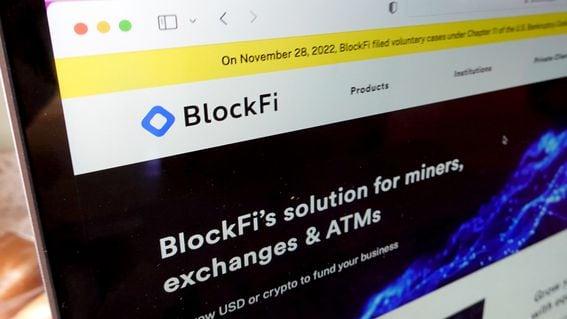
BlockFi was the first victims of the contagion caused by crypto exchange FTX’s collapse in early November 2022 and filed for bankruptcy on Nov. 28, 2022. BlockFi will start interim crypto distributions through Coinbase this month. BlockFi filed for Chapter 11 bankruptcy protection after the FTX collapse in November 2022. Bankrupt crypto lender BlockFi will commence first interim crypto distributions through Coinbase (COIN) in July 2024, it announced on Thursday. BlockFi was the first victims of the contagion caused by crypto exchange FTX’s collapse in early November 2022 and filed for Chapter 11 bankruptcy protection on Nov. 28, 2022, less than a month after halting withdrawals from the platform. BlockFi then began the process of asking the court to greenlight customer withdrawals that are locked up in the platform. In September 2023, creditors approved its bankruptcy restructuring plan and in early 2024, BlockFi settled with the estates of FTX and Alameda Research for nearly $1 billion dollars bringing BlockFi closer to full recovery for customers. "The distributions will be processed in batches in the coming months, and eligible clients will receive a notification to the BlockFi account email on file," the announcement said. "Please note that non-US Clients are unable to receive funds at this time due to the regulatory requirements applicable to them." Those clients who did not withdraw their funds by earlier deadlines could reach out to the bankruptcy administrator has the ability to use Coinbase for future rounds of distributions. Read More: BlockFi Says It's Taken Major Step Toward Emerging From Bankruptcy https://www.coindesk.com/policy/2024/07/18/blockfi-to-start-interim-crypto-distributions-through-coinbase-this-month/
2024-07-18 09:49
Most coins, including market leader bitcoin and USDT, are trading at a significant discount on WazirX. WazirX's native token WRX slumped 15% in dollar terms. SHIB has lost 6% since the attacker drained $100 million worth of the token from the Indian exchange. Most coins, including market leader bitcoin and tether, are trading at a significant discount on WazirX. Cryptocurrencies stolen in a malicious attack at Indian exchange WazirX early Thursday, as well as the platform's native token, are experiencing significant losses in their market values after the hack drained roughly 50% of the exchange's reserves. The exchange has temporarily paused withdrawals. WazirX's WRX token is trading 15% lower at just over 14 cents, according to Coingecko data. The rupee-denominated price has slumped more than 25% since the exchange confirmed the hack that saw the attacker walk away with $230 million in customer funds, including $100 million in shiba inu (SHIB). The attacker also drained $52 million in ether (ETH), $11 million in MATIC and $6 million in PEPE. Since then, SHIB has lost over 6% in market value in U.S. dollar terms while trading 16% lower in rupee terms amid reports the hacker is liquidating the coins. Blockchain data suggests the attacker is offloading SHIB, putting downward pressure on its market value. Other tokens have held relatively steady in dollar terms while suffering significant losses in the exchange's INR pairs. Notably, the bitcoin-rupee (BTC/INR) pair has declined by 11% to 5.1 million rupees ($60,945), trading at a massive discount to prices on rival exchange CoinDCX, where the cryptocurrency changed hands at 5.7 million rupees. BTC's global average dollar-denominated price traded 1% higher on the day at $61,800. The largest cryptocurrency by market value is priced around $64,900 according to CoinDesk Indices data. Meanwhile, the USDT-INR pair (USDT) on WazirX has slipped by 8%. The discounts in BTC, USDT and other cryptocurrencies on WazirX likely reflect panic selling by investors and the rush for fiat/cash in the wake of the hack. https://www.coindesk.com/markets/2024/07/18/indian-crypto-exchange-hack-sends-shib-wrx-tumbling-as-bitcoin-tether-trade-at-massive-discount/

2024-07-18 08:25
President Joe Biden said during an interview that if a medical condition emerged, he'd consider dropping out of the race. The chances of Biden pulling out of the U.S. presidential election are climbing, according to traders on Polymarket. A recent Covid diagnosis and a statement from Biden that he'd withdraw if he came down with a medical condition appear to be moving the market. The chances of President Joe Biden withdrawing from the race for U.S. president hit 68%, challenging an all-time high of 70%, after he said he had been diagnosed with Covid-19, according to bets placed on the crypto-based prediction market platform Polymarket. In an interview with BET News that aired yesterday, Biden said that he would consider dropping out should he be diagnosed with a medical condition. “Is there anything that you would look to you, personally and to say, ‘If I see that, I will reevaluate?’” BET's Ed Gordon asked Biden. “If I had some medical condition that emerged, if somebody, if doctors came to me and said, ‘You got this problem, that problem,’” Biden said. The odds of Biden dropping out first surged following a debate with Republican candidate Donald Trump, jumping to 70% from 36% beforehand as his performance was widely criticized by stakeholders and the press. Biden acknowledged the poor performance, blaming jet lag and an intense travel schedule. After a PR campaign stressing his candidacy and denials from possible replacements, the "Yes" side of the drop-out contract slid 34 percentage points back to 36%. And then the cycle repeated. A public call-out from long-time Democratic supporter George Clooney for Biden to step down rocketed the "Yes" side of the contract up to 66% for a short while before it returned to the 30s. It rebounded again during the Republican National Convention and a market-favorite running mate pick from Trump's camp. The Covid diagnosis boosted it further. Meanwhile, the chances that Biden will drop out before the Democratic convention confirms his nomination in August are also on their way back up, now at 59%. Polymarket's national election tracker puts Trump at 64% to Biden's 12%. Kamala Harris, Biden's running mate, is at 19%. https://www.coindesk.com/policy/2024/07/18/biden-dropout-chances-rise-to-68-after-covid-diagnosis/

2024-07-18 07:51
One of the exchange's multisig wallets experienced a security breach, the exchange confirmed in an X post. Indian crypto exchange WazirX experienced a security breach in one of its multisig wallets, leading to the loss of user funds and over $230 million in withdrawals. The exploiter is actively selling the stolen tokens, including $100 million worth of shiba inu, and $52 million in ether, on the onchain exchange Uniswap. These stolen funds account for over 45% of the total reserves cited by the exchange in a June 2024 report. Indian crypto exchange WazirX saw over $230 million in withdrawals in early European hours on Thursday as a security breach affected one of its wallets, causing the loss of user funds. "We're aware that one of our multisig wallets has experienced a security breach. Our team is actively investigating the incident," the exchange confirmed in an X post. "To ensure the safety of your assets, INR and crypto withdrawals will be temporarily paused." Blockchain sleuth Elliptic said that North Korea-linked hackers appear to have perpetrated the attack. The stolen funds account for over 45% of the exchange's $500 million holdings, which it disclosed in a June report. The Indian exchange's live proof of reserve site was down for maintenance as of the time of writing. WazirX identified the multisig wallet's provider as crypto custody firm Liminal in a follow-up post, hours after the initial confirmation. It later deleted the post as Liminal said that the wallets that were created "outside of the Liminal ecosystem had been compromised." Multisig wallets are a type of crypto wallet that requires two or more private keys to authenticate and confirm transactions before they are processed. The Indian Financial Ministry declined to comment on the attack or its implications for the country's crypto ecosystem. Blockchain data tracked by Lookonchain shows over $100 million worth of shiba inu (SHIB) tokens were withdrawn, the most among lost funds, followed by $52 million in ether (ETH), $11 million in Matic's MATIC, and $6 million in pepe (PEPE). Transactional data shows the exploiter is actively selling the stolen holding using the onchain exchange Uniswap. The exploiter is yet to sell their ETH holdings, and holds over $4.2 million in FLOKI tokens WazirX is popular among Indian traders and primarily targets the Indian market. It is among the few Financial Intelligence Unit (FIU) registered exchanges in the country, allowing it to offer crypto exchange services to Indian citizens. CoinGecko data shows WazirX exchanged at least $2.2 million in volumes in the past 24 hours, led by tether (USDT) stablecoins and XRP. (Amitoj Singh contributed reporting.) https://www.coindesk.com/business/2024/07/18/crypto-exchange-wazirx-sees-230m-in-suspicious-withdrawals-largely-100m-in-shib-token/