2024-10-17 13:47
The electric carmaker moved its stash of BTC to new wallets earlier this week, sparking speculation on why it may have done so. Some bitcoin traders were spooked as Tesla on Wednesday moved its BTC stash for the first time in over two years. So far, though, none of the bitcoins have apparently made it to exchange wallets or were swapped for stablecoins. Here's some reasons why companies may move their digital assets. Elon Musk-controlled Tesla (TSLA) created ripples earlier this week as it moved over $750 million worth of bitcoin (BTC) to new wallets after nearly two years of the stash being untouched. The action sparked conversation around Tesla's/Musk's intentions and concerns of further selling pressure. The electric carmaker as of the time of the move roughly 40 hours ago was the fourth-largest corporate holder of bitcoin, BitcoinTreasuries data showed, with about 10,000 tokens. Tesla accumulated its holdings in 2021 and sold a sizable chunk amid the 2022 bear market. Available data from Arkham Intelligence on the Wednesday move showed the BTC was transferred to new wallets and not to any exchange, alleviating early fears of a sizable sale. Tesla or Musk are yet to publicly comment on the movement, though more detail may come early next week when the company reports its third quarter earnings results. The reason(s) for now are limited to speculation and they range from wallet management to restructuring, CryptoQuant community analyst Maartunn told CoinDesk in a Telegram interview on Thursday: Another possible reason getting some social media chatter could be the consolidation of UTXOs (unspent transaction outputs) - i.e., the process of combining multiple UTXOs into one or fewer UTXOs. A UTXO can be considered as individual, unspent amounts of any token waiting to be used in future transactions. Each UTXO used in a transaction increases the transaction size, which can lead to higher fees because miners charge based on the data size of the transaction. Consolidating leads to fewer inputs for future transactions, potentially reducing the cost and increasing the speed of a larger transaction in the future. https://www.coindesk.com/markets/2024/10/17/four-reasons-elon-musks-tesla-may-have-moved-760m-of-bitcoin/

2024-10-17 12:00
The token will be available on both Ethereum and OP Mainnet. Kraken is launching its own wrapped bitcoin product. The token will be available on both Ethereum and OP Mainnet. The launch will also be supported by Paraswap and Morpho. Crypto exchange Kraken has launched its own wrapped bitcoin (BTC) token, kBTC, the company told CoinDesk in an exclusive interview. The token will be available on both Ethereum and OP Mainnet, and will be backed 1:1 with bitcoin, a company spokesperson said. The bitcoin will be custodied in Kraken Financial, the exchange's U.S. qualified custody solution, in a segregated wallet. The address of this wallet will be made public so that customers can see the bitcoin is in full reserve. Wrapped tokens allow unsupported crypto assets like bitcoin and ether (ETH) to be traded, lent and borrowed on decentralized finance (DeFi) platforms. The largest such token, WBTC, allows investors to use bitcoin on other blockchains, and has a key role in lending DeFi as collateral, with a market capitalization of around $10 billion. Kraken is not the only major player to have recently launched a wrapped bitcoin token. There have been a slew of new issues after BitGo, the sole custodian for WBTC, announced a tie up with Tron founder Justin Sun, prompting widespread concern. Rival exchange Coinbase (COIN) launched its own wrapped bitcoin product, the Coinbase Wrapped BTC (cbBTC) on the Ethereum and Base networks, last month. At launch, kBTC will be supported across several blue-chip DeFi apps, and its partners will include: Kraken, Kraken Wallet, Ethereum, Optimism, Paraswap, Yearn, Gauntlet, deBridge, Definitive, CowSwap, Beefy, Velodrome, Curve and Morpho. There won't be any supported spot markets for kBTC at launch, Kraken said, but if clients want to use their bitcoin they can redeem it for the underlying and trade it as they would do normally. The minimum deposit size for kBTC on both Ethereum and Optimism will be 0.00026 BTC, which is around $15, assuming a bitcoin price of $60,000. The token launch is part of Kraken's mission to accelerate the adoption of DeFi, and kBTC is expected to be widely used across the ecosystem. "We believe in an onchain future and DeFi represents a key part of that opportunity," said Mark Greenberg, Kraken's global head of asset growth and management, in emailed comments. "kBTC relies on Kraken's long history of seamless UX and top-of-the-range security, bringing DeFi to new users and accelerating the adoption of decentralized applications," he added. https://www.coindesk.com/business/2024/10/17/crypto-exchange-kraken-launches-wrapped-bitcoin-token-kbtc/

2024-10-17 09:46
Buterin’s roadmap aims to keep Layer 1 decentralized, ensure Layer 2s inherit Ethereum’s core values, and enhance seamless interoperability across chains. Ethereum co-founder Vitalik Buterin set a goal of 100,000 TPS for Ethereum in a Thursday blog post. This goal will be hit with increased integration of Layer 2s, but some work on standardization will need to be done first. Ethereum will eventually be able to push through 100,000 transactions per second (tps) according to a roadmap laid out in a new blog post from the network co-founder Vitalik Buterin, which outlined what users can expect from 'The Surge' – the next chapter in the protocol's Dencun upgrade. Buterin says this 100,000 TPS goal will be achieved through Ethereum’s rollup-centric roadmap, which combines Layer 2 scaling solutions, advanced data availability sampling, and data compression techniques. "The rollup-centric roadmap proposes a simple division of labor: the Ethereum L1 focuses on being a robust and decentralized base layer, while L2s take on the task of helping the ecosystem scale," Buterin wrote in the post. "This is a pattern that recurs everywhere in society: the court system (L1) is not there to be ultra-fast and efficient, it's there to protect contracts and property rights, and it's up to entrepreneurs (L2) to build on top of that sturdy base layer," he continued. Buterin writes that the easy solution to all of this might be to simply increase Ethereum’s gas limit, however, this would increase centralization as any increase would demand costly hardware, pushing out smaller nodes and leading to fewer, more centralized validators. Instead, Buterin advocates a nuanced approach, exploring cost-optimized gas fees and introducing an efficient bytecode format, EOF (Ethereum Object Format). Buterin also took aim at the friction between Layer 2s, which play an important role in helping scale Ethereum, but feel like walled gardens. "Ethereum should feel like one ecosystem, not 34 different blockchains," he wrote, suggesting adding standardized chain identifiers to addresses and improving cross-L2 standards to streamline multi-chain interactions. Buterin gave an example of how he lost $100 on Polymarket not from a bad bet, but by selecting the wrong chain. "If we are serious about the idea that L2s are part of Ethereum, we need to make using the L2 ecosystem feel like using a unified Ethereum ecosystem," he wrote in the post. https://www.coindesk.com/tech/2024/10/17/vitalik-buterin-wants-ethereum-to-hit-100k-transaction-per-second-with-rollups/

2024-10-17 09:26
Paris-based Kaiko pointed to a notable drop in 2% BTC market depth on Coinbase in a report early this week. Coinbase and Cumberland downplay reports of a decline in BTC market liquidity. Kaiko pointed to a notable drop in 2% BTC market depth on Coinbase in a report early this week. Trading conditions on Coinbase (COIN) remain stable, the Nasdaq-listed cryptocurrency exchange said on Tuesday, downplaying reports of a notable drop in the bitcoin (BTC) order book liquidity amid the U.S. SEC's lawsuit against market maker Cumberland. "We have not seen a material change or decline in BTC-USD depth at 2% throughout Oct," Coinbase's spokesperson told CoinDesk in an email, responding to a recent report by Paris-based Kaiko, which said liquidity, measured by the 2% market depth, declined on Oct. 10 after the SEC charged Cumberland for operating as an unregistered dealer in more than $2 billion worth of crypto assets traded since March 2018. In a report published Monday, crypto data analysis firm Kaiko said the 2% BTC depth on Coinbase started declining on Oct. 10 at 18:00 UTC, dropping by 37% to 315 BTC within a few hours. The decline meant an order 37% smaller in size than before 18:00 UTC could have moved the spot price by 2% in either direction. The 2% market depth represents a collection of buy and sell orders within 2% of the mid-price or average bid and the ask/offer prices. The metric helps gauge liquidity or the market's ability to process large trading orders at stable prices while minimum slippage – the difference between the expected price and the price at which the order is filled – for the market participant. Kaiko noted that while the ask-side depth, representing sell orders, dropped, bid depth for buy orders increased, indicating that "market makers had readjusted their positions, possibly anticipating a price decline." Other exchanges also witnessed a drop in liquidity, Kaiko added, saying overall liquidity on U.S. exchanges remained below pre-lawsuit levels. In a mail to CoinDesk, Cumberland expressed reservations with the analysis, drawing attention to their recent public statement, which suggested no changes in its activities due to the SEC's lawsuit. "We are not making any changes to our business operations or the assets in which we provide liquidity as a result of this action by the SEC," the statement said. Kaiko, in its latest statement to CoinDesk, said the liquidity has since recovered, reiterating that the initial drop in the ask-side liquidity may have been due to shifts in market expectations. 10:04 UTC: Corrects the decline in the market depth to 37% from the previous 46%. https://www.coindesk.com/markets/2024/10/17/coinbase-says-bitcoin-liquidity-on-exchange-unfazed-after-secs-lawsuit-against-cumberland/
2024-10-17 08:13
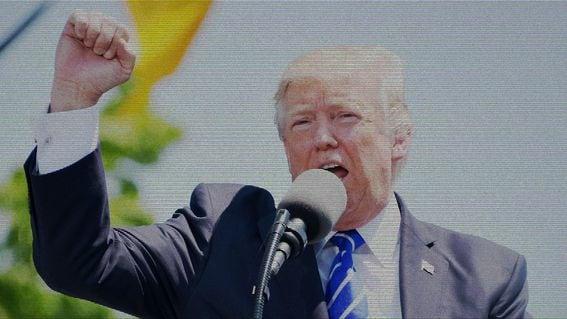
A note from Kalshi's market research team suggests the prediction market - polls gap can be explained by Harris' sliding popularity with key demographics. A market research report from Kalshi shows that there's strong Republican momentum going into the last weeks of the campaign. Meanwhile many are suspicious of the motivation of one of the largest holders of the pro-Trump side on Polymarket's election contract. Republican candidate Donald Trump commands a significant lead against his Democratic rival Kamala Harris on Kalshi and other prediction markets. While this has led to accusations that dark money is manipulating markets, a new research report from Kalshi outlines the case for broad support for Trump and suggests that it might not be a close race. Trump is currently leading against Harris 56-44 on Kalshi, with a surge occurring in early October – a few days after Trump's surge on Polymarket. The rise in Trump's odds on Kalshi isn't an entirely unexpected event, Jack Such, a market research analyst at Kalshi, wrote in a note Wednesday. "Harris is falling in key demographics and has lost ground in every “Blue Wall” state over the past three weeks," Such wrote, pointing to Harris' significant underperformance with black men, who traditionally are stalwart democrat supporters, compared to Obama. With Trump's odds of winning the popular vote rising, Such observes that there's not a misprice as the odds of winning the popular vote are in line with his chances in the main election contract. "Relative to the changes in the main presidential market’s odds, Trump’s chance to win the electoral college and popular vote came exclusively at the expense of his odds to win the electoral college and lose the popular vote," Such wrote. "[This tells] us that the hypothesis on Kalshi behind a Trump victory is rooted in a belief in his widespread support rather than a belief that he’ll scrape by in a key swing state or two." Trump's projected popular vote surge is largely fueled by North Carolina, where his landslide win odds jumped from 3.5% to 19%, alongside gains in Pennsylvania (+4%) and a slight lead in Michigan, reflecting a weakening Blue Wall for Harris. Dark money or a French connection? Trump's surge isn't isolated to one prediction market, as his momentum is observed on Polymarket as well as the U.K's gambling platform Betfair. But massive pro-Trump bets on Polymarket – which does not have a know-your-customer (KYC) mechanism – by one account, which appears to have a collection of affiliated accounts, has many within the political forecasting community wondering if dark money is trying to manipulate the markets. A mysterious high-stakes bettor, identified as "Fredi9999," has spent $25 million solely betting on Trump across prediction markets, according to research done by Polymarket whale 'Domer'. Fredi, according to on-chain detective work done by Domer, appears to operate under multiple accounts, Fredi9999, PrincessCaro, Michie, and Theo, funded through sizeable Kraken deposits (in precise amounts like $500,000 or $1 million). Each account follows a similar betting pattern, concentrating exclusively on Trump, likely to disguise the trades as individual actions rather than one coordinated investment. Domer briefly chatted with Fredi on Discord, and crowd-sourced linguistic analysis of their conversation points to someone who has French as a mother tongue. But what's missing is an explanation of why Fredi is doing this. Is this an operative trying to pour in dark money to influence an election? Or, is it just a wealthy French trader with a strong pro-Trump conviction? On Twitter, many have pointed to a hole in the theory that this is dark money at play: Trump's surge is reflected across multiple markets, and, as Kalshi's analyst Such argued, in the polls as well. https://www.coindesk.com/markets/2024/10/17/kalshi-research-finds-widespread-evidence-of-strong-republican-momentum-in-us-elections/
2024-10-17 06:32
Digital assets have emerged as an alternative investment class for private wealth in Asia, with 76% of family offices and high-net-worth individuals investing in cryptocurrencies versus 58% in 2022. A notable 76% of family offices surveyed during the second half of this year have crypto exposure, according to a report authored by Aspen Digital. DeFi, AI, and DePin are key areas of interest. Private wealth is long-term bullish on crypto, expecting BTC to trade in five figures by the end of December. A growing number of Asia-based private wealth managers are entering the crypto market, with some forecasting bitcoin (BTC) will hit $100,000 by year's end, according to a report by digital asset technology platform Aspen Digital. Digital assets have emerged as an alternative investment class for private wealth in Asia, with 76% of family offices and high-net-worth individuals investing in cryptocurrencies and 16% planning to do so in the future. That's a notable improvement from the previous study in 2022, when 58% had exposure to digital assets and 34% planned to invest. Most respondents cited higher returns as a primary driver, with an increasing number of respondents citing diversification and inflation hedge appeal as key motivations to invest in digital assets, the report shared with CoinDesk said. The latest findings are based on a survey of more than 80 family offices and high-net-worth individuals conducted in the second half of this year. Most respondents had assets under management (AUM) between $10 million and $500 million, with 20% boasting an AUM of $500 or more. The report includes contributions from contributions from SBI Digital Markets and Family Office Association of Hong Kong. Decentralized finance (DeFi) remained a significant area of interest, with 67% of respondents interested in DeFi development, followed by 61% in artificial intelligence and decentralized physical infrastructure network (DePin), 50% in blockchain infrastructure 47% in real-world assets (RWA) tokenization. "We believe every asset class will eventually transition onto the blockchain, capitalizing on the competitive advantages that blockchain technologies offer, representing immense growth potential for DeFi. Currently, approximately 85 million users are engaging with financial services on-chain and we anticipate this number will surpass 200 million by the end of 2025," Re7 Capital said. One respondent pointed to the ease of trading memecoins on Ethereum's rival Solana, while another manager called liquid restaking tokens (LRT) "too complex" to take the exposure. The survey also highlighted a preference for institutional-grade digital asset custody. Market outlook The private wealth sector held a long-term bullish outlook, with 31% of respondents expecting bitcoin to rise to at least $100,000 by the end of the fourth quarter. Respondents mentioned interest rate cuts, the U.S. presidential election results and favorable crypto industry developments as main bullish drivers. Muted allocation Despite the optimism, the majority of private wealth managers allocate less than 5% of their portfolio to digital assets. The report cited the fragmented nature of the digital asset landscape, regulatory uncertainty and poor user experience as critical obstacles for widespread adoption. That said, 30% of respondents were hopeful of boosting exposure in the future, and several high-net-worth individuals and family offices have already increased exposure from less than 5% to over 10% in 2024 while seeking exposure to the broader crypto market in the wake of the debut of spot-based bitcoin and ether ETFs. https://www.coindesk.com/markets/2024/10/17/asian-private-wealth-managers-embrace-crypto-some-foresee-bitcoin-at-100k-by-year-end/