2026-02-12 12:47
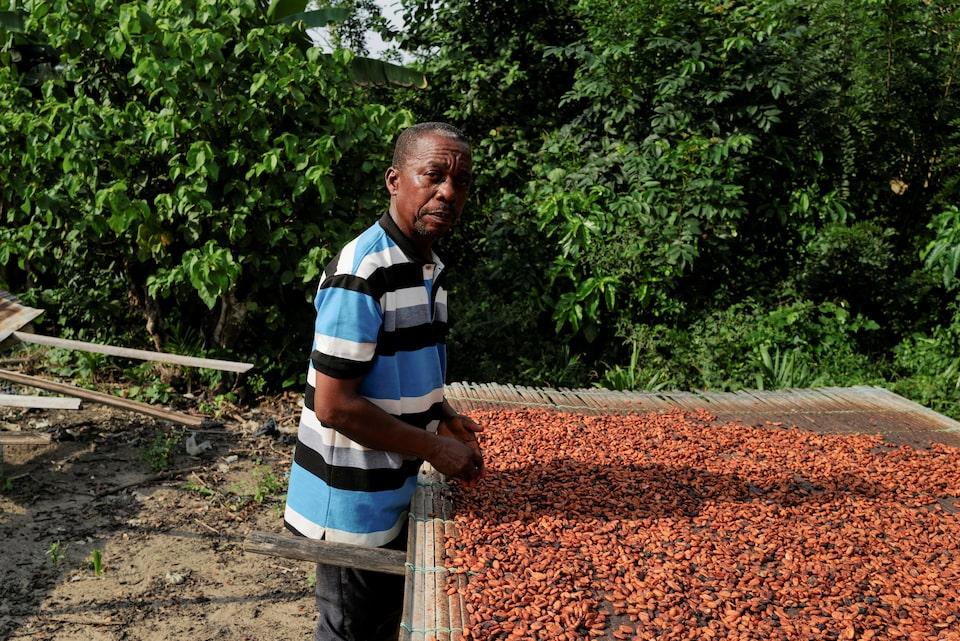
Cocoa beans have piled up as demand has shrunk globally Farmers are unable to invest and struggle to meet basic needs Regulator says it is in talks to resolve the situation ASSIN FOSO, Ghana, Feb 12 (Reuters) - Joseph Bermah Dautey, a Ghanaian cocoa farmer, delivered six bags of beans to be sold months ago, but is still waiting for payment from the country's regulator, forcing the 65-year-old to limit his meals to one a day. He is among thousands of farmers in Ghana, the world's second biggest cocoa producer, struggling to find money to buy food, pay for their children's school fees and invest in basic farm maintenance as thousands of tons of unsold beans have piled up. Sign up here. The situation is comparable in Ivory Coast, the biggest producer, as global cocoa demand has fallen sharply, leading global prices to halve over the course of a year to two-year lows of around $4,000 a metric ton. Before that, a poor crop had led to a price spike on international markets. Dautey, who previously worked as a teacher, told Reuters he was unable to pay for his older daughter's tuition and that his younger daughter keeps calling him asking for money. To maintain a 25-acre farm in Assin Foso, a major cocoa-growing district, he spent 3,600 cedis ($328.77) using borrowed funds and still owes 2,000 cedis. "For about three weeks now, I eat once a day, things are very difficult for me," Dautey said. "It has affected my life so much that I cannot even describe it." Another farmer, Jacob Agbeko Tetteh, told Reuters his children could not return to university because he has also not been paid for six bags of cocoa he delivered. He lacks funds to replace ageing cocoa trees, whose yield has declined. INTERNATIONAL TRADERS STOP BUYING Ghana's farmgate price, set annually by market regulator Cocobod, is 58,000 cedis a ton or nearly $5,300, meaning international traders face losses on Ghanaian cocoa purchases. Their purchases have dwindled as a result, leaving farmers unpaid. The regulator said last week it has about 50,000 metric tons of unsold cocoa at ports, adding that it is in talks with farmers and the Finance Ministry to try to resolve the situation. Farmers told Reuters they have significant unsold stocks of beans at home but no access to buyers after the district officers of the Licensed Buying Companies, the only companies authorised to buy from the farmers, closed their shops. Cocoa can be stored for only 6-12 months before losing quality in hot, humid countries. MISMATCH BETWEEN INTERNATIONAL PRICES AND FARMGATE PRICES The licensed buyers urged the regulator Cocobod last week to secure funding urgently to pay for approximately 300,000 tons of cocoa. A coalition of Ghanaian cocoa farmers said it was willing to accept lower prices for future deliveries if the government agrees to sign a memorandum of understanding linking farmgate rates to international market prices going forward. However, the Ghana Cooperative Cocoa Farmers and Marketing Association, which represents about 395,000 members, said the government must first pay what it owes for beans already delivered at the official price. "What they have already bought and not paid for, they should find a way to pay that immediately," Theophilus Tamakloe, the association’s national vice president, told Reuters. "After that, they can meet with us to discuss a possible reduction of the farmgate price." Tetteh said he would accept a government price reduction if it enables the regulator to purchase remaining stocks and pay for beans already delivered. "It's business, so if prices go up on the international market, farmgate prices should also go up. If they come down, the farmgate price must come down too," said the farmer who is still drying fresh cocoa with nowhere to sell it. ($1 = 10.9500 Ghanaian cedi) https://www.reuters.com/world/africa/ghanas-unpaid-cocoa-farmers-are-forced-go-hungry-2026-02-12/
2026-02-12 12:37
Feb 12 (Reuters) - American Electric Power (AEP.O) , opens new tab surpassed Wall Street expectations for fourth-quarter profit on Thursday, and said it would expand its five-year capital expenditure plan beyond $72 billion to meet the surging demand for power. U.S. electricity demand is rising at an unprecedented pace, with utilities ramping up investments to address growing demand for power capacity from Big Tech as they set up data centers to support complex AI-related tasks. Sign up here. AEP is among the primary beneficiaries of this surge in demand, with 80% of its growth being driven by large hyperscalers including Alphabet's (GOOGL.O) , opens new tab Google, Amazon.com (AMZN.O) , opens new tab and Meta (META.O) , opens new tab. AEP's shares rose 1.7% in premarket trading. The company said it has identified $5 billion to $8 billion in additional transmission and generation projects beyond its current $72 billion capital investment plan. However, as utilities beef up spending on power plants, cables and other electrical infrastructure to meet rising demand, concerns are growing about rising customer power bills. AEP CEO Bill Fehrman said the company remained focused on affordability and protecting residential customers from increased costs associated with providing service to new large load customers. "Through federal loans, state grants, innovative rate designs and direct bill assistance, we are working to limit bill impacts while continuing to invest in the system," Fehrman said. The utility said it had signed an additional 28 gigawatts of load, with the incremental demand for new load doubling since October. AEP said it would partner with ERCOT, an independent system operator in Texas, to build the necessary transmission and distribution infrastructure and "bring these large loads online in a timely manner and within the regulatory construct". The Ohio-based company posted operating earnings of $1.19 per share for the three months ended December 31, compared with analysts' average estimate of $1.15 per share, according to data compiled by LSEG. https://www.reuters.com/business/energy/aep-expands-spending-plan-beats-profit-estimates-electricity-demand-surges-2026-02-12/

2026-02-12 12:35
Italy plans to help citizens and companies cover energy bills Support package of up to 3 billion euros expected next week Meloni says EU needs to review Emissions Trading Scheme ROME, Feb 12 (Reuters) - The Italian government plans to adopt a package of measures next week to help families and firms cope with high energy prices, Prime Minister Giorgia Meloni said on Thursday. Government officials said the measures would be worth up to 3 billion euros ($3.56 billion), although the government was still discussing options to cover its funding needs without increasing Italy's deficit-to-GDP ratio. Sign up here. "Next week we will present detailed measures on energy bills," Meloni told reporters before an EU leaders' meeting in Belgium. Low- and middle-income families and small businesses will be the main beneficiaries of the aid package, the officials said. The government wants to narrow the spread between wholesale gas prices in the Amsterdam hub and Italy, as a way of reducing domestic energy bills, they added, blaming market inefficiencies, transport costs and speculative moves. The wholesale price for natural gas traded on the Italian market, the PSV, is normally higher than the TTF, which is traded in Amsterdam, by some 2-4 euros per megawatt hour. "We must curb speculation surrounding the energy pricing system," Meloni said. Under pressure from Italy's business lobbies, known for their repeated calls for corporate tax cuts and state subsidies, the government had been considering more decisive measures to spread levies weighing on energy bills over several years under a securitisation scheme. Rome put them on hold, however, due to their negative impact on the country's state coffers. Italy has committed to bring its deficit below the EU ceiling of 3% of GDP starting from this year, despite weak growth prospects. Power costs in Italy are significantly higher than in France and Spain, while more than 40% of electricity is produced with gas. Meloni also said the EU needed to thoroughly review the bloc's Emissions Trading Scheme (ETS) and adopt further measures to fight speculation keeping energy prices high. The ETS is the EU's most important climate change policy. It forces power plants and industries to buy CO2 permits when they pollute, and caps the amount of permits in the market, to curtail emissions over time. ($1 = 0.8418 euros) https://www.reuters.com/sustainability/boards-policy-regulation/italy-adopt-energy-bill-cutting-package-next-week-pm-meloni-says-2026-02-12/

2026-02-12 12:29
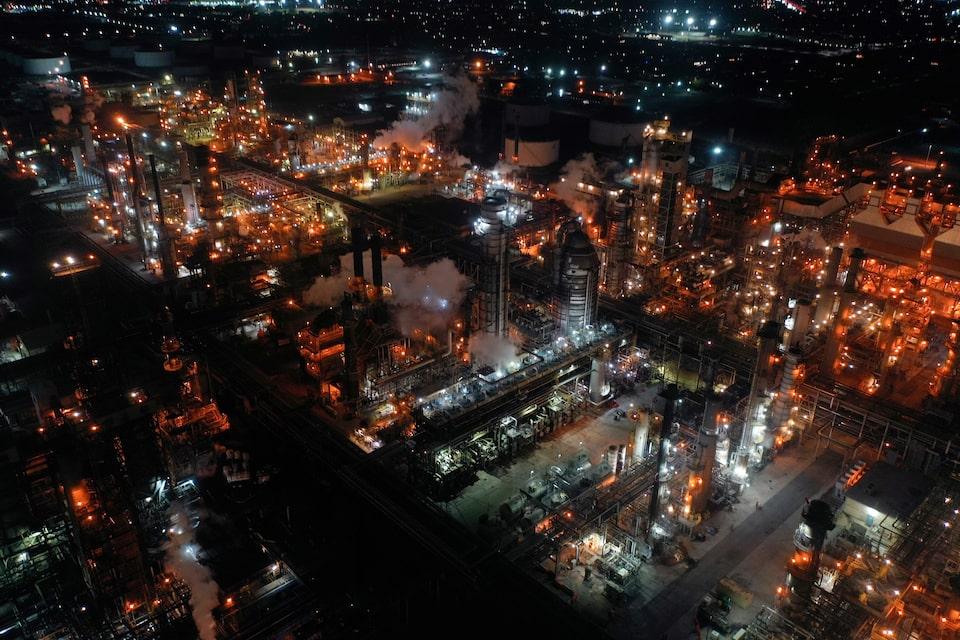
Feb 12 (Reuters) - Refiner PBF Energy (PBF.N) , opens new tab reported a surprise profit on Thursday, as supply disruptions tied to the Russia-Ukraine war and improved crude price differentials lifted refining margins. PBF gained 49 cents per share on an adjusted basis in the fourth quarter, compared with estimates of a loss of 10 cents per share, according to data compiled by LSEG. Sign up here. The U.S. refining industry saw a sharp recovery in the fourth quarter, with the 3-2-1 crack spread benchmark rebounding from multi-year lows earlier in 2024. This turnaround was driven by tighter global fuel supplies and a seasonal uptick in demand, which bolstered profits. The recovery follows a 2024 slump, when margins retreated from post-pandemic highs as supply disruptions linked to Russia's 2022 invasion of Ukraine eased. "Oil markets remain dynamic, and many recent headwinds are now converting to tailwinds for refiners, particularly for PBF. Global refining capacity remains structurally constrained, with expected demand growth and rationalization outpacing new capacity additions," said CEO Matthew Lucey. PBF Energy's consolidated gross refining margin, excluding special items, more than doubled to $11.16 per barrel in the fourth quarter. The company's crude oil and feedstocks throughput rose to 888,900 barrels of oil per day (bpd) in the reported quarter, from 862,000 bpd a year earlier. Larger rivals Valero Energy VLO.N, Marathon Petroleum MPC.N and Phillips 66 PSX.N also reported upbeat results citing higher margins. PBF also said that construction activities of its California-based Martinez refinery are expected to be completed by February 16, 2026 following a fire last year. The company expects the refinery's catalytic cracking unit to start in the first week of March. https://www.reuters.com/business/energy/pbf-energy-posts-surprise-profit-refining-margins-rebound-2026-02-12/
2026-02-12 12:07
Unsafe reused oil, spoilt tomatoes found at Jaipur outlet McDonald’s India warned, given 14 days to fix violations Food safety officers seized samples for testing Franchise says it follows global standards, is cooperating NEW DELHI, Feb 12 (Reuters) - Indian food safety officials have warned a McDonald’s outlet in Jaipur after an inspection found cooking oil unfit for consumption and rotten tomatoes in storage, prompting regulators to seize samples for testing, an official told Reuters. During an inspection at the outlet on Monday in Jaipur, a tourist hotspot in the desert state of Rajasthan, inspectors found 40 litres of oil repeatedly used in cooking and unfit of consumption, government food safety officer Sushil Chotwani said. Sign up here. That breached food safety norms and "officials collected oil samples for further testing," Chotwani said. McDonald's (MCD.N) , opens new tab spokesperson in the United States did not respond to Reuters queries outside regular business hours. Its franchise for North and East India, Connaught Plaza Restaurants, said it was cooperating with the authorities and followed "rigorous McDonald’s global standards." Chotwani said McDonald's was issued a warning and given 14 days to fix its practices at the outlet or face further "strict" action. Officials would "inspect more McDonald's outlets in the city," he said. Food adulteration is often reported across India, but safety lapses at high-profile brands like McDonald's are rare. McDonald's is one of India’s most popular restaurant chains, with hundreds outlets that draw customers with its burgers and other offerings. https://www.reuters.com/world/india/mcdonalds-india-outlet-gets-regulatory-warning-over-rotten-tomatoes-reused-oil-2026-02-12/

2026-02-12 12:00
Paladin Energy eyes higher output from Namibian project Namibia is world's No.3 uranium producer Bannerman sees decision on new mine soon Nuclear power wave, higher prices fuel new investment CAPE TOWN, Feb 12 (Reuters) - Australian miner Paladin Energy (PDN.AX) , opens new tab is on track to complete the ramp up of its Langer Heinrich uranium mine in Namibia to reach maximum output from July as higher prices help to accelerate mining investment, its chief executive said on Thursday. Spurred by a global push for nuclear energy and a potential supply shortfall for the critical mineral, uranium prices surged to a two-year high of $101 a pound in January before settling down to hover between $85-$90 a pound. Sign up here. Namibia, the world's No 3 uranium producer after Canada and leader Kazakhstan, wants to cement its position after achieving record output last year when it topped 10,000 metric tonnes (around 22 million pounds) of U3O8, commonly known as "yellowcake", for the first time. "We've had five quarter-on-quarter improvement in volumes and expect that trend to continue into FY 27, so we expect an absolute cracker of a year," Paul Hemburrow, Paladin's chief executive officer, said, referring to Paladin's output. "Higher prices are good for everybody," he said, in a telephone interview from Namibia during an investor visit. China National Nuclear Corporation (CNNC) holds a 25% stake in the Langer mine. The two largest uranium mines operating in Namibia's arid conditions are Swakop Uranium's Husab and CNNC Rossing, both majority owned by Chinese companies. Uranium yellowcake is mainly used to create nuclear fuel for power plants. NEW PROJECTS COULD HELP NAMIBIA DOUBLE OUTPUT The arid southern African country has two new projects in the pipeline - Bannerman Energy's (BMN.AX) , opens new tab Etango Mine and Deep Yellow's (DYL.AX) , opens new tab Tumas Mine are expected to cost around 12 billion Namibian dollars ($756 million) to develop. French nuclear group Orano, which lost its licences in Niger following a coup, is also re-evaluating its Trekkopje mine that has been mothballed for more than a decade, according to media reports. Bannerman's chief executive said they expect to take a final investment decision in the next six to 12 months and planned first sales in 2029. "Once Etango is in production there is potential to further increase production to 6.8 million pounds U3O8 per annum without the need for additional drilling," CEO Gavin Chamberlain told Reuters this week. The Namibian Uranium Institute said with planned new projects and existing mines still ramping up, record production could eventually double to more than 20,000 tonnes of U3O8. Major export markets include China, Europe, Japan and the U.S. "But this, of course, is linked to the development of the uranium price in the future," Gabi Schneider, executive director of the Institute, said. ($1 = 15.8705 Namibian dollars) https://www.reuters.com/world/africa/australian-uranium-miners-namibia-bullish-outlook-prices-surge-2026-02-12/