2026-02-02 03:47
MANILA, Feb 2 (Reuters) - The Philippine economy will bounce back this year with growth of at least 5%, supported by sound fundamentals and a solid performance in its key revenue sectors, the finance minister said on Monday. The Philippine economy grew just 4.4% in 2025, well below the government's 5.5% to 6.5% target for the year, as a corruption scandal weighed on public spending and undermined consumer and investor confidence. Sign up here. Finance Secretary Frederick Go said the country's economic fundamentals were still intact, with inflation in check and credit ratings remaining the same. "We will bounce back. And we will definitely have a GDP of at least 5%," Go told foreign correspondents. The government is aiming for growth of between 5% and 6% this year. "All the other pillars of growth of our country remain solid and reliable," Go said, citing remittance growth from its foreign overseas workers and revenues from the business process outsourcing sector, a key economic driver. https://www.reuters.com/world/asia-pacific/philippine-economy-rebound-2026-with-least-5-growth-says-minister-2026-02-02/

2026-02-02 03:03
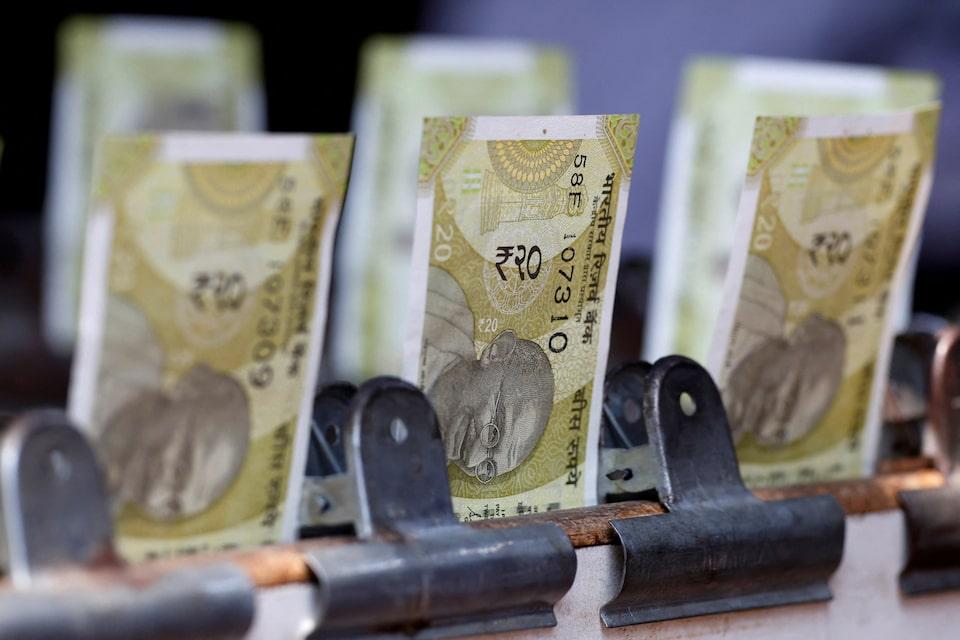
MUMBAI, Feb 2 (Reuters) - The Indian rupee is expected to remain under strain on Monday amid broad-based risk-off sentiment, with traders wary of pushing the currency beyond the 92-per-dollar handle due to the possibility of central bank intervention. The 1-month non-deliverable forward indicated the rupee will open in the 91.94-91.99 range versus the U.S. dollar, having settled near the all-time low of 91.9825 on Friday. Sign up here. Indian equities, which were open on Sunday for the budget session, logged their biggest percentage drop on a budget-day trading session in six years, underscoring a bout of local risk aversion. Separately, volatile trading in precious metals drove a broader risk-off move, pulling down Asian shares and U.S. equity futures, before a busy week for corporate earnings, central bank meetings and major economic data. In this environment, the rupee should have "comfortably" weakened beyond 92, a currency trader at a bank said. "The only thing holding it back is RBI defence and the market's reluctance to test that discomfort zone. We could still see 92, depending on the pre-open price action," the trader added. The rupee struggled to weaken beyond 92 per dollar last week, with state-run banks consistently offering dollars at around the level, a pattern traders said pointed to intervention on behalf of the central bank. While the Reserve Bank of India is likely to continue supporting the currency, the rupee’s weakening trend is expected to persist, a senior treasury official at a bank said. The official pointed out that the budget is unlikely to reverse the recent spate of equity outflows from India and that Indian bonds are likely to face pressure when markets open on Monday. Overseas investors have sold a record amount of Indian equities, totalling $22.9 billion since 2025, piling pressure on the rupee. https://www.reuters.com/world/india/risk-off-pressure-keeps-rupee-knocking-92-handle-rbi-looms-2026-02-02/
2026-02-02 02:17
BUENOS AIRES, Feb 1 (Reuters) - Argentina bought $808 million in Special Drawing Rights (SDRs)from the U.S. Treasury to meet an interest payment to the International Monetary Fund (IMF), local newspaper La Nacion reported on Sunday. The deal came after the U.S. provided essential financial assistance last year to avert a currency crisis in Argentina. Sign up here. SDRs are an international reserve asset created by the IMF and based on a basket of major currencies. Under ultraliberal Argentine President Javier Milei, the South American country has become a key ally of the government of U.S. President Donald Trump in the region. Argentina's economy ministry did not immediately respond to a request for comment. https://www.reuters.com/business/media-telecom/argentina-buys-808-million-drawing-rights-us-pay-imf-media-reports-2026-02-02/
2026-02-02 01:40
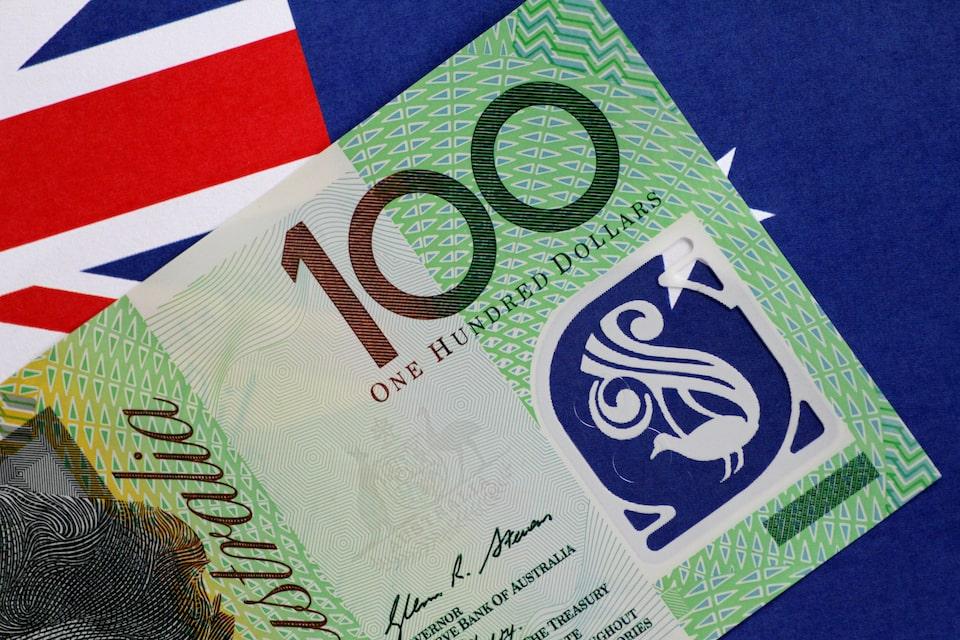
SYDNEY, Feb 2 (Reuters) - The Australian and New Zealand dollars wobbled on Monday after the nomination of Kevin Warsh as the next U.S. central bank chief lifted the embattled greenback and sent prices for precious metals tumbling. The Aussie hit a one-week low of $0.6923 before steadying at $0.6970. It lost 1.2% on Friday to break a nine-day winning streak, which saw it retreat further from a three-year peak of $0.7094. Sign up here. Still, it was up 4.3% in January alone, aided by growing bets that the Reserve Bank of Australia could resume a hiking cycle after three rate cuts last year. Much is riding on the outcome of a policy meeting on Tuesday where a quarter-point increase is about 75% priced in. A surprise decision to hold would sting the Aussie, while an increase would push it up. Joseph Capurso, head of foreign exchange at the Commonwealth Bank of Australia, said guidance from the RBA indicating additional hikes could boost the currency materially. "But the pick-up in volatility also means AUD/USD is susceptible to sharp moves down," he said. "If the slump in precious and other metal prices continue, AUD/USD will be dragged lower." On Friday, U.S. President Donald Trump said Warsh - who prefers a smaller central bank balance sheet - would be his pick for the next Federal Reserve chair. That sparked a wave of selling across risky assets, boosted the U.S. dollar and triggered sharp corrections in gold and silver prices. The kiwi dollar similarly hit a one-week trough of $0.5996 before recovering a little to be recently flat at $0.6022. It climbed a sizeable 4.5% in January, with near-term resistance at $0.6092. New Zealand's quarterly labour market data is due on Wednesday. Forecasts are centred on a 0.3% quarterly rise in employment growth, with the jobless rate likely holding steady at 5.3%. The Reserve Bank of New Zealand meets on February 18 and it will be the first for new Governor Anna Breman to lay out her vision for how policy might develop. Markets also assume the next move in New Zealand rates will be up, albeit not until July at the earliest. https://www.reuters.com/world/asia-pacific/aussie-kiwi-wobble-warshs-fed-appointment-lifts-us-dollar-2026-02-02/
2026-02-02 01:32
MUMBAI, Feb 2 (Reuters) - The Indian rupee and government bonds are expected to extend their rough patch this week as the government’s higher-than-expected borrowing plan is a concern for traders while weak capital flows leave the currency exposed. The rupee fell to a record low of 91.9875 per dollar on Friday, ending just shy of the 92 mark, falling more than 2% in January. Sign up here. India unveiled its federal budget on Sunday for the fiscal year starting April 1. A lack of big-bang announcements and a hike in taxes on equity derivative transactions that investors weren't anticipating weighed on local stocks, while FX and fixed income markets were shut. The government shifted to targeting the debt-to-GDP ratio for fiscal policy, aiming to bring down this ratio to 55.6% in the next fiscal year, with a fiscal deficit of 4.3% of GDP. The rupee is likely to continue its feeble recent form, with traders anticipating a fall past the 92 per dollar handle. Government bond yields are expected to rise as market participants respond to the planned gross borrowing of a record 17.20 trillion rupees ($187.63 billion) in fiscal year 2027. Market participants were expecting gross borrowing in the range of 16 trillion rupees to 17.50 trillion rupees, with the median of a Reuters poll of 35 economists at 16.3 trillion rupees. "The government's borrowing number is slightly higher than what the market expected, so the supply-demand imbalance issues for government bonds are likely to persist," said Vivek Rajpal, Asia macro strategist at JB Drax Honore. "The Reserve Bank of India (RBI) will have to continue to be the marginal buyer of government debt," referring to the central bank's bond purchases. The gross borrowing will be 17% higher than the current year's 14.61 trillion rupees. The net borrowing will also rise to 11.73 trillion rupees from 11.33 trillion rupees for the current year. The 10-year benchmark 6.48% 2035 yield settled at 6.6963% on Friday, marking its fourth weekly rise in five, as worries over demand-supply mismatch for debt dominated the run up to the budget. Traders expect the yield to move in a 6.62% to 6.75% range until the release of the central bank's monetary policy decision on Friday, where rates are expected to be left unchanged. At the policy, focus will be on transmission of previous rate cuts through liquidity operations. The RBI cut policy rates by 125 basis points last year, though transmission has been hampered by a rise in government bond yields and intermittent liquidity pressures linked to market interventions to support the rupee. Traders say heavy debt supply could keep yields elevated going ahead, even after the RBI's unprecedented measures to ensure sufficient banking system liquidity, including record bond purchases and foreign-exchange swaps. Government bonds will have to contend with a firmer U.S. dollar and an uptick in longer tenor U.S. bond yields after former Federal Reserve Governor Kevin Warsh was selected to be the next Fed chair. Warsh is seen as being likely to support lower interest rates, but stopping well short of the more aggressive easing preferences associated with some of the other potential nominees. The dollar index rose 1% on Friday, while the yield on the 10-year and 30-year U.S. Treasuries also drifted higher. KEY EVENTS: India ** January HSBC manufacturing PMI – February 2, Monday (10:30 a.m.) ** January HSBC services PMI – February 4, Wednesday (10:30 a.m.) ** RBI monetary policy decision – February 6, Friday (10:00 a.m.)(Reuters poll: no change) U.S. ** January S&P Global manufacturing PMI final – February 2, Monday (8:15 p.m. IST) ** January ISM manufacturing PMI - February 2, Monday (8:30 p.m. IST) ** January S&P Global composite PMI final – February 4, Wednesday (8:15 p.m. IST) ** January S&P Global services PMI final - February 4, Wednesday (8:15 p.m. IST) ** January ISM non-manufacturing PMI – February 4, Wednesday (8:30 p.m. IST) ** Initial weekly jobless claims for week to January 31 – February 5, Thursday (7:00 p.m. IST) ** January non-farm payroll and unemployment rate – February 6, Friday (7:00 p.m. IST) ($1 = 91.6710 Indian rupees) https://www.reuters.com/world/india/india-budget-leaves-rupee-bonds-vulnerable-heading-into-rbi-policy-decision-2026-02-02/
2026-02-02 01:28
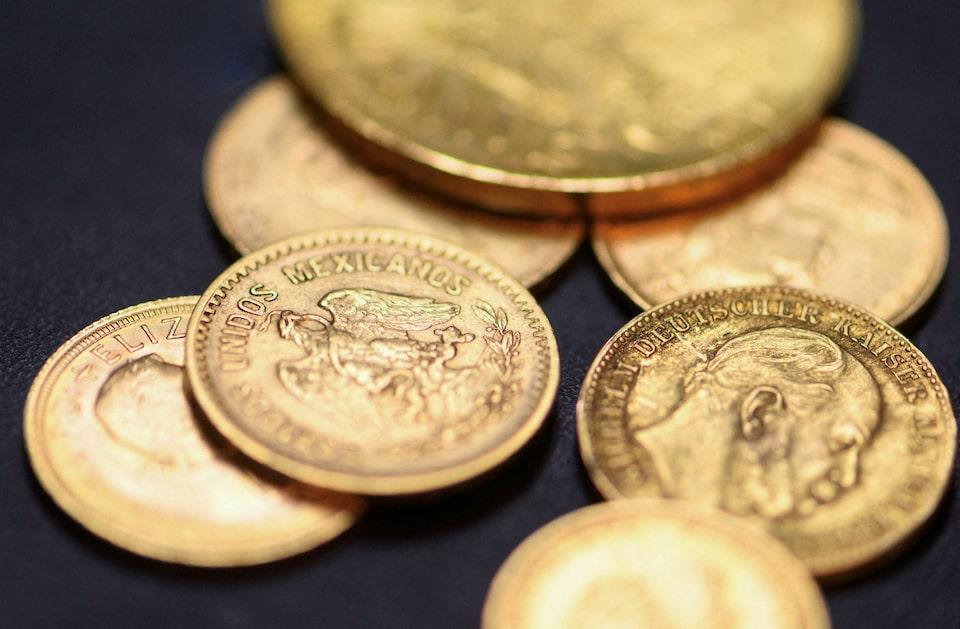
Gold records its steepest fall since 1983 in previous session Analysts says selloff does not signal a sustained downturn Silver down about 37% from record high Feb 2 (Reuters) - Gold and silver prices continued to fall on Monday as higher margin requirements at CME Group (CME.O) , opens new tab compounded last week's sharp selloff following the nomination of Kevin Warsh as the next Federal Reserve chair. Spot gold was down 4.8% at $4,630.59 an ounce by 01:32 p.m. ET (1832 GMT), after tumbling nearly 10% earlier in the session. U.S. gold futures for April delivery settled 1.9% lower at $4,652.60 an ounce. Sign up here. Bullion tumbled 9.8% on Friday, and has shed about $900 from its January 29 record high of $5,594.82, erasing most of this year's gains. "Gold and silver are on a rollercoaster ride and when you get to the top of the 'lift hill', gravity takes over and you are heading down," said SP Angel analyst John Meyer. Spot silver fell 9.2% to $76.81 an ounce, after sliding as much as 15% earlier in the session. Silver has dropped roughly 37% since hitting a record high of $121.64 last week. Despite the rout, analysts cautioned against reading the move as the start of a prolonged downturn. "The conditions do not appear primed for a sustained reversal in gold prices," said Michael Hsueh, precious metals analyst at Deutsche Bank, in a note, adding that investors "remain highly bid for upside," pointing to continued volatility rather than a collapse in sentiment. CME Group said on Friday it would raise margin requirements on precious metal futures, with the changes taking effect after Monday's market close. Meanwhile, analysts said the sharp fall in prices has pushed out many speculative traders who had piled into the market during the rally, helping cool the market and reduce excess speculation. "We saw some money coming out of ETFs and we suspect some brave hedge funds took it from there," Meyer said. Meanwhile, the dollar index (.DXY) , opens new tab extended gains, to hit a more than one-week high, making dollar‑priced bullion more expensive for overseas buyers. U.S. President Donald Trump on Friday nominated former Fed official Kevin Warsh to succeed Chair Jerome Powell in May, with markets expecting a tilt toward rate cuts alongside tighter balance‑sheet policy. Spot platinum fell by 3.3% to $2,091.38 per ounce, while palladium shed 1.4% to $1,673.70. https://www.reuters.com/world/india/gold-falls-15-firm-dollar-silver-recovers-over-three-week-low-2026-02-02/