2025-09-26 11:53
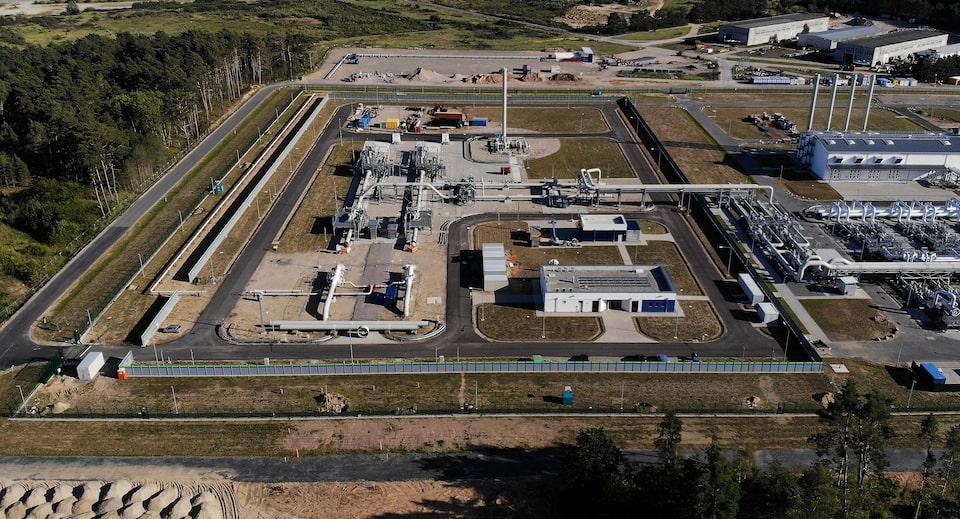
MOSCOW, Sept 26 (Reuters) - The Kremlin said on Friday that the surviving section of the Nord Stream gas pipelines from Russia to Germany, which were blown up three years ago, could be quickly put into service. "The remaining line is there, it can be launched right now, in fact," Kremlin spokesman Dmitry Peskov told reporters. Sign up here. The Nord Stream system consists of two double pipelines, Nord Stream 1 (NS1) and Nord Stream 2 (NS2), running under the Baltic Sea to Germany. Only one pipeline of the four, part of NS2, remained intact after the explosions in 2022. German Chancellor Friedrich Merz said in May that ensuring Nord Stream 2 did not enter operation was part of efforts to increase pressure on Russia to engage in talks to end the war in Ukraine. Peskov said Russia hoped a German-led investigation into the blasts would be completed. Last month a Ukrainian man was arrested in Italy on suspicion of carrying out the attacks, which Russia blames directly on Kyiv. No one has taken responsibility for the blasts and Ukraine has denied any role. Described by both Moscow and the West as an act of sabotage, the explosions on September 26, 2022 cut off a large part of Russia's gas supplies to Europe. Peskov on Friday repeated the Kremlin position that the United States was partially to blame for orchestrating the attacks. "Who, let's say, condoned this? Well, it is obvious that without the knowledge of the (Joe) Biden administration, in the U.S., such actions of the part of Ukraine and the Kyiv regime would have been impossible," Peskov said. The United States has denied any role in the attack. https://www.reuters.com/business/energy/kremlin-says-intact-section-nord-stream-gas-pipelines-could-be-quickly-activated-2025-09-26/
2025-09-26 11:47
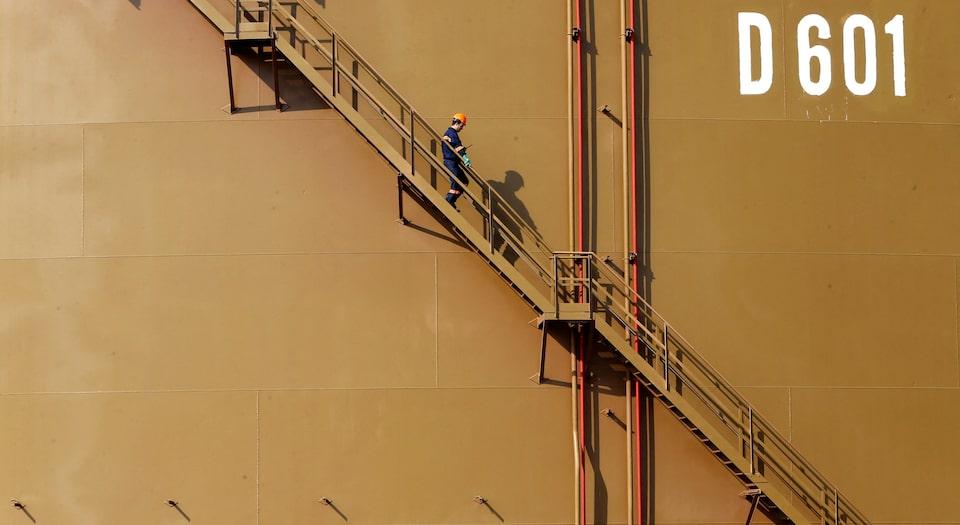
Turkey's Russian oil imports seen at 1.2 million tons in September, lowest since April Trump pressures Europeans to halt Russian oil purchases MOSCOW, Sept 26 (Reuters) - Imports of Russian oil to Turkey, Europe's largest buyer of fuel from Moscow, have declined due to competition from other oil grades, sanctions, and as U.S. President Donald Trump urges allies to stop buying Russia's oil to cripple its war efforts. Frustrated by Russia's refusal to halt fighting in Ukraine, Trump has called on Europe to halt Russian oil and gas purchases, a key source of Moscow's revenue. Sign up here. On Thursday, after two hours of talks with Turkish President Tayyip Erdogan, Trump said he believed Ankara would agree to his request to stop buying Russian oil and that he may lift U.S. sanctions on Turkey. TURKEY AND RUSSIA HAVE FORGED CLOSE RELATIONS A shift in Turkey's stance is not guaranteed, however, as Erdogan and Russian President Vladimir Putin have forged close relations in recent years. Kremlin spokesman Dmitry Peskov said on Friday it was up to Turkey to decide who it trades with. "It is a sovereign state that decides for itself in which areas to cooperate with us. And if certain types of trade in certain goods are deemed advantageous to the Turkish side, then the Turkish side will continue to do so," he said. Imports of Russian oil to Turkey have fallen in September to the lowest since April, two traders said and LSEG data showed. Turkey is the second-largest importer of seaborne Russian Urals crude after India, according to LSEG data. It has not joined Western sanctions against Russia but complies with international laws and restrictions. Turkey bought 1.6 million tons of Urals in June, the most since May 2024, LSEG data showed. But imports are set to fall to around 1.2 million tons this month, according to LSEG data as of Friday. Turkey's and Russia's energy ministries didn't immediately reply to requests for comment. Turkey cut Russian oil imports at the start of the year as refiner Tupras paused purchases after the price of Urals exceeded the Western-imposed price cap of $60 per barrel. Urals held above the price cap until April, when it fell back below it and Tupras resumed buying. In July, the European Union and the UK lowered the price cap for Urals to about $47.60 per barrel, further complicating the purchases. https://www.reuters.com/business/energy/russian-oil-imports-turkey-fall-trump-seeks-cut-moscows-earnings-2025-09-26/
2025-09-26 11:43
Sept 26 (Reuters) - Italy's cable maker Prysmian (PRY.MI) , opens new tab has won a contract to build a submarine power cable connecting Italy and Tunisia, it said on Friday in a statement. The contract, awarded by tender of Italy's power grid operator Terna (TRN.MI) , opens new tab and the Tunisian electricity grid operator STEG under the Elmed Project, could reach a value of around 460 million euros ($536.59 million), subject to certain conditions, Prysmian said. Sign up here. The power line will go from the Partanna electrical substation in Sicily to the Mlaabi substation on the Tunisian Cap Bon peninsula. "The interconnector will benefit both countries and support the global shift toward cleaner energy," Prysmian's EVP Transmission BU Raul Gil said. ($1 = 0.8573 euros) https://www.reuters.com/business/energy/prysmian-wins-460-mln-euros-power-cable-deal-connecting-italy-tunisia-2025-09-26/

2025-09-26 11:41
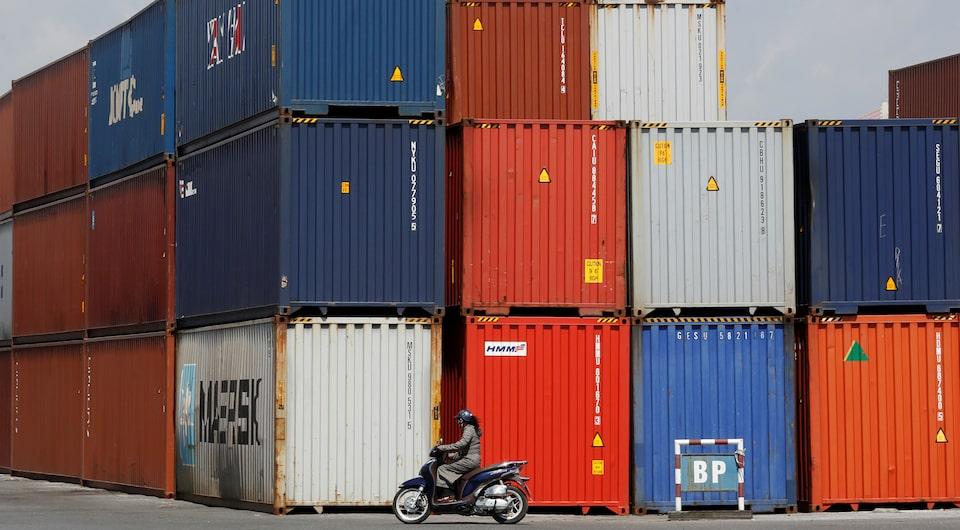
HANOI, Sept 26 (Reuters) - The European Union is seeking more balanced trade with Vietnam, Maros Sefcovic, the EU trade commissioner, said on Friday at the end of his visit to southeast Asia. "I value the commitment shown and look forward to jointly tackling remaining barriers and moving forward toward more balanced trade," Sefcovic told reporters in Hanoi. Sign up here. Sefcovic said Vietnam's exports to the EU had risen 60% compared with a 10% increase of EU exports since the EU-Vietnam free trade agreement entered force in 2020 and called on Vietnam to simplify procedures for agriculture imports from the bloc. "I proposed the simplification measure to our Vietnamese partners, that if the permit is given for (a) particular agriculture commodity in one of the EU member states, it should be automatically issued for the rest of the EU member states because we have the same regulations, same controls and same standards," he said. He also encouraged Vietnam to accept international standards for cars. Sefcovic added that he had discussed boosting cooperation in investment with the Vietnamese trade minister during his visit. https://www.reuters.com/sustainability/society-equity/eu-seeks-more-balanced-trade-with-vietnam-sefcovic-says-2025-09-26/
2025-09-26 11:34
Trump's "energy dominance" agenda weighs on sector Private equity, utilities eye undervalued clean energy projects Sept 26 (Reuters) - The Trump administration's rapid retreat from renewable energy has kicked off consolidation and asset sales among smaller U.S. solar and wind power companies as they scramble to stay afloat, industry insiders and analysts said. President Donald Trump's One Big Beautiful Bill Act (OBBBA) has overhauled tax credits and sharply shortened eligibility windows for solar and wind projects as part of an "energy dominance" agenda focused on oil, gas, coal and nuclear, in a sharp departure from the green energy-focused policies under his predecessor Joe Biden. Sign up here. "There's likely to be consolidation due to a variety of federal moves of late, including the recently passed tax bill (OBBBA) which eliminates investment tax credits," said Gregg Felton, CEO of Connecticut-based Altus Power. Clean energy deals surged to 63 with a combined value of around $34 billion in the first half of 2025, according to KPMG, versus roughly 57 deals worth about $7 billion in the second half of 2024. Compounding the worries, the Inflation Reduction Act, which had allowed projects to use or sell credits to lower construction costs, was rolled back earlier this year, while loan guarantees for green projects were scrapped in late December. The compressed deadlines and reduced support could force smaller players to merge, form joint ventures, or sell assets to survive, said John Villali, senior research director at IDC Energy Insights. The U.S. Energy Department said on September 24, it intends to cancel more than $13 billion in funds for green energy, further darkening the outlook for such projects. That followed axing in May of more than $3.7 billion in funding for 24 green energy projects approved under Biden, including one at an ExxonMobil (XOM.N) , opens new tab refinery in Texas. Sunnova Energy (NOVAQ.PK) , opens new tab recently lost a $2.92 billion loan guarantee. The cancellation of federal loans will likely drive M&A in the utility sector, particularly for distressed clean energy assets, said Gregg Semler, CEO of InPipe Energy. SAVVY BUYERS AWAIT Private equity firms and utilities are already circling. In late August, CBRE Investment Management agreed to acquire ClearGen, a clean energy developer and manager backed by Blackstone (BX.N) , opens new tab with more than 250 projects across 14 states. Disruptions are industry-wide but nimble developers and market-aware investors will still find opportunities, ClearGen CEO Rob Howard said. Larger utilities and private equity investors with stronger balance sheets and risk tolerance are lapping up the undervalued assets. "We are on the buy side...actively dealing with greenfield developers and other energy companies," said independent power producer Agilitas Energy CEO Barrett Bilotta. The company plans more M&A announcements this year after having acquired a solar project in Rhode Island in August and two hydropower projects in West Virginia and Maryland in June. https://www.reuters.com/sustainability/climate-energy/trumps-energy-pivot-accelerates-us-solar-wind-power-mergers-asset-sales-2025-09-26/
2025-09-26 11:33
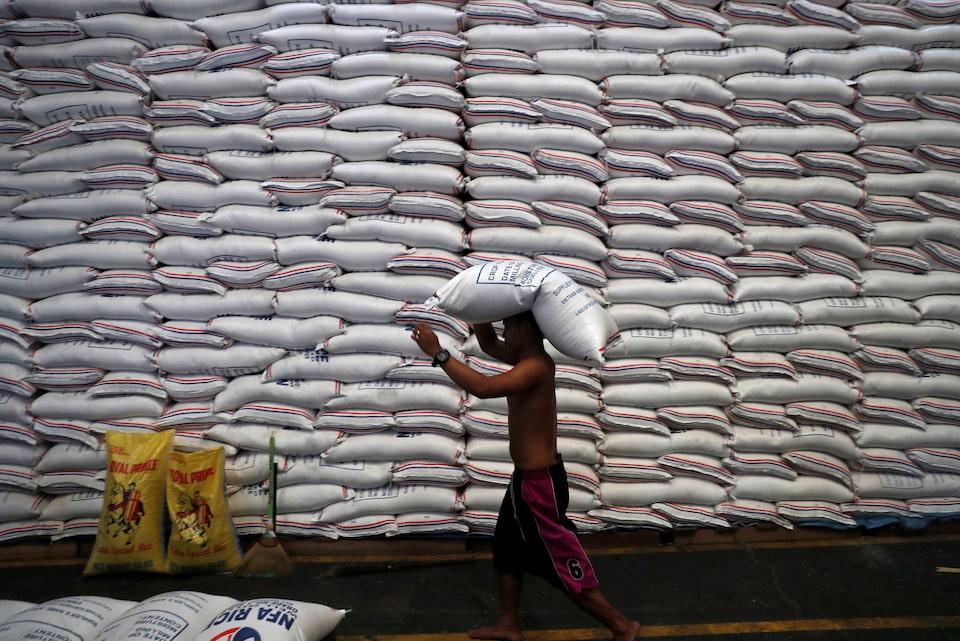
MANILA, Sept 26 (Reuters) - Philippine President Ferdinand Marcos Jr has ordered to extend the country's ban on rice imports beyond 60 days, his office said on Friday, but it did not specify how long the extension would last. Marcos had earlier ordered a 60-day suspension of rice imports starting from September 1 in an effort to protect farmers during the local harvest and keep rice prices in check. The order covers the import of regular milled and well-milled rice and excludes varieties not commonly produced locally. Sign up here. "Under the President's directive, the two-month import suspension will be extended," the Presidential Communications Office Undersecretary Claire Castro told a press briefing. The Philippines, one of the world's largest rice importers, shipped in 4.8 million metric tons of rice last year, mostly from Vietnam and Thailand. Agriculture Secretary Francisco Tiu Laurel has said he plans to recommend to the president that the moratorium should be extended by another 15 to 30 days, and that the ministry was also looking at increasing tariffs on imported rice. The annual rate of increase in rice prices in the Philippines hit a 15-year high of 24.4% in March last year, but has since reversed course and declined by 17% in August. It helped to tame inflation, which averaged 1.7% in the eight-month period, below the government's 2.0% to 4.0% target. The Philippines has lowered tariffs on rice and extended existing tariff cuts on some other commodities to combat inflation and ensure supplies are ample. https://www.reuters.com/markets/commodities/philippines-extend-60-day-ban-rice-imports-2025-09-26/