2025-09-26 11:31
PARIS, Sept 26 (Reuters) - Workers at French LNG terminals will continue to block ships from discharging until their salary demands are met, two representatives with the CGT union said on Friday. The blockade at three out of four of the country's terminals has reduced gas outflows from one of Europe's top gas buyers and lifted prices this week. Sign up here. LNG terminal operator Elengy has invoked force majeure at its three sites in France because of the month-long strikes and said no ships can discharge until October 2. Reduced deliveries from French LNG terminals contributed to a 1.3% rise in the price of the Dutch TTF front-month benchmark European gas contract on Thursday, though the impact was muted on Friday due to increased flows from Norway, where a maintenance period is ending, analysts said. Unions could continue their blockades beyond October 2 if conditions are not met, the union representatives said, potentially further lifting prices. France is Europe's fourth largest gas importer, with much of the supply sent to neighbouring countries. Its exports have jumped since 2022 when Russian piped gas to the European Union was shut off following the invasion of Ukraine. France is also the largest importer of Russian LNG in Europe, buying around 4 million tons in the first eight months of the year with a significant portion going through Elengy's Montoir terminal on the west coast. Both of Elengy's Fos terminals in the south are currently blocked from sending out gas, with reduced outflows from the Montoir terminal, a spokesperson said. The last ship to dock and offload in Fos was on September 12 while the last to discharge in Montoir was on September 21, LSEG data showed. Three full LNG carriers are currently anchored near the ports waiting to discharge, LSEG data showed. https://www.reuters.com/sustainability/sustainable-finance-reporting/strike-prompts-force-majeure-three-french-lng-terminals-2025-09-26/

2025-09-26 11:31
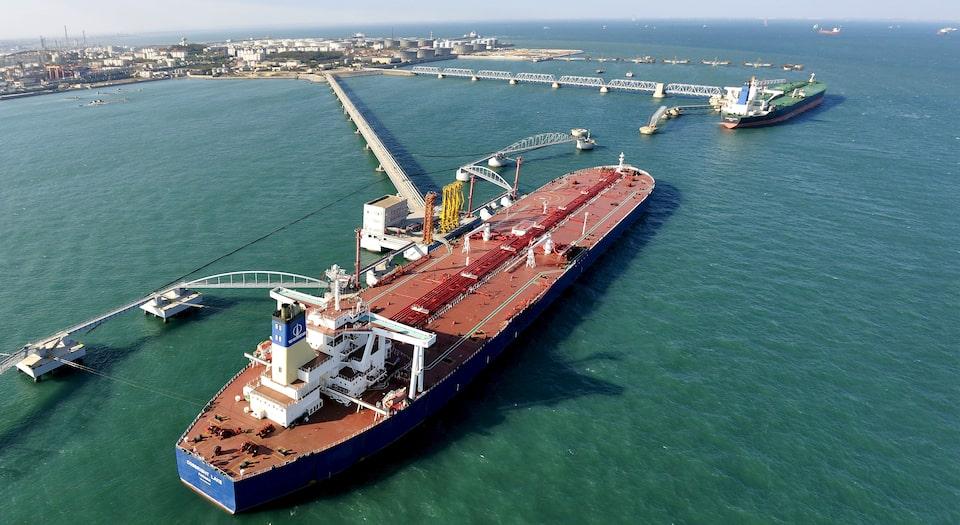
SINGAPORE, Sept 26 (Reuters) - Terminal operators in a major oil port in east China's Shandong province are set to introduce measures to ban shadow fleet vessels and curb visits by other old tankers, according to an official notice seen by Reuters and a tanker tracker. The measures, to take effect from November 1, would ban vessels using fake International Maritime Organization numbers and ships of 31 years or older, which traders said would target what is known as the shadow fleet that transports oil under Western sanctions. Sign up here. Four terminal operators at Huangdao Port last week issued the notice, seen by Reuters, a month after the United States designated an oil terminal in nearby Dongjiakou port as receiving Iranian oil carried by vessels under sanctions. Both Huangdao and Dongjiakou are in the broader Qingdao port area, the largest Chinese entry point for Iranian oil. China, Iran's biggest oil client, has repeatedly defended its oil transactions with Iran and opposed unilateral Western sanctions. NO IMMEDIATE COMMENT Qingdao Shihua did not immediately comment, and calls to the other three companies involved were not answered. "The new tanker risk-rating rules appear to be a precautionary step driven by environmental concerns and rising U.S. sanctions pressure, even though the latter is not explicitly mentioned in the notice," said Emma Li, China analyst with tanker tracker Vortexa Analytics. However, the impact is likely to be limited because Huangdao has only a minor role in handling high-risk tankers compared with other Shandong ports, Li added. Vessels holding invalid or expired certificates from various international agencies will be banned from calling and those with a record of pollution or accident in the previous three years will also be barred, according to the document reviewed by Reuters. The terminal operators are also introducing a scoring system that rates vessels' level of risk: the older the vessel, the lower the score. With a full mark at 100, vessels rated below 55 are considered high risk and will be barred from anchoring. The scoring system also takes into account a ship's classification society and pollution liability cover, the document shows. The terminal operators are Qingdao Haiye Oil Terminal Co, Qingdao Shihua Crude Oil Terminal Co, Qingdao Gangxin Oil Products Co and Qingdao Lixing Logistics Co. https://www.reuters.com/business/energy/china-oil-port-set-introduce-measures-ban-shadow-fleet-2025-09-26/
2025-09-26 11:26
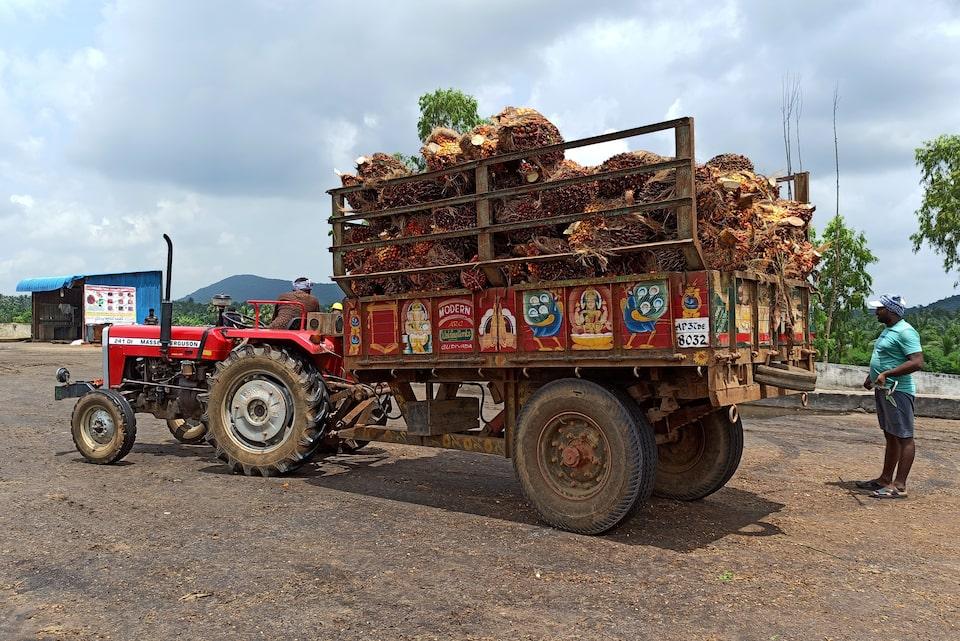
MUMBAI, Sept 26 (Reuters) - India's edible oil imports in 2025/26 are projected to rise 4.6% to a record 17.1 million metric tons, driven by higher palm oil purchases by the world's largest vegetable oil buyer, industry analyst Dorab Mistry said on Friday. Higher palm oil purchases by India will help top producer Indonesia and Malaysia to bring down stocks and support benchmark Malaysian palm oil futures . Sign up here. Palm oil imports are likely to jump 13.4% to 9.3 million tons while soyoil imports are likely to dip to 5 million tons in the new marketing year from November 1, Mistry told delegates at an industry conference Globoil India. Sunflower oil imports in the new season are likely to fall to 2.7 million tons from 3 million tons this year, Mistry said. India buys palm oil mainly from Indonesia and Malaysia while importing soyoil and sunflower oil from Argentina, Brazil, Russia and Ukraine. Global palm oil production growth is slowing, with output in 2025/26 projected to rise by only 1 million tons even as demand for food and biofuels climbs, Mistry said. Malaysian palm oil futures are expected to rise once the peak production period ends in October and could surpass 5,000 ringgit ($1,185) a ton in November–December, he said. Prices could extend the rally further, reaching a more than three-year high of 5,500 ringgit a ton in January–March 2026 on supplies tightened by increased biodiesel consumption in top producer Indonesia. The benchmark palm oil contract for December delivery on the Bursa Malaysia Derivatives Exchange eased 43 ringgit, or 0.97%, to 4,396 ringgit a ton on Friday. ($1 = 4.2190 ringgit) https://www.reuters.com/world/india/indias-edible-oil-imports-jump-record-higher-palm-buying-analyst-mistry-says-2025-09-26/
2025-09-26 11:22
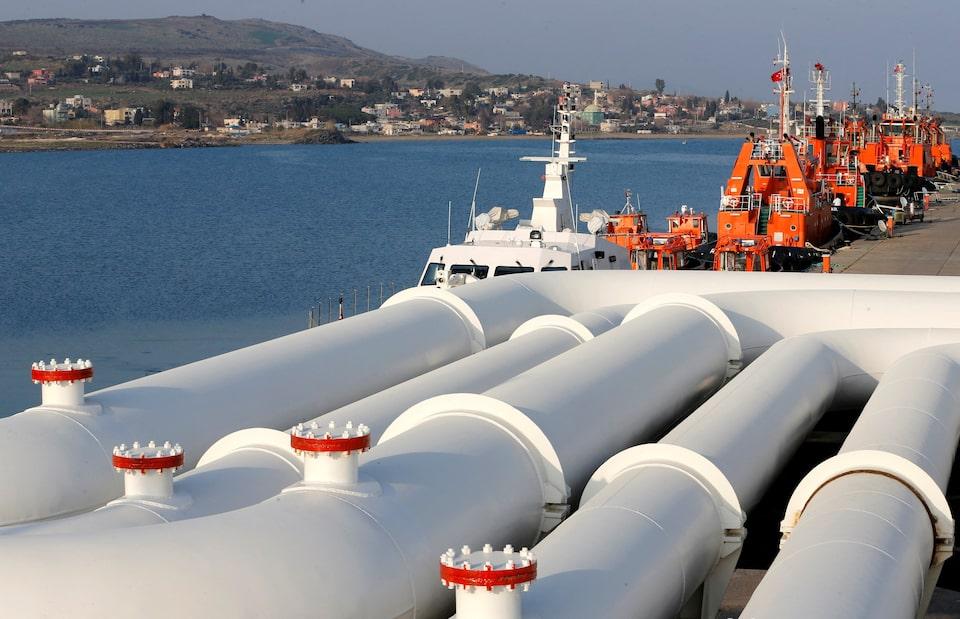
OSLO, Sept 26 (Reuters) - Crude oil exports from Iraq's semi-autonomous Kurdistan region to Turkey were scheduled to restart at 0600 local time (0300 GMT) on Saturday, three sources familiar with the plans told Reuters on Friday. Eight oil companies operating in Iraqi Kurdistan, representing over 90% of production, reached agreements in principle on Wednesday with Iraq's federal and Kurdistan Regional Government to resume exports. Sign up here. Iraq's state oil company SOMO, which will transport crude oil via pipeline to Ceyhan port in Turkey, was not immediately available for comment. One of the sources said the Kurdistan's Ministry for Natural Resources sent a notification to oil companies operating in Kurdistan about the planned startup. The Kurdistan Regional Government and Iraq's Federal Oil Ministry did not immediately respond to emailed requests for comment. Flows through the Kirkuk-Ceyhan pipeline have been shut since March 2023, when the International Chamber of Commerce ordered Turkey to pay Iraq $1.5 billion in damages for unauthorised exports by the Kurdish regional authorities. https://www.reuters.com/business/energy/crude-oil-exports-iraqs-kurdistan-restart-early-saturday-sources-say-2025-09-26/
2025-09-26 11:14
LONDON/LAGOS, Sept 26 (Reuters) - Nigeria's Dangote oil refinery has fired some of its workers, according to a copy of a letter from the company seen by Reuters and an official at the PENGASSAN oil union on Friday. The refinery is Africa's biggest by far with crude processing capacity of 650,000 barrels per day and has the potential to reshape global fuel trading dynamics by creating a new swing supplier in the Atlantic Basin. Sign up here. It was not immediately possible to confirm how many workers have lost their jobs or whether the layoffs would affect production. The letter said the dismissals would be by the evening of September 25. Dangote shut its gasoline unit in late August for repairs likely to take 2-3 months. The refinery did not respond immediately to a request for comment. The plant, which began processing crude in January 2024, exported a higher volume of fuel oil in September, according to Kpler. Modern oil refineries typically export higher volumes of fuel oil when they have an outage or maintenance. https://www.reuters.com/business/world-at-work/nigerias-dangote-refinery-is-firing-some-nigerian-workers-2025-09-26/

2025-09-26 10:35
LONDON, Sept 26 (Reuters) - Check out what the ROI team are excited to read, watch and listen to over the weekend. From the Editor: Sign up here. Hello Morning Bid readers! The job of the U.S. Federal Reserve was made a bit harder yesterday. First, there was news that second quarter GDP was revised up to 3.8%, , opens new tab the fastest annualized growth since 3Q2023. U.S. President Donald Trump then announced a batch of new tariffs, including 100% levies on branded drugs and 25% tariffs on heavy-duty trucks. , opens new tab The details remain unclear and there will certainly be exemptions, but the combination of resilient economic growth and potential upward price pressures calls into question expectations for aggressive monetary easing. The market had been pricing in more than an 80% chance of a 50 basis point cut , opens new tabby December, but that’s now down to roughly 60%. All eyes will be on the PCE inflation data coming out later today. Even if the policy rate does keep falling, as expected, political uncertainty, fiscal issues and inflation fears could push up the long end of the curve. That might be bad news for the AI boom, argues Joachim Klement, investment strategist at Panmure Liberum. , opens new tab Meanwhile, central bank-watchers got their fill this week, with a slew of talks from multiple Fed officials, including Chair Jerome Powell , opens new tab, Governor Stephen Miran , opens new tab, and San Francisco Fed President Mary Daly , opens new tab. Atlanta Fed President Raphael Bostic also spoke on the Market Musings podcast, , opens new tab suggesting that the Fed should consider replacing the 2% inflation target with a range, abandoning the “illusion of precision.” In the commodities markets, much attention has been focused on Ukrainian drone strikes on Russia’s energy infrastructure. ROI Energy Columnist Ron Bousso argues that if these attacks are too successful, they risk raising the ire of President Trump. In other energy news, the future of seaborne coal is looking increasingly split between robust domestic markets in China, India and Indonesia and a gradually fading seaborne market, explains ROI Asia Commodities Columnist Clyde Russell. On the renewables side, ROI Energy Transition Columnist Gavin Maguire notes which countries, beyond China, are likely to play the biggest role in determining future pollution trends. And, finally, over in the metals world, ROI Metals Columnist Andy Home explains why traders are betting that the nickel price has hit rock bottom. As we head into the weekend, check out the ROI team’s recommendations for what you should read, listen to, and watch to stay informed and ready for the week ahead. I’d love to hear from you, so please reach out to me at [email protected] , opens new tab . , opens new tab This weekend, we're reading... RON BOUSSO, ROI Energy Columnist: For anyone interested in the complexities of the world's energy system, I highly recommend BP's 2025 Energy Outlook , opens new tab that was published on Thursday. The big headline was that BP delayed the expected peak in oil demand. But the report also details how the energy transition could play out. Be sure to read the excellent slides on the impact of today's geopolitical turmoil on future energy markets. MIKE DOLAN, ROI Financial Markets Editor-at-Large: Governments have thus far lagged behind the private sector in adopting artificial intelligence in their core functions. While governments will face problems as they attempt to catch up, they potentially offer AI investment another tailwind. Assessing where governments are in the process, the Organisation for Economic Cooperation and Development , opens new tab recently published a study outlining the state of play. GAVIN MAGUIRE, ROI Global Energy Transition Columnist: This Reuters investigation , opens new tab reveals that a U.S. biofuel refinery supplying “green” jet fuel to airlines like JetBlue and Southwest, has sourced cattle fat from Brazilian slaughterhouses linked to illegal Amazon deforestation, raising serious questions about the environmental cost of clean energy incentives. ANDY HOME, ROI Metals Columnist: The world’s first industrial-scale wind turbines are coming to the end of their life. But how to recycle them? This piece from the Guardian , opens new tab looks at some of the latest technologies being pioneered. Interesting fact, by 2030, Europe will generate 40,000-60,000 tonnes of “blade waste”. We're listening to... ANNA SZYMANSKI, ROI Editor-in-Charge: A series of unexpected events have caused mass disruptions to supply chains. On this week's episode of Reuters Econ World, host Carmel Crimmins and global managing editor Mark Bendeich unravel how companies, nations and consumers are moving past the initial shock to rework entire strategies. And we're watching... JAMIE MCGEEVER, ROI Markets Columnist: What do market experts think of the Fed's independence, how well is the Fed doing its job and how will President Trump's interventions shape corporate America? Watch this excellent Reuters Market Talk , opens new tab panel discussion featuring Reuters U.S. Economics Editor Dan Burns to find out. Want to receive the Morning Bid in your inbox every weekday morning? Sign up for the newsletter here. You can find ROI on the Reuters website , opens new tab, and you can follow us on LinkedIn , opens new tab and X. , opens new tab Opinions expressed are those of the author. They do not reflect the views of Reuters News, which, under the Trust Principles , opens new tab, is committed to integrity, independence, and freedom from bias. https://www.reuters.com/business/finance/global-markets-view-usa-2025-09-26/




