2026-02-02 01:08
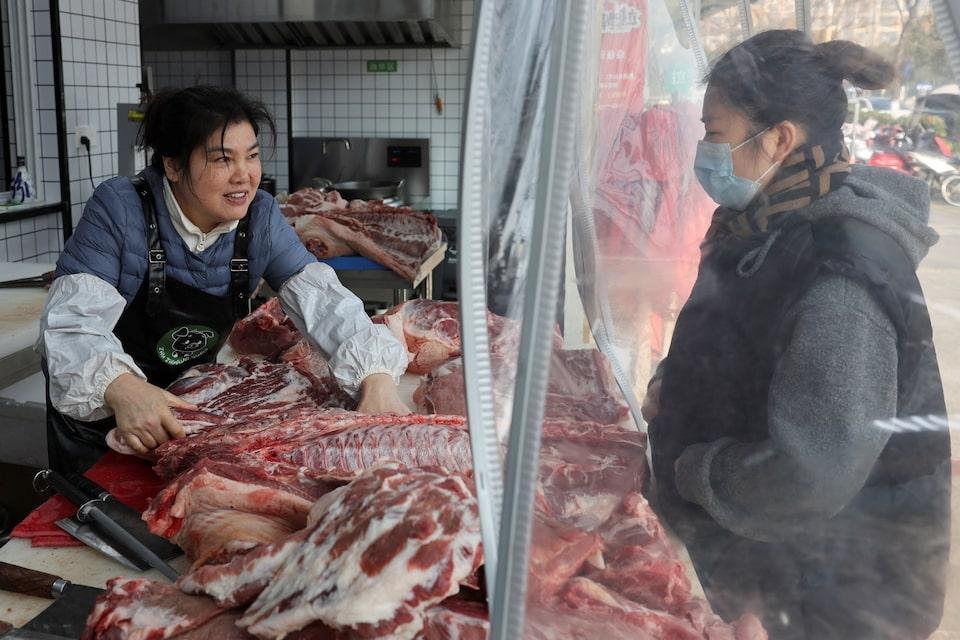
Chinese middle class wants black pigs from their childhood Pig producers seize opportunity as pork prices fall The premium meat market lacks a standard TAIZHOU, China Feb 2 (Reuters) - Gao Xianghua is a happy mom this year because she knows her teenage kids will eagerly finish the pork belly she is braising for the Lunar New Year feast. Her secret? Chinese black pork. Sign up here. "I want my kids to eat the good pork I used to have when I was little," Gao said at a neighbourhood butcher as she ordered 1,000 yuan ($144) worth of black pork ribs, feet and sausages. "Not the cheap, low-quality, fast-produced pork that has penetrated my kids' lives." She plans to rub the pork with Sichuan numbing pepper and salt it before hanging it on her balcony to dry for the holiday. Gao, a crab roe seller, is a member of China's rising middle class who, no longer satisfied with mass-produced pork from imported Western "white pig" breeds, is hungry for premium products. For older buyers in particular, black pork evokes childhood, when black-haired pigs were raised at home and slaughtered for family gatherings around Lunar New Year. Demand for what has been marketed as the "Wagyu of pork," known for its fattier and more tender texture, is in turn a lifeline for China's beleaguered pork producers. The premium cut, which is up to four times more expensive than more common white pork, is one of the remaining profitable segments after years of overcapacity and falling prices in the world's largest market for hogs, according to interviews with more than two dozen meat producers, analysts and academics. ‘THE ONLY WAY OUT’ The red-braised pork, or hongshao rou, that Gao prepares - a favorite dish of Chairman Mao Zedong, made with caramelized sugar, soy sauce and spices - was a rare luxury before reforms in the 1980s and 1990s ushered in a long economic boom and gave many the means to enjoy meat more than a handful of times a year. To meet that demand, in the 1990s China began importing Western varieties that matured in five months versus the year that was needed for Chinese black pigs. Last year, China - the world's largest hog producer - slaughtered 720 million pigs. And in the final quarter of 2025, it produced 15.7 million metric tons of pork, the highest fourth-quarter tally since 2018. But size has become a liability and Mao's favourite flavor was lost. Pork prices have been falling for years due to weak demand, a stagnating economy and changing tastes; in December, they declined 14.6% from a year earlier. And rampant overcapacity, triggered in part by the government's reaction in 2018 to the outbreak of African swine fever, has cost the industry profits. A major Chinese pork producer, Wen Foodstuff Group (300498.SZ) , opens new tab, in January said its 2025 net profit fell 40.7% to 46.1% from a year earlier. And Muyuan Foods (002714.SZ) , opens new tab, the world's largest hog producer, also said it expects its 2025 profit to fall 12.2% to 17.8%. For some, black pork offers a way out. Yang Xinchun, a 49-year-old pig farmer in Taizhou, about two hours by train from Shanghai, earned a net profit of over 1 million yuan from black pork in 2025. His 1,000 black hogs offset the losses from his herd of 6,000 white pigs. He said his gamble paid off. He started raising black hogs in late 2024 after learning that state-owned giant Bright Food Group was looking at the premium market to avoid losses. “People come to my butcher store every day to learn from my experience,” Yang said, referring to other hog producers. He plans to expand his herd to 15,000 black pigs and his three black pork butcher stores to 40 franchises this year. "Black pigs are the only way out for pig producers, especially small-to-medium producers who were pressured by falling white pork prices," said Gao Qinxue, a director at the Chinese Association of Animal Science and Veterinary Medicine. The total number of black hogs in Yang's town, Taizhou, increased to 30,000 in 2025 from 10,000 in 2024 and local pork farmers hope the herd grows to 100,000 by 2027, Gao said. Top Chinese pork producers are also scaling up. In November, Wen Foodstuff told investors it aims to become the No. 1 Chinese black pork brand and lift these hogs to 5% of its herd by 2027. Pork giant New Hope also said last fall it was expanding its herd of more than 150,000 black hogs. Analysts said they expected black hog numbers to rise 50% to 30 million to 32 million between 2024 and 2026, or roughly 5% of all the pigs in China. NO INDUSTRY STANDARD Demand exceeds supply in China's premium pork market by about 15% to 20%, but it is unclear whether black pork can fill the whole gap because producers must develop brands and supply chains in this nascent industry, analysts said. The black pork businesses are also competing with imported products and Chinese pork moguls that are developing premium pork from fast-growing Western breeds. Today, China has more than four dozen local black or black-dotted pig breeds that are sold at varying premiums. Producers like Yang raise black hogs that are crossbred with Western Berkshire or Duroc lines to accelerate pig growth while maintaining their black coats and meat quality. The niche market could fall into oversupply if too many producers pile in and margins may not be sustained, observers said. "If you flood the market with lots of black pigs, will people pay it, or will the price come down?" said David Casey, senior product development and supply director at the Pig Improvement Company, a major global breeder. "Most people are still buying cheaply raised, low-priced pork." “Unlike Spanish Iberico pork, there is no standard in China. I could bring in a Hampshire pig, call it black, and I qualify. I've heard scientists talk about changing Western pigs' hair colour to black." https://www.reuters.com/world/china/disgruntled-with-western-pork-china-wants-go-back-black-pigs-2026-02-02/
2026-02-02 00:39
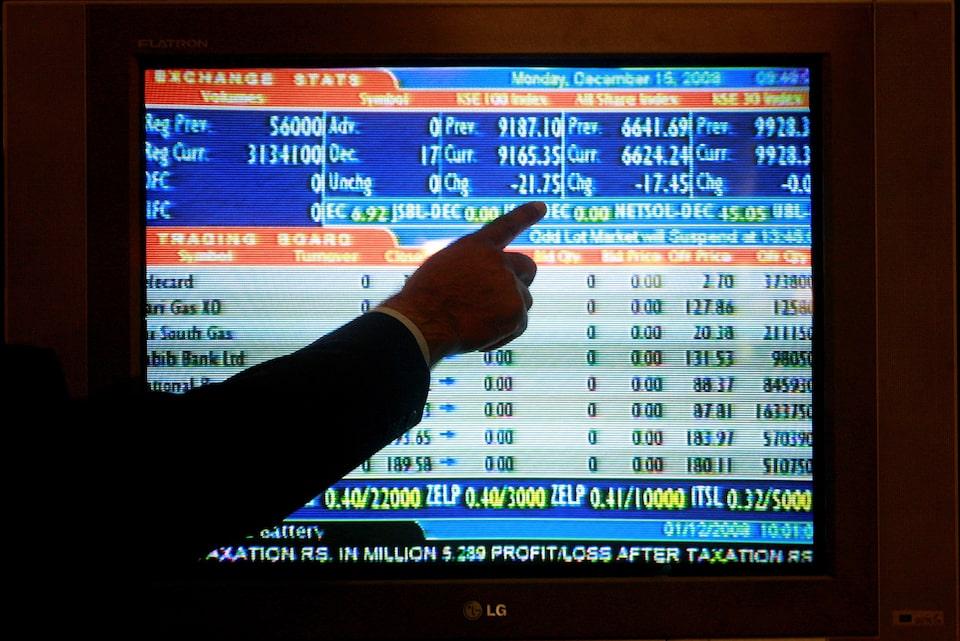
Gold, silver plunge in wild trade, margins under pressure S&P futures slide ahead of earnings deluge, payrolls test KOSPI dives, Nikkei down despite polls pointing to LDP win Dollar and bonds steady for the moment SYDNEY, Feb 2 (Reuters) - Asian shares followed Wall Street futures deep into the red on Monday as chaotic selling in precious metals made for a nervous start to a week that is packed with corporate earnings, central bank meetings and major economic data. Silver lost another 10% at one stage, as Friday's 30% plunge squeezed leveraged positions in what had become a very crowded trade. Dealers said pressure on the UBS SDIC silver futures fund in China added to the rout, with talk of investors having to sell profitable assets to cover margin calls. Sign up here. Adding to the unease was a move by the CME to raise margins on a number of futures contracts, including gold and silver. Oil prices also fell more than 4% as President Donald Trump said over the weekend Iran was "seriously talking" with Washington, perhaps lessening the risk of a U.S. military strike on the country. The jitters saw South Korea's formerly high-flying KOSPI (.KS11) , opens new tab shed 5.5%, the biggest one-day loss since the tariff-induced market mayhem of last April. MSCI's broadest index of Asia-Pacific shares outside Japan (.MIAPJ0000PUS) , opens new tab sank 2.8%, while Chinese blue chips (.CSI300) , opens new tab lost 1.0%, with heavy falls in gold indexes. Japan's Nikkei (.N225) , opens new tab fell 1.0%, supported only briefly by an opinion poll suggesting Prime Minister Sanae Takaichi's Liberal Democratic Party was likely to score a landslide victory in next week's lower house election. Such a victory would likely make it easier to push through aggressive stimulus policies, and ease political uncertainty. More debt-funded spending could pressure bonds and the yen, with Takaichi talking up the benefits of a weaker currency for exports. It was also a busy week for earnings in Europe, with around 30% of Euro STOXX market capitalisation due to report. EUROSTOXX 50 futures and DAX futures both fell 1.1%, while FTSE futures dipped 0.5%. S&P 500 futures lost 1.2% and Nasdaq futures fell 1.6%, with much now riding on earnings to support valuations. About one quarter of the S&P 500 set to report this week, and growth in earnings per share was running at 11% on the previous year, when consensus had been for 7%. The focus will be on tech majors Alphabet , Amazon (AMZN.O) , opens new tab and AMD (AMD.O) , opens new tab, particularly costs and benefits of AI in the wake of Microsoft's (MSFT.O) , opens new tab badly received results. Analysts at Goldman Sachs noted consensus estimates for AI hyperscaler capex this year had climbed to $561 billion, up 38% on 2025 and compared to $540 billion expected at the start of earnings season. DOLLAR STEADIES AS YEN SLIPS In currencies, the dollar looked a little steadier as early weakness in the yen saw it edge up 0.1% to 155.00 . Yet, the euro still added 0.2% to $1.1868 , regaining some of Friday's 1% retreat. The dollar rally had been initially triggered by Trump's choice of former Federal Reserve governor Kevin Warsh to become the next chair of the central bank. Analysts assumed Warsh was less likely to press for all-out rapid rate cuts than some other possible choices, though he has sounded more dovish than current chair Jerome Powell. "Trump is most unlikely to have nominated Warsh if he was not genuinely supportive of lower interest rates, and for which there is plenty of evidence Warsh believes that the economy can achieve higher rates of non-inflationary growth," said Ray Attrill, head of FX strategy at NAB. This was why market pricing remained at two rate cuts for this year, with a move seen unlikely until June when, presumably, Warsh will be chair. Futures imply a 68% chance of a steady outcome at the April meeting and, oddly, 68% for an easing in June. That outlook may change should the January payrolls report on Friday surprise significantly in either direction, assuming the government is open and it is actually released. Also on the menu this week are policy meetings by the Reserve Bank of Australia, European Central Bank and Bank of England. The RBA is an outlier in that markets imply around a 75% chance it will raise interest rates by a quarter point to 3.85%, so reversing one of three cuts delivered last year, in an attempt to quell resurgent inflation. In commodity markets, volatility was the main theme as gold fell 4.1% to $4,665 an ounce , having shed almost 10% on Friday. Silver was last down 7.0% at $78.61 , with trade extremely choppy. "We think this is a buying opportunity for both gold and silver as the market eventually resumes their preference for hard assets relative to the U.S. dollar," said Vivek Dhar, a mining and commodities strategist at CBA. "We still maintain our forecast for gold futures to reach $US6,000/oz in Q4 2026 on stronger structural safe-haven demand and a lower Fed Funds rate." Oil prices fell as investors waited anxiously to see whether the U.S. would strike Iran, or some sort of deal could be struck. Brent slid 4.5% to $66.30 a barrel, while U.S. crude dropped 4.6% to $62.19 per barrel. https://www.reuters.com/world/china/global-markets-global-markets-2026-02-02/
2026-02-01 23:56
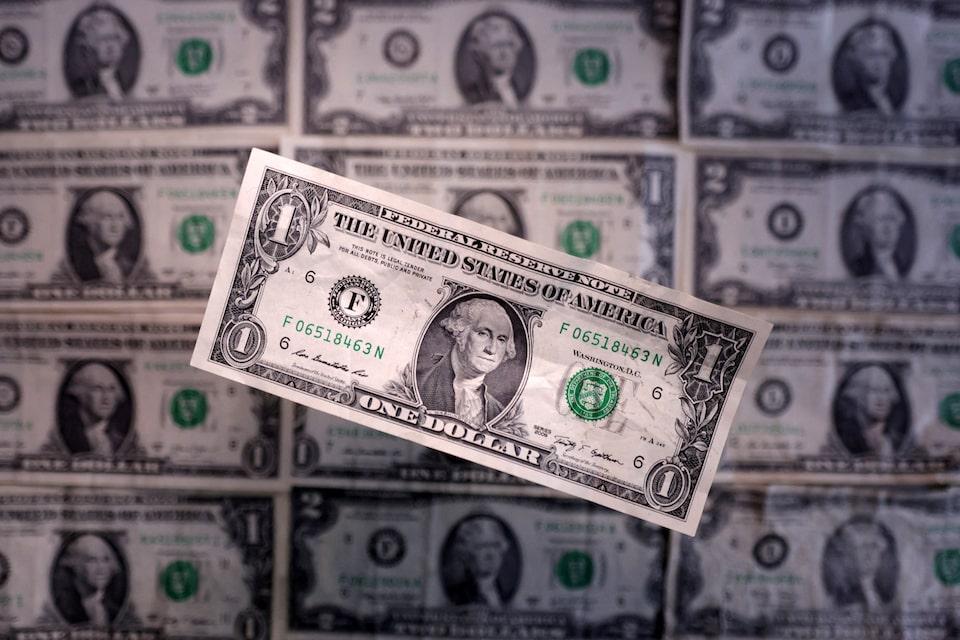
Dollar holds to gains; euro back under $1.20 level Warsh likely to rein in Fed balance sheet Yen weakens after Takaichi talks down currency's declines SINGAPORE, Feb 2 (Reuters) - The dollar clung to its gains on Monday as investors weighed what a Federal Reserve under Kevin Warsh might look like, with his preference for a smaller balance sheet. The yen was also back on traders' radars, after Japanese Prime Minister Sanae Takaichi over the weekend talked up the benefits of a weaker yen in a campaign speech, in a tone at odds with her finance ministry that has worked to stem the currency's declines. Sign up here. U.S. President Donald Trump's pick of Warsh as the next Fed Chair sparked a wave of selling across risky assets and sent precious metals tumbling on Friday, while the dollar clawed back its losses from earlier last week. While investors think Warsh will be inclined to cut rates, they expect him to rein in the Fed's balance sheet, which is typically supportive for the dollar as it reduces the money supply in the market. The greenback remained on the front foot in early Asia trade on Monday, leaving the euro firmly away from the $1.20 level as it last stood at $1.1848. Sterling was down 0.05% to $1.3680, while the dollar index steadied at 97.22 after jumping 1% on Friday. Richard Clarida, PIMCO's global economic advisor and former Fed Vice Chair, said that while Warsh will inherit a Federal Open Market Committee that remains divided over the pace and scale of further policy easing, he believes Warsh will be able to deliver two rate cuts this year, and potentially even a third. "Beyond those next two or three rate cuts, we believe Warsh may be more wary, depending on the inflation outlook," said Clarida. "Warsh, based on his writings since leaving the Fed, may be much less likely to rely on extensive forward guidance about the future path of interest rates." Elsewhere, the Australian dollar fell 0.54% to $0.69255, while the New Zealand dollar slid 0.3% to $0.6001. YEN WEAKENS The Japanese yen was down 0.4% to 155.39 per dollar on Monday, pressured in part by the dollar's strength and Takaichi's weekend comments which seemed to condone a weaker currency. A survey by the Asahi newspaper showed that her party is likely to score a landslide victory in the upcoming lower house election. "The February 8 snap election is likely to be the next key local catalyst for the yen," said Tony Sycamore, a market analyst at IG. "An LDP majority would likely push the USD/JPY toward 160, whereas a coalition outcome could leave the pair near the 155.00 level depending on the coalition partners." Investors have sold the yen and Japanese government bonds in the run-up to the election, on expectations of more expansionary fiscal policy should Takaichi win a strong mandate, and that the tax cuts her party has touted would further strain already stretched government finances. Still, the ailing yen has found a floor in recent times, as traders remain on alert to the prospect of a coordinated currency intervention by the U.S. and Japan after talks of rate checks from both sides late last month sent the currency surging. https://www.reuters.com/world/asia-pacific/dollar-firm-investors-mull-fed-under-warsh-yen-back-under-spotlight-2026-02-01/
2026-02-01 23:42
Capstone restarts Mantoverde mine despite strike Mantoverde output to run at 50% - 75% of normal production Australian depositary receipts drop as much as 4.5% Feb 2 (Reuters) - Capstone Copper Corp (CS.TO) , opens new tab resumed operations at its Mantoverde copper and gold mine in northern Chile, even as a strike by a labor union representing nearly 22% of its workforce continued, the Canadian miner said on Monday. The company, in an Australian exchange filing dated February 1, reiterated it expects to continue operations at a level between 50% to 75% of normal production during the strike. Sign up here. Shares of Capstone's Australia-listed depositary receipts fell as much as 4.5% to A$15.810 on the day, their lowest level since January 23. The decision to resume operations follows a Chilean court ruling last week authorizing the forced removal of striking workers from a desalination plant supplying water to the mine, a key resource for day-to-day operations. The strike began in January after negotiations over new labor contracts with Union No. 2 of Mantoverde broke down. Unionized workers rejected the company's latest payment offer, leading to the ongoing impasse. Capstone said it remains open to further dialogue with the union as it seeks to resolve the dispute. Union No. 2 at Capstone Copper’s Mantoverde mine is the largest labor union on site, representing around 645 workers, which corresponds to roughly 50% of the mine’s direct workforce. It is the union leading the strike. The conflict centers on Mantoverde's desalination plant on the coast, located about 40 kilometers (25 miles) from the mine. The company reported that on the evening of January 18, individuals entered the desalination facility, interfering with the plant's electrical system and causing an interruption in water supply. The water shortage forced the mine to rely on on-site reserves, halt parts of its operations including sulphide processing, and warn further shutdowns could occur if the situation persisted. Chile, the world’s top copper producer, has grappled with deepening droughts that have forced Santiago to consider unprecedented water rationing. The shortages have intensified long‑standing tensions over water use as miners - traditionally dependent on continental sources like lakes, rivers and reservoirs - compete for supplies needed to power copper smelting. In 2025, Mantoverde produced 62,308 tons of copper concentrate and 32,807 tons of copper cathodes, about 0.4% of global production. Capstone owns a 70% stake in Mantoverde, with Japan's Mitsubishi Materials (5711.T) , opens new tab holding the remaining 30%. https://www.reuters.com/sustainability/sustainable-finance-reporting/canadas-capstone-copper-restarts-chiles-mantoverde-mine-while-strike-drags-2026-02-01/

2026-02-01 23:20
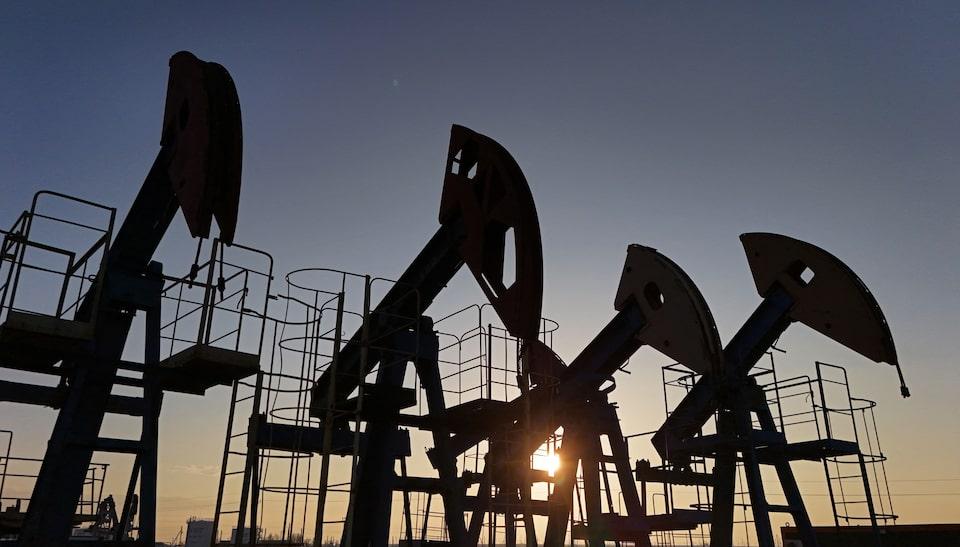
TOKYO, Feb 2 (Reuters) - Oil prices fell by nearly 3% on Monday as U.S. President Donald Trump said over the weekend Iran was "seriously talking" with Washington. Brent crude futures were down $1.90 per barrel, losing 2.8%, to $67.39 per barrel at 2350 GMT. U.S. West Texas Intermediate crude also fell $1.90 per barrel, losing 2.9%, to $63.32 per barrel. Sign up here. Both contracts dropped sharply from the previous session, when Brent hit a six-month high and WTI was hovering near its highest since late September on mounting tensions between the United States and Iran. Trump repeatedly threatened Iran with intervention if it did not agree to a nuclear deal or failed to stop killing protesters. On Saturday Trump told reporters Iran was "seriously talking" with Washington, hours after Tehran's top security official Ali Larijani said on X that arrangements for negotiations were underway. "I hope they negotiate something acceptable," Trump said. "You could make a negotiated deal that would be satisfactory with no nuclear weapons." De-escalation of U.S.-Iran tensions is driving oil prices down on profit-taking, said IG market analyst Tony Sycamore. "The crude oil market is interpreting this as an encouraging step back from confrontation, easing the geopolitical risk premium built into the price during last week's rally and prompting a bout of profit-taking," he said. OPEC+ agreed to keep its oil output unchanged for March at a meeting on Sunday. In November they froze further planned increases for January through March 2026 because of seasonally weaker consumption. "Geopolitical risks mask a fundamentally bearish oil market," Capital Economics said in a January 30 note. "The historical example of last year's 12-day war (between Israel and Iran), and a well-supplied oil market, will still bear down on Brent crude prices by end-2026." https://www.reuters.com/business/energy/oil-falls-by-over-1-per-barrel-iran-talks-focus-2026-02-01/
2026-02-01 22:20
HAVANA, Feb 1 (Reuters) - The United States on Sunday accused Cuba of interfering with the work of its top diplomat in Havana after small groups of Cubans jeered at him during meetings with residents and church representatives outside the capital. Amid rising tensions between the two countries, the State Department on social media accused the Cuban government of "failed intimidation tactics," and it demanded that Havana stop "sending individuals to interfere with the diplomatic work" of U.S. Charge d'Affaires Mike Hammer. Sign up here. Friction has increased between the long-time foes after U.S. President Donald Trump last week declared Cuba "an unusual and extraordinary threat" to U.S. national security and said he would slap tariffs on any country that delivered oil to the communist-run Caribbean island. Trump on Sunday said Cuba was "a failing nation" but added: "I think we're going to make a deal with Cuba." Hammer, a career diplomat who arrived in Cuba in late 2024, has traveled the island widely to meet with political dissidents, Catholic Church representatives and others. The Cuban government accuses him of seeking to foment unrest. On Saturday, he posted a video describing alleged harassment following a meeting with local church leaders. "When I left the parish, a few communists, surely frustrated by how bad the revolution is going, shouted obscenities at me," Hammer said in the video on social media. Subsequently, several more videos surfaced showing small groups of people in two locations during nighttime blackouts, taunting Hammer with cries of "Assassin!" and "Imperialist!" Reuters could not identify the individuals in the videos, and Cuba's government has not commented on them. Cuba's foreign ministry last year complained to Hammer about behavior it said was "interventionist" and alleged he incited Cubans to commit crimes and attack the state. The U.S. Embassy, which produces the videos, has denied those charges and says Hammer is simply doing his job. The two neighboring countries have been at odds since Fidel Castro's 1959 revolution, but a crippling economic crisis on the island and stepped up pressure from the Trump administration have recently brought the conflict to a head. https://www.reuters.com/world/us/washington-scolds-cuba-after-crowds-heckle-us-diplomat-2026-02-01/