2025-09-25 20:00
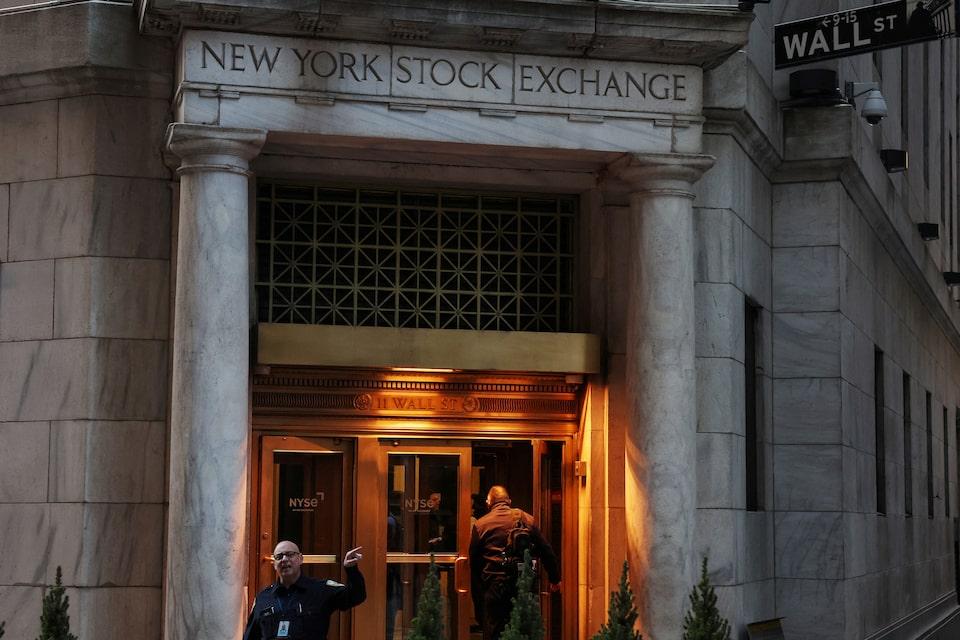
Initial claims for state unemployment benefits drop CarMax falls to lowest in over five years Investors await PCE data Friday Indexes: Dow down 0.4%, S&P 500 down 0.5%, Nasdaq down 0.5% NEW YORK Sept 25 (Reuters) - U.S. stocks ended moderately lower on Thursday, with most S&P 500 sectors down as economic data increased uncertainty over the outlook for interest rate cuts from the Federal Reserve. Data showed initial jobless claims dropped 14,000 to a seasonally adjusted 218,000 for the week ended September 20. Other data showed the U.S. economy grew faster than previously estimated in the second quarter amid strong consumer spending and business investment. Sign up here. Also, Chicago Fed President Austan Goolsbee said on Thursday he was uneasy with cutting rates too quickly, with inflation a risk. The comments and data follow the U.S. central bank's move last week to lower rates by 25 basis points - its first cut since December - after signs of weakness in the labor market. It also gave indications of more rate cuts ahead. Investor expectations of another 25 bps cut in the Fed's October meeting are now at 83.4%, down from about 92% on Wednesday, according to the CME FedWatch Tool. "The economic data that's come out over the last day or two is kind of confusing in that, in my mind, it calls into question" how much the Fed may cut rates again and whether the Fed needs to cut rates again this year, said Peter Tuz, president of Chase Investment Counsel in Charlottesville, Virginia. Investors are bracing for Friday's release of the Personal Consumption Expenditures price index, the Fed's preferred inflation measure. Most of the S&P 500 sectors ended lower, but energy (.SPNY) , opens new tab gained 0.9% and technology (.SPLRCT) , opens new tab eked out a 0.03% increase as shares of Intel (INTC.O) , opens new tab jumped 8.9%. The Wall Street Journal reported, citing people familiar with the matter, that Intel has approached Taiwan Semiconductor Manufacturing Company (2330.TW) , opens new tab about investments in manufacturing or partnerships. The Dow Jones Industrial Average (.DJI) , opens new tab fell 173.96 points, or 0.38%, to 45,947.32, the S&P 500 (.SPX) , opens new tab lost 33.25 points, or 0.50%, to 6,604.72 and the Nasdaq Composite (.IXIC) , opens new tab lost 113.16 points, or 0.50%, to 22,384.70. Among decliners, CarMax (KMX.N) , opens new tab shares fell 20.1% after the used-car retailer reported lower second-quarter profit. In addition, shares of Accenture (ACN.N) , opens new tab were down 2.7% even after the consulting firm reported revenue above expectations. Investors are eager to hear soon from more companies on their quarterly results, especially with valuations considered high after the market's run of record highs recently. "Historically we're certainly at the high end" of valuations, said Rick Meckler, partner at Cherry Lane Investments, a family investment office in New Vernon, New Jersey. "One big positive is it seems like the government is going to let big tech get bigger." Next week brings the all-important monthly U.S. jobs report. Monetary policymakers are not unanimous on the proper way forward with rates, with Stephen Miran, President Donald Trump's recent Fed appointee, continuing to push for accelerated policy easing. Earlier this week, Fed Chair Jerome Powell reiterated that the U.S. central bank needs to balance inflation concerns with a weakening job market in its coming interest rate decisions. Declining issues outnumbered advancers by a 3.11-to-1 ratio on the NYSE. There were 110 new highs and 109 new lows on the NYSE. On the Nasdaq, 1,166 stocks rose and 3,502 fell as declining issues outnumbered advancers by a 3-to-1 ratio. Volume on U.S. exchanges was 19.58 billion shares, compared with the 17.99 billion average for the full session over the last 20 trading days. https://www.reuters.com/business/wall-street-futures-flat-caution-builds-ahead-inflation-data-2025-09-25/
2025-09-25 20:00
MEXICO CITY, Sept 25 (Reuters) - Mexico's National Service of Agro-Alimentary Health, Safety, and Quality (Senasica) said on Thursday that a confirmed case of an animal infested with the New World screwworm parasite in Nuevo Leon state was possible thanks to protocols it established with the United States. A fly-trapping system to detect screwworm flies in Mexico is checked every three or four days, Senasica told Reuters, a frequency determined with the animal health arm of the U.S. Department of Agriculture. Sign up here. Senasica's comments came after criticism by U.S. Agriculture Secretary Brooke Rollins, who said Mexico had not adequately enacted protocols to curb the spread of the parasite. https://www.reuters.com/business/healthcare-pharmaceuticals/mexicos-senasica-says-screwworm-case-north-was-detected-thanks-protocol-2025-09-25/

2025-09-25 19:56
Sept 25 (Reuters) - San Francisco Federal Reserve Bank President Mary Daly repeated on Thursday that the U.S. central bank likely needs to cut interest rates further, but it needs to move slowly as it balances risks to its twin goals of full employment and price stability. "I think a little bit more will be needed over time to get that interest rate where it's balancing out those two risks," Daly said at the San Francisco Fed's 2025 Western Bankers Forum. "If you adjust the path all at once, you risk one of the goals. ... If you adjust the path gradually, assess the information before deciding, then you can actually get to a good achievement." Sign up here. https://www.reuters.com/business/feds-daly-a-little-bit-more-rate-cutting-likely-needed-over-time-2025-09-25/

2025-09-25 19:42
US plans to delay retirement of many more coal power plants Plan to boost power includes more coal, nuclear and backup generation US needs to add 100 GW of capacity in five years, excluding renewables DOE receives 300 inquiries for new power plant, data center sites NEW YORK, Sept 25 (Reuters) - The administration of U.S. President Donald Trump expects most of the nation's coal-fired power plants to delay retirement to help deliver the vast amount of electricity needed to fuel artificial intelligence, Energy Secretary Chris Wright told Reuters on Thursday. Keeping those often half-century-old coal plants running is part of a broader strategy to increase the country's power output that will also include boosting nuclear energy and allowing backup power plants to operate around the clock. Sign up here. The administration has made expanding energy production a top priority while rejecting concerns about climate change, which Trump told the United Nations this week amounted to a global "con job." "Energy sobriety has returned to Washington, D.C. Our focus is on Americans and the price of utility and avoiding blackouts," Wright said at a Reuters Newsmaker event. "We've got to stop existing firm capacity from retirement." The government had been in discussions with many utilities nationwide and expects the majority of the several dozen U.S. coal plants nearing retirement to delay closure, he said. "I would say the majority of that coal capacity will stay online," he added. The administration is also prepared to use its emergency powers to extend the life of coal-fired plants, he said. Last month, Wright extended his emergency order to keep a Michigan coal plant running, even though the plant's operator had been planning to shut permanently for economic reasons. The Energy Department also ordered a gas and oil-fired power plant, slated for retirement in Pennsylvania, to continue operating. Wright said more plants should expect similar orders, which fall under grid stability provisions in the Federal Power Act. "Absolutely, absolutely. Yeah, that's not the only one," Wright said. Wright said the U.S. would also aim to get more out of the existing grid by running backup generators and standby power plants continuously, rather than just when electricity demand surges. The White House is also seeking to boost nuclear energy, including through regulatory reforms to speed permitting and by hosting new nuclear technologies through the Department of Energy. "We need that industry as another source of energy, and so we're going to give temporary nudges to get it started," Wright said. Currently, two shut U.S. nuclear power plants - including one on Three Mile Island in Pennsylvania - are in the unprecedented process of being restarted. Three Mile Island, dubbed the Crane Clean Energy Center, would deliver electricity for Microsoft data centers. Total U.S. electricity demand is projected to hit record highs this year and next, according to the Energy Information Administration. Growth in the country's power consumption will also continue to accelerate through the end of the decade as massive AI data center campuses power up. The global race by countries, primarily the U.S. and China, to dominate AI will depend largely on connecting new electricity supplies, the Trump administration has said. China built 100 gigawatts of coal-fired power last year and another 100 gigawatts are under construction, Wright said. "Right now, it doesn't matter what China says about climate policy," Wright said. "They're growing their electricity, they're building their industrial might, and they're saying: please keep sending us your industry." The Department of Energy, this year, also opened federal land for the development of power plants and data centers. So far, the department has received some 300 inquiries, Wright said. https://www.reuters.com/sustainability/climate-energy/us-urges-utilities-keep-coal-fired-plants-running-ai-demand-booms-energy-2025-09-25/

2025-09-25 19:41
Iraq to resume oil flow from Kurdish region to Turkey on Saturday after more than two-year halt U.S. Secretary of State Marco Rubio welcomes deal, says Washington helped facilitate SOMO to handle Kurdish crude exports via Turkey under new arrangement BAGHDAD, Sept 25 (Reuters) - Iraq will restart the export of oil from its Kurdish region to Turkey on Saturday after an interruption of more than two years, following what Prime Minister Shia al-Sudani called a historic agreement between Baghdad and the Kurdish regional government. U.S. Secretary of State Marco Rubio welcomed the agreement, which he said Washington had helped to facilitate. Sign up here. "This agreement will strengthen the mutually beneficial economic partnership between the United States and Iraq, encourage a more stable investment environment throughout Iraq for U.S. companies, enhance regional energy security, and reinforce Iraq’s sovereignty," Rubio said in a statement. Under the agreement, Iraq's state oil marketer SOMO will export crude from Kurdish oil fields through a pipeline to Turkey, two Iraqi oil ministry officials with knowledge of the deal told Reuters. The Kurdistan Regional Government said on X that exports would resume within 48 hours following the tripartite agreement between Iraq's oil ministry, the KRG ministry of natural resources and producing companies. Flows through the Kirkuk-Ceyhan pipeline have been shut since March 2023, when the International Chamber of Commerce ordered Turkey to pay Iraq $1.5 billion in damages for unauthorised exports by the Kurdish regional authorities. The Iraqi oil ministry said in a statement it had reached an agreement to deliver all crude from Kurdistan fields, except volumes for local use, to SOMO for export via the pipeline to Ceyhan. The ministry did not specify when flows would restart. Eight oil companies operating in Iraqi Kurdistan, representing over 90% of production, reached agreements in principle on Wednesday with Iraq’s federal and regional governments to resume exports. Before the suspension, Iraq was shipping about 230,000 barrels per day through the pipeline. Turkey is appealing the compensation order but has said it is ready to restart the pipeline. https://www.reuters.com/business/energy/iraqi-pm-confirms-agreement-with-kurdish-region-resume-oil-exports-2025-09-25/

2025-09-25 19:13
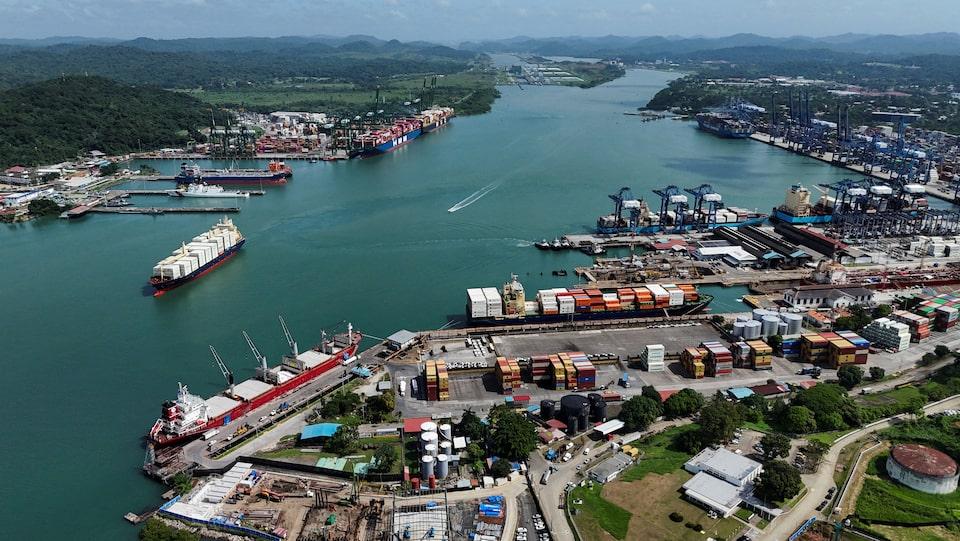
PANAMA CITY, Sept 25 (Reuters) - The Panama Canal said on Thursday that lawmakers in the Central American nation had approved the proposed budget for the key global freight channel for the 2025/26 fiscal year, which is expected to bring an increase in state contributions. For the October to September period, lawmakers backed a $5.21 billion budget for the canal, which is expected to bring $3.19 billion to state coffers, up 14.5% from the level set out in the prior year's budget, the canal authority said. Sign up here. Last week, the canal forecast a $3.5 billion profit for the fiscal year ending in September. The canal has said it expects less transits next year due to global economic instability. The now-approved budget includes provisions for some of the canal's planned investments, it added, including its plan to build a $1.6 billion reservoir to expand the canal, a project that has been challenged in court by local communities. The Rio Indio reservoir project would displace some 2,500 people. A group representing farmers filed a lawsuit to Panama's Supreme Court, saying most residents do not want to leave and that the project violates the constitution. Building the reservoir would boost key supplies of water needed to transport cargo ships through a series of elevated locks, after a drought in 2023 caused the canal to reduce transits. Millions of gallons of water are needed per transit. Panama has faced pressure from Washington over the running of the canal, with the Trump administration pledging to "take back" the waterway from perceived influence from China. China and the United States compete for economic influence in the region, and the latter has been pushing countries in the Central American to limit the presence of Chinese companies. https://www.reuters.com/business/energy/panama-lawmakers-approve-canal-budget-treasury-take-seen-up-15-2025-09-25/