2025-09-25 12:41
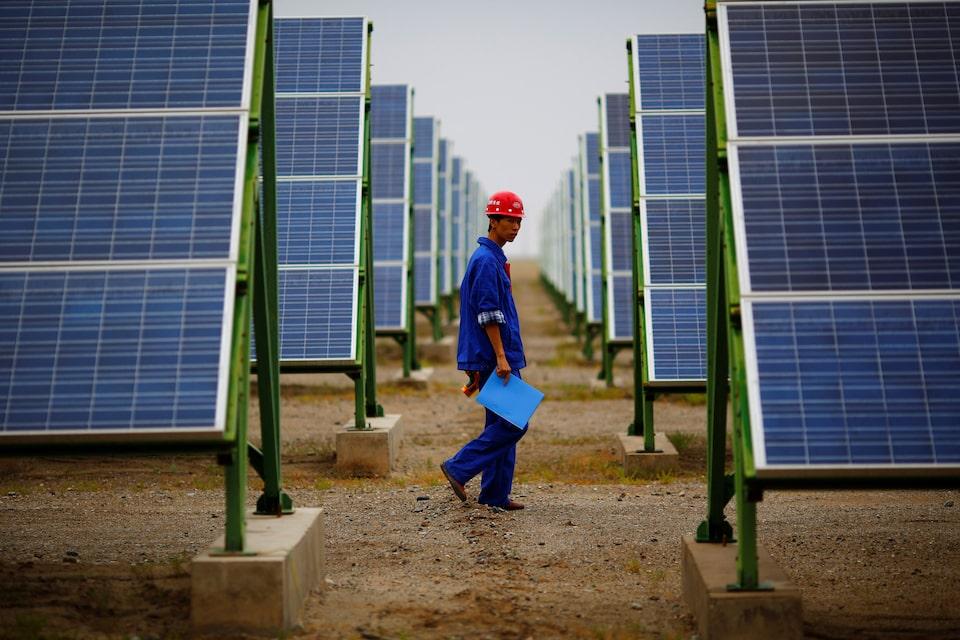
China has history of setting targets it can achieve China's renewable capacity is already the world's largest Goal marks first time China has promised to cut emissions BEIJING, Sept 25 (Reuters) - China's climate goals made public on Wednesday promise the continued expansion of renewable energy, which it has already added at a rapid pace, but make no specific commitment to increase its share in power generation or scale back coal. In announcing the country's first carbon reduction goals, President Xi Jinping said China would increase its wind and solar power capacity, already the world's largest, by six times from 2020 levels to 3,600 gigawatts by 2035. Sign up here. Last year, China reached a target to bring total wind and solar generating capacity to 1,200 GW six years ahead of schedule, reflecting what analysts said is its penchant for setting goals it knows it can meet. Yao Zhe, global policy adviser for Greenpeace East Asia, said this week's updated targets from the world's largest carbon emitter were again unambitious. "If wind and solar expansion continues at its current pace, total installations will exceed 3,000 GW by 2030 and reach 4,500 GW by 2035," Yao said. CURTAILMENT, NOT CAPACITY IS THE ISSUE Anders Hove, senior research fellow at the Oxford Institute for Energy Studies, said China's renewables challenge is not capacity but surging curtailment rates. Curtailment occurs when grid managers limit the power coming onto the grid to maintain a balance with demand or due to infrastructure constraints. Hove said China should focus more on ensuring that renewable power goes into the grid, displacing electricity from coal and gas. Xi said China would aim to cut greenhouse gas emissions by 7%-10% from the peak, a level it has not yet defined but that analysts expected to happen earlier than the official 2030 goal. The targets announced on Wednesday were the first since China in 2020 said it would hit peak carbon emissions by 2030 and bring the economy to carbon neutrality by 2060. Although the new goals, including the renewable target, were expected to provide a clearer roadmap to achieving progress, the headline number fell short of the 30% emissions cut observers said is needed to keep China on track for carbon neutrality by 2060. Even so, the measured targets were a contrast to the speech made by U.S. President Donald Trump, who dismissed climate change as a "con job". "There's a lot of uncertainty around demand growth in China and the need to allow for continued growth from traditional users as well as new users, like data centres and others," said Michael Davidson, a University of California, San Diego, professor who researches renewable energy systems and carbon neutrality in China. "China will be very hesitant to put any caps on what that demand growth could be," he said. Xi stopped short of setting new targets for coal or reiterating a target from 2020, when China said it would "phase down" coal use between 2026 and 2030. It has continued to build and permit new coal mines. https://www.reuters.com/sustainability/cop/china-sets-renewables-goal-it-can-easily-surpass-analysts-say-2025-09-25/
2025-09-25 12:05
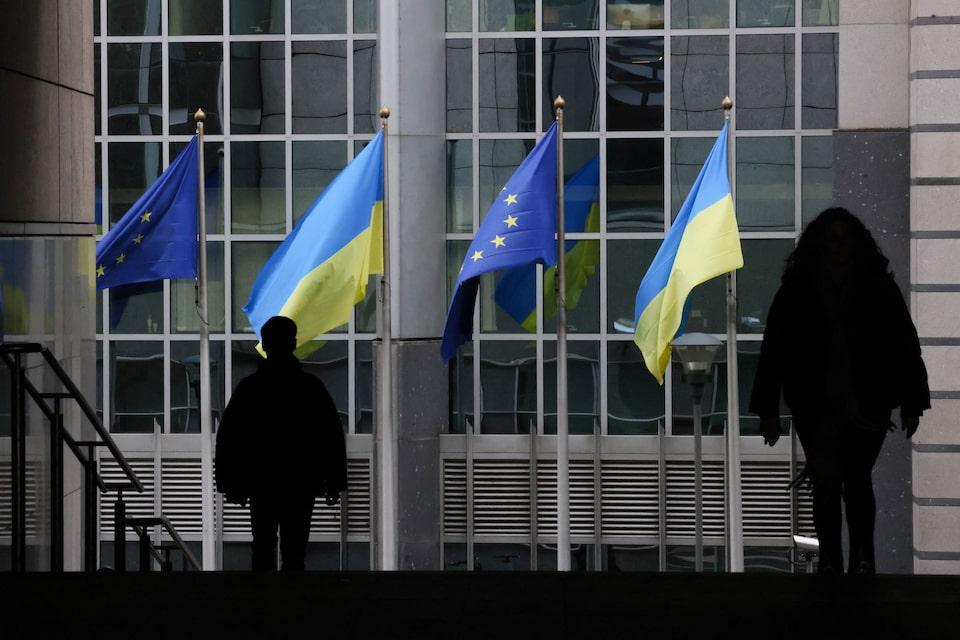
WARSAW, Sept 25 (Reuters) - The 19th package of European Union sanctions against Russia over its full-scale invasion of Ukraine will close a loophole allowing Russia to bypass an EU ban for imports of liquefied petroleum gas (LPG), Polish energy minister said on Thursday. The 12th sanctions package from 2024 had excluded some types of LPG, such as butane and isobutane, used mainly as a feedstock for production of other petrochemicals. Other types of LPG are mainly used as fuel for cars and heating. Sign up here. Before the sanctions went into force, Poland was the largest importer of Russian LPG. While Sweden became the biggest supplier of LNG to Poland in the first half of 2025, imports of liquefied gas from Russia fell but were not eliminated, data from the Polish Liquefied Gas Organization (POGP) showed. The remaining Russian imports corresponded with inflow of butane and isobutane, fractions of LPG with a purity of more than 95%, used also in production of aerosols, POGP data showed. "Adding butane to the sanctions will close the possibility of its import from Russia and Belarus as a component for creating a liquefied petroleum gas mixture, eliminating a loophole in the existing ban on LPG imports," Polish Energy Minister Milosz Motyka said in a statement. https://www.reuters.com/business/energy/eus-proposed-19th-package-russia-sanctions-closes-lpg-loophole-poland-says-2025-09-25/
2025-09-25 12:01
MILAN, Sept 25 (Reuters) - Italy's Snam (SRG.MI) , opens new tab was amazed by the lengthy approval process it faces over its acquisition of a stake in Germany's largest independent gas transmission operator, its CEO told an Italian newspaper, hinting the group could pull the deal. The Italian gas grid operator signed a deal in April to buy 24.99% in Open Grid Europe, paving the way for Snam to enter the German gas market. Sign up here. "The transaction is proceeding... but we are amazed by the lengthiness of the process due to the incredible amount of additional documents requested by the German authority," Snam's CEO Agostino Scornajenchi told daily Il Sole 24 Ore. The asset is interesting, but Snam would not pursue the acquisition "come hell or high water," Scornajenchi added. Part of the information requested by the German authority was related to the role of China's State Grid, an indirect investor in Snam, sources told Reuters. Germany's economy ministry, which is reviewing Snam's acquisition, declined to comment. China's State Grid owns 35% in CDP Reti, which in turns holds 31.4% of Snam. In 2018, Germany blocked an attempt by China's State Grid to buy a stake in power grid operator 50Hertz. ($1 = 0.8510 euros) https://www.reuters.com/sustainability/boards-policy-regulation/snam-ceo-amazed-by-lengthy-approval-german-gas-grid-deal-report-says-2025-09-25/

2025-09-25 12:01
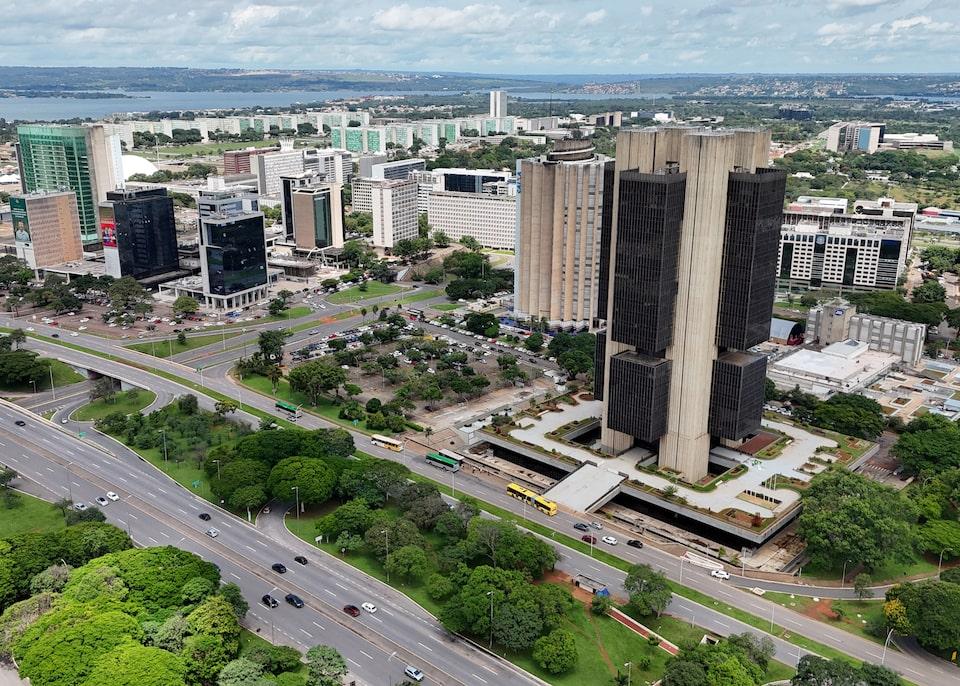
SAO PAULO, Sept 25 (Reuters) - Brazil's central bank projected on Thursday that inflation will hover near the official goal in the first quarter of 2028, but still fail to meet it, according to the bank's latest quarterly monetary policy report. After projecting earlier this month annual inflation at 3.4% for the first quarter of 2027, the relevant horizon for policy decisions, policymakers unveiled a 3.1% forecast for the first quarter of 2028, the final period covered by the report. Sign up here. The bank targets inflation at 3%, with a tolerance band of 1.5 percentage points in either direction. Last week, the monetary institution kept interest rates at a near two-decade high of 15%, signaling a "new stage" of prolonged pause in its attempt to curb consumer prices. The bank launched in September last year a cycle that lifted the benchmark Selic rate by 450 basis points. Compared with June's report, the central bank lowered its 2025 inflation forecast by 0.1 percentage point to 4.8%, while the projection for 2026 was held at 3.6%. "Among the factors that pushed inflation upwards, the dynamism of the labor market in a context of positive growth, and the increase in residential electricity projections stand out," the bank said in the report. "Downward factors include the appreciation of the real and the reduction in inflation expectations." The central bank also decreased its 2025 GDP growth forecast to 2.0% from 2.1% projected in June, citing an expected moderation in economic growth due to the recent tightening of monetary policy, as showed by some economic indicators. Policymakers unveiled for the first time their projection for GDP expansion in 2026, seen at 1.5%. https://www.reuters.com/world/americas/brazils-central-bank-sees-inflation-still-missing-target-early-2028-2025-09-25/
2025-09-25 12:00
Last year's edition saw peak oil demand in 2025 Renewables to overtake coal share in energy mix by 2040 Natural gas demand set to grow almost 20% by 2040 LONDON, Sept 25 (Reuters) - BP (BP.L) , opens new tab said on Thursday it expects global oil demand to grow until 2030, five years later than its forecast a year ago, stressing slowed efforts to increase energy efficiency. The oil major's latest Energy Outlook, an annual study of energy trends through 2050, models two scenarios. Sign up here. The "Current Trajectory" scenario is based on existing policies and pledges, while in its "Below 2-Degrees" scenario it envisions about a 90% drop in carbon emissions by 2050 from 2023 levels. Emissions are largely the result of burning oil, natural gas and coal. The following are highlights from the report: OIL DEMAND, OIL PRODUCTION Global oil demand is expected to hit 103.4 million barrels per day (bpd) by 2030 in BP's Current Trajectory, before falling to 83 million bpd by 2050. BP's report last year saw demand peaking by 2025 at around 102 million bpd, but slowing efficiency gains have changed the picture. In its Below 2-Degrees scenario, oil demand peaks this year at 102.2 million bpd before falling to 33.8 million bpd by 2050. CARBON EMISSIONS In the Current Trajectory, CO2 equivalent emissions stay broadly flat to 2030, then fall by about 25% by 2050 from 2023 levels. In the Below 2-Degrees scenario, emissions drop 90%, driven by faster decarbonisation in emerging economies. NATURAL GAS AND LNG DEMAND In the Current Trajectory, natural gas demand grows to around 4,800 billion cubic metres (bcm) by 2040, up by around 17% from current levels, boosted by China, India and other Asian and Middle Eastern countries, then plateaus at that level. The European Union's imports of Russian pipeline gas fall by around 50% to 15 billion cubic metres (bcm) and stay at that level for decades to come. Exports of liquefied natural gas, which BP uses as a gauge for demand for the fuel, will increase to around 900 bcm by 2035 in the Current Trajectory, with more than 50% of those supplies coming from the U.S. and the Middle East. BP rival Shell (SHEL.L) , opens new tab has pegged LNG demand by 2040 at between 630 million and 718 million metric tons a year, or around 860-980 bcm. ELECTRICITY, AI AND RENEWABLES Global electricity demand in the Current Trajectory scenario rises to over 40,000 terrawatt hours over the coming decade, up around 40% from 2023 levels, boosted by China and India. By 2050 it roughly doubles, driven mainly by huge leaps in the electrification of transport. Over half of power generation will come from wind and solar by then. https://www.reuters.com/sustainability/boards-policy-regulation/bp-postpones-oil-demand-peak-prediction-2030-2025-2025-09-25/

2025-09-25 11:38
Initial probe said one pilot asked another why he cut the fuel Captain's father accuses Indian investigators of 'procedurally improper' remarks Pilots' union condemns investigators' visit to father Air India crash was one of world's deadliest aviation disasters NEW DELHI, Sept 25 (Reuters) - The father of the crashed Air India flight's captain said officials from India's accident investigation bureau visited him last month and implied his son cut the fuel to the plane's engines after takeoff, correspondence obtained by Reuters showed. Pushkar Raj Sabharwal, 91, emailed the Federation of Indian Pilots (FIP) last week to say that Aircraft Accident Investigation Bureau (AAIB) officials had visited him at home on August 30 "under the pretext of offering condolences", and implied his son, Captain Sumeet Sabharwal, was the one who moved the fuel switches. Sign up here. "During this interaction ... they went beyond their mandate - speaking in innuendos and insinuating, on the basis of selective CVR (cockpit voice recorder) interpretation and a so-called 'layered voice analysis', that my son had moved the fuel control switches from RUN to CUTOFF after take-off," the September 17 email said. The day before the AAIB visit, he wrote to the civil aviation ministry - in a letter dated August 29 - to request India's government open an additional investigation into the deadly crash, criticising what he said were investigators' "selective" releases of information, which had led to speculation about his son's actions. The crash of Air India flight 171 in June, moments after it took off from Ahmedabad, killed 241 of the 242 people on board the Boeing Dreamliner, as well as 19 on the ground. A preliminary investigation report by the AAIB showed the plane's fuel engine switches had almost simultaneously flipped from run to cutoff just after takeoff. The AAIB did not respond to Reuters queries. On Thursday, a Reuters reporter seeking comment was stopped by building security and denied access to Pushkar Raj Sabharwal's home in Mumbai. The FIP condemned the AAIB visit and said it had "taken up the matter" with the minister of civil aviation. "In any court of law the judge or the prosecutor does not go to the house of victims and cross question individuals," Captain C.S. Randhawa, the organisation's president, told Reuters in a text message. India's civil aviation ministry and Air India did not respond to Reuters requests for comment. 'INTEGRITY' Pushkar Raj Sabharwal, himself a former official of India's aviation safety regulator, in his email to the pilots federation requested its support for a fair, transparent investigation. The AAIB's preliminary report in July said one pilot was heard on the cockpit voice recorder asking the other why he had cut off the fuel. "The other pilot responded that he did not do so," the report said, without identifying who said what. A source briefed on U.S. officials' early assessment of evidence in July told Reuters the cockpit recording of dialogue between the two pilots supported the view that Captain Sabharwal had cut the flow of fuel to the engines. The first officer was at the controls of the Boeing (BA.N) , opens new tab 787 and asked the captain why he had moved the fuel switches into a position that cut off supply to the engines and requested that he restore the fuel flow, the source told Reuters. "My son's dignity and the integrity of due process must be preserved," Pushkar Raj Sabharwal wrote in the email to the pilots federation, calling the investigator's alleged remarks "procedurally improper and professionally indefensible." In July, the AAIB urged the public and media to refrain from spreading "premature narratives" that risked undermining the investigation's integrity. In his letter to the ministry, Sabharwal's father said the "speculation" had caused him personal anguish, adding another investigation by the government would help in "safeguarding the truth and ensuring the safety of future passengers." This week, India's Supreme Court asked the government to respond to a separate public interest litigation seeking an independent investigation into the crash. https://www.reuters.com/world/india/air-india-crash-grieving-father-captain-says-investigators-insinuated-son-cut-2025-09-25/




