2025-09-25 11:00
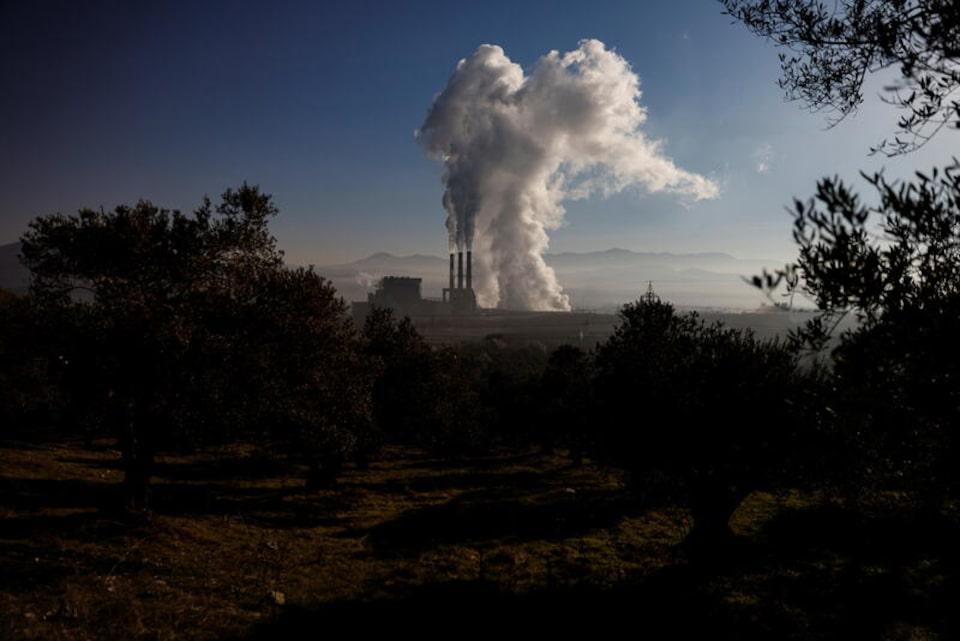
LITTLETON, Colorado, Sept 25 (Reuters) - Turkey's skilled workforce and low energy costs have made it a popular destination for businesses looking to develop supply chains on the doorstep of both Europe and Central Asia. But the industrial boom has come with a stiff pollution penalty. So far in 2025, power firms in Turkey have emitted more carbon dioxide (CO2) than any other European nation, supplanting Germany as the region's largest power polluter. Sign up here. Rising emissions reflect the country's fast-growing power needs, which have surged as companies built or expanded production capacity in Turkey to exploit its proximity to European consumers and reduce reliance on Asian factory hubs. Between 2019 and 2024, Turkey's electricity demand rose by 14%, according to data from energy think tank Ember, which contrasted with a decline in Europe's overall electricity demand over the same period. The diverging power trends highlight how the practice of nearshoring capacity to Turkey has not only revved up its entire industrial economy, but has also spurred a major shift in polluting activities to Turkey from other locations. CHEAP POWER In addition to a large labor pool and good logistical connections to world markets, Turkey's low power costs have been a major lure for manufacturers and heavy industry. Between mid-2022 and late 2024 - when most European power prices surged following Russia's invasion of Ukraine - Turkey's average electricity prices declined thanks to hefty government subsidies designed to shield consumers from inflation. Turkey's household consumer prices averaged around 5.5 euro cents per kilowatt hour (kWh) in late 2024, compared to 7.5 euro cents/kWh in mid-2022, data from Eurostat shows. That roughly 25% fall in Turkish electricity prices contrasts sharply with the electricity price trend in Germany - Europe's most established manufacturing and industrial hub - over the 2022 to 2024 period. Germany's consumer electricity prices rose from around 19 euro cents/kWh in 2022 to close to 28 euro cents/kWh by late 2024, which represented a nearly 50% rise. And while business power costs differ to household consumer electricity prices in both countries, Turkey's industrial power costs are also substantially below those in Germany and tend to move in line with electricity prices. INDUSTRIAL-SCALE IMPACT The impact of the build-up in production capacity in Turkey is clear from output data of key commodities and components made in the country. What's more, production trends of those same items in Germany also showcase the effects of Turkey's relatively lower energy costs compared to Germany since 2022. Over the past five years or so, Turkey's production of several energy-intensive commodities including cement, chemicals and refined products has steadily climbed. Over that time frame, German production of those same items has contracted, revealing a swing in production capacity from Germany to Turkey driven in part by the wide energy cost differential between the countries. BUILDING MOMENTUM Turkey's output of more developed products and goods has also climbed to record highs in recent years just as output of those same materials and goods has fallen to multi-year lows in Germany. This growth in both energy-intensive commodities and in higher-value products and components indicates Turkey's economy has the potential to grow further and boost wealth for its population. However, the country's economy also faces substantial risks in the form of high inflation, rising government debt levels and a weakening currency that is eroding national purchasing power. Turkey's production hubs are also heavily reliant on European countries for consumers, and therefore face the risk of a collective downturn in demand in the event of any Europe-wide recessions. However, strong logistical links to the Middle East, North Africa and Central Asia help to diversify Turkey's consumer market risks and mean that Turkey-made products have strong sales potential into those markets. The Middle East and Africa are also fast-growing markets for the cement, building materials and basic chemicals made in Turkey. That large consumer base on Turkey's doorstep bodes well for commodities and raw material producers in Turkey, but suggests the associated pollution will grow alongside and stands to make Turkey a new major emitter on the global stage. The opinions expressed here are those of the author, a columnist for Reuters. Enjoying this column? Check out Reuters Open Interest (ROI), your essential new source for global financial commentary. ROI delivers thought-provoking, data-driven analysis of everything from swap rates to soybeans. Markets are moving faster than ever. ROI can help you keep up. Follow ROI on LinkedIn , opens new tab and X , opens new tab. https://www.reuters.com/markets/commodities/turkeys-nearshoring-boom-comes-with-climate-catch-2025-09-25/
2025-09-25 10:55
KAMPALA, Sept 25 (Reuters) - Uganda's currency is expected to gain against the dollar in the next week to Thursday, while those of Ghana, Nigeria, Kenya and Zambia are forecast to be little changed, traders said. UGANDA Uganda's shilling is seen trading with a firming bias in the coming days, helped by month-end inflows of hard currency from charities and commodity exporters. Sign up here. Commercial banks quoted the shilling at 3,497/3,507 to the dollar, compared to last Thursday's close of 3,495/3,505. "We are seeing some (hard-currency) flows from commodity exporters and NGOs and being month-end days we anticipate this trend to dominate," one trader said. The shilling would likely trade between 3,470 and 3,510 to the dollar, he said. GHANA Ghana's cedi is expected to stay around its current levels as central bank dollar auctions meet demand on the interbank market. LSEG data showed the cedi trading at 12.30 to the dollar on Thursday, compared to 12.22 at last Thursday's close. "The currency is likely to hold steady in the coming week as recent central bank auction amounts on offer have exceeded the total bids allocated," said Andrews Akoto, head of trading Absa Bank Ghana. "We expect demand from local corporate accounts to persist though, particularly from the services and manufacturing sectors," he added. Another trader said the cedi would remain stable as foreign-currency demand and supply are close to equilibrium. NIGERIA Nigeria's naira is seen trading within a narrow range, helped by central bank support in the wake of rising demand for the U.S. dollar. The naira was quoted at 1,491 naira to the dollar on the official market on Thursday, compared with a closing quote of 1,498 naira a week earlier. The currency was changing hands at 1,500 naira to the dollar in street trading on Thursday. "I expect (the) central bank to continue to help. All things being equal, I think rates will remain stable next week trading at around 1,485 to 1,490 levels," a trader said. KENYA Kenya's shilling is forecast to extend a long-running period of stability. LSEG data quoted the shilling at 129.00/129.40 to the dollar on Thursday, the same level as at last Thursday's close. ZAMBIA Zambia's kwacha is likely to hold near its current level, unless there is market-moving news in Friday's national budget presentation. On Thursday commercial banks quoted the kwacha at 23.97 per dollar from 23.55 a week ago. https://www.reuters.com/world/africa/africa-fx-ugandan-shilling-seen-rising-month-end-fx-flows-2025-09-25/

2025-09-25 10:52
LONDON, Sept 25 (Reuters) - Wealthy investors in the United States and Asia have cancelled plans to put money into U.S. hedge funds this year, while increasing their exposure to Europe and the Middle East, according to a Bank of America survey seen by Reuters on Thursday. Half of the allocators who told Bank of America (BAC.N) , opens new tab last year they would invest in U.S. hedge funds have now ditched these plans, according to the survey. Sign up here. The report, which canvassed 263 respondents, representing around $840 billion of industry cash, showed European allocations exceeded expectations by 8%, based on the bank's data, which compared surveys done during the fourth quarter of last year to its most recent investor survey carried out this August and September. U.S. and Asian investors led the move into hedge funds based in Europe and the Middle East, where several global hedge funds have set up shop in Abu Dhabi and Dubai in recent years. The biggest of these, which manage over $10 billion, favoured deals with hedge funds called separately managed accounts - special investment vehicles that are created for a single allocator. Firms like pension funds, sovereign wealth funds and family offices have poured $37 billion into hedge funds so far this year, the most new money the industry has seen since at least 2016, said BofA. While some hedge funds will return an investor's money in a day, some will lock up money for as long as five years. In public markets, money has more recently returned to U.S. equity funds, where weekly flows tracked by EPFR hit a year-to-date high of almost $58 billion last week. https://www.reuters.com/sustainability/boards-policy-regulation/hedge-flow-us-asian-investors-turn-european-mideast-hedge-funds-bofa-survey-2025-09-25/

2025-09-25 10:45
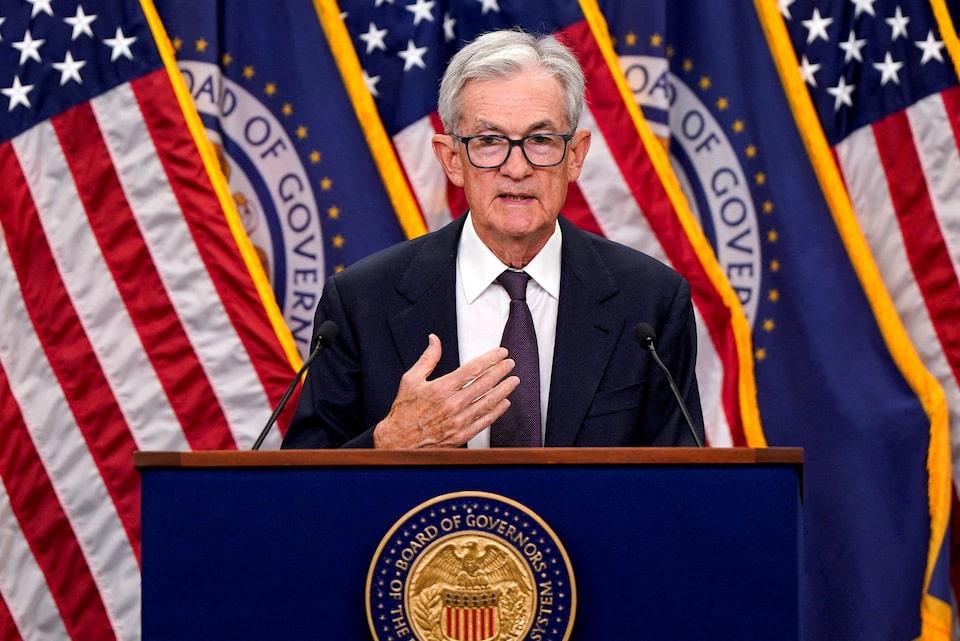
What matters in U.S. and global markets today By Anna Szymanski, Editor-in-Charge, Reuters Open Interest Sign up here. Wall Street looks set for a weak opening ahead of the bell on Thursday. Federal Reserve Chair Jerome Powell’s warning about stretched valuations has perhaps injected a bit of caution into markets, given the run-up in equities this year. Fed watchers will be busy today, with multiple officials from the central bank set to speak. Investors will also soon get a bit more color about the factors weighing on both sides of the Fed's mandate, with the final estimate of U.S. second-quarter GDP coming out today, followed by the latest PCE inflation index reading tomorrow. Today's Market Minute * The White House asked federal agencies on Wednesday to prepare plans for mass firings during a possible government shutdown next week, marking a sharp departure from the temporary furloughs of workers typically seen during past shutdowns , opens new tab. * Chinese drone experts have flown to Russia to conduct technical development work on military drones at a state-owned weapons manufacturer that is under Western sanctions, according to two European security officials and documents seen by Reuters. * Several investors in Walt Disney on Wednesday asked the media giant to share documents about its decision to suspend Jimmy Kimmel's show last week for inspection. * Which countries make up the "Dirty Dozen," the nations likely to play a key role in determining future pollution trends? Find out in the latest piece from ROI global energy transition columnist Gavin Maguire. * Debate around the politicization of the Federal Reserve has mostly centered around its ability to set interest rates. But, writes ROI markets columnist Jamie McGeever, another part of the central bank's toolkit is also back in the spotlight, one that could perhaps have even greater significance for global financial stability. Chart of the day Oil prices moved down early on Thursday from the previous session's seven-week high, with investors likely taking profits in anticipation of slower winter demand and the return of more supplies from Iraq and Kurdistan. Oil flows from Iraqi Kurdistan are expected to restart in days , opens new tab after eight oil firms struck a deal on Wednesday with Iraq's federal and Kurdish regional governments to resume exports. Meanwhile, the threat of a revival of international sanctions on Iran is looming, but ROI energy columnist Ron Bousso argues that these measures are unlikely to curtail Tehran’s vital oil exports but could benefit Chinese refiners, offering them access to a larger share of discounted Iranian crude. Today's events to watch Want to receive the Morning Bid in your inbox every weekday morning? Sign up for the newsletter here. You can find ROI on the Reuters website , opens new tab, and you can follow us on LinkedIn , opens new tab and X. , opens new tab Opinions expressed are those of the author. They do not reflect the views of Reuters News, which, under the Trust Principles , opens new tab, is committed to integrity, independence, and freedom from bias. https://www.reuters.com/business/finance/global-markets-view-usa-2025-09-25/
2025-09-25 10:23
MUMBAI, Sept 25 (Reuters) - The Indian rupee traded in a narrow range on Thursday and closed nearly flat, with likely central bank intervention staving off the pressure from weak equities and foreign outflows. The rupee closed at 88.6650 against the U.S. dollar, nearly unchanged from its previous close at 88.69. Sign up here. The RBI most probably intervened through state-run banks to support the rupee, traders said, adding that the move helped the currency withstand pressure due to dollar demand from foreign banks and local importers. India's benchmark equity indexes, BSE Sensex (.BSESN) , opens new tab and Nifty 50 (.NSEI) , opens new tab declined for the fifth straight session to end lower by about 0.7% each while IT stocks (.NIFTYIT) , opens new tab, in focus after the change in U.S. visa policies, dropped by over 1%. Nomura analysts said in a note that changes to the H-1B visa policy could add to risks of equity outflows, hurt the rupee, curb growth of remittances to India and slightly reduce corporate income repatriation from the U.S. They recommend betting on a weaker rupee against the euro , which hit a peak of 104.87 earlier this week when the local unit slumped to a record low of 88.7975 per dollar. Foreign investors have already sold $1.3 billion of Indian stocks so far in September. The rupee's muted price action on Thursday also echoed similar moves in broader currency markets with the dollar hovering little changed at 97.8 against a basket of peers. Investors are awaiting comments from U.S. Federal Reserve policymakers later on Thursday ahead of Friday’s personal consumption expenditure (PCE) data for clues on the rate outlook. At home, the RBI is expected to leave policy rates unchanged next week, though some economists see a possible 25-basis-points cut to shield economic growth from slipping. https://www.reuters.com/world/india/rupee-ends-flat-likely-rbi-intervention-blunts-drag-weak-stocks-2025-09-25/

2025-09-25 10:18
SOCHI, Russia, Sept 25 (Reuters) - The Russian central bank will proceed very cautiously with lowering its key rate, Governor Elvira Nabiullina said on Thursday, speaking after the government announced plans to raise value-added tax from next year. "I want to confirm that we will continue moving forward, carefully calibrating each step," Nabiullina said. "Additional, overly rapid easing of monetary conditions could lead to the risk of restarting the inflation spiral," she added. Sign up here. Nabiullina generally backed the draft budget, calling it "disinflationary". She warned about a one-off increase in inflation when VAT goes up but played down its sustainability and importance. "Even if such an effect occurs, it would be a temporary, one-time effect," Nabiullina said in reference to the tax increase. "It may to some extent influence the pace of decline in inflation expectations, but unlike deficit growth as a possible alternative through borrowing, it certainly cannot be a source of sustained inflationary pressure," she said. Nabiullina praised the government's proposal , opens new tab to lower the cut-off price for oil above which oil revenues go into the fiscal reserve fund to try to ensure that the fund is sufficiently replenished. The central bank cut its key interest rate by one percentage point to 17% on September 12. It sees the average key interest rate at 12% to 13% in 2026, expecting inflation to return to its target of 4% from the current level of around 8%. https://www.reuters.com/business/finance/russias-nabiullina-says-central-bank-will-cut-rates-with-caution-2025-09-25/