2026-02-01 09:06
OPEC+ keeps pause in oil output hikes in March Brent crude near highest since August OPEC+ JMMC reiterated importance of full compliance Lack of guidance on post-March policy significant, analyst says MOSCOW/LONDON, Feb 1 (Reuters) - OPEC+ agreed to keep its oil output unchanged for March at a meeting, the producer group said on Sunday, even after crude prices hit six-month highs on concern the U.S. could launch a military strike on OPEC member Iran. The meeting of eight OPEC+ members comes as Brent crude closed near $70 a barrel on Friday, close to the six-month high of $71.89 it hit on Thursday, despite speculation that a supply glut in 2026 would push prices down. Sign up here. The eight producers - Saudi Arabia, Russia, the United Arab Emirates, Kazakhstan, Kuwait, Iraq, Algeria and Oman - raised production quotas by about 2.9 million barrels per day from April through December 2025, roughly 3% of global demand. In November they froze further planned increases for January through March 2026 because of seasonally weaker consumption. Sunday's brief meeting reaffirmed that decision for March, after earlier gatherings did the same for January and February. NO FORWARD GUIDANCE Sunday's statement made no mention of what OPEC+ could decide for specific months beyond March, and the lack of forward guidance is significant, said Jorge Leon, a former OPEC official who now works as head of geopolitical analysis at Rystad Energy. "With rising uncertainty around Iran and U.S. tensions, the group is keeping all options firmly on the table," he said. "OPEC's own numbers point to a lower call on OPEC+ crude in the second quarter, which could limit the scope for production increases," Leon added. OPEC+ includes the Organization of the Petroleum Exporting Countries (OPEC), plus Russia and other allies. The full OPEC+ pumps about half of the world's oil. A separate OPEC+ panel called the Joint Ministerial Monitoring Committee also met on Sunday. The JMMC does not have decision-making authority on production policy. The JMMC stressed the importance of achieving full compliance with OPEC+ output agreements, a statement on OPEC's website said. BOTH SIDES SIGNAL WILLINGNESS TO TALK U.S. President Donald Trump is weighing options on Iran that include targeted strikes against security forces and leaders, aiming to inspire protesters, multiple sources said on Thursday. Washington has imposed extensive sanctions on Tehran to choke off its oil revenue, a crucial source of state funding. Both the U.S. and Iran have since signalled willingness to engage in dialogue, but Tehran on Friday said its defence capabilities in any talks. Oil prices have also been supported by supply losses in Kazakhstan, where the oil sector has suffered a series of disruptions in recent months. Kazakhstan on Wednesday it was restarting the huge Tengiz oilfield in stages. The eight countries plan to hold their next meeting on March 1 and the JMMC on April 5, the statements showed. https://www.reuters.com/business/energy/opec-set-keep-planned-oil-output-pause-march-prices-jump-sources-say-2026-02-01/
2026-02-01 09:05
MUMBAI, Feb 1 (Reuters) - India will be warmer and drier this month after an unusually warm January, the weather office said, raising risks for key winter-sown crops such as wheat, rapeseed and chickpeas. The country's northwestern wheat-growing region is likely to receive less than 78% of its long-term average rainfall, Mrutyunjay Mohapatra, director-general of the India Meteorological Department, said on Saturday. Sign up here. Maximum and minimum temperatures in most parts of the country will be above average in February, he said. Crops such as wheat and barley could suffer yield losses, as higher-than-normal temperatures may accelerate crop growth and shorten the growing period, he said. "Below-normal cold-wave days are likely over several parts of northwest and adjoining central India," he said. India's Punjab, Haryana, and Uttar Pradesh states in the north, along with Madhya Pradesh in central India, form the country's top wheat-growing regions. Winter-sown crops such as wheat, rapeseed, and chickpeas are planted from October to December and require cold conditions during their growth and maturity stages for optimal yields. In January, minimum and maximum temperatures were above average as the country received 31.5% lower-than-average rainfall, Mohapatra said. Indian farmers had planted wheat and rapeseed on a record 33.42 million hectares and 8.94 million hectares, respectively, by January 23, farm ministry data showed. "February is a crucial month for grain development. A sharp rise in temperatures during this period would lead to lower yields and could wipe out the gains from higher planting," said a Mumbai-based dealer with a global trade house. Any drop in the rapeseed crop could force India, the world's biggest vegetable-oil importer, to step up its cooking-oil imports, dealers said. India buys palm oil mainly from Indonesia, Malaysia and Thailand, while it imports soyoil and sunflower oil from Argentina, Brazil, Russia and Ukraine. https://www.reuters.com/business/environment/india-faces-hotter-drier-february-threatening-winter-crops-2026-02-01/

2026-02-01 04:14
TOKYO, Feb 1 (Reuters) - Japan will continue to face market jitters over fiscal policy, with the risk of further tax relief raising the prospect of a renewed selloff in government bonds and the yen similar to Britain's "Truss shock," a former top currency diplomat said. Markets remain highly sensitive to the risk that the ruling Liberal Democratic Party (LDP) could lean toward more sales tax relief to shore up voter support if it senses trouble in the election campaign, said Hiroshi Watanabe, a former vice finance minister for international affairs. Sign up here. "We're somehow managing to hold the line for now, but it's right at the edge," Watanabe told Reuters in an interview. Watanabe, now a visiting professor at Tokyo Seitoku University, oversaw Japan's currency policy and coordinated economic policy with other countries between 2004 and 2007. Prime Minister Sanae Takaichi is seeking a mandate for her push to reflate the economy in a snap election on February 8. Japan suffered a broad market rout last month after Takaichi pledged to cut the consumption tax on food for two years, reviving investor concerns about fiscal discipline in a country with public debt more than twice the size of its economy. Super-long Japanese government bonds sold off sharply, while the yen slid toward levels that had previously triggered yen-buying intervention. Markets have since stabilised somewhat, with the yen rebounding to around 154 per dollar as speculation grew that Japanese and U.S. authorities had carried out rate checks - normally considered a precursor to actual intervention. Watanabe warned of a strong reaction from investors to any hint that tax relief could expand beyond current pledges. "I do think that Takaichi, as well as Finance Minister Satsuki Katayama, have registered the warnings coming from global capital markets," Watanabe said, adding that caution from major U.S. and European investors had likely tempered policymakers' public messaging. Watanabe said concerns over public finances, combined with a structural trade deficit and a lack of clarity over the Bank of Japan's rate path, would likely limit the scope for a sustained yen rebound. "There is a possibility that the yen could briefly move into the 140s per dollar," he said. "But it's hard to see a situation where yen appreciation continues." https://www.reuters.com/world/asia-pacific/japan-markets-edge-over-looser-fiscal-policy-ex-currency-diplomat-watanabe-says-2026-02-01/
2026-02-01 04:08
BEIJING, Feb 1 (Reuters) - Precious metal prices have been "highly volatile" in China and overseas recently, with market uncertainty significantly increasing, the Industrial and Commercial Bank of China (ICBC) said on Sunday. Investors are advised to assess their risk tolerance and avoid impulsive trading, it added. Sign up here. https://www.reuters.com/world/asia-pacific/chinas-icbc-warns-precious-metal-volatility-urges-investor-caution-2026-02-01/
2026-02-01 01:46
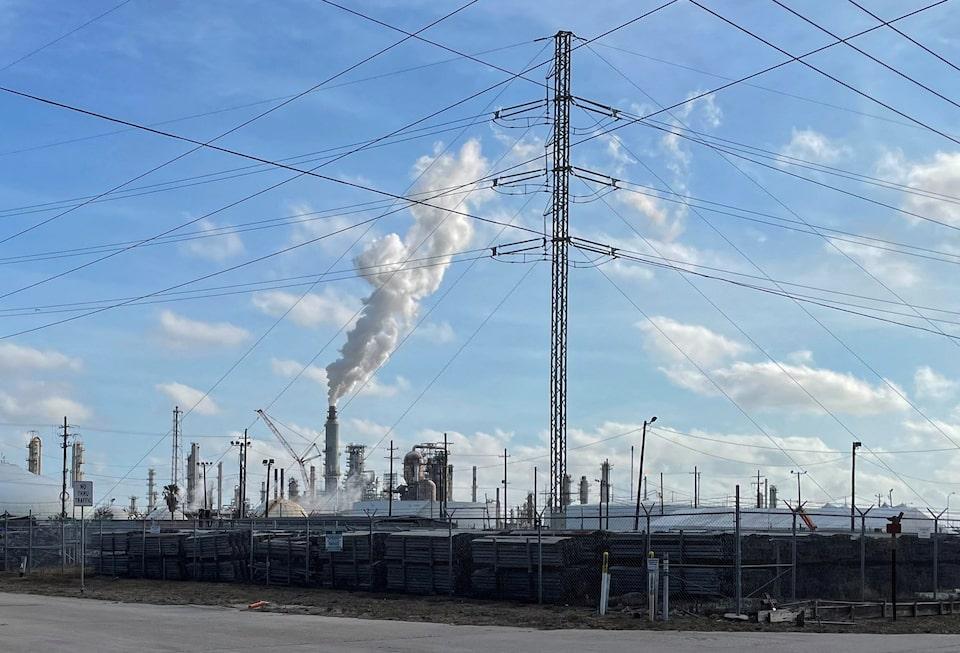
Strike averted on a rolling 24-hour basis, union says Union has rejected at least five Marathon proposals Last proposal would have provided 14% pay increase over four years HOUSTON, Jan 31 (Reuters) - The United Steelworkers union said late on Saturday it would extend talks with Marathon Petroleum (MPC.N) , opens new tab, averting a strike by 30,000 workers at U.S. refineries and chemical plants. The rolling 24-hour extension means the current contract, which had been set to expire at 12:01 a.m. ET (0501 GMT) on Sunday, remains in effect until either the union gives a 24-hour notice to strike or Marathon issues a 24-hour notice to lock workers out. Sign up here. Since negotiations began a little over a week ago, the union has rejected at least five proposals from Marathon. The last proposal on Saturday would have given refinery and chemical plant workers a 14% wage increase over a four-year contract. Marathon is the lead negotiator for 26 U.S. refiners and chemical companies, including Exxon Mobil (XOM.N) , opens new tab, Chevron (CVX.N) , opens new tab and Valero Energy (VLO.N) , opens new tab. The USW represents workers at plants that account for two-thirds of U.S. crude oil refining capacity. Earlier on Saturday, Marathon spokesperson Jamal Kheiry said, "MPC continues to meet with representatives from the USW. We are committed to bargaining in good faith and to working toward a mutually satisfactory agreement." Mike Smith, chairman of the Steelworkers' National Oil Bargaining Program, said union members were fighting for fairness and justice. "Our unity and solidarity at every facility throughout the industry sends a clear message that we are prepared to fight for a fair contract," Smith said in a statement issued by the USW. Sticking points for the talks are cost-of-living increases for the 30,000 oil industry workers represented by the union, healthcare costs and standards for use of artificial intelligence in the plants, said people familiar with the talks. The USW is also pushing for tougher safety standards, but the sources said that seems to be a non-starter for Marathon. "Marathon as a company thinks our industry is overpaid," said one of the sources, who asked not to be identified because they were not authorized to speak publicly. "They’re not coming up much on economics. And to be honest, they’re not really addressing anything else in our proposal besides AI. And they’re not addressing it in a good way." In previous negotiations, the USW has granted 24-hour extensions for several days past a contract's expiration. The negotiations are for a national pattern agreement that sets wages for the hourly union workers, healthcare costs, national agreements on safety and other issues. Inside refinery operators make about $50 an hour after completing their probationary period. The national agreement is combined with agreements on site-specific issues to create the contract for each plant. Workers and the company settled local issues on Friday at Marathon's largest refinery, the 631,000 barrel-per-day Galveston Bay Refinery. https://www.reuters.com/business/world-at-work/union-marathon-meeting-strike-deadline-looms-us-refineries-2026-02-01/
2026-02-01 01:07
Feb 1 (Reuters) - New car registrations in France declined 6.55% in January from a year earlier to 107,157 vehicles, data from French car body PFA showed on Sunday. Tesla (TSLA.O) , opens new tab sales in the country slumped 42.07% last month to 661 vehicles. Sign up here. https://www.reuters.com/business/autos-transportation/france-new-car-registrations-down-655-january-industry-body-says-2026-02-01/